Mixing Racial Messages

Posted in Articles, Arts, Asian Diaspora, Media Archive, United States on 2013-11-02 22:23Z by Steven

Mixing Racial Messages

Hyperallergic: Sensitive to Art & its Discontents
2013-10-30

Ryan Wong

Starting with its title, the group exhibition War Baby/Love Child: Mixed Race Asian American Art  at Seattle’s Wing Luke museum asks a provocative question: how do those seen by Americans as products of either colonial domination or subversive desire move past those categories? How do they escape, as the curators put it, an “identity defined by their parentage,” “fixed in the status of infants or children”?

Paradoxically, War Baby/Love Child begins with that parentage in order to make room for the artist to grow past it. Organized by Laura Kina and Wei Ming Dariotis, it is the most significant exhibition on the subject since Kip Fulbeck’s groundbreaking Hapa Project, which began in 2002. In the decade since, we have seen America’s multiracial population grow a third, to 9 million, not to mention the election of our first mixed race President…

Read the entire article here.

Tags: , , , , , , , ,

African-Americans and Latinos: Conflict or Collaboration?

Posted in Articles, Census/Demographics, History, Latino Studies, Media Archive, United States on 2013-11-02 22:08Z by Steven

African-Americans and Latinos: Conflict or Collaboration?

Ebony Magazine
2012-09-25

Eugene Holley, Jr.

As Latinos now outnumber African-Americans as this country’s largest minority, could there be a political, social and economic union with our brown brothers and sisters?

In celebration of Hispanic Heritage Month – which runs through October 15th – EBONY interviewed African-Americans and Hispanics about the challenges, complexities and collaborations between these two groups. 

“The Census suggested a competition,” says Miriam Jiménez Román, Executive Director of the AfroLatin@forum: a research and resource center focusing on Black Latinos and Latinas in the United States. “And it ignored a history of, not only just collaboration, but inclusion within the rubric of Blackness. We are not in competition with the African-American community. They have been at the vanguard, in terms of assuring civil rights in this country. And for that reason, all of the privileges that we have as Latinos in this country owe so much to the African-American struggle.”

The New York-born Puerto Rican, who also co-edited the book, The Afro-Latin@ Reader, also points out that there are many Hispanics of visible African descent. “Many African-Americans don’t realize that the majority of Black people in the Americas are in Latin America and the Caribbean,” she states. “Ninety five percent of all the enslaved Africans landed in those places. There are 150 million people of African descent in Latin America.”…

Read the entire article here.

Tags: , ,

Black History’s Missing Chapters: ‘The African Americans: Many Rivers to Cross,’ on PBS

Posted in Articles, History, Media Archive, United States on 2013-11-02 21:59Z by Steven

Black History’s Missing Chapters: ‘The African Americans: Many Rivers to Cross,’ on PBS

The New York Times
2013-10-18
 
Felicia R. Lee

The television mini-series “Roots,” about the slave Kunta Kinte and his descendants, is a classic, inspired by real lives and real history. But it is a truism among historians that young people do not know enough about African-American contributions to history. Even a tiny slice of recent history — the civil rights movement — is not required teaching in most states, the Southern Poverty Law Center found in a recent assessment.

“It boils down to Rosa Parks, Martin Luther King and ‘I Have a Dream,’ ” Maureen Costello, director of the center’s Teaching Tolerance Project, said of the typical level of knowledge. Films and the occasional series on black history have helped fill in the gaps, creating a kind of “cultural accretion,” Ms. Costello added, but television in recent years has not consistently offered informative entertainment.

When “Roots” was broadcast in 1977, “the whole nation watched it because there were three networks vying for our attention,” Ms. Costello said. “As a culture, we’ve become so fragmented. I think more Americans can reasonably discuss the meth trade or the Mafia because of ‘Breaking Bad’ and ‘The Sopranos’ than they can African-American history.”

Into the breach has stepped Henry Louis Gates Jr., assisted by dozens of historians. His six-part series, “The African Americans: Many Rivers to Cross,” beginning on Tuesday on PBS, aims to chronicle 500 years of black history. The program starts with Juan Garrido, a free black man whose 1513 expedition with Spanish explorers in Florida made him the first known African to arrive in what is now the United States, and ends with Barack Obama in the White House in 2013, a time of complexity and contradictions for black Americans. In between, Professor Gates, director of the W. E. B. Du Bois Institute for African and African American Research at Harvard, draws on the latest scholarship to put flesh on characters like the resilient South Carolina slave girl Priscilla as well as her descendants…

Read the entire article here.

Tags: , , , , ,

Analysis of a Tri-Racial Isolate

Posted in Anthropology, Articles, Media Archive, Native Americans/First Nation, Tri-Racial Isolates, United States on 2013-11-01 20:59Z by Steven

Analysis of a Tri-Racial Isolate

Human Biology
Volume 36, Number 4 (December 1964)
pages 362-373

William S. Pollitzer
Department of Anatomy
University of North Carolina, Chapel Hill

Based on a paper presented at the meeting of the American Association of Physical Anthropologists in Philadelphia, May 2, 1962

A relatively isolated population in the state of North Carolina, composed of persons who call themselves Indian but who appear to be of tri-racial origin, provides a model for the study of analysis by gene frequencies of a mixed population of White, Negro, and Indian ancestry.

A people considered Indian is known to have occupied this territory by the mid-eighteenth century; they spoke English, tilled the soil, and owned slaves. English, Scotch Highlanders, and French Huguenots migrated into the area in the eighteenth century also. Planters from neighboring states settled in this vicinity, often bringing slaves and a few free Negroes with them. The most common names of the free Negroes are the same as those of the present-day mixed population.

The origin of the Indian component of this hybrid population is open to speculation; three ideas have been advanced. The most colorful theory is that the people of the present isolate are the descendants of Raleigh’s famous “Lost Colony” who mixed with the Croatan Indians, an Algonquin-speaking tribe on the coast. Some similarity in the names of the colonists and the names in the present population, plus a few cultural traits, have been construed as evidence for this view. Another suggestion is that the Cherokee, a powerful Iroquois-speaking tribe who had general overlordship in the Western Carolinas, contributed the Indian genes to the hybrid group. Finally, the view has been advanced that the Siouan-speaking tribes who lived in the Piedmont Carolinas, e.g., the Catawba, were the Indian stock involved.

Considerable phenotypic variation is found within the isolate today, with extremes of skin color from light to dark and of hair form from very curly to straight- The morphology of the face also suggests broad racial backgrounds. It is therefore of interest to learn what the blood factors and hemoglobins tell of the composition of this population of multiple racial origins.

In 1958, in cooperation with Dr. Amoz Chernoff, blood samples were…

Tags: , , ,

Booker Sworn In as U.S. Senator

Posted in Articles, Media Archive, Politics/Public Policy, United States on 2013-11-01 04:22Z by Steven

Booker Sworn In as U.S. Senator

The New York Times
2013-10-31

Jennifer Steinhauer, Congressional Reporter

WASHINGTON — Cory A. Booker, who gained celebrity as a danger-dodging, super-tweeting mayor of Newark, was sworn in as New Jersey’s junior United States senator on Thursday, the first African-American to be elected to the chamber since Barack Obama in 2004…

Read the entire article here.

Tags: , , , , ,

Mixing Race, Risk, and Reward in the Digital Age (Sawyer Seminar IV)

Posted in History, Live Events, Media Archive, Passing, Social Science, United States on 2013-11-01 04:04Z by Steven

Mixing Race, Risk, and Reward in the Digital Age

University of Southern California
Dana and David Dornsife College of Letters, Arts and Sciences
Center for Japanese Religions and Culture
University Park Campus
Doheny Memorial Library (DML), East Asian Seminar Room: 110C
2013-11-05, 13:00-17:00 PST (Local Time)

USC Conference Convenors:

Duncan Williams, Associate Professor of Religion
University of Southern California

Brian C. Bernards, Assistant Professor of East Asian Languages and Cultures
University of Southern California

Velina Hasu Houston, Associate Dean for Faculty Recognition and Development, Director of Dramatic Writing and Professor
University of Southern California

What are the outcomes of evolving racial ideologies in North America and how are they impacting 21st century American identities?  How do 21st century multiracial identities and representations reflect and challenge historical constructions of racial mixing?  How does racial mixing inform transhumanistic enterprises (i.e., wearable technology) and impact educational experiences dedicated to mixed-race studies in digital spaces?

PRESENTERS:

“Racial Passing and the Color of Cultural Identity”

Marcia Dawkins, Clinical Assistant Professor of Communication Studies
University of Southern California (Author of Clearly Invisible: Racial Passing and the Color of Cultural Identity (Baylor University Press, 2012) and Eminem: The Real Slim Shady (Praeger, 2013).)

“Frizzly Studies: Law, History, Narrative, and the Color Line”

Daniel J. Sharfstein, Professor of Law
Vanderbilt University (Author of The Invisible Line: Three American Families and the Secret Journey from Black to White (Penguin Press, 2013) and “Crossing the Color Line: Racial Migration and the Emergence of the One-Drop Rule, 1600-1860,” Minnesota Law Review (2007).)

“Tweeting into the Future: Mixing Race and Technology in the 21st Century”

Ulli K. Ryder, Scholar in Residence, Office of the Chaplains and Religious Life
Brown University (Author of forthcoming book Mixed Race 3.0: Mixing Race, Risk & Reward in the Digital Age (Annenberg Press, 2014).)

For more information, click here.

Tags: , , , , , , , , , , , , ,

350:445 Revisiting Racial Passing in the 21st Century

Posted in Course Offerings, Media Archive, Passing, United States on 2013-11-01 04:01Z by Steven

350:445 Revisiting Racial Passing in the 21st Century

Rutgers, The State University of New Jersey
Summer 2013

This is a course on racial passing, which many people wrongly believe is an antiquated phenomenon. Passing has historically referred to light-skinned African Americans who use their phenotypes to pretend to be white and enjoy the privileges of whiteness. As we will discuss in our seminar, today people pass in a variety of ways, and not just racially. For example, folks regularly pass economically, religiously, and/or through gender. In discussing contemporary passing, we will begin with President Barack Obama, who some have argued has engaged in a form of passing by having black skin yet “white politics.”

We will read primary and secondary material on this literary genre, to determine the tropes, images, themes, and formal elements that comprise “the passing narrative.” We will also consider the ways in which it has been expanded in this “post-race” era.

Primary texts will include:

Films will include: “Imitation of Life” (1934 & 1959) and “The Human Stain” (2003).

For more information, click here.

Tags: , , , , , , , , , , ,

Dr. Yaba Blay on shifting the lens on race

Posted in Audio, Identity Development/Psychology, Interviews, Media Archive, Social Science, United States on 2013-10-30 23:29Z by Steven

Dr. Yaba Blay on shifting the lens on race

Radio Times with Marty Moss-Coane
WHYY 90.9 FM
Philadelphia, Pennsylvania
2013-10-30

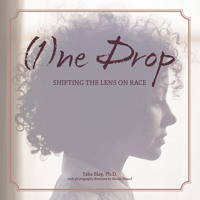
Who is black? And who is not? “Mixed/Jamerian,” “Black/Latina,” “Appalachian African American” are examples of how some people of color describe themselves. Drexel University Africana Studies professor Dr. Yaba Blay explores the nuances of the politics of racial identity and hair and skin color. Her work sheds light on the legacy of the outdated “one-drop” law – that if a person had a drop of black blood, they would be forever identified as black. Through interviews and research, she shows the diversity of the many ways bi-racial and multi-racial people self-identify. Her new portrait essay book is “(1)ne Drop: Shifting the Lens on Race.”

Download the episode here.

Tags: , , , , , ,

Living in Ambiguity: The Mixed Race Experience at Colorado State University

Posted in Campus Life, Dissertations, Identity Development/Psychology, Media Archive, United States on 2013-10-30 22:51Z by Steven

Living in Ambiguity: The Mixed Race Experience at Colorado State University

Colorado State University
Fall 2012
77 pages

Carl Izumi Olsen

In partial fulfillment of the requirements For the Degree of Master of Arts Colorado State University, Fort Collins

This study analyzes the experiences of mixed race students at Colorado State University by using semi-structured interviews of nineteen students. The interviews reveal that multiracial students exhibit different forms of racialization as compared to monoracial students. Despite some commonalities, the study also demonstrates that multiracial students are not monolithic group. In an effort to highlight the uniqueness embedded in the diversity of multiracial students, the study analytically identifies three main clusters based on how they are perceived. These include: Non-White Mixed Race, In-Between Mixed Race, and White-Identified Mixed Race. The interviews also show that the three dominant themes mediate their multiracial identity: perception, self-identification and connection to culture. Finally, the participants in this study all point to the inability of the existing cultural centers in meeting their specific needs and call for the establishment of multiracial center that would provide resources for education, outreach and retention issues for multiracial students.

Read the entire thesis here.

Tags: , , , ,

Loving v. Virginia (No. 395): 206 Va. 924, 147 S.E.2d 78, reversed.

Posted in Articles, Law, Media Archive, United States, Virginia on 2013-10-28 02:09Z by Steven

Loving v. Virginia (No. 395): 206 Va. 924, 147 S.E.2d 78, reversed.

Waren, C.J., Opinion of the Court, SUPREME COURT OF THE UNITED STATES
388 U.S. 1, Loving v. Virginia
Appeal from the Supreme Court of Appeals of Virginia
No. 395
Argued: April 10, 1967
Decided: June 12, 1967
Source: Legal Information Institute, Cornell University Law School

MR. CHIEF JUSTICE WARREN delivered the opinion of the Court.

This case presents a constitutional question never addressed by this Court: whether a statutory scheme adopted by the State of Virginia to prevent marriages between persons solely on the basis of racial classifications violates the Equal Protection and Due Process Clauses of the Fourteenth Amendment. [n1] For reasons which seem to us to reflect the central meaning of those constitutional commands, we conclude that these statutes cannot stand consistently with the Fourteenth Amendment.

In June, 1958, two residents of Virginia, Mildred Jeter, a Negro woman, and Richard Loving, a white man, were married in the District of Columbia pursuant to its laws. Shortly after their marriage, the Lovings returned to Virginia and established their marital abode in Caroline County. At the October Term, 1958, of the Circuit Court [p3] of Caroline County, a grand jury issued an indictment charging the Lovings with violating Virginia’s ban on interracial marriages. On January 6, 1959, the Lovings pleaded guilty to the charge, and were sentenced to one year in jail; however, the trial judge suspended the sentence for a period of 25 years on the condition that the Lovings leave the State and not return to Virginia together for 25 years. He stated in an opinion that:

Almighty God created the races white, black, yellow, malay and red, and he placed them on separate continents. And, but for the interference with his arrangement, there would be no cause for such marriage. The fact that he separated the races shows that he did not intend for the races to mix.

After their convictions, the Lovings took up residence in the District of Columbia. On November 6, 1963, they filed a motion in the state trial court to vacate the judgment and set aside the sentence on the ground that the statutes which they had violated were repugnant to the Fourteenth Amendment. The motion not having been decided by October 28, 1964, the Lovings instituted a class action in the United States District Court for the Eastern District of Virginia requesting that a three-judge court be convened to declare the Virginia anti-miscegenation statutes unconstitutional and to enjoin state officials from enforcing their convictions. On January 22, 1965, the state trial judge denied the motion to vacate the sentences, and the Lovings perfected an appeal to the Supreme Court of Appeals of Virginia. On February 11, 1965, the three-judge District Court continued the case to allow the Lovings to present their constitutional claims to the highest state court…

…Marriage is one of the “basic civil rights of man,” fundamental to our very existence and survival. Skinner v. Oklahoma, 316 U.S. 535, 541 (1942). See also Maynard v. Hill, 125 U.S. 190 (1888). To deny this fundamental freedom on so unsupportable a basis as the racial classifications embodied in these statutes, classifications so directly subversive of the principle of equality at the heart of the Fourteenth Amendment, is surely to deprive all the State’s citizens of liberty without due process of law. The Fourteenth Amendment requires that the freedom of choice to marry not be restricted by invidious racial discriminations. Under our Constitution, the freedom to marry, or not marry, a person of another race resides with the individual, and cannot be infringed by the State.

These convictions must be reversed.

It is so ordered.

Read the entire opinion here.
Tags: , , ,