Brown Skinned White Girls: class, culture and the construction of white identity in suburban communities

Posted in Articles, Identity Development/Psychology, Media Archive, Social Science, United States, Women on 2010-01-05 22:51Z by Steven

Brown Skinned White Girls: class, culture and the construction of white identity in suburban communities

Gender, Place & Culture
Volume 3, Issue 2
July 1996
pages 205 – 224
DOI: 10.1080/09663699650021891

France Winddance Twine, Professor of Sociology
University of California, Santa Barbara

Feminist scholars theorizing about whiteness and white identity have not examined the pivotal role that middle-class material privilege, residential segregation and US consumer culture play in the social construction of a racialized cultural identity among the African-descent daughters of Asian-American and European-American mothers. There is a dearth of empirical research by feminist scholars which interrogates the shifts in a racialized gender identity which follow from the interaction between class status, ideological communities and residentially segregated communities. The nascent body of social science scholarship on white identity has assumed that a ‘white’ identity is available only to individuals of exclusively European ancestry. This paper provides a specific case-study of African-descent girls, who have been culturally constructed as ‘white’ girls prior to puberty, only to later construct a non-white ‘black’ or ‘biracial’ identity after moving to a different residential, cultural and ideological community-the Berkeley campus of the University of California. Drawing upon transcripts from 16 taped interviews with African-descent university students, who were attending the University of California at Berkeley, this paper delineates the specific cultural conditions under which a racially neutral or ‘white’ identity is acquired, constructed, and then reconstructed by a segment of the African-descent community, the daughters of Asian and European-American women in economically privileged households in suburban communities. 

Read or purchase the article here.
Tags:

The Ethics of Identity

Posted in Books, Literary/Artistic Criticism, Media Archive, Monographs, Philosophy, Social Science on 2010-01-05 21:04Z by Steven

The Ethics of Identity

Princeton University Press
2004
384 pages
6 x 9
Hardback ISBN: 9780691120362
Paper ISBN: 978-1-4008-2619
e-Book ISBN: 978-1-4008-2619-3

Kwame Anthony Appiah, Laurance S. Rockefeller University Professor of Philosophy and the Center for Human Values
Princeton University

  • A New York Times Editors’ Choice
  • One of Amazon.com’s Best Nonfiction Books of 2005
  • Winner of the 2005 Award for Excellence in Professional/Scholarly Publishing in Philosophy, Association of American Publishers
  • Honorable Mention for the 2005 Gustavus Myers Outstanding Book Award, Gustavus Myers Center for the Study of Bigotry and Human Rights

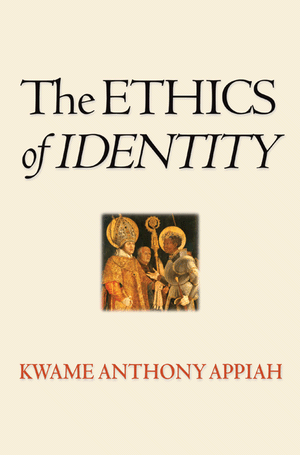
Race, ethnicity, nationality, religion, gender, sexuality: in the past couple of decades, a great deal of attention has been paid to such collective identities. They clamor for recognition and respect, sometimes at the expense of other things we value. But to what extent do “identities” constrain our freedom, our ability to make an individual life, and to what extent do they enable our individuality? In this beautifully written work, renowned philosopher and African Studies scholar Kwame Anthony Appiah draws on thinkers through the ages and across the globe to explore such questions.

The Ethics of Identity takes seriously both the claims of individuality–the task of making a life—and the claims of identity, these large and often abstract social categories through which we define ourselves.

What sort of life one should lead is a subject that has preoccupied moral and political thinkers from Aristotle to Mill. Here, Appiah develops an account of ethics, in just this venerable sense–but an account that connects moral obligations with collective allegiances, our individuality with our identities. As he observes, the question who we are has always been linked to the question what we are.

Adopting a broadly interdisciplinary perspective, Appiah takes aim at the clichés and received ideas amid which talk of identity so often founders. Is “culture” a good? For that matter, does the concept of culture really explain anything? Is diversity of value in itself? Are moral obligations the only kind there are? Has the rhetoric of “human rights” been overstretched? In the end, Appiah’s arguments make it harder to think of the world as divided between the West and the Rest; between locals and cosmopolitans; between Us and Them. The result is a new vision of liberal humanism–one that can accommodate the vagaries and variety that make us human.

Table of Contents

  • PREFACE
  • Chapter One: The Ethics of Individuality
    • THE GREAT EXPERIMENT—LIBERTY AND INDIVIDUALITY—PLANS OF LIFE–THE SOUL OF THE SERVITOR—SOCIAL CHOICES—INVENTION AND AUTHENTICITY—THE SOCIAL SCRIPTORIUM—ETHICS IN IDENTITY—INDIVIDUALITY AND THE STATE—THE COMMON PURSUIT
  • Chapter Two: Autonomy and Its Critics
    • WHAT AUTONOMY DEMANDS—AUTONOMY AS INTOLERANCE—AUTONOMY AGONISTES—THE TWO STANDPOINTS—AGENCY AND THE INTERESTS OF THEORY
  • Chapter Three: The Demands of Identity
    • LEARNING HOW TO CURSE—THE STRUCTURE OF SOCIAL IDENTITIES—MILLET MULTICULTURALISM—AUTONOMISM, PLURALISM, NEUTRALISM—A FIRST AMENDMENT EXAMPLE: THE ACCOMMODATIONIST PROGRAM—NEUTRALITY RECONSIDERED—THE LANGUAGE OF RECOGNITION—THE MEDUSA SYNDROME—LIMITS AND PARAMETERS
  • Chapter Four: The Trouble with Culture
    • MAKING UP THE DIFFERENCE—IS CULTURE A GOOD?—THE PRESERVATIONIST ETHIC—NEGATION AS AFFIRMATION— THE DIVERSITY PRINCIPLE
  • Chapter Five: Soul Making
    • SOULS AND THE STATE—THE SELF-MANAGEMENT CARD—RATIONAL WELL-BEING—IRRATIONAL IDENTITIES—SOUL MAKING AND STEREOTYPES—EDUCATED SOULS—CONFLICTS OVER IDENTITY CLAIMS
  • Chapter Six: Rooted Cosmopolitanism
    • A WORLDWIDE WEB–RUTHLESS COSMOPOLITANS–ETHICAL PARTIALITY–TWO CONCEPTS OF OBLIGATION–COSMOPOLITAN PATRIOTISM–CONFRONTATION AND CONVERSATION–RIVALROUS GOODS, RIVALROUS GODS–TRAVELING TALES–GLOBALIZING HUMAN RIGHTS–COSMOPOLITAN CONVERSATION
  • ACKNOWLEDGMENTS
  • NOTES
  • INDEX
Tags: ,

Mixed Race in the United States (Lecture Series)

Posted in History, Live Events, Media Archive, Social Science, United States on 2010-01-05 20:28Z by Steven

 Mixed Race in the United States

Simpson Center for The Humanities at the University of Washington
Dates (Local Time: 19:30 PST): 2010-01-06, 2010-01-20, 2010-02-03, 2010-02-17, and 2010-03-03
Location: Kane Hall 220

Is it coincidence that the first nonwhite president of the United States comes from a multiracial background? Or was his election, in fact, partially due to his mixed-race background and the idea that it somehow resonated with all Americans, regardless of race? In the twenty-first century United States, mixed-race people, from the chief executive to the family next door, seem to be everywhere. In the past twenty-five years, the period since the decriminalization of interracial marriage, the births of monoracial babies have increased 15%, while multiracial births have increased a dramatic 260%.  But what do these numbers imply?  Has racialized inequality changed with the surging numbers of multiracial Americans?  This course will interrogate what it means to understand mixed-race identity in America, and what representations and histories of U.S. multiracialism can illustrate about changing notions of race, power, and privilege in the United States.

Ralina L. Joseph is Assistant Professor in the Department of Communication and an adjunct assistant professor in the departments of American Ethnic Studies and Women Studies at the University of Washington.  She recently completed a book manuscript, Beyond the Binaries?: Reading Mixed-Race Blackness in the New Millennium, and is currently at work on her second book project, Speaking Back: How Black Women Resist Post-Identity Culture. Joseph teaches about issues of race, gender, sexuality, and the media, and is a 2009 recipient of a Woodrow Wilson Career Enhancement Fellowship and a Ford Foundation Postdoctoral Fellowship.

The Wednesday University provides Puget Sound residents with an intellectually stimulating way to continue their education in the humanities.

Each year, the Wednesday University offers three courses taught by distinguished faculty at the University of Washington. These courses, which meet on Wednesday evenings, are open to anyone—from high school students to senior citizens. Please join us and become a part of one of Seattle’s liveliest intellectual and cultural communities.

The Wednesday University is a collaborative program sponsored by Seattle Arts & Lectures, the Simpson Center for the Humanities, and the Henry Art Gallery. All classes are held at the Henry Art Gallery Auditorium at the University of Washington from 7:30-9 pm.

Course Fee: $80 each or $210 for all three courses. To register, please visit the Seattle Arts & Lectures website or call 206.621.2230 ext. 10.

All course locations are on the University of Washington campus.  The Fall and Winter courses will be in Kane Hall. The Spring course will be in Brechemin Hall in the Music Building.  All courses begin at 19:30 PST (Local Time).

To register for the lecture, click here.

Tags: ,

Racial ambiguity among the Brazilian population

Posted in Articles, Brazil, Caribbean/Latin America, Media Archive, Social Science on 2010-01-05 18:32Z by Steven

Racial ambiguity among the Brazilian population

Ethnic and Racial Studies
Volume 25, Issue 3 (May 2002)
pages 415-441
DOI: 10.1080/01419870252932133

Edward E. Telles, Professor of Sociology
Princeton University

I investigate the extent to which interviewers and respondents in a 1995 national survey consistently classify race in Brazil, overall and in particular contexts. Overall, classification as white, brown or black is consistent 79 per cent of the time. However, persons at the light end of the colour continuum tend to be consistently classified, whereas ambiguity is greater for those at the darker end. Based on statistical estimation, the findings also reveal that consistency varies from 20 to 100 per cent depending on one’s education, age, sex and local racial composition. Inconsistencies are in the direction of both ”whitening” and ”darkening”, depending on whether the reference is interviewer or respondent. For example, interviewers ”whitened” the classification of higher educated persons who self-identified as brown, especially in mostly non-white regions. Finally, I discuss the role of the Brazilian state in constructing race and the implications of these findings for survey research and comparative analysis.

Read the entire article here.

Tags: , , ,

Fade: My Journeys in Multiracial America

Posted in Autobiography, Books, Census/Demographics, Identity Development/Psychology, Media Archive, Monographs, Politics/Public Policy, Social Science, United States on 2010-01-04 23:26Z by Steven

Fade: My Journeys in Multiracial America

Basic Books an imprint of The Perseus Books Group
2006-12-28
302 pages
ISBN: 9780786718825
ISBN-10: 078671882X

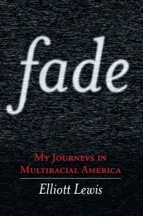
Elliott Lewis

Television journalist Elliott Lewis weaves his memoirs as a black-and-white biracial American with the voices of dozens of multiracial people who are challenging how we think and speak about race today. “What are you?” This seemingly ordinary but politically charged question has become a touchstone for debate around race and ethnicity. Now, more than ever, mixed race Americans are calling themselves biracial and multiracial rather than feeling forced to choose only one race. Nearly seven million people checked more than one racial category in the 2000 US census, the first time in history Americans had the option to mark more than one box. With Fade, Lewis offers a comprehensive look at the multiracial state of the union. Here he speaks with dozens of individuals, tackling hot button issues such as the often complicated lives of multiracial people in communities of color, interracial dating, transracial adoption, and the birth of the multiracial movement. The author also shares his own moving — and often humorous — firsthand experiences with race, along with intimate stories from those at the forefront of nationwide efforts to formally recognize the multiracial population.

Tags: , ,

Part Asian, 100% Hapa: Portraits by Kip Fulbeck

Posted in Arts, Asian Diaspora, Books, Media Archive, Monographs on 2010-01-04 22:09Z by Steven

Part Asian, 100% Hapa: Portraits by Kip Fulbeck

Chronicle Books
February, 2006
264 pages
7 x 7 in; 125 color photographs
ISBN 0811849597
ISBN13 9780811849593

Kip Fulbeck, Professor of Performative Studies, Video
University of California, Santa Barbara

Foreword by Sean Lennon

Afterword by Paul Spickard, Professor of History
University of California, Santa Barbara

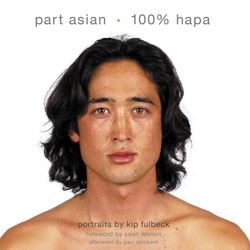
Part Asian, 100% Hapa — Originally a derogatory label derived from the Hawaiian word for half, Hapa is now being embraced as a term of pride by many people of Asian or Pacific Rim mixed-race heritage. Award-winning film producer and artist Kip Fulbeck has created a forum in word and image for Hapas to answer the question they’re nearly always asked: “What are you?” Fulbeck’s frank, head-on portraits are paired with the sitters’ own statements of identity. A work of intimacy, beauty, and powerful self-expression, Part Asian, 100% Hapa is the book Fulbeck says he wishes he had growing up. An introduction to the rest of the world and an affirmation for Hapas themselves—who now number in the millions—it offers a new perspective on a rapidly growing population.

Tags: , , , , , ,

The American Melting Pot? Miscegenation Laws in the United States

Posted in Articles, History, Law, Media Archive, Social Science, Teaching Resources, United States on 2010-01-02 02:25Z by Steven

The American Melting Pot? Miscegenation Laws in the United States

Organization of American Historians Magazine of History
Volume 15, Number 4, Summer 2001
pages 80-84

Bárbara C. Cruz, Associate Professor of Social Science Education
University of South Florida, Tampa

Michael J. Berson, Associate Professor of Social Science Education
University of South Florida

People of mixed heritage have been citizens of the United States since the country’s inception. Indeed, one scholar has insisted that “American History would be unrecognizable without ethnic intermarriage”. But while Americans proudly describe their nation as a “melting pot,” history shows that social convention and legal statutes have been less than tolerant of miscegenation, or “race mixing.” For students and teachers of history, the topic can provide useful context for a myriad of historical and contemporary issues.

Laws prohibiting miscegenation in the United States date back as early as 1661 and were common in many states until 1967. That year, the Supreme Court ruled on the issue in Loving v. Virginia, concluding that Virginia’s miscegenation laws were unconstitutional. In this article, we look at the history of miscegenation in the United States, some motivations for anti-miscegenation policy, the landmark decision of Loving v. Virginia, and some applications of the topic for the social studies classroom…

Read or purchase the article here.

Tags: , , , , , ,

Shades of Citizenship: Race and the Census in Modern Politics

Posted in Books, Brazil, Caribbean/Latin America, Census/Demographics, Media Archive, Monographs, Politics/Public Policy, United States on 2010-01-02 01:38Z by Steven

Shades of Citizenship: Race and the Census in Modern Politics

Stanford University Press
2000
256 pages
4 tables.
Cloth ISBN-10: 0804740135
Cloth ISBN-13: 9780804740135
Paper ISBN-10: 0804740593
Paper ISBN-13: 9780804740593

Melissa Nobles, Arthur and Ruth Sloan Professor of Political Science
Massachusetts Institute of Technology

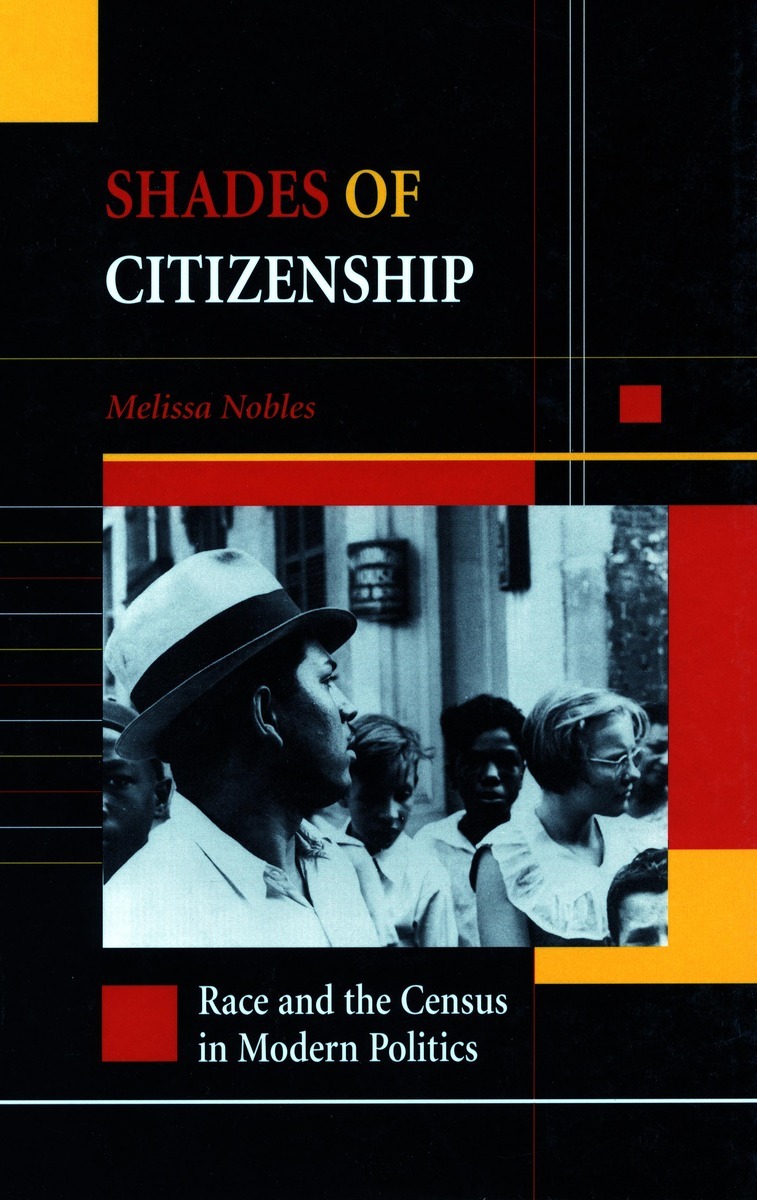
This book explores the politics of race, censuses, and citizenship, drawing on the complex history of questions about race in the U.S. and Brazilian censuses. It reconstructs the history of racial categorization in American and Brazilian censuses from each country’s first census in the eighteenth and nineteenth centuries up through the 2000 census. It sharply challenges certain presumptions that guide scholarly and popular studies, notably that census bureaus are (or are designed to be) innocent bystanders in the arena of politics, and that racial data are innocuous demographic data.

Using previously overlooked historical sources, the book demonstrates that counting by race has always been a fundamentally political process, shaping in important ways the experiences and meanings of citizenship. This counting has also helped to create and to further ideas about race itself. The author argues that far from being mere producers of racial statistics, American and Brazilian censuses have been the ultimate insiders with respect to racial politics.

For most of their histories, American and Brazilian censuses were tightly controlled by state officials, social scientists, and politicians. Over the past thirty years in the United States and the past twenty years in Brazil, however, certain groups within civil society have organized and lobbied to alter the methods of racial categorization. This book analyzes both the attempt of America’s multiracial movement to have a multiracial category added to the U.S. census and the attempt by Brazil’s black movement to include racial terminology in census forms. Because of these efforts, census bureau officials in the United States and Brazil today work within political and institutional constraints unknown to their predecessors. Categorization has become as much a “bottom-up” process as a “top-down” one.

Tags: ,

Post-Race on America’s Next Top Model

Posted in Arts, Communications/Media Studies, Media Archive, Papers/Presentations, Social Science, United States, Women on 2010-01-02 01:27Z by Steven

Post-Race on America’s Next Top Model

International Communication Association, TBA
2007 Conference
San Francisco, CA
2007-05-23

Ralina L. Joseph, Assistant Professor of Communications, American Ethnic Studies and Women Studies
University of Washington

African American supermodel Tyra Banks’s popular reality show for aspiring young models, America’s Next Top Model, both reflects and produces twenty-first century ideals of post-feminism, a “girl power” moment in which second-wave feminism is antiquated, and post-race, a post-Civil Rights moment in which race is relic. ANTM features a sizable number of women of color contestants who are led by an African American female leader. The show’s explicit message is that racialized and gendered identities are equalized in the “Top Model” space. However, all of the contestants, both women of color and white women, are disciplined so that they must signify hyper-raced, hyper-sexed and essentialized versions of “difference.” At the same time, the contestants must also perform as safe, genteel, and essentially white middle class “Cover Girls.”

In this paper I investigate performances of racial and gender masquerade in a 2004 episode of America’s Next Top Model. This episode features a confluence of race as costume, because the contestants “switch ethnicities” with the help of makeup and wigs, and gender as maternity, because the contestants don milk mustaches and three-year-old children as props. ANTM demonstrates that performances of post-ethnicity and post-feminism are always reliant upon racialized and gendered stereotypes and the logic of capitalism. While the mixed-race contestants are showcased as the most seamless transgressors of racialized and gendered identity, as all of the women slip on race and gender “costumes,” the show illustrates the seductive power of post-identity politics in the twenty first century United States.

…As a graduate student I worked on notions of contemporary mixed-race African-American representations as being particularly emblematic of a post-race and postfeminist excuse that was vital in constructing neo-conservative political measures like California’s 1996 anti-affirmative action measure prop 209 and 2003’s racial privacy initiative prop[osition] 54. Historically and into the new millennium hybridized Black female bodies have been represented as not only sexually available, but also complicit in their exploitation (one of my favorite examples is Halle Berry’s much lauded academy award winning turn in 2001’s Monster’s Ball where she screams out in her sex scene with her death row inmate husband’s prison guard/executioner Billy Bob Thornton, “make me feel good!”). What I’ve been working on post-grad school is how these connected ideologies of post-race and post-feminism operate in other popular culture where mixed-race functions more often as a metaphor. One cite I’ve been investigating is the celebrity of thirty-three year old African American supermodel turned media mogul Tyra Banks and the phenomenon of her reality television show, America’s Next Top Model

Read the entire article here.

Tags: , ,

Sexual Naturalization: Asian Americans and Miscegenation

Posted in Asian Diaspora, Books, History, Law, Literary/Artistic Criticism, Media Archive, Monographs, Social Science, United States on 2010-01-01 23:35Z by Steven

Sexual Naturalization: Asian Americans and Miscegenation

Stanford University Press
2005
224 pages
Cloth ISBN-10: 0804747288; ISBN-13: 9780804747288
Paper ISBN-10: 0804747296; ISBN-13: 9780804747295

Susan Koshy, Associate Professor of English and Asian American Studies
University of Illinois, Urbana-Champaign

Sexual Naturalization offers compelling new insights into the racialized constitution of American nationality. In the first major interdisciplinary study of Asian-white miscegenation from the late nineteenth to the end of the twentieth century, Koshy traces the shifting gender and racial hierarchies produced by antimiscegenation laws, and their role in shaping cultural norms. Not only did these laws foster the reproduction of the United States as a white nation, they were paralleled by extraterritorial privileges that facilitated the sexual access of white American men to Asian women overseas. Miscegenation laws thus turned sex acts into race acts and engendered new meanings for both.

Koshy argues that the cultural work performed by narratives of white-Asian miscegenation dramatically transformed the landscape of desire in the United States, inventing new objects and relations of desire that established a powerful hold over U.S. culture, a capture of imaginative space that was out of all proportion to the actual numbers of Asian residents.

Read an excerpt of chapter 1 here.

Table of Contents

  • Acknowledgments
  • Introduction
  • Part One: Sexual Orients and the American National Imaginary
    • Mimic Modernity: “Madame Butterfly” and the Erotics of Informal Empire
    • Eugenic Romances of American Nationhood
  • Part Two: Engendering the Hybrid Nation
    • Unincorporated Territories of Desire: Hypercorporeality and Miscegenation in Carlos Bulosan’s Writings
    • Sex Acts as Assimilation Acts: Female Power and Passing in Bharati Mukherjee’s Wife and Jasmine
  • Notes
  • Bibliography
  • Index
Tags: ,