The Poet as Cultural Dentist: Ethnicity in the Poetry of Jackie Kay

Posted in Literary/Artistic Criticism, Media Archive, Papers/Presentations, United Kingdom, Women on 2010-05-06 21:43Z by Steven

The Poet as Cultural Dentist: Ethnicity in the Poetry of Jackie Kay

Theory and Practice in English Studies 4 (2005)
Proceedings from the Eighth Conference of British, American and Canadian Studies.
Brno: Masarykova Univerzita
pages 63-67

Pavlína Hácová, Philosophical Faculty
Palacky University, Olomouc

The acclaimed British poet Jackie Kay (born 1961) belongs to the colourful mainstream of recent British poetry. The paper aims to survey the ethnic imagery and consciousness Kay explores in her poems, predominantly with the images of dentistry. Special attention will be paid to the images of cultural significance. A few sample poems will be discussed to demostrate the constant search for identity (inclusion vs. exclusion, assimilation vs. marginalization) and cultural heritage.

…Kay keeps clear-cut the distinction between white and black. In the poem “Pride”, the exploration of identity that is based on the imagery of teeth, leads to concern with nationality. Kay is proud of her mixed Scottish and Nigerian background. She links her African descent to her Scottish nationality as she compares Scottish clans to African tribes – both sharing the pride of their respective cultures:

His [the stranger’s] face had a look
I’ve seen on a MacLachlan, a MacDonnell, a MacLeod,
the most startling thing, pride. (Kay 1998: “Pride”, lines 51-53)

However, Kay does not see the identity of the characters as either black or white. She has stated in an interview: “I consider myself a Scottish writer, in the sense that I am, and I consider myself a black writer, in the sense that I am, and a woman writer, in the sense that I am” (Severin 2002)…

Read the entire paper here.
Tags: ,

Jackie Kay (Review of Darling)

Posted in Articles, Book/Video Reviews, Media Archive, United Kingdom, Women on 2010-05-06 21:32Z by Steven

Jackie Kay (Review of Darling)

Aesthetica Magazine
Issue 19 (2007-10-01)
page 10

Rachel Hazelwood

Jackie Kay is one of the most prolific and insightful poets currently writing in the UK today. At a time when too many people frequently describe the form as being “in decline” and thought of as an “exclusive club”, Kay writes poems that are accessible, yet deeply involved and involving. Her poetry embraces the reader, and at the same time it challenges them to really think about what she is saying. Her work covers weighty themes such as gender, ethnicity, racism and cultural difference, and presents them in ways that leave you marvelling at her command of language, and at the same time feeling as though you have gained valuable insight into subjects fraught with social and emotional complexities. As far as Kay is concerned: “All you need is a way of reading poetry so while you’re listening, you are also reading; and that you listen to poetry like you might listen to a piece of music. You actually don’t need to understand it in the first instance; you’re listening to enjoy and experience language, not to worry about it.  Once you’re past worrying you can actually return again and again to the same poem, and that’s what I think is wonderful about poetry.”

Kay’s latest work, Darling, published in October 2007, brings together into a vibrant new book many favourite poems from her four Bloodaxe collections, The
Adoption Papers, Other Lovers, Off Colour and Life Mask, as well as featuring new work, some previously uncollected poems, and some lively poetry for younger readers…

Read the entire review here.

Tags: , ,

Biracial Asian Americans and Mental Health

Posted in Articles, Health/Medicine/Genetics, Identity Development/Psychology, Media Archive, United States on 2010-05-05 20:43Z by Steven

Biracial Asian Americans and Mental Health

University of California, Davis
News and Information
2008-08-10

A new study of Chinese-Caucasian, Filipino-Caucasian, Japanese-Caucasian and Vietnamese-Caucasian individuals concludes that biracial Asian Americans are twice as likely as monoracial Asian Americans to be diagnosed with a psychological disorder.

The study by researchers at the Asian American Center on Disparities Research at the University of California, Davis, was reported Sunday at the annual meeting of the American Psychological Association in Boston.

“Up to 2.4 percent of the U.S. population self-identifies as mixed race, and most of these individuals describe themselves as biracial,” said Nolan Zane, a professor of psychology and Asian American studies at UC Davis. “We cannot underestimate the importance of understanding the social, psychological and experiential differences that may increase the likelihood of psychological disorders among this fast-growing segment of the population.”…

Read the entire article here.

Tags: , ,

The President, the Professor, and the Wide Receiver

Posted in Articles, Asian Diaspora, Barack Obama, Family/Parenting, Media Archive, Social Science, United States on 2010-05-04 21:50Z by Steven

The President, the Professor, and the Wide Receiver

When the biracial U.S. President Barack Obama visits South Korea tomorrow, he will be visiting a country grappling with its prejudices about race.

Foreign Policy
2009-11-17

James Card

This week, U.S. President Barack Obama, the son of a black father and white mother, is making his landmark visit to Asia, including a Wednesday stop in Seoul, where South Korea is in the midst of a racial reckoning. His visit could have positive repercussions for years to come. Race is a thorny issue in the country, and biracial persons especially so. Both North and South Koreans embrace pure bloodlines, untainted by non-Korean DNA. Biracial children are broadly considered unadoptable, and children and adults of mixed race endure ostracism and bullying. But in the past few years, a number of events and people have made South Koreans reconsider racism and persons of mixed race…

Read the entire article here.

Tags: , , ,

Mixed-race theory for everyone

Posted in Identity Development/Psychology, Media Archive, Papers/Presentations, Politics/Public Policy, Social Science, United Kingdom on 2010-05-04 20:21Z by Steven

Mixed-race theory for everyone

Mixedness & mixing: New perspectives on mixed-race Britons
A Commission for Racial Equality eConference
2007-09-04 through 2007-09-06

Jin Haritaworn, Assistant Professor in Gender, Race and Environment at the Faculty of Environmental Studies
York University, Canada

What insights does mixed-race theory bear for mixed-race people, our allies, and the professionals who work with us? This paper introduces three lessons which are especially relevant in this time and place.

Table of Contents

Lesson 1: Scandalising the ‘What are you?’ encounter
Lesson 2: The good mix and the bad
Lesson 3: A Mongrel Nation?

Mixed-race theory helps us challenge the voyeuristic entitlement which some people feel to find out intimate things about us. Many of us are used to giving unreciprocated information about our identities, origins and families. We endure this treatment as we know from experience that the person asking ‘Where are you from?’ will not be satisfied with ‘Northampton’. We rarely risk challenging this inappropriate ‘smalltalk’, for fear of being labelled irritating.

Read the entire paper here.

Tags: , ,

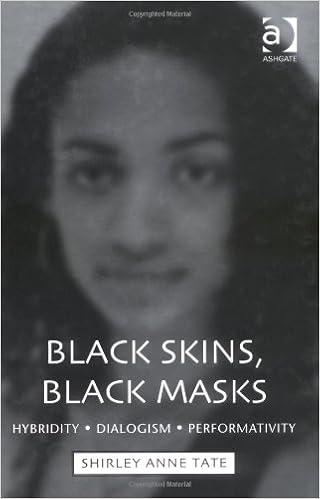
Black Skins, Black Masks: Hybridity, Dialogism, Performativity

Posted in Anthropology, Books, Identity Development/Psychology, Media Archive, Monographs, Women on 2010-05-04 18:07Z by Steven

Black Skins, Black Masks: Hybridity, Dialogism, Performativity

Ashgate Publishing
February 2005
188 pages
234 x 156 mm
Hardback ISBN: 978-0-7546-3641-0

Shirley Anne Tate, Professor of Sociology
Leeds Beckett University, Leeds, United Kingdom

Black Skin, Black Masks: Hybridity, Dialogism, Performativity offers a timely exploration of Black identity and its negotiation. The book draws on empirical work recording everyday conversations between Black women: friends, peers and family members. These conversations are discussed in the light of the work of Homi Bhabha, Stuart Hall, Gerd Baumann, Claire Alexander and others on questions of hybridity, identity, otherness and the development of ‘new ethnicities’. Tate aims to address what she sees as significant omissions in contemporary Black Cultural Studies. She argues that theorists have rarely looked at the process of identity construction in terms of lived-experience; and that they have tended to concentrate on the demise of the essential Black subject, paying little attention to gender.

The book points to a continuation of a ‘politics of the skin’ in Black identities. As such it argues against Bhabha’s claim that essence is not central to hybrid identities. The conversations recorded in the book reveal the ways in which women negotiate the category of Blackness, in what Tate calls a ‘hybridity-of- the-everyday’.

The book introduces a new interpretative vocabulary to look at the ways in which hybridity is orchestrated and fashioned, showing it to be performative, dialogical and dependent on essentialism.

Table of Contents

  • Introduction
  • Foucault, Bakhtin, ethnomethodology
  • Critical ontologies and racialized gender
  • Storied hybridity and gendered readings of ‘Race’
  • Beyond hybridity: bodily schema and the ‘Third Space’
  • Resisting Black skin
  • Hybridity, dialogism, performativity
  • Fetishizing community: a politics of skin, homes and belonging
  • Conclusion; Bibliography
  • Index
Tags: , , ,

Biracial Student Voices: Experiences at predominatly white institutions

Posted in Articles, Campus Life, Identity Development/Psychology, Media Archive, United States on 2010-05-04 03:08Z by Steven

Biracial Student Voices: Experiences at predominatly white institutions

The Bulletin
Association of College Unions International
Volume 77, Issue 6 (November 2009)

Willie L. Banks Jr., Associate Dean of Student Life
Cleveland State University

Race is a complex issue for campuses to address. Often, universities tout their diversity by sharing statistics about the respective racial populations present within their study body, all boxes that can be neatly checked: African-American, Asian, Hispanic, etc. While “other” may be used as a catchall, rarely is a category for biracial or multiracial students included in this list. In the January 2002 issue of American Demographics, Alison Stein Wellner reported that 2.4 percent (approximately 6.8 million people) of the total U.S. population were living in households that included two or more races. In the Aug. 8, 2006 issue of Inside Higher Ed, Scott Jaschik indicated the biracial population was increasingly growing and attending institutions of higher education, requiring the need for research reflecting the experiences of these students on college campuses. Biracial students have been on campus for a number of years; however, their voice has not been adequately represented within the literature as Donna M. Talbot described in the 2008 book, “Biracial and Multiracial Students.”

April Jourdan commented in the 2006 Journal of Counseling and Development that the majority of research on minority populations on college campuses focused on monoracial ethnic categories (i.e., Asian, African American, or Hispanic) and not on the lives of biracial or multiracial individuals in higher education.

For many campuses, biracial individuals provide an interesting challenge and pose more questions than answers. Who comprises this population? What are this population’s needs? How can institutions provide resources and services to address those needs? Unfortunately, there is not one answer to these critical questions. Just as biracial individuals are complex and multilayered, so are their needs and experiences.

Earlier this year, a new study was conducted to examine the experiences of biracial students with one parent of African American heritage attending predominantly white institutions in the southern United States. The findings demonstrate some practical strategies that campus professionals can employ to improve the educational environment in which biracial students develop their identities.

Read the entire article here.

Tags: , , , ,

Children of the French Empire: Miscegenation and Colonial Society in French West Africa 1895-1960

Posted in Africa, Books, History, Identity Development/Psychology, Media Archive, Monographs on 2010-05-04 00:54Z by Steven

Children of the French Empire: Miscegenation and Colonial Society in French West Africa 1895-1960

Oxford University Press
1999
216 pages
Hardback ISBN13: 9780198208198; ISBN10: 0198208197

Owen White, Associate Professor of History
University of Delaware

This book recreates the lives of the children born of relationships between French men and African women from the time France colonized much of West Africa towards the end of the 19th century, until independence in 1960. Set within the context of the history of miscegenation in colonial French West Africa, the study focuses upon the lives and identities of the resulting mixed-race or métis population, and their struggle to overcome the handicaps they faced in a racially divided society. This author has drawn an evaluation of the impact and importance of French racial theories, and offers a critical discussion of colonial policies in such areas as citizenship and education, providing insights into problems of identity in colonial society.

Table of Contents

Abbreviations
Map of French West Africa and Togo
Introduction
1. Miscegenation in French West Africa
2. Abandonment and Intervention
3. Education and Employment
4. Race and Heredity
5. Paternity and the Mother Country
6. Métis and the Search for Social Identity
Conclusion
Bibliography
Index

Tags: , , ,

Don’t tell me who I am

Posted in Articles, Biography, Gay & Lesbian, Identity Development/Psychology, Media Archive, United Kingdom, Women on 2010-05-03 04:57Z by Steven

Don’t tell me who I am

The Guardian
2002-01-12

Libby Brooks, Deputy Comment Editor

Jackie Kay has become used to all kinds of assumptions being made about her identity—literary, national, sexual and familial. The more annoying, because the joy of being a writer is that you can create any persona you like. On the other hand, she does want to stand and be counted. She explains to Libby Brooks

Jackie Kay tells a tale of mistaken identity. “I went to sit down in this chair in a London pub and this woman says, ‘You cannae sit doon in that chair – that’s ma chair.’ I said, ‘Oh, you’re from Glasgow, aren’t you?’ and she said, ‘Aye, how did you know that?’ I said, ‘I’m from Glasgow myself.’ She said, ‘You’re not, are you, you foreign-looking bugger!'” Kay roars delightedly. “I still have Scottish people asking me where I’m from. They won’t actually hear my voice, because they’re too busy seeing my face.” Meanwhile, in Glasgow, her black female friends are stopped in the street and asked if they’re Jackie Kay…

…Born in Edinburgh to a Scottish mother and Nigerian father, Kay herself was adopted by a white couple and brought up in Glasgow. A lesbian – she lives in Manchester with poet Carol Ann Duffy, her own 13-year-old son, Matthew, and Duffy’s daughter, Ella, six – Kay has found her own identities too easily commodified for comfort. “Your characters are fiction, but when you’re a public writer people often try to make them you. Often, they have this real need, which seems to come out of our culture, to relate things back to this big thing called the personality. There’s something discomforting about that gaze being on you because, by writing, you’ve deliberately chosen to put yourself behind the scenes…

…Kay has always read and always written. As a young girl growing up in predominantly white Glasgow, books such as Anne Of Green Gables and the Famous Five series offered her other lives, while writing gave her the chance to create her own. When she was 12, she wrote the 80-page One Person, Two Names in a school jotter, illustrated by a pal, about a girl living in the States who was black but pretended to be white. “It interests me that I still write about the same things,” she notes dryly…

Read the entire article here.

Tags: , , ,

Race/Ethnicity and the 2000 Census: Recommendations for African American and Other Black Populations in the United States

Posted in Articles, Census/Demographics, Health/Medicine/Genetics, Media Archive, Politics/Public Policy, Social Science, United States on 2010-05-03 04:23Z by Steven

Race/Ethnicity and the 2000 Census: Recommendations for African American and Other Black Populations in the United States

Amercan Journal of Public Health
Volume 90, Number 11 (November 2000)
pages 1728-1730

David R. Williams, Florence and Laura Norman Professor of Public Health and of African and African American Studies
Harvard University

James S. Jackson, Daniel Katz Distinguished University Professor of Psychology, Professor of Health Behavior and Health Education, School of Public Health, and Director of the Institute for Social Research
University of Michigan

This commentary considers the implications of the assessment of racial/ethnic status for monitoring the health of African Americans and other Black populations in the United States. It argues that because racial disparities in health and other social indicators persist undiminished, the continued assessment of race is essential. However, efforts must be made to ensure that racial data are of the highest quality. This will require uniform assessment of racial status that includes identifiers for subgroups of the Black population.

Research also indicates that the health of multiracial persons varies by maternal race. Thus, efforts to monitor multiracial status should assess the race of both parents. More attention should also be given to analysis and interpretation of racial data and to the collection of additional data that capture characteristics linked to race (such as socioeconomic factors and racism) that may adversely affect health.

…As long as being Black remains consequential for every aspect of life, and as long as racial status continues to reflect differences in power and desirable resources in society, it is important to assess race. The view that we should all simply be called “Americans,” and that all other race and ethnic terms should be dropped, denies the power and status differences that exist between and among racial and ethnic groups. Thus, if the welfare of the African American population and racial inequalities in society are to be monitored more broadly, it is important to continue to assess racial status. This information should be used in the effort to eliminate inequalities…

…What are the implications of multiracial status for characterizing health risks? A few studies have examined distributions of health problems by multiracial status. They have all shown that health outcomes vary by the race of the mother. For example, Collins and David studied the relationship between biracial status and low-birthweight children born in Black–White unions in Illinois. In comparison with infants whose parents were White, infants born to Black mothers and White fathers had a higher rate of low birthweight than infants born to White mothers and Black fathers. Even after adjustment for maternal age, education, marital status, parity, prenatal care, census tract income, and gestational age, infants born to Black mothers and White fathers were still 1.4 times more likely to be of low birthweight than infants with 2 White parents. Similarly, using the 1983 national population of single live births, Migone et al. found that among infants born in Black–White unions, low birthweight, mean birthweight, and rates of preterm births were more strongly related to the mother’s than to the father’s race. Biracial infants with White mothers and Black fathers had better outcomes than those with Black mothers and White fathers…

Read the entire article here.

Tags: , ,