Dreaming with the Ancestors: Black Seminole Women in Texas and Mexico (review)

Posted in Articles, Book/Video Reviews, Media Archive, Slavery, Texas, United States on 2011-10-17 23:58Z by Steven

Dreaming with the Ancestors: Black Seminole Women in Texas and Mexico (review)

Southwestern Historical Quarterly
Volume 115, Number 2, October 2011
E-ISSN: 1558-9560 Print ISSN: 0038-478X
pages 214-215

William M. Clements, Professor of English
Arkansas State University

Shirley Boteler Mock, Dreaming with the Ancestors: Black Seminole Women in Texas and Mexico, Norman: Oklahoma University Press, 2010, 400 pp.

In the early 1700s, Spanish and Native communities in Florida were offering refuge for runaway slaves from the British colonies. Meanwhile, dissidents from the Creek Nation were forming an independent confederation using the name “Seminole.” Persons of African descent found the Seminole communities particularly welcoming, and many developed relationships of servitude with the Indians. Although sometimes considered to be “slaves,” these blacks, in fact, enjoyed much more independence than their counterparts in the colonies that became the states of the Old South, particularly in their ability to maintain African-derived cultural forms while integrating with the Seminoles, often through marriage. Nevertheless, when Congress passed the Indian Removal Act of 1830, these blacks were considered property and, despite the armed resistance known as the Second Seminole War, accompanied the Seminoles who were transported to Indian Territory in 1838. There they became subject to stricter slave codes. Finding these…

Read or purchase the review here.

Tags: , , , , ,

Chica da Silva: A Brazilian Slave of the Eighteenth Century

Posted in Biography, Books, Brazil, Caribbean/Latin America, History, Media Archive, Monographs, Slavery, Women on 2011-10-16 05:45Z by Steven

Chica da Silva: A Brazilian Slave of the Eighteenth Century

Cambridge University Press
January 2009
348 pages
228 x 152 mm; 0.6kg
Hardback ISBN: 9780521884655

Júnia Ferreira Furtado, Professor of Modern History
Federal University of Minas Gerais, Brazil

Júnia Ferreira Furtado offers a fascinating study of the world of a freed woman of color in a small Brazilian town where itinerant merchants, former slaves, Portuguese administrators and concubines interact across social and cultural lines. The child of an African slave and a Brazilian military nobleman of Portuguese descent, Chica da Silva won her freedom using social and matrimonial strategies. But her story is not merely the personal history of a woman, or the social history of a colonial Brazilian town. Rather, it provides a historical perspective on the cultural universe she inhabited, and the myths that were created around her in subsequent centuries, as Chica de Silva came to symbolize both an example of racial democracy and the stereotype of licentiousness and sensuality always attributed to the black or mulatta female in the Brazilian popular imagination.

  • Explores issues of slavery, racial distinction, gender, social mobility, and local colonial policy
  • Draws on a wide range of sources, including major archives in Brazil and Portugal, as well as literature on the colonial period in Portuguese and English
  • For scholars in Atlantic history, African diaspora, slavery, gender, and Latin American history

Read the beginning of the introduction here.

Tags: , , , , ,

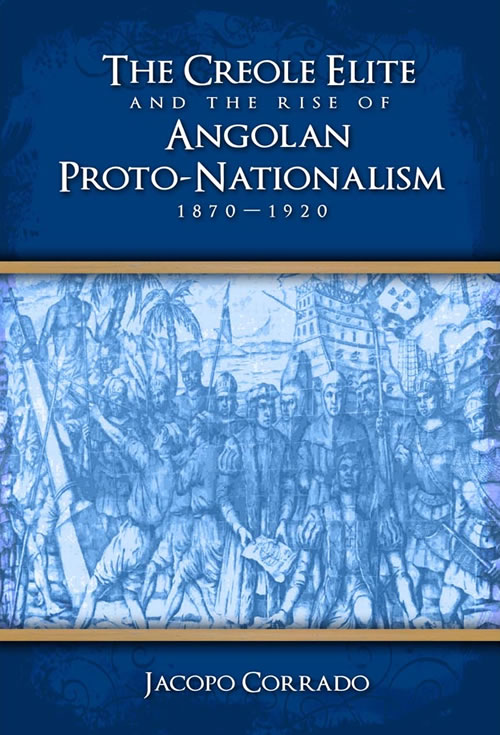
The Creole Elite and the Rise of Angolan Proto-Nationalism, 1870–1920

Posted in Africa, Books, Brazil, Caribbean/Latin America, Europe, History, Literary/Artistic Criticism, Media Archive, Monographs, Slavery on 2011-10-15 21:17Z by Steven

The Creole Elite and the Rise of Angolan Proto-Nationalism, 1870–1920

Cambria Press
2008-09-08
340 pages
ISBN: 9781604975291

Jacopo Corrado

This book is about Angolan literature and culture. It investigates a segment of Angolan history and literature, with which even Portuguese-speaking readers are generally not familiar. Its main purpose is to define the features and the literary production of the so-called ‘creole elite’, as well as its contribution to the early manifestations of dissatisfaction towards colonial rule patent during a period of renewed Portuguese commitment to its African colonies, but also of unrealised ambitions, economic crisis, and socio-political upheaval in Angola and in Portugal itself.

Nineteenth-century Angolan society was characterised by the presence of a semi-urbanised commercial and administrative elite of Portuguese-speaking creole families––white, black, some of mixed race, some Catholic and others Protestant, some old established and others cosmopolitan––who were based in the main coastal towns.

As well as their wealth, derived from the functions performed in the colonial administrative, commercial and customs apparatus, their European-influenced culture and habits clearly distinguished them from the broad native population of black peasants and farm workers. In order to expand its control over the region, Portugal desperately needed the support of this kind of non-coloniser urban elite, which was also used as an assimilating force, or better as a source of dissemination of a relevant model of social behaviour. Thus, until the 1850s great creole merchants and inland chiefs dealt in captive slaves, bound for export to Brazil via Cape Verde and São Tomé: the tribal aristocracy and the creole bourgeoisie thrived on the profits of overseas trade and lived in style, consuming imported alcoholic beverages and wearing European clothes.

After the abolition, however, their social and economic position was eroded by an influx of petty merchants and bureaucrats from Portugal who wished to grasp the commercial and employment opportunities created by a new and modern colonial order, anxious to keep up with other European colonial powers engaged in the partition of the African continent.

This book thus considers the first intellectuals, the early printed publications in the country, and the pioneers of Angolan literature who felt the need to raise their roots to higher dignity. Thus, they wrote grammar, dictionaries, poetry, fiction, and of course, incendiary articles denouncing exploitation, racism, and the different treatment afforded by the colonial authorities to Portuguese expatriates and natives.

Table of Contents

  • Foreword
  • Acknowledgments
  • List of abbreviations
  • Introduction
  • Chapter 1: Cherished Myths
    • The greatest and most Portuguese overseas possession
    • Lusotropicalism
  • Chapter 2: The Intellectual Setting
    • The Luso-Atlantic cultural triangle
    • Brazil
    • Portugal
    • The literary and cultural influences
    • Diffusion
    • Association
  • Chapter 3: Luanda
    • The advent of modernity
    • Between journalism and literature
    • The new century: Hope and failure
  • Chapter 4: The ‘Creole’ Elite and Early ‘Nationalism’
    • The term ‘Creole’
    • The term ‘Nationalism’
  • References
  • Index
Tags: , , ,

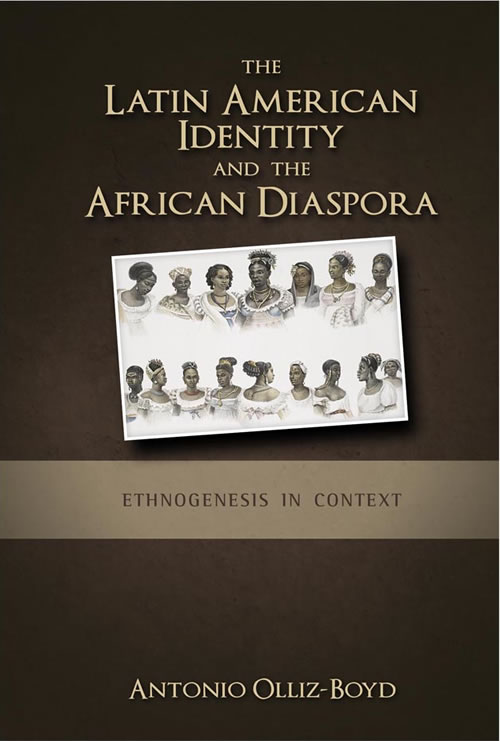
The Latin American Identity and the African Diaspora: Ethnogenesis in Context

Posted in Africa, Anthropology, Books, Brazil, Caribbean/Latin America, History, Media Archive, Monographs, Slavery on 2011-10-15 19:42Z by Steven

The Latin American Identity and the African Diaspora: Ethnogenesis in Context

Cambria Press
2010-08-08
360 pages
ISBN: 9781604977042

Antonio Olliz-Boyd, Emeritus Professor of Latin American Literature
Temple University

Just beneath the surface of most scholars’ research on the ethno-racial composition of Spanish-speaking America lies a definitive connection between the African Diaspora and the Latin American identity. Although to a lesser extent, this is also true of Portuguese-speaking Brazil—the existence of African-related people and their role as an integral part of the total Latin ethnicity currently appears to be more readily accepted and discussed in Brazil than in other Latin American countries. Afro-Peruvians, Afro-Colombians, Afro-Venezuelans, Afro-Uruguayans, or Afro-Mexicans—to name just a few—are rarely openly acknowledged in most of Spanish-speaking Latin America. However, one cannot deny that African slavery was a fact of life in all the territories colonized and settled by Spain and Portugal in the Americas, and with this, of course, came widespread miscegenation between the European male and the subjugated African female.

More than likely, because of the diversity of racial features, most non-natives do not see the extent to which Latin America’s genetic amalgam can often mask the phenotypic effects of race-mixing. As a result, many researchers and scholars of the area are reluctant to divulge that someone is a descendant of African forebears because doing so might run the risk of one being considered politically incorrect or having debased that person’s character. Whereas in the United States there is little to no stigma attached to the president’s African ancestry, for any president of a Latin American country, one cannot overtly attribute a genetic link to African heritage.

There is extensive research found both in books and articles on the various topics of Afro Latinism/Afro Hispanism that is directed mainly at the non-native. Nonetheless, one still notices either cultural confusion or political reluctance to accept the identity of Blackness that the Latin American native lives with—for himself or for others—on a daily basis. For the average Cuban, Venezuelan, Peruvian, and so forth, along with their Latin counterparts, Blackness in racial terms surfaces as a matter of degrees of African-relatedness that is then counterbalanced by degrees of European and/or Amerindian genomic components. It is only in non-native cultures that one encounters such disparate comparisons as “statistics for Hispanics versus statistics for Blacks.” But is it not possible to find persons that are ethnoracially Black included in the demographics for Hispanics?

The overarching aim of this book, then, is to determine whether it is possible to perceive a constituency within the Latin American whole who is also an integral part of the African Diaspora. It examines the concept of African-relatedness within the totality of the Latin American sphere—not just in one isolated country or region—through a careful process of literary analysis. By exploring the works of Latin American novelists, poets, and lyricists, this study shows how they creatively expose their most intimate feelings on ethnic Blackness through a semiotic reliance on the inner voice. At the same time, the reader becomes a witness to the writers’ associations with a sense of Africanness as it artistically affects them and their communities in their formulations of self-identity.

Unique to this volume is the scholarly presentation of the presence of a group of people in Ghana, West Africa, who owe their raison d’être as a clan to their ancestral origins in Brazil. Having been accepted and received by an endemic tribe of what was called the Gold Coast at an historical moment in the nineteenth century, a community of escaped slaves and deported ex-slaves from Brazilian bondage regrouped as an ethnic whole. The reality of their existence gives new meaning to the term African Diaspora. To this day, their descendants identify themselves as displaced Latin Americans in Africa. Undoubtedly, both this surprising feature of Latin Americans returning to the African continent and the book as a whole will stimulate further discussion on the issue of who is Black and who is Hispanic as well as generate continued, in-depth research on the relationship between two continents and their shared genotypology.

Table of Contents

  • Acknowledgments
  • Prologue
  • Essay I: Aesthetic Blackness in the Creative Literature of the Latin/Hispanic Reality
  • Essay II: The Aesthetics of Language as an Experience of the Afro Latin/Afro Hispanic Reality
  • Essay III: An Aesthetic Experience: The Reality of Phenotypes and Racial Awareness in Dominican Literature (Julia Alvarez and Loida Maritza Pérez)
  • Introduction to Essay IV
  • Essay IV: A Latin Identity, An African Experience: The Tabom Brazilians of Ghana
  • Epilogue
  • Notes
  • Index
Tags: , , ,

Brazil’s unfinished battle for racial democracy

Posted in Articles, Brazil, Caribbean/Latin America, Media Archive, Slavery, Social Work on 2011-10-08 03:13Z by Steven

Brazil’s unfinished battle for racial democracy

The Economist
2000-04-20

JOSILENE SALES’S career is typical of Brazil’s emerging middle class. She spent seven years working in a petrochemical plant, while studying for a degree at night classes. Having moved to a better paid job in marketing, she saved enough to start her own telemarketing firm in Salvador, a city in Brazil’s north-east, and now employs two other staff. Less typically, Ms Sales is black, something which sometimes surprises her clients when they meet her. “You just have to overcome this [reaction] with professionalism,” she says.

Ms Sales descends from the 4m or more African slaves imported to Brazil, many of them through Salvador, for two centuries the colonial capital. When the Portuguese first landed on Brazil’s north-east coast, on April 22nd 1500, they thought that the docile Indians they encountered could easily be put to work building a new colony. But the Amerindians were few in number, unwilling workers, and many fell victim to European diseases. The colonists quickly sought African labour for Brazil’s sugar plantations, and later its mines. Brazil would not abolish slavery until 1888.
 
Five centuries of miscegenation have blurred the racial boundaries between Europeans, Africans and Amerindians: today 38% of Brazilians call themselves “brown” (of mixed ancestry). Blacks are only 6% and Amerindians a mere 0.2%. Such racial mixing encouraged Brazil’s largely white elite to nourish a myth that their country had overcome the legacy of slavery and become a “racial democracy”, with no colour prejudice—unlike the strife-torn United States.

Displays of racial hatred are indeed rare in Brazil. Nor do Brazilians live in racially segregated areas. And in contrast to their counterparts in the United States, Brazilians of mixed race are likely to be seen, and see themselves, not as black but as white or brown.

But Brazil’s blacks do face prejudice. And though, or because, as Brazilians say, “money whitens”, the country’s deep social inequalities run broadly along racial lines. Brazil is still largely governed, managed and owned by whites. Blacks and browns are disproportionately poor, and find it harder than similarly qualified whites to get a job….

Read the entire article here.

Tags:

Jean Rhys’s Voyage in the Dark as a Trans-Atlantic Tragic Mulatta Narrative

Posted in Articles, Literary/Artistic Criticism, Media Archive, Slavery on 2011-10-04 05:55Z by Steven

Jean Rhys’s Voyage in the Dark as a Trans-Atlantic Tragic Mulatta Narrative

Sargasso: Journal of Caribbean Literature, Language, and Culture
Volume I (2009-2010)
pages 79-92

Ania Spyra, Assistant Professor of English
Butler University

“pretty useful mask that white one.”
—Jean Rhys, Voyage In the Dark

Images of masks and masking surface repeatedly in Jean Rhys’s 1934 novel Voyage in the Dark; they describe the faces and artificial smiles of English people that Anna Morgan, the narrator and main character, meets when she immigrates to London from the West Indies after her father dies, and they act as an image of a loss of identity. Most importantly, however, they refer to the white or “crude pink” masks worn by Blacks during the Caribbean carnival in Anna’s native Dominica, which resurface in her memory at the end of the novel when she hallucinates in a delirium after a mishandled abortion. The carnival masks always include a slit through which the tongue can emerge and taunt the outraged white onlookers. But Anna does not feel taunted; she asserts she “knew why the masks were laughing” (186). Such an assertion of an intimate knowledge in the usually timid Anna suggests that she holds a particular insight into this “Black skin, White masks” situation: that her pale face might only be a mask covering her own racial mixture, or, in the least, it suggests Anna’s own uncertainty about her genealogy.

My reading is complicated and aided by the original ending of the novel found and published six years after Rhys’ death by Nancy Hemond Brown. The entirety of part IV of the novel originally counted almost two and an half thousand words more than the ending readers of Rhys s published works know (Hemond 41). Since all interpretation of the novel depends on the specific contexts of Annas jumbled reminiscences and thoughts—what Mikhail Bakhtin would call framing—the original, longer text sometimes complicates and sometimes helps to disambiguate statements made in the novel, framing them to suggest different meanings. For example, it is Anna’s father, rather than herself, who pronounces the words about the usefulness of white masks I opened with. Being closer to the family history, the father can speak even more authoritatively about the issue of racial relations in the family. On the other hand, it is still Anna who asserts the knowledge of why the masks are laughing. This time, additional context refigures her statement, “I knew why were laughing they were laughing at the idea that anybody black would want to be white” (52), pointing once again to Annas racial confusion and the centrality of racial masquerade as a theme in the novel.

But what interests me most here is that when Rhys was asked to re-write the original ending because of how grim and potentially unpopular with readers it was, she consented but continued to affirm that the original version was rendered “meaningless” because it provided “the only possible ending” (Letters 25). While in the revised ending, Anna, after some hallucinations, is supposed to be “ready to start all over again in no time” (187), in the original version, she bleeds to death after an abortion. Additionally, it was Rhys’s initial intention to depict Annas death as replicating both her father’s and her mother’s premature deaths, since Anna remembers her mother’s servant, Meta, saying “she was too young to die” (Hemond 44). Why would Rhys see this vicious circle of tragic deaths as the most meaningful, or indeed the only possible, ending for Voyage in the Dark. My argument here is that the early and tragic death ot the protagonist, especially when following that of her mother and father, places the novel firmly in the tradition of the “tragic mulatta” narrative, which—transplanted to the British context—calls for a more complex understanding of transatlantic reverberations of the plantation economy and the racial hierarchies and categories it left in its wake. While I do not mean to replicate an assumption of Annas racial difference, I see the comparative context of the “tragic mulatto” narratives as productive in teasing out the critique ot racial ideologies ot the plantation system that Voyage in the Dark presents.

Although interracial characters inhabited literature since antiquity, the “tragic mulatto” trope derives more specifically from the context of sentimental antislavery narratives in the U.S. In Neither Black Nor White Yet Both: Thematic Explorations of Interracial Literature, Werner Sollors traces the representational matrices of mixed race figures across several languages and genres starting with Greek myths and Biblical parables. He notes an increase in interracial themes since the late eighteenth century, but carefully distinguishes between the cliche representation of a mulatto’s tragic end—which he notices already in the various adaptations and rewritings of Joanna from John Gabriel Stedman’s Narrative of Five Years Expedition in Swiname (1796)—and the actual “tragic mulatto” trope. The essential difference lies for him in that the early interracial characters’ tragic plotlines follow from their status as slaves and thus property, while the tragic mulatto’s drama derives from their indeterminate race and being indentificd as non-white even though they lead lives of free white people (Sollors 207). Sollors’sdefinition of the “tragic mulatto” trope emphasizes that even if far away in time and space from the plantation, the characters who—like Rhys’s Anna—may also seem entirely white still have to deal with echoes of the racial ideologies of the plantation system. Many scholars of the Caribbean—Edouard Glissant, C.L.R. James, Sidney Mintz, Philip Curtin, and David Scott to mention a few—have postulated the plantation system as an essential template for understanding modernity. I turn to Glissant in particular here, because as his postulation of the concept of Relation that connects Africa, Europe and the Caribbean (that for him includes southern US as well) into a web ot filiations, he helps me theorize Rhys’ trans-Atlantic “tragic mulatta.” Because the Relation itself is difficult to define, Michael Dash translates it in a variety of idiomatic ways: creolization, cultural contact, cross-cultural relationships. Glissant writes, “Rhizomatic thought is the principle behind what I call the Poetics of Relation, in which each and every identity is extended through a relationship with the Other” (11). Opposed to a totalitarian rootcdncss, with its connotation ot unique origins, Glissant seeks for an alternative in Gilles Deleuze and Felix Guattari’s rhizome with its “enmeshed root system, a network spreading either in the ground or in the air” (11) to assert an existence of connections and influences that grow out of the plantation system. The imagery of rhizomatic connections and tangled webs of influence help me theorize both the distant geographical contexts that Voyage in the Dark engages and its fragmented form. Relation, with its confluence of time and space, helps elucidate also what Rhys saw as her main intention in the novel—described in a letter to Evelyn Scott—to explore the idea that “the past exists side by side with the present, not behind it; that what was—is” (Letters 24)…

Read the entire article here.
Tags: , ,

The Amalgamation Waltz: Race, Performance, and the Ruses of Memory [Review: Zack]

Posted in Articles, Book/Video Reviews, Slavery on 2011-10-04 01:26Z by Steven

The Amalgamation Waltz: Race, Performance, and the Ruses of Memory [Review: Zack]

American Nineteenth Century History
Volume 11, Issue 2 (2010)
pages 269-270
DOI: 10.1080/14664658.2010.481885

Naomi Zack, Professor of Philosophy
University of Oregon

The Amalgamation Waltz: Race, Performance, and the Ruses of Memory
Tavia Nyong’o
Minneapolis: University of Minnesota Press, 2009
Pp. 230. ISBNs 978 0 8166 5612 7 and 978 0 8166 5613 4

If The Amalgamation Waltz were not a 230-page book, published by a university press, complete with scholarly apparatus, readers might think that Alan Sokal was at it again, this time with the bad taste to caricature postmodern treatments of mixed race—as though mixed race did not already have a history of tragedy in fiction and biography. But alas, Tavia Nyong’o’s jargon-ridden exercise in “mixed-race theory” probably is the sincere but feverish reworking of a doctoral dissertation written under great stress, which it purports to be. Most readers, after reviving from the stupor induced by grappling with the first half of the introduction, would probably simply recycle the book unread and have done with it. But, I am heartened by the fact that mixed race has become a sufficiently respectable intellectual topic to support publication of even such a failed effort.

Nyong’o’s major theme appears to be that the idea of racial miscegenation enables certain errors in the mass political memory (which is something like a Jungian collective unconscious, only structured by anxiety). The idea of racial miscegenation leads to a “miscegenation of time.” When time is miscegenated, temporal order gets disorganized, so that what people imagine as A preceding B is in reality a case of B preceding A. Thus, the idea of mixed race is imagined to come after the idea of pure race. But in reality, the idea of mixed race comes first and the idea of pure race is constructed as a defense against the nightmarish chaos and danger evoked by the idea of mixed race. However, to put it this way might be too literal, because Nyongo writes, “My method employs the archive as a practice of ‘countermemory’ but without the pretense of using it to build a complete or coherent historical narrative” (p. 7). Indeed, such a narrative is not possible insofar as the “spurious issue” of mixed race/hybridity/amalgamation is not a thing but a performance that defers solution of racial problems into some future in which it (m-r/h/a) will transcend race.

Although Nyongo begins The Amalgamation Waltz by castigating Americans for the assumption that that the history of race in the U.S. offers the final meanings of race words, the four chapters of the book are largely restricted to American history. Chapter one, “The Mirror of Liberty,” is about representations of Crispus Attucks, a mixed-race patriot or insurgent who was killed by British troops in the Boston Massacre on 5 March 1770. Nyong’o weaves Attucks’s role as a symbol of unresolved racial injustice in colonial times with reflection on a book in the Wellcome Library in London that is falsely described as bound in the “Tanned Skin of the Negro whose Execution caused the War of Independence.” Nyong’o notes that some books were in fact bound in human skin, a practice called “anthropodermic bibliopegy” (p. 37). Chapter two, “In Night’s Eye,” begins with a nineteenth-century story about a traveler in a coach at night, who informs his companions that the idea of amalgamation is used by anti-abolitionists to frighten and shock abolitionists. This notion of moral panic, based on imagery of sexual disorder, is further developed throughout the chapter, and Nyong’o makes a lucid case that such imagery was used by both sides of the slavery…

Read or purchase the review here.

Tags: , ,

Race in North America: Origin and Evolution of a Worldview (Fourth Edition)

Posted in Anthropology, Barack Obama, Books, Canada, Caribbean/Latin America, Health/Medicine/Genetics, History, Media Archive, Monographs, Slavery, Social Science, United States on 2011-09-25 04:16Z by Steven

Race in North America: Origin and Evolution of a Worldview (Fourth Edition)

Westview Press
July 2011
400 pages
Trade paperback ISBN: 9780813345543

Audrey Smedley, Professor Emerita of Anthropology and African American Studies
Virginia Commonwealth University

Brian D. Smedley, Vice President and Director
Health Policy Institute
Joint Center for Political and Economic Studies

In a sweeping work that traces the idea of race for more than three centuries, Audrey Smedley shows that “race” is a cultural invention that has been used variously and opportunistically since the eighteenth century. Race, in its origin, was not a product of science but of a folk ideology reflecting a new form of social stratification and a rationalization for inequality among the peoples of North America.

New coauthor Brian Smedley joins Audrey Smedley in updating this renowned and groundbreaking text. The fourth edition includes a compelling new chapter on the health impacts of the racial worldview, as well as a thoroughly rewritten chapter that explores the election of Barack Obama and the evolving role of race in American political history. This edition also incorporates recent findings on the human genome and the implications of genomics. Drawing on new understandings of DNA expression, the authors scrutinize the positions of contemporary race scientists who maintain that race is a valid biological concept.

Table of Contents

  • Preface
  • Introduction
  • 1. Some Theoretical Considerations
  • 2. Etymology of the Term “Race”
  • 3. Antecedents of the Racial Worldview
  • 4. The Growth of the English Ideology about Human Differences in America
  • 5. The Arrival of Africans and Descent into Slavery
  • 6. Comparing Slave Systems: The Significance of “Racial” Servitude
  • 7. Eighteenth-Century Thought and Crystallization of the Ideology of Race
  • 8. Antislavery and the Entrenchment of a Racial Worldview
  • 9. The Rise of Science and Scientific Racism
  • 10. Growth of The Racial Worldview in 19th Century Science
  • 11. Science and the Expansion of Race Ideology Beyond the US
  • 12. Twentieth-Century Developments in Race Ideology
  • 13. Changing Perspectives on Human Variation in Science
  • 14. Dismantling the Folk Idea of Race: The Election of Barack Obama and the Transformations of an Ideology
  • 15. The Health Consequences of the Racial Worldview
  • References
  • Index
Tags: , , ,

Race, Blood, and What the Alligator Knows: A Review of What Blood Won’t Tell

Posted in Articles, Book/Video Reviews, History, Law, Media Archive, Slavery, United States on 2011-09-23 04:06Z by Steven

Race, Blood, and What the Alligator Knows: A Review of What Blood Won’t Tell

Southern California Law Review
Volume 83, Number 3 (March 2010)
pages 425-440

Jason A. Gillmer, Associate Professor of Law
Texas Wesleyan School of Law

From the opening pages of Ariela J. Gross’s What Blood Won’t Tell: A History of Race on Trial in America, it is clear that the reader is about to embark on something special. The story begins in a Louisiana courthouse in 1857, with an enslaved woman named Alexina Morrison claiming that she is white. For her contemporaries, the assertion no doubt carried troubling implications. James White, the man who insisted Morrison was black, had papers to prove that he paid good money for her and that she was his property. But her “blue eyes and flaxen hair” told a different story, and her recent appearances at public balls in Jefferson Parish had convinced a number of residents that her graceful mannerisms and affectations were those of a white woman rather than slave. The courtroom was soon bombarded with a dizzying array of evidence for such a simple question—was she white or was she black?—with men eventually stripping her to the waist to examine her body for the tiniest signs of her true identity. Three trials later, the community still had not resolved the issue. But more importantly, from Gross‘s view, this case provides an unparalleled opportunity to examine the complex and constantly shifting ground of race and its import for this nation‘s history…

Read the entire essay here.

Tags: , , , ,

The Origins of the Afrikaners and their Language, 1652-1720: A Study in Miscegenation and Creole

Posted in Africa, Anthropology, Articles, History, Media Archive, Slavery, South Africa on 2011-09-23 02:12Z by Steven

The Origins of the Afrikaners and their Language, 1652-1720: A Study in Miscegenation and Creole

Race & Class
Volume 15, Number 4 (April 1974)
pages 461-495
DOI: 10.1177/030639687401500404

Ken Jordaan

We are a bastard people with a bastard language. Ours is a bastard nature. That is good and fine. And like all bastards, uncertain of their identity, we have begun to cling to the concept of purity.

Breyten Breytenbach, the Afrikaner poet

Introduction

The purpose and scope of this paper may be summarized as follows: 1. From the middle of the fifteenth century to the end of the seventeenth, Portuguese was a world language, having been spoken in the Caribbean and Latin America, Africa and Asia, consequent upon the expansion of the Portuguese empire. It was used as literary or High Portuguese, but mainly as Creole or Low Portuguese, the lingua franca. Europeans spoke it among themselves when they could not communicate with one another in their own languages. It was also spoken among slaves and between master and slave. Dutch officials, sailors and soldiers as well as African and Oriental slaves introduced the lingua franca into the Cape of…

Read or purchase the article here.

Tags: , , ,