W.Va. historian to talk on pre-Civil War slave economy

Posted in Articles, Economics, History, Media Archive, Slavery, United States, Virginia on 2013-04-10 04:11Z by Steven

W.Va. historian to talk on pre-Civil War slave economy

The Charleston Gazette
Charleston, West Virginia
2013-04-09

Douglas Imbrogno

CHARLESTON, W.Va.—Ending slavery was a moral question that haunted early American history, but it was one inextricably tangled up in economics.

While West Virginia was a state born in 1863 out of the tumult over slavery and the political disputes that erupted in the Civil War, slavery long had a toehold in the Kanawha Valley. Consider the salt mining industry in this area, a slave-powered enterprise from the 1820s onward, said Greg Carroll.

“Here in the Kanawha Valley, we had upwards of 2,000 slaves working in the salt industry,” said Carroll, a retired historian with the state’s Archives and History Section.

Yet slaves were not just a subjugated labor force, but a commodity often even more valuable to their owners as property chips to be sold into other slave economies.

“Here in West Virginia, for instance, before the Civil War, you can see in the state archives newspapers advertising slaves to be sold down the river. These slaves were being sold into the cotton and sugar-producing areas of mainly Louisiana, Texas and Arkansas,” Carroll said.

Before he retired last October, Carroll was a Culture and History staff historian for 23 years, mostly focusing on American Indians, black Americans and Civil War history. He’ll combine a couple of those specialties in the free talk “Slavery in Virginia: 1619-1860,” at 6 p.m. Thursday in the Archives and History Library in the Culture Center.

He’ll describe the different slave economies across North and South America and the missed opportunities for ending slavery in the lead-up to the Civil War.

 Consider, for instance, the slaves who worked Caribbean sugar plantations or in the rice fields of the Carolinas. Yellow fever, malaria and other hazards kept slave owners away from their plantations, Carroll said.

Yet in the tobacco plantations and farms of Virginia and farther south, slave owners lived closely with their slaves—sometimes very closely.

“That also led to a paternalism that we see in the way Virginia slave owners referred to their slaves as ‘their people.’ Slaves became very valuable as the tobacco crop became valuable,” he said.

The result was a stronger slave and family culture, one that was not as Afrocentric as Caribbean and South American slave societies with their constant infusions of new slaves, Carroll said. Yet the proximity of owner to slave had other implications.

“White slave owners took sexual advantage of their female slaves,” Carroll said. “That produced a very mixed-race people that we see in the Virginia and North Carolina and Maryland slave cultures—a lot of mixed-race people.”…

Read the entire article here.

Tags: , , , ,

A White Face With A Forgotten African Family

Posted in Africa, Articles, Audio, History, Interviews, Media Archive, Slavery, United States, Virginia on 2013-04-08 02:33Z by Steven

A White Face With A Forgotten African Family

All Things Considered
National Public Radio
2012-11-24

Jacki Lyden, Host

Growing up blond-haired and blue-eyed in Southern California, Joe Mozingo always thought his family name was Italian.

But as an adult, Mozingo became skeptical of that theory when friends and co-workers began to ask him about his unusual-sounding last name.

The journey to discover the truth about the Mozingo name took him from the libraries of Los Angeles to the courthouses and plantations of Virginia and, finally, to Africa.

Mozingo spoke with weekends on All Thing Considered guest host Jacki Lyden about his first book, The Fiddler on Pantico Run: An African Warrior, His White Descendants, A Search for Family, which chronicles that journey…

Listen to the interview here. Download the interview here. Read the transcript here.

Tags: , , ,

The Rumpus Interview with Joe Mozingo

Posted in Africa, Articles, Biography, History, Interviews, Media Archive, Slavery, United States on 2013-04-07 04:31Z by Steven

The Rumpus Interview with Joe Mozingo

The Rumpus
2013-03-04

Peter Orner

I recently finished a powerful book about a journey to find the origin of a name. It’s called the The Fiddler on Pantico Run: An African Warrior, His White Descendants, A Search for Family by Joe Mozingo. The book details Mozingo’s search for the origin of the name “Mozingo,” which, he comes to understand, is one of the few African names to survive not only the Middle Passage, but the history of American slavery itself.

The book takes Mozingo, a Los Angeles Times reporter, on a great chase—from Los Angeles, to the American South, to Angola—as he traces the history of the first American Mozingo, Edward Mozingo, a former slave from West-Central Africa who eventually won his freedom by suing for it in a Virginia court. Some Mozingos fought for the Union; others for the Confederacy. Some were abolitionists; others were in the Ku Klux Klan. One thing they all have in common is Edward Mozingo, a man who—in spite of everything—held onto his royal name…

…The Rumpus: Your story is especially remarkable in that Mozingo is only one of two African names to survive slavery. Since you had no idea how significant your name actually was when you went into this, could you trace how the revelation came about?

Joe Mozingo: The understanding that I descended from this African man who kept his African name came in different waves. First there was puzzlement—how could this be?—then deep curiosity, then frustration, and eventually this exhilaration. The frustration was this: I needed to envision my ancestor, Edward, but subconsciously I harbored this white-black binary view that has been bestowed to us by American history. I was white. So it was hard to envision him as my ancestor at first. But that blockage gave way as I researched more, visited the places Edward lived, met more Mozingos—black, white, and in-between—and went to Africa. The exhilaration came then, when I felt that link to him, to this lineage spinning back to the beginning. In Angola, where he sailed off into the Atlantic for Jamestown, that connection to this eternal system just welled up inside. It was this great feeling of opening up…

Read the entire interview here.

Tags: , , ,

The Fiddler on Pantico Run: An African Warrior, His White Descendants, A Search for Family

Posted in Biography, Books, History, Media Archive, Monographs, Slavery, United States on 2013-04-07 04:03Z by Steven

The Fiddler on Pantico Run: An African Warrior, His White Descendants, A Search for Family

Free Press (an Imprint of Simon & Schuster)
October 2012
320 pages
Hardcover ISBN: 9781451627480
eBook ISBN: 9781451627619

Joe Mozingo

“My dad’s family was a mystery,” writes prize-winning journalist Joe Mozingo. Growing up, he knew that his mother’s ancestors were from France and Sweden, but he heard only suspiciously vague stories about where his father’s family was from—Italy, Portugal, the Basque country. Then one day, a college professor told him his name may have come from sub-Saharan Africa, which made no sense at all: Mozingo was a blue-eyed white man from the suburbs of Southern California. His family greeted the news as a lark—his uncle took to calling them “Bantu warriors”—but Mozingo set off on a journey to find the truth of his roots.

He soon discovered that all Mozingos in America, including his father’s line, appeared to have descended from a black man named Edward Mozingo who was brought to the Jamestown colony as a slave in 1644 and won his freedom twenty-eight years later. He became a tenant farmer growing tobacco by a creek called Pantico Run, married a white woman, and fathered one of the country’s earliest mixed-race family lineages.

But Mozingo had so many more questions to answer. How had it been possible for Edward to keep his African name? When had some of his descendants crossed over the color line, and when had the memory of their connection to Edward been obscured? The journalist plunged deep into the scattered historical records, traveled the country meeting other Mozingos—white, black, and in between—and journeyed to Africa to learn what he could about Edward’s life there, retracing old slave routes he may have traversed.

The Fiddler on Pantico Run is the beautifully written account of Mozingo’s quest to discover his family’s lost past. A captivating narrative of both personal discovery and historical revelation that takes many turns, the book traces one family line from the ravages of the slave trade on both sides of the Atlantic, to the horrors of the Jamestown colony, to the mixed-race society of colonial Virginia and through the brutal imposition of racial laws, when those who could pass for white distanced themselves from their slave heritage, yet still struggled to rise above poverty. The author’s great-great-great-great-great grandfather Spencer lived as a dirt-poor white man, right down the road from James Madison, then moved west to the frontier, trying to catch a piece of America’s manifest destiny. Mozingos fought on both sides of the Civil War, some were abolitionists, some never crossed the color line, some joined the KKK. Today the majority of Mozingos are white and run the gamut from unapologetic racists to a growing number whose interracial marriages are bringing the family full circle to its mixed-race genesis.

Tugging at the buried thread of his origins, Joe Mozingo has unearthed a saga that encompasses the full sweep of the American story and lays bare the country’s tortured and paradoxical experience with race and the ways in which designations based on color are both illusory and life altering. The Fiddler on Pantico Run is both the story of one man’s search for a sense of mooring, finding a place in a continuum of ancestors, and a lyrically written exploration of lineage, identity, and race in America.

Tags: , , ,

In Pursuit of Freedom: Slave Law and Emancipation in Louisville and Jefferson County, Kentucky

Posted in Articles, History, Media Archive, Slavery, United States on 2013-04-05 21:38Z by Steven

In Pursuit of Freedom: Slave Law and Emancipation in Louisville and Jefferson County, Kentucky

The Filson Club History Quarterly
July 2002
pages 287-325

J. Blaine Hudson (1950-2013), Professor of Pan-African Studies
University of Louisville

The lives of both free and enslaved African-Americans were constrained to varying degrees by the powerful and paradoxical role of race in antebellum American society. According to Michael Omi and Howard Winant, this role was a consequence of the institutionalization of the United States as a “racial state,” a nation in which racial classification was a more important determinant of status than either socio-economic class or gender.’ In practical terms, this meant that “blackness” was considered prima facie evidence of slave status, that only persons of African descent were subject to the “social death” of slavery, and that, even if free, they were still black, and the visible marker of their Africanness consigned them to a place marginal to the American mainstream) In this context, the journey from the “social death” of slavery to the full enjoyment of freedom—such as African-Americans or their ancestors last experienced in their home African societies—was long, arduous, and, even now, remains unfinished. However, a careful reading of historical literature that reflects the perspective of African-Americans themselves indicates that there were several crucial milestones on this journey toward which the aspirations and efforts of African-Americans were directed: first, to maximize the freedom and human dignity possible within the confines of slavery; second, to become free—whether through legal or illegal means; and third, ultimately to achieve full equality and empowerment as free people in this country or, failing that, elsewhere.

As Frederick Douglass observed, for enslaved African-Americans trapped in the most horrendous and degrading circumstances, simply finding a “good master” or a less demanding work regimen or both was often viewed as a dramatic improvement in status. Unfortunately, for most, this first milestone was never reached; for the fortunate few, even this limited improvement was achieved at great cost over long years and was the best they could hope for in one lifetime. However, while escaping the most egregious evils of slavery was clearly desirable, slavery was still slavery, and freedom remained the ultimate goal. That the achievement of freedom was not an end in itself but only the beginning of another struggle for equality and empowerment did not lessen its attractions. Freedom was still preferable, by far, to bondage. It was for this reason that efforts by whites to ameliorate the conditions of slavery invariably failed to reduce the likelihood of escape or revolt—and often made these responses more likely.

In this broad context, there were several paths to the milestone of freedom in the antebellum period and each of these paths warrants careful analysis. As a general rule, African-Americans would choose the path of least resistance and minimum risk whenever possible. Such paths, of course, were few and—because they were legal and depended on the good faith, if not the good will, of whites—were closed to most enslaved African-Americans. Such paths were important nonetheless, and all were traveled to varying degrees at various times by African-Americans in Kentucky. Thus, it is appropriate to complement the previously published account of illegal routes to freedom with an analysis of how African-Americans in Louisville and Jefferson County pursued and achieved freedom through legal means during the antebellum period….

…The proportion of “mulattoes” (including “quadroons” and “octoroons“) in the African-American population was usually underestimated-since mulattos were often considered “living proof” of the sexual depravity of the slave system. Thus, census and other official records indicated that roughly ten percent of the slave population and roughly one-third of the free-black population were racially mixed. On the other hand, travel accounts, slave narratives, and the personal observations of southerners themselves suggest that the racially hybrid subgroup was a far larger segment of both the enslaved and free African-American populations. Clearly, local patterns seemed to follow the “unofficial” record, as African-Americans of mixed ancestry were overrepresented among those granted deeds of emancipation (68 of 129—52.7 percent). This fact may explain something of the unbalanced sex ratio. Some of the African-Americans emancipated were the children of slaveholders and the mothers of those children in many African-American “households.” The father was white—and missing…

Read the entire article here.

Tags: , ,

The African American Experience in Antebellum Cabell County, Virginia/West Virginia, 1810-1865

Posted in Articles, History, Media Archive, Slavery, United States, Virginia on 2013-04-05 17:41Z by Steven

The African American Experience in Antebellum Cabell County, Virginia/West Virginia, 1810-1865

Ohio Valley History
Filson Historical Society
Volume 11, Number 3, Fall 2011
pages 3-23

Cicero M. Fain III, Assistant Professor of History
College of Southern Maryland

Located on the Ohio River in western Virginia, adjacent to southeastern Ohio and eastern Kentucky, antebellum Cabell County lay at the fulcrum of east and west, north and south, freedom and slavery. Possessed of a bountiful countryside—replete with wildlife, timber, pristine streams and creeks, and rich river-bottom soil along the navigable Ohio and Guyandotte rivers—it held great potential for settlers who sought to put down roots. Drawn by its promising location and cheap, arable land, migrants settled in the county in increasing numbers in the early 1800s, and many settlers took their slaves with them. Yet like most counties on Virginia’s western border, antebellum Cabell County was, in historian Ira Berlin’s words, a “society with slaves” rather than a “slave society.” In contrast to the rice and cotton-growing regions of the Deep South where the institution of slavery shaped the political economy and “the master-slave relationship provided the model for all social relations,” slavery never became central to the economy or social structure of Cabell County. Unlike Kanawha County, Virginia, to the northeast (and from which it was formed in 1809), Cabell County lacked industrial slavery. Unlike Jefferson County in the lower Shenandoah Valley, it lacked the numbers to support plantation slavery. Distant from plantation society and the rigid social and cultural norms imposed by the planter elite of eastern Virginia, Cabell County reveals the significance of slavery even within a “society with slaves” like central Appalachia, the impact of western expansion on slavery, and the hardening of racial attitudes in the Ohio Valley. Equally important, the county’s antebellum history helps illuminate the ways in which African Americans living in this border region exercised agency in order to better their condition.

By 1810, almost three thousand people resided in Cabell County, including 221 slaves and twenty-five Indians, or as one local historian notes, “about 1½ persons to the square mile.” In the county’s early years, it had only two villages of note. Guyandotte, formed in 1810 at the confluence of the Guyandotte and Ohio rivers, featured a number of businesses and a small but growing port. By the early 1830s, the town hosted many river travelers and benefitted from the construction of a road that connected it to the James River and Kanawha Turnpike at Barboursville, the county seat. Formed in 1813 and situated south of Guyandotte along the Guyandotte River, Barboursville was surrounded by large expanses of fertile land and plentiful timber. Farming and manufacturing formed the economic foundation of the village in its formative years. Increasing settlement in and near Guyandotte and Barboursville in the eastern part of the county close to the turnpike sparked economic growth throughout the early 1800s…

…Following a longstanding trend, black female slaves outnumbered black male slaves in Cabell County, an imbalance that still existed after emancipation and when black migrants began arriving in the early 1870s. Slaveholders favored female slaves in part because they (along with male slaves younger than twelve) were not taxed. Four other factors help explain the gender imbalance among Cabell County’s enslaved population. Female slaves cost less than enslaved men, slave children inherited the status of their mothers, and enslaved men were more able and thus more likely run away. In addition, in a society of slaves where slave ownership was more a status symbol than an economic necessity, many slaveholders employed enslaved women who worked as domestics. In 1860, Cabell County’s enslaved population was also quite young, with 30 percent (ninety three) of the county’s slaves nine or younger. Slaves under the age of twenty constituted 57 percent of the county’s total (ninety-five females and eighty males). Most striking, those under thirty represented 74 percent of the county’s enslaved population, with 121 females and 105 males (226 total) in this category. Cabell County’s black population was also growing lighter in skin color. In 1860, black slaves outnumbered mulattoes 215 to ninety (70.5 percent to 29.5 percent), but the county’s mulatto population was growing faster. Of the 136 males, ninety five (70 percent) were black and forty one (30 percent) mulatto. Of the 169 females, 120 (71 percent) were black and forty nine (29 percent) mulatto. Reflecting broader trends, the county’s mulatto population was concentrated among the young as increasing numbers of mulatto parents produced greater numbers of mulatto children…

…While the county’s enslaved mulatto population comprised 29.5 percent of the slave population, the county’s free mulatto population comprised 42 percent (ten of twenty four) of the total free black population. Most lived in the county’s more populated districts. Five resided in Guyandotte Post Office, two each lived in Barboursville and Guyandotte townships, and one lived in Cabell Court House. All six free blacks residing in white households were mulatto. The 1860 census also reveals that more free black females lived in Cabell County than free black males, but the gender imbalance exceeded that within the slave population. While female slaves comprised 55.4 percent of the general slave population in 1860, free black females, assisted by the eight women in the Haley family, comprised 62.5 percent (fifteen of twenty four) of the county’s free black population. These fifteen resided in seven households, just over two per household, though removing the Haley women from the calculation results in an average of slightly more than one black female per household. The county’s free black population was also disproportionally older, with 59 percent aged thirty and above…

Read the entire article here.

Tags: , , , ,

Masters and Slaves: ‘Sugar in the Blood,’ by Andrea Stuart

Posted in Articles, Book/Video Reviews, Caribbean/Latin America, History, Media Archive, Slavery on 2013-04-03 02:33Z by Steven

Masters and Slaves: ‘Sugar in the Blood,’ by Andrea Stuart

The New York Times
2013-03-29

Amy Wilentz

Sugar in the Blood: A Family’s Story of Slavery and Empire By Andrea Stuart, Illustrated. 353 pp. Alfred A. Knopf.

On a trip to Paris, I recently had the same shocked realization that Andrea Stuart describes in her astounding new book, “Sugar in the Blood.”

Slaves built this, I thought as I wandered from one grand 18th-century monument to the next. How rarely we acknowledge that Europe’s great cities were built on profits from the labor and blood of slaves cutting sugarcane half a world away.

Stuart, a London-based author of Barbadian ancestry, writes of contemporary England: “Sugar surrounds me here.” The majestic Harewood House in Leeds was built with money from Caribbean sugar plantations, she points out, as was the Codrington Library of All Souls College in Oxford and Bristol’s mansions. The slaves of the West Indies built this wealth while unaware of its existence, or of their own connection to it. Without them, the vast empire that gave the world Victoria and Dickens might never have existed.

In this multigenerational, minutely researched history, Stuart teases out these connections. She sets out to understand her family’s genealogy, hoping to explain the mysteries that often surround Caribbean family histories and to elucidate more important cultural and historic themes and events: the psychological after­effects of slavery and the long relationship between sugar — “white gold” — and forced labor…

…There is not a single boring page in this book, which — as a longtime reader of nonfiction and skipper of boring pages — I can attest is an achievement in itself. In every chapter of “Sugar in the Blood,” history, fact, analysis and personal reflection combine to move the narrative forward, both the grand story of slavery and sugar and the more mundane but always fascinating story of family and business. And beneath every banal moment of cooking or cleaning, of selling or buying, of dressing or undressing, the threat of uprising and rebellion beats loudly, as it must have done on the plantation…

Read the entire review here.

Tags: , , ,

A Rising Voice: Afro-Latin Americans

Posted in Africa, Anthropology, Articles, Brazil, Caribbean/Latin America, History, Identity Development/Psychology, Media Archive, Slavery, Women on 2013-04-02 22:34Z by Steven

A Rising Voice: Afro-Latin Americans

Miami Herald
2007-06-10 through 2007-06-24

In this series, the black experience is unveiled through a journey: to Nicaragua, where a quiet but powerful civil and cultural rights movement flickers while in neighboring Honduras, the black Garffuna community fights for cultural survival; to the Dominican Republic where African lineage is not always embraced; to Brazil, home to the world’s second largest population of African descent; to Cuba, where a revolution that promised equality has failed on its commitment to erase racism; and to Colombia, where the first black general serves as an example of Afro-Latin American achievements.

Part 1: Nicaragua and Honduras: Afro-Latin Americans: A rising voice
Audra D.S. Burch
A close-up look at a simmering civil rights movement in a tiny port settlement along Nicaragua’s Atlantic Coast.

…To appreciate the story of race here, is to understand the kaleidoscopic legacy of slavery, the historic demonization and denial of blackness and the practice of racial mixing.

This portrait is complicated by the lack of reliable census data because of traditional undercounting and because some blacks decline to identify themselves as such.

The dynamic along the coast is a layered quilt of Miskitos, mestizos and blacks. The ancestors of other Afro-Nicaraguans were free blacks who immigrated from Jamaica and other Caribbbean countries, lured by the good, steady jobs available for English speakers.

Stories abound about people who have hidden behind ambiguously brown complexions, “passing” for Miskito Indians, or mestizo.

“It’s hard to mobilize when you are still recouping the identity and just starting to openly use the term black,” says [Juliet] Hooker, the University of Texas professor whose father was a regional councilman…

Part 2: Dominican Republic: Black denial
Frances Robles
An examination on the sensitive nature of racial definition in a nation with inextricable ties to Africa.

SANTO DOMINGO—Yara Matos sat still while long, shiny locks from China were fastened, bit by bit, to her coarse hair.

Not that Matos has anything against her natural curls, even though Dominicans call that pelo malo—bad hair.

But a professional Dominican woman just should not have bad hair, she said. “If you’re working in a bank, you don’t want some barrio-looking hair. Straight hair looks elegant,” the bank teller said. “It’s not that as a person of color I want to look white.   I want to look pretty.”

And to many in the Dominican Republic, to look pretty is to look less black.

Dominican hairdressers are internationally known for the best hair-straightening techniques. Store shelves are lined with rows of skin whiteners, hair relaxers and extensions.

Racial identification here is thorny and complex, defined not so much by skin color but by the texture of your hair, the width of your nose and even the depth of your pocket.  The richer, the “whiter.” And, experts say, it is fueled by a rejection of anything black…

Part 3: Brazil: A Great Divide
Jack Chang
Black Brazilians speak out and push for affirmative action laws in the hemisphere’s most Africanized nation.

…And Brazilians are finally discussing race after decades of telling themselves and the rest of the world that the country was free from racism, said Sen. Paulo Paim, author of one of the pending affirmative-action bills.

“The Brazilian elite says this is not a racist country, but if you look at whatever social indicator, you’ll see exclusion is endemic,” he said. “We want to open up to more Brazilians the legitimate spaces they deserve…

…”I have never seen any evidence that suggests anything other than there’s widespread racism in Brazil,” said UCLA sociology professor Edward Telles, who studies race in Brazil…

…Black leaders also blame what they describe as decades of self-censorship about race spurred by the “racial democracy” vision of their country, which long defined Brazilian self-identity.

Preached in the early 20th century by sociologist Gilberto Freyre, the vision depicted a Brazil that was freeing itself of racism and even of the concept of race through pervasive mixing of the races…

Part 4: Cuba: A barrier for Cuba’s blacks
Miami Herald Staff Report
Economic and political apartheid are alive in Cuba, despite a revolution launched in 1959 that promised equality.

..DISPARITY IN NUMBERS

Cuba’s official statistics offer little help on the race issue. The 2002 census, which asked Cubans whether they were white, black or mestizo/mulatto, showed 11 percent of the island’s 11.2 million people described themselves as black. The real figure is more like 62 percent, according to the Institute for Cuban and Cuban-American Studies at the University of Miami.

And the published Census figures provide no way at all to compare blacks and whites in categories like salary or educational levels. Ramón Colás, who left Cuba in 2001 and now runs an Afro-Cuba race-relations project in Mississippi, said he once carried out his own telling survey: Five out of every 100 private vehicles he counted in Havana were driven by a Cuban of color.

The disparity between the census’ 11 percent and UM’s 62 percent also reflects the complicated racial categories in a country where if you look white you are considered white, no matter the genes.

“You know, there are seven different types of blacks in Cuba,” said Denny, who now works as a waiter but dreams of a hip-hop career. From darkest to lightest, they are: negro azul, prieto, moreno, mulato, trigueño, jabao and blanconaso

Part 5: Achievers: Racism takes many hues
Leonard Pitts, Jr.
An overview on the achievement of black leaders in the region. And a personal essay by Miami Herald columnist Leonard Pitts Jr.

…Which brings us back to that earnestly debated question: Who is black?

A COMPLEX MATTER

The question is more complex than an American might believe. In Brazil, a nation of indigenous peoples and descendants of African slaves, European colonists and immigrants, a dark-skinned man who might automatically be called black elsewhere has a racial vocabulary that allows him to skirt the Africa in his heritage altogether. He can call himself moreno (racially mixed), mestizo (colored) or pardo (medium brown). Anything but “afrodescendente” (Africa-descended) or negro (black)…

..Brazil likes to think of itself as a racial democracy, says Miriam Leitao, but that’s a delusion. She has, she says, been making that argument for 10 years and has become one of the nation’s most controversial journalists in the process.

When she writes about racism in Brazil, people tell her she’s crazy. “I don’t know how to explain the thing that, for me, is so obvious,” she says

Multimedia

Read the entire series here.

Tags: , , , , , , , , , ,

Don Lemon: It only takes one drop

Posted in Articles, Identity Development/Psychology, Interviews, Media Archive, Passing, Slavery, Social Science, United States, Videos on 2013-04-02 22:32Z by Steven

Don Lemon: It only takes one drop

Cable News Network (CNN)
In America: You define America. What defines you?
2012-01-15

Don Lemon, Anchor
CNN Newsroom

This piece is part of a three-part series tied to the (1)ne Drop Project.

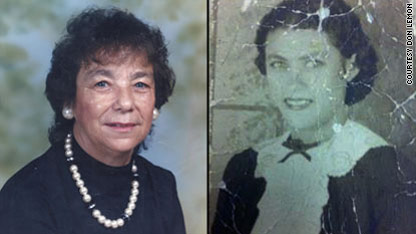
(CNN) – For years, the woman on the left in the photograph below could not be friendly to her own husband in public. She would pretend she didn’t know him or tell people he was her driver. She didn’t want him to be beaten in public as he had many times before.

She learned that particular survival technique from the woman in the photograph on the right, her mother and my grandmother, who had to use it from the 1930s until my grandfather died in the 1960s. Both women were often mistaken for white. And for whatever privileges my aunt and grandmother might have received for their light skin, their husbands paid for it by beatings or threats from white men. One handed-down family story that sticks with me is how my uncle was lucky to have survived a savage throttling in the 1950s after exiting a ferry crossing the Mississippi River from Baton Rouge to Port Allen. Apparently, he and my aunt had let down their guard. They never did it again.

Heck, as a child, I wasn’t even sure about my grandmother or my aunt. “Is Aunt-ee Lacy white?” I’d ask. “Lacy’s black,” an adult would say. Of course the reply was followed by a big laugh and a phrase I’d never forget: “It only takes one drop.” Meaning it only takes one drop of “Negro” blood to make you black

Read the entire article here and watch a interview with (1)ne Drop Project author Dr. Yaba Blay here.

Tags: , , , , ,

Ties That Bind: The Story of an Afro-Cherokee Family in Slavery and Freedom

Posted in Books, History, Media Archive, Monographs, Native Americans/First Nation, Slavery, United States on 2013-04-02 04:32Z by Steven

Ties That Bind: The Story of an Afro-Cherokee Family in Slavery and Freedom

University of California Press
February 2005
329 pages
Hardcover ISBN: 9780520241329
Paperback ISBN: 9780520250024

Tiya Miles, Professor of American Culture, Afroamerican and African Studies, and Native American Studies
University of Michigan

  • Lora Romero First Book Publication Prize, American Studies Association
  • Frederick Jackson Turner Prize, Organization of American Historians

This beautifully written book tells the haunting saga of a quintessentially American family. It is the story of Shoe Boots, a famed Cherokee warrior and successful farmer, and Doll, an African slave he acquired in the late 1790s. Over the next thirty years, Shoe Boots and Doll lived together as master and slave and also as lifelong partners who, with their children and grandchildren, experienced key events in American history—including slavery, the Creek War, the founding of the Cherokee Nation and subsequent removal of Native Americans along the Trail of Tears, and the Civil War. This is the gripping story of their lives, in slavery and in freedom.

Meticulously crafted from historical and literary sources, Ties That Bind vividly portrays the members of the Shoeboots family. Doll emerges as an especially poignant character, whose life is mostly known through the records of things done to her—her purchase, her marriage, the loss of her children—but also through her moving petition to the federal government for the pension owed to her as Shoe Boots’s widow. A sensitive rendition of the hard realities of black slavery within Native American nations, the book provides the fullest picture we have of the myriad complexities, ironies, and tensions among African Americans, Native Americans, and whites in the first half of the nineteenth century.

Table of Contents

  • List of Illustrations
  • Shoeboots Family Tree
  • Preface
  • Acknowledgments
  • Introduction
  • PART ONE. BONE OF MY BONE: SLAVERY, RACE, AND NATION—EAST
    • 1. Captivity
    • 2. Slavery
    • 3. Motherhood
    • 4. Property
    • 5. Christianity
    • 6. Nationhood
    • 7. Gold Rush
  • PART TWO. OF BLOOD AND BONE: FREEDOM, KINSHIP, AND CITIZENSHIP—WEST
    • 8. Removal
    • 9. Capture
    • 10. Freedom
  • Epilogue: Citizenship
  • Coda: The Shoeboots Family Today
  • Appendix 1. Research Methods and Challenges
  • Appendix 2. Definition and Use of Terms
  • Appendix 3. Cherokee Names and Mistaken Identities
  • Notes
  • Selected Bibliography
  • Index
Tags: ,