There Is No Such Thing as Race

Posted in Anthropology, Articles, Health/Medicine/Genetics, History, Media Archive, Politics/Public Policy, Social Science on 2014-11-09 21:12Z by Steven

There Is No Such Thing as Race

Newsweek
2014-11-08

Robert Wald Sussman, Professor of Physical Anthropology
Washington University, St. Louis, Missouri

In 1950, the United Nations Educational, Scientific and Cultural Organization (UNESCO) issued a statement asserting that all humans belong to the same species and that “race” is not a biological reality but a myth. This was a summary of the findings of an international panel of anthropologists, geneticists, sociologists, and psychologists.

A great deal of evidence had accumulated by that time to support this conclusion, and the scientists involved were those who were conducting research and were most knowledgeable about the topic of human variation. Since that time similar statements have been published by the American Anthropological Association and the American Association of Physical Anthropologists, and an enormous amount of modern scientific data has been gathered to justify this conclusion…

…In my book, The Myth of Race: The Troubling Persistence of an Unscientific Idea, I have not dwelt upon all of the scientific information that has been gathered by anthropologists, biologists, geneticists, and other scientists concerning the fact that there are no such things as human biological races. This has been done by many people over the past fifty or so years.

What I do is describe the history of our myth of race and racism. As I describe this history, I think that you will be able to understand why many of our leaders and their followers have deluded us into believing these racist fallacies and how they have been perpetuated from the late Middle Ages to the present.

Many of our basic policies of race and racism have been developed as a way to keep these leaders and their followers in control of the way we live our modern lives. These leaders often see themselves as the best and the brightest. Much of this history helped establish and maintain the Spanish Inquisition, colonial policies, slavery, Nazism, racial separatism and discrimination, and anti-immigration policies.

Although policies related to racism seem to be improving over time, I hope to help clarify why this myth still exists and remains widespread in the United States and throughout Western Europe by describing the history of racism and by exploring how the anthropological concepts of culture and worldview have challenged and disproven the validity of racist views…

Read the entire article here.

Tags: ,

A Chosen Exile: A History of Racial Passing in American Life – Allyson Hobbs

Posted in Audio, History, Interviews, Live Events, Media Archive, Passing, United States on 2014-11-09 19:46Z by Steven

A Chosen Exile: A History of Racial Passing in American Life – Allyson Hobbs

Research at the National Archives and Beyond
BlogTalk Radio
Thursday, 2014-11-06, 21:00 EST (Friday, 2014-11-07, 02:00Z)

Bernice Bennett, Host

Allyson Hobbs is an assistant professor in the history department at Stanford. She graduated magna cum laude from Harvard and she received a Ph.D. with distinction from the University of Chicago. She has received fellowships from the Ford Foundation, the Clayman Institute for Gender Research, and the Center for the Comparative Study of Race and Ethnicity at Stanford. Allyson teaches courses on American identity, African American history, African American women’s history, and twentieth century American history. She has won numerous teaching awards including the Phi Beta Kappa Teaching Prize. She has appeared on C-SPAN and National Public Radio and her work has been featured on CNN.com and Slate.com. Allyson’s first book, A Chosen Exile: A History of Racial Passing in American Life, published by Harvard University Press, examines the phenomenon of racial passing in the United States from the late eighteenth century to the present.

For more information, click here. Download the audio here.

Tags: , , ,

Everyday Life in the Early English Caribbean: Irish, Africans, and the Construction of Difference

Posted in Books, Caribbean/Latin America, History, Media Archive, Monographs on 2014-11-09 17:59Z by Steven

Everyday Life in the Early English Caribbean: Irish, Africans, and the Construction of Difference

University of Georgia Press
2013-11-15
256 pages
18 b&w photos, 1 map
Trim size: 6 x 9
Cloth ISBN: 978-0-8203-4505-5
Paper ISBN: 978-0-8203-4662-5
Ebook ISBN: 978-0-8203-4634-2

Jenny Shaw, Assistant Professor of History
University of Alabama

A new examination of the experiences of Irish and Africans in the English Caribbean

Set along both the physical and social margins of the British Empire in the second half of the seventeenth century, Everyday Life in the Early English Caribbean explores the construction of difference through the everyday life of colonial subjects. Jenny Shaw examines how marginalized colonial subjects—Irish and Africans—contributed to these processes. By emphasizing their everyday experiences Shaw makes clear that each group persisted in its own cultural practices; Irish and Africans also worked within—and challenged—the limits of the colonial regime. Shaw’s research demonstrates the extent to which hierarchies were in flux in the early modern Caribbean, allowing even an outcast servant to rise to the position of island planter, and underscores the fallacy that racial categories of black and white were the sole arbiters of difference in the early English Caribbean.

The everyday lives of Irish and Africans are obscured by sources constructed by elites. Through her research, Jenny Shaw overcomes the constraints such sources impose by pushing methodological boundaries to fill in the gaps, silences, and absences that dominate the historical record. By examining legal statutes, census material, plantation records, travel narratives, depositions, interrogations, and official colonial correspondence, as much for what they omit as for what they include, Everyday Life in the Early English Caribbean uncovers perspectives that would otherwise remain obscured. This book encourages readers to rethink the boundaries of historical research and writing and to think more expansively about questions of race and difference in English slave societies.

Tags: ,

Barack Obama and the Myth of a Post-Racial America

Posted in Anthologies, Barack Obama, Books, History, Media Archive, Politics/Public Policy, Social Science, United States on 2014-11-09 17:56Z by Steven

Barack Obama and the Myth of a Post-Racial America

Routledge
2013-10-04
240 pages
Paperback ISBN: 978-0-415-81394-5
Hardback ISBN: 978-0-415-81393-8
eBook ISBN: 978-0-203-06779-6

Edited by:

Mark Ledwidge, Senior Lecturer of History and American Studies
Canterbury Christ Church University

Kevern Verney, Professor of American History
Edge Hill University

Inderjeet Parmar, Professor of Government
University of Manchester

The 2008 presidential election was celebrated around the world as a seminal moment in U.S. political and racial history. White liberals and other progressives framed the election through the prism of change, while previously acknowledged demographic changes were hastily heralded as the dawn of a “post-racial” America. However, by 2011, much of the post-election idealism had dissipated in the wake of an on-going economic and financial crisis, escalating wars in Afghanistan and Libya, and the rise of the right-wing Tea Party movement.

By placing Obama in the historical context of U.S. race relations, this edited book interrogates the idealized and progressive view of American society advanced by much of the mainstream literature on Obama. Barack Obama and the Myth of a Post-Racial America takes a careful look at the historical, cultural and political dimensions of race in the United States, using an interdisciplinary analysis that incorporates approaches from history, political science, and sociology. Each chapter addresses controversial issues such as whether Obama can be considered an African-American president, whether his presidency actually delivered the kind of deep-rooted changes that were initially prophesised, and whether Obama has abandoned his core African-American constituency in favour of projecting a race-neutral approach designed to maintain centrist support.

Through cutting edge, critically informed, and cross-disciplinary analyses, this collection directly addresses the dimensions of race in American society through the lens of Obama’s election and presidency.

Contents

  • Introduction
  • 1. Barack Obama, First African American President: Continuity or Change; Mark Ledwidge
  • 2. The Obama Dilemma: Confronting Race in the 21st Century; Carl Pedersen
  • 3. Republican Mavericks: The Anti-Obama Impulse in the 2008 Election; Robert Busby
  • 4. Obama in the Northeast: The Politics of Race in America’s Bluest Region; Kevin J. McMahon
  • 5. Obama, the Tea Party Movement and Domestic Dissent; Mark Ledwidge
  • 6. The Obama Election and the White Supremacist Movement: How the Rise of America’s First Black President Unleashed a Racist Backlash; Heidi Beirich and Kevin Hicks
  • 7. The Final Frontier: Barack Obama and the Vision of a Post-Racial America; Kevern J. Verney
  • 8. Barack Obama and the Future of American Politics; Rogers M. Smith and Desmond King
  • 9. The Far Side of Jordan: Obama, Civil Rights and the Promised Land Paradox; Jelani Cobb
  • 10. Continuity of Deep Structures: Housing Markets and the Increasing Racial Wealth Gap in Post-Racial America; Melvin Oliver, Thomas Shapiro and Hannah Thomas
  • 11. Prophet without Honor? Perceptions of Barack Obama’s Leadership at Home and Abroad; Andra Gillespie
  • 12. “You Say Obama, I say Osama – Let’s Call the Whole Thing Off”: Race and U.S. Foreign Policy; Lee Marsden
  • 13. The Color of Obama’s World: Race and Diplomacy During the Obama Administration; Michael L. Krenn
  • 14. First Ladies in Africa: A Comparison of Michelle Obama to Laura Bush and Hillary Clinton; Andra Gillespie
  • 15. Postscript: Race and the 2012 U.S. Elections
Tags: , , , , , , , , , , , , , , , , , , ,

Episode Six: A More Perfect Union

Posted in Barack Obama, History, Media Archive, Politics/Public Policy, United States, Videos on 2014-11-09 17:53Z by Steven

Episode Six: A More Perfect Union

The African Americans: Many Rivers to Cross (with Henry Louis Gates, Jr.)
Public Broadcasting Service
Tuesdays, 2013-10-22 through 2013-11-26, 20:00-21:00 ET

From Black Power to Black President

By 1968, the Civil Rights movement had achieved stunning victories, in the courts and in the Congress. But would African Americans finally be allowed to achieve genuine racial equality? Episode Six, A More Perfect Union (1968-2013), looks at the aftermath of the assassination of Martin Luther King, Jr. and the rise of the Black Panthers and Black Power movement.  The decline of cities that African Americans had settled in since the Great Migration, the growth of a black middle class, the vicious beating of Rodney King in Los Angeles and the ascent of Barack Obama from Illinois senator to the presidency of the United States are all addressed in the final episode of The African Americans: Many Rivers to Cross. Revisit images of the Black is Beautiful movement and hear commentary from former Black Panther Party member Kathleen Cleaver, former Secretary of State Colin H. Powell, musician Ahmir “Questlove” Thompson, and many more…

For more information, click here.

Tags: , , , , , , , , , , , ,

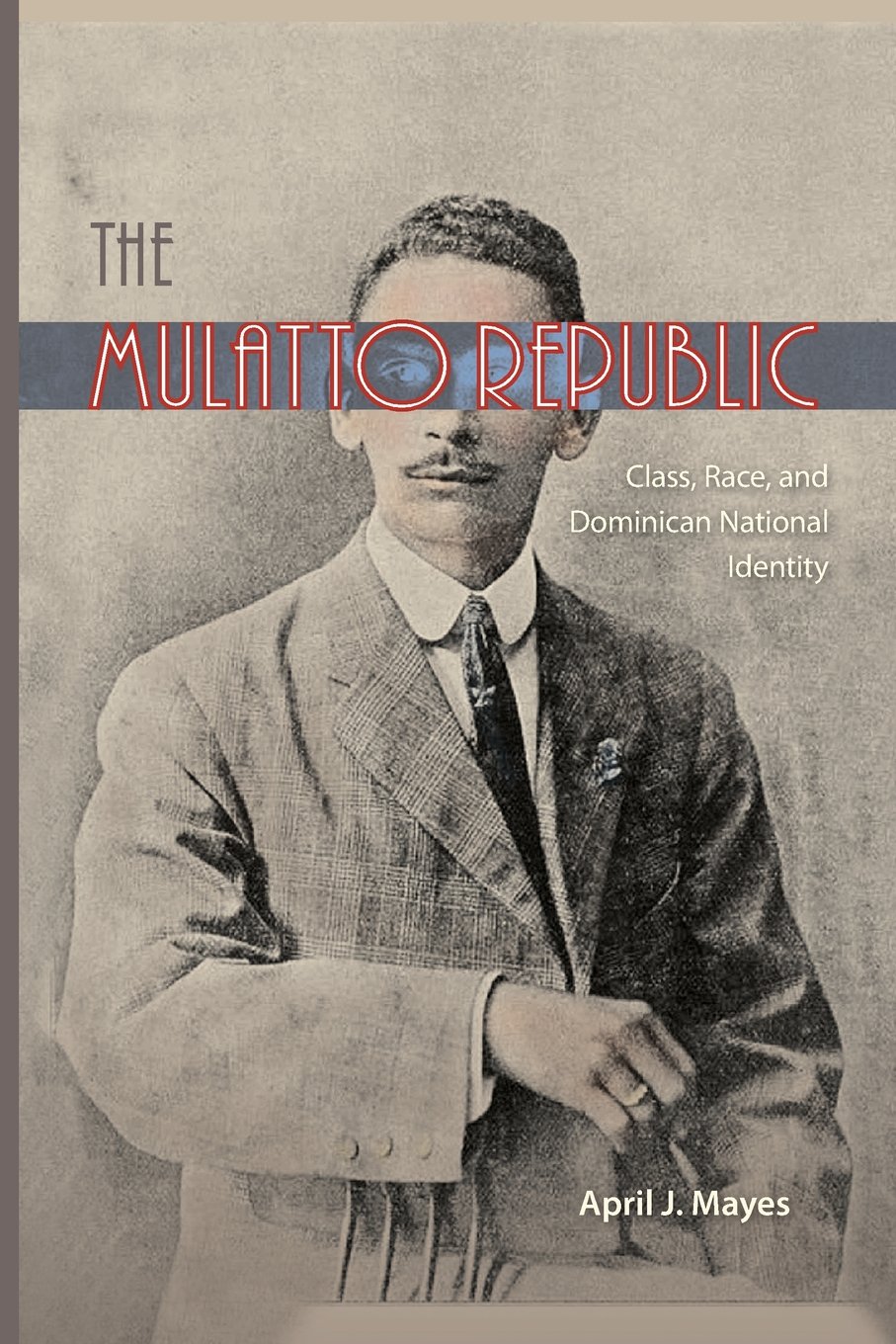
The Mulatto Republic: Class, Race, and Dominican National Identity

Posted in Anthropology, Books, Caribbean/Latin America, History, Media Archive, Monographs, Religion on 2014-11-09 17:51Z by Steven

The Mulatto Republic: Class, Race, and Dominican National Identity

University Press of Florida
2014-03-24
224 pages
6×9
Cloth ISBN 13: 978-0-8130-4919-9

April J. Mayes, Associate Professor of History and Africana Studies
Pomona College, Claremont, California

The Dominican Republic was once celebrated as a mulatto racial paradise. Now the island nation is idealized as a white, Hispanic nation, having abandoned its many Haitian and black influences. The possible causes of this shift in ideologies between popular expressions of Dominican identity and official nationalism has long been debated by historians, political scientists, and journalists.

In The Mulatto Republic, April Mayes looks at the many ways Dominicans define themselves through race, skin color, and culture. She explores significant historical factors and events that have led the nation, for much of the twentieth century, to favor privileged European ancestry and Hispanic cultural norms such as the Spanish language and Catholicism.

Mayes seeks to discern whether contemporary Dominican identity is a product of the Trujillo regime—and, therefore, only a legacy of authoritarian rule—or is representative of a nationalism unique to an island divided into two countries long engaged with each other in ways that are sometimes cooperative and at other times conflicted. Her answers enrich and enliven an ongoing debate.

Tags: , , ,

Notes from a Colored Girl: The Civil War Pocket Diaries of Emilie Frances Davis

Posted in Autobiography, Books, History, Media Archive, Monographs, United States, Women on 2014-11-09 17:42Z by Steven

Notes from a Colored Girl: The Civil War Pocket Diaries of Emilie Frances Davis

University of South Carolina Press
May 2014
280 pages
9 b&w illus.
6 x 9
Hardcover ISBN: 978-1-61117-352-9
eBook ISBN: 978-1-61117-353-6

Karsonya Wise Whitehead, Assistant Professor of Communication and African and African American Studies
Loyola University Maryland, Baltimore

A rare glimpse into the thoughts and experiences of a free black American woman in the nineteenth century

In Notes from a Colored Girl, Karsonya Wise Whitehead examines the life and experiences of Emilie Frances Davis, a freeborn twenty-one-year-old mulatto woman, through a close reading of three pocket diaries she kept from 1863 to 1865. Whitehead explores Davis’s worldviews and politics, her perceptions of both public and private events, her personal relationships, and her place in Philadelphia’s free black community in the nineteenth century.

Although Davis’s daily entries are sparse, brief snapshots of her life, Whitehead interprets them in ways that situate Davis in historical and literary contexts that illuminate nineteenth-century black American women’s experiences. Whitehead’s contribution of edited text and original narrative fills a void in scholarly documentation of women who dwelled in spaces between white elites, black entrepreneurs, and urban dwellers of every race and class.

Notes from a Colored Girl is a unique offering to the fields of history and documentary editing as the book includes both a six-chapter historical reconstruction of Davis’s life and a full, heavily annotated edition of her Civil War–era pocket diaries. Drawing on scholarly traditions from history, literature, feminist studies, and sociolinguistics, Whitehead investigates Davis’s diary both as a complete literary artifact and in terms of her specific daily entries.

From a historical perspective, Whitehead re-creates the narrative of Davis’s life for those three years and analyzes the black community where she lived and worked. From a literary perspective, Whitehead examines Davis’s diary as a socially, racially, and gendered nonfiction text. From a feminist studies perspective, she examines Davis’s agency and identity, grounded in theories elaborated by black feminist scholars. And, from linguistic and rhetorical perspectives, she studies Davis’s discourse about her interpersonal relationships, her work, and external events in her life in an effort to understand how she used language to construct her social, racial, and gendered identities.

Since there are few primary sources written by black women during this time in history, Davis’s diary—though ordinary in its content—is rendered extraordinary simply because it has survived to be included in this very small class of resources. Whitehead’s extensive analysis illuminates the lives of many through the simple words of one.

Tags: , , , , , ,

Historically Black: Imagining Community in a Black Historic District

Posted in Anthropology, Books, History, Media Archive, Monographs, United States, Virginia on 2014-11-09 17:40Z by Steven

Historically Black: Imagining Community in a Black Historic District

New York University Press
July 2014
208 pages
10 halftones
Cloth ISBN: 9780814762882
Paper ISBN: 9780814763483

Mieka Brand Polanco, Assistant Professor of Anthropology
James Madison University, Harrisonburg, Virginia

In Historically Black, Mieka Brand Polanco examines the concept of community in the United States: how communities are experienced and understood, the complex relationship between human beings and their social and physical landscapes—and how the term “community” is sometimes conjured to feign a cohesiveness that may not actually exist. Drawing on ethnographic and historical materials from Union, Virginia, Historically Black offers a nuanced and sensitive portrait of a federally recognized Historic District under the category “Ethnic Heritage—Black.” Since Union has been home to a racially mixed population since at least the late 19th century, calling it “historically black” poses some curious existential questions to the black residents who currently live there. Union’s identity as a “historically black community” encourages a perception of the town as a monochromatic and monohistoric landscape, effectively erasing both old-timer white residents and newcomer black residents while allowing newer white residents to take on a proud role as preservers of history. Gestures to “community” gloss an oversimplified perspective of race, history and space that conceals much of the richness (and contention) of lived reality in Union, as well as in the larger United States. They allow Americans to avoid important conversations about the complex and unfolding nature by which groups of people and social/physical landscapes are conceptualized as a single unified whole. This multi-layered, multi-textured ethnography explores a key concept, inviting public conversation about the dynamic ways in which race, space, and history inform our experiences and understanding of community.

Tags: , ,

Race, Sex, and the Freedom to Marry: Loving v. Virginia

Posted in Books, History, Law, Media Archive, Monographs, United States, Virginia on 2014-11-09 17:36Z by Steven

Race, Sex, and the Freedom to Marry: Loving v. Virginia

University Press of Kansas
November 2014
296 pages
5-1/2 x 8-1/2
Cloth ISBN 978-0-7006-1999-3, $39.95(s)
Paper ISBN 978-0-7006-2000-5, $19.95(s)
Ebook ISBN 978-0-7006-2048-7

Peter Wallenstein, Professor of History
Virginia Polytechnic Institute and State University

In 1958 Mildred Jeter and Richard Loving, two young lovers from Caroline County, Virginia, got married. Soon they were hauled out of their bedroom in the middle of the night and taken to jail. Their crime? Loving was white, Jeter was not, and in Virginia—as in twenty-three other states then—interracial marriage was illegal. Their experience reflected that of countless couples across America since colonial times. And in challenging the laws against their marriage, the Lovings closed the book on that very long chapter in the nation’s history. Race, Sex, and the Freedom to Marry tells the story of this couple and the case that forever changed the law of race and marriage in America.

The story of the Lovings and the case they took to the Supreme Court involved a community, an extended family, and in particular five main characters—the couple, two young attorneys, and a crusty local judge who twice presided over their case—as well as such key dimensions of political and cultural life as race, gender, religion, law, identity, and family. In Race, Sex, and the Freedom to Marry, Peter Wallenstein brings these characters and their legal travails to life, and situates them within the wider context—even at the center—of American history. Along the way, he untangles the arbitrary distinctions that long sorted out Americans by racial identity—distinctions that changed over time, varied across space, and could extend the reach of criminal law into the most remote community. In light of the related legal arguments and historical development, moreover, Wallenstein compares interracial and same-sex marriage.

A fair amount is known about the saga of the Lovings and the historic court decision that permitted them to be married and remain free. And some of what is known, Wallenstein tells us, is actually true. A detailed, in-depth account of the case, as compelling for its legal and historical insights as for its human drama, this book at long last clarifies the events and the personalities that reconfigured race, marriage, and law in America.

Tags: , , , ,

Pigmentocracies: Ethnicity, Race, and Color in Latin America

Posted in Anthropology, Books, Brazil, Caribbean/Latin America, Census/Demographics, Economics, History, Mexico, Monographs, Native Americans/First Nation, Social Science on 2014-11-07 19:07Z by Steven

Pigmentocracies: Ethnicity, Race, and Color in Latin America

University of North Carolina Press
October 2014
320 pages
59 figs., 4 maps, 23 tables, notes, bibl., index
6.125 x 9.25
Paper ISBN: 978-1-4696-1783-1

Edward E. Telles, Professor of Sociology
Princeton University

and

The Project on Ethnicity and Race in Latin America (PERLA)
Princeton University

Pigmentocracies—the fruit of the multiyear Project on Ethnicity and Race in Latin America (PERLA)—is a richly revealing analysis of contemporary attitudes toward ethnicity and race in Brazil, Colombia, Mexico, and Peru, four of Latin America’s most populous nations. Based on extensive, original sociological and anthropological data generated by PERLA, this landmark study analyzes ethnoracial classification, inequality, and discrimination, as well as public opinion about Afro-descended and indigenous social movements and policies that foster greater social inclusiveness, all set within an ethnoracial history of each country. A once-in-a-generation examination of contemporary ethnicity, this book promises to contribute in significant ways to policymaking and public opinion in Latin America.

Edward Telles, PERLA’s principal investigator, explains that profound historical and political forces, including multiculturalism, have helped to shape the formation of ethnic identities and the nature of social relations within and across nations. One of Pigmentocracies’s many important conclusions is that unequal social and economic status is at least as much a function of skin color as of ethnoracial identification. Investigators also found high rates of discrimination by color and ethnicity widely reported by both targets and witnesses. Still, substantial support across countries was found for multicultural-affirmative policies—a notable result given that in much of modern Latin America race and ethnicity have been downplayed or ignored as key factors despite their importance for earlier nation-building.

Contents

  • Acknowledgments
  • 1. The Project on Ethnicity and Race in Latin America (PERLA): Hard Data and What Is at Stake
  • 2. The Different Faces of Mestizaje: Ethnicity and Race in Mexico
  • 3. From Whitened Miscegenation to Triethnic Multiculturalism: Race and Ethnicity in Columbia
  • 4. ¿El pals de todas las sangres? Race and Ethnicity in Contemporary Peru
  • 5. Mixed and Unequal: New Perspectives on Brazilian Ethnoracial Relations
  • 6. A Comparative Analysis of Ethnicity, Race, and Color Based on PERLA Findings
  • Notes
  • References
  • About the Authors
  • Index
Tags: , , , , , , ,