Mark One or More: Civil Rights in Multiracial America

Posted in Books, Census/Demographics, Media Archive, Monographs, Politics/Public Policy, United States on 2009-09-28 00:42Z by Steven

Mark One or More: Civil Rights in Multiracial America

University of Michigan Press
2006
208 pages
6 x 9; 11 Tables & 8 Figures.
Paper ISBN: 978-0-472-03280-8

Kim M. Williams, Associate Professor of Political Science; Academic Director of the Center for Women, Politics & Policy at the Hatfield School of Government
Portland State University, Portland, Oregon

The little-known story of the struggle to include a multiracial category on the U.S. census, and the profound changes it wrought in the American political landscape.

Mark One or More tells the little-known story of the struggle to include a multiracial category on the U.S. census, and the profound changes it wrought in the American political landscape.

The movement to add a multiracial category to the 2000 U.S. Census provoked unprecedented debates about race. The effort made for strange bedfellows.  Republicans like House Speaker Newt Gingrich and affirmative action opponent Ward Connerly took up the multiracial cause. Civil rights leaders opposed the movement on the premise that it had the potential to dilute the census count of traditional minority groups. The activists themselves—a loose confederation of organizations, many led by the white mothers of interracial children—wanted recognition. What they got was the transformation of racial politics in America.

Mark One or More is the compelling account of how this small movement sparked a big change, and a moving call to reassess the meaning of racial identity in American life.

Tags: , ,

The Politics of Multiracialism: Challenging Racial Thinking

Posted in Anthologies, Books, Census/Demographics, Media Archive, Politics/Public Policy, United States on 2009-09-27 23:39Z by Steven

The Politics of Multiracialism: Challenging Racial Thinking

State University of New York Press
June 2004
263 pages
Hardcover ISBN-10: 0-7914-6153-X; ISBN-13: 978-0-7914-6153-2
Paperback ISBN-10: 0-7914-6154-8; ISBN13: 978-0-7914-6154-9

Editor:

Heather M. Dalmage, Professor of Sociology and Director
Mansfield Institute for Social Justice
Roosevelt University

A provocative analysis of current thought and discourse on multiracialism.

This is the first book to critically look at the political issues and interests surrounding the broadly defined Multiracial Movement and at what is being said about multiracialism. Many of the multiracial family organizations that exist across the United States developed socially, ideologically, and politically during the conservative Reagan years. While members of the Multiracial Movement differ widely in their political views, the concept of multiracialism has been taken up by conservative politicians in ways that are often inimical to the interests of traditionally defined minorities.

Contributors look at the Multiracial Movement’s voice and at the political controversies that attend the notion of multiracialism in academic and popular literature, internet discourse, census debates, and discourse by and about pop culture celebrities. The work discusses how multiracialism, hybridity, and racial mixing have occurred amidst existing academic discussions of authenticity, community borders, identity politics, the social construction of race, and postmodern fragmentation. How the Multiracial Movement is shaping and transforming collective multiracial identities is also explored.

Contributors include Erica Chito Childs, Kimberly McClain DaCosta, Heather M. Dalmage, Abby L. Ferber, Charles A. Gallagher, Terri A. Karis, Rebecca Chiyoko King-O’Riain, Kerry Ann Rockquemore, Barbara Katz Rothman, Rainier Spencer, Eileen T. Walsh, and Kim M. Williams.

Table of Contents

Part One: Context of the Multiracial Movement

1. All in the Family: The Familial Roots of Racial Divisions
Kimberly McClain DaCosta

2. Defending the Creation of Whiteness: White Supremacy and the Threat of Interracial Sexuality
Abby L. Ferber

3. Racial Redistricting: Expanding the Boundaries of Whiteness
Charles A. Gallagher

4. Linking the Civil Rights and Multiracial Movements
Kim M. Williams

Part Two: Discourses of the Multiracial Movement

5. Beyond Pathology and Cheerleading: Insurgency, Dissolution, and Complicity in the Multiracial Idea
Rainier Spencer

6. Deconstructing Tiger Woods: The Promise and Pitfalls of Multiracial Identity
Kerry Ann Rockquemore

7. Multirace.com: Multiracial Cyberspace
Erica Chito Childs

8. “I Prefer to Speak of Culture”: White Mothers of Multiracial Children
Terri A. Karis

Part Three: Lessons from the Multiracial Movement

9. Model Majority? The Struggle for Identity among Multiracial Japanese Americans
Rebecca Chiyoko King-O’Riain

10. Transracial Adoption: Refocusing Upstream
Barbara Katz Rothman

11. Protecting Racial Comfort, Protecting White Privilege
Heather M. Dalmage

12. Ideology of the Multiracial Movement: Dismantling the Color Line and Disguising White Supremacy?
Eileen T. Walsh

List of Contributors

Index

Tags: , , , , , , , , , , , , , , , ,

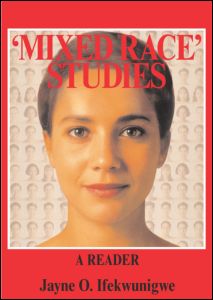
‘Mixed Race’ Studies: A Reader

Posted in Anthologies, Anthropology, Books, Census/Demographics, Media Archive, Politics/Public Policy, Social Science on 2009-09-25 00:53Z by Steven

‘Mixed Race’ Studies: A Reader

Routledge
2004-06-17
352 pages
Trim Size: 246mm x 174mm
Binding(s): Hardback, Paperback
ISBN13: 9780415321631; ISBN-10: 0415321638

Editor:  Jayne O. Ifekwunigwe, Visiting Associate Professor of African and African American Studies
Duke University

Mixed race studies is one of the fastest growing, as well as one of the most important and controversial areas in the field of race and ethnic relations. Bringing together pioneering and controversial scholarship from both the social and the biological sciences, as well as the humanities, this reader charts the evolution of debates on ‘race’ and ‘mixed race’ from the nineteenth to the twenty-first century. The book is divided into three main sections:

  • tracing the origins: miscegenation, moral degeneracy and genetics
  • mapping contemporary and foundational discourses: ‘mixed race’, identities politics, and celebration
  • debating definitions: multiraciality, census categories and critiques.

This collection adds a new dimension to the growing body of literature on the topic and provides a comprehensive history of the origins and directions of ‘mixed race’ research as an intellectual movement. For students of anthropology, race and ethnicity, it is an invaluable resource for examining the complexities and paradoxes of ‘racial’ thinking across space, time and disciplines.

Table of Contents

  • Part 1:  Tracing the Origins: Miscegenation, Moral Degeneracy, and Genetics
  • Part 2:  Mapping Contemporary and Foundational Discourses: ‘Mixed Race’, Identities Politics, and Celebration
  • Part 3:  Debating Definitions: Multiraciality, Census Categories, and Critique.  Index.
Tags: , , , ,

Spurious Issues: Race And Multiracial Identity Politics In The United States

Posted in Anthropology, Books, Census/Demographics, Media Archive, Monographs, Politics/Public Policy, United States on 2009-09-24 19:34Z by Steven

Spurious Issues: Race And Multiracial Identity Politics In The United States

Westview Press
1999-08-12
240 pages
Hardcover ISBN-10: 0813336775; ISBN-13: 978-0813336770

Rainier Spencer, Director and Professor of Afro-American Studies; Professor of Interdisciplinary Studies
University of Nevada, Las Vegas

Recent times have seen the rise of a movement lobbying for explicit recognition of multiracial identity as separate from any other racial category. Factions in this movement have petitioned the government for the addition of a federal multiracial category to the census and to other official forms. While these attempts have as yet been unsuccessful, the potential impact of such a change cannot be overstated. Rainier Spencer takes up the claims of multiracial activists, subjecting their arguments to a level of scholarly rigor they have heretofore not been required to meet. Demonstrating that the twin justifications for a federal multiracial category—accuracy and self-esteem—are inherently contradictory, Spencer presents an absorbing analysis of race, multirace, and categorization that shakes the very foundations of racial identity on all sides. Spurious Issues is a critical examination of multiracial identity politics in the United States, and of the specific issues surrounding federal racial classification. It is also a book about race generally, an extended argument that invites and challenges its readers to assume a skeptical position in regard to one of the most widely accepted but rarely analyzed components of life in the United States.

Tags: ,

Beyond Racial Exceptionalism: Explaining the Convergence of Mixed-Race Census Categorizations in Canada, the U.S. and Great Britain

Posted in Canada, Census/Demographics, Media Archive, Papers/Presentations, Politics/Public Policy, United Kingdom, United States on 2009-09-24 04:08Z by Steven

Beyond Racial Exceptionalism: Explaining the Convergence of Mixed-Race Census Categorizations in Canada, the U.S. and Great Britain

Canadian Political Science Association
81th Annual Conference
2009-05-27 through 2009-05-29

Debra Thompson, Assistant Professor of Political Science
Ohio University

By examining racial classifications in national censuses this paper will explore moments of policy convergence that defy domestic explanations of the state’s regulation of racial identities. During the same time period, the United Kingdom, the United States and Canada all moved towards ‘counting’ mixed-race on their national censuses; given their previous divergences in other areas of racial regulation, even in terms of previous modes of racial classification, this recent convergence is puzzling. In the United States, this move is largely attributed to the existence of a mixed-race social movement that pushed Congress for the change – but parallel developments in Canada and the U.K. occurred without the presence of a politically active civil society devoted to making the change. This begs an interesting question: Why the convergence? When domestic explanations prove insufficient, what can comparisons tell us? This paper will demonstrate the political salience of global trends surrounding race and racialism – specifically, the transnational discourses of multiculturalism and recognition that have pervaded ethnopolitics since the 1990s. Ultimately, it seeks to challenge conventional domestic explanations for institutional racial categorization, rejecting ‘exceptionalism’ in the sphere of problematic race relations and demonstrating the ways in which race can be studied in comparative context.

Tags:

Obama, The Instability of Color Lines, and the Promise of a Postethnic Future

Posted in Articles, Barack Obama, Media Archive, Politics/Public Policy, United States on 2009-09-20 01:43Z by Steven

Obama, The Instability of Color Lines, and the Promise of a Postethnic Future

Callaloo: A Journal of African Diaspora Arts and Letters
Volume 31, Number 4 (2008)
pages 1033–1037
DOI: 10.1353/cal.0.0282

David A. Hollinger, Preston Hotchkis Professor of American History
University of California at Berkeley

The focus of media depictions of Barack Obama as a “post-racial,” “post-black” or “postethnic” candidate is usually limited to two aspects of his presidential campaign.  First is his self-presentation with minimal references to his color. Unlike Jesse Jackson or Al Sharpton, whose presidential candidacies were more directed at the significance of the color line, Obama has never offered himself as the candidate of a particular ethnoracial group. Second, the press calls attention to the willingness of millions of white voters to respond to Obama.  Some of his greatest margins in primary elections and caucuses were in heavily white states like Idaho and Montana.  He even won huge numbers of white voters in some states of the old Confederacy, and in the November election carried Florida, Virginia and North Carolina.

But there is much more to it…

…Obama’s mixed ancestry generates some of the new uncertainty about blackness.  The white part of his genetic inheritance is not socially hidden, as it often is for “light-skinned blacks” who descend from black women sexually exploited by white slaveholders and other white males. Rather, Obama’s white ancestry is right there in the open, visible in the form of the white woman who, as a single mother, raised Obama after his black father left the family to return to his native Kenya. Press accounts of Obama’s life, as well as Obama’s own autobiographical writings, render Obama’s whiteness hard to miss.  No public figure, not even Tiger Woods, has done as much as Obama to make Americans of every education level and social surrounding aware of color-mixing in general and that most of the “black” population of the United States, in particular, are partially white. The “one-drop rule” which denies that color is a two-way street is far from dead, but not since the era of its legal and social consolidation in the early 1920s has the ordinance of this rule been so subject to challenge….

Read the entire article here.

Tags: , , , , ,

Mixed Race in Britain: A Survey of the Preferences of Mixed Race People for Terminology and Classifications (Interim Report)

Posted in Census/Demographics, Identity Development/Psychology, Media Archive, Papers/Presentations, Politics/Public Policy, United Kingdom on 2009-09-17 03:31Z by Steven

Mixed Race in Britain: A Survey of the Preferences of Mixed Race People for Terminology and Classifications (Interim Report)

Centre for Health Services Studies (CHSS)
University of Kent at Canterbury
July 2006

Peter Aspinall, Senior Research Fellow
Centre for Health Services Studies (CHSS)
University of Kent

Miri Song, Professor of Sociology
University of Kent

Ferhana Hashem, Research Fellow
Centre for Health Services Studies (CHSS)
University of Kent

…This research project into the preferences for terminology and classifications was initiated in 2004 and put into the field in summer 2005.  Its main purposes were: (i) to help inform terminology and classifications for ethnic group for the upcoming 2011 Census and (ii) to serve as a pilot study for an ESRC application: ‘The ethnic options of mixed race people in Britain’ (which also had a focus on official terminology and classifications).  This application was funded by ESRC and the project began on 1st March 2006.  A small dataset on official terminology and classifications is also accruing via this route…

…On issues of terminology, the salient general term of choice amongst respondents was ‘mixed race’.  The only other terms that attracted significant support were ‘mixed heritage’ and ‘mixed parentage’. Very few preferred ‘dual heritage’.  Respondents identified eleven different terms as offensive, most frequently ‘dual heritage’, ‘half-caste’ and ‘mixed origins’.  The reasons for the dislike of ‘dual heritage’ focussed mainly on its limitation to two groups.  ‘Half-caste’ was regarded as pejorative by several respondents, on the ground of partial recognition & historical connotations.  The largest number of respondents felt that terms like ‘mixed race’ and ‘mixed parentage’ should refer to ‘people who are mixes of white and any minority racial/ethnic group’.  Significant numbers also felt that the terms should refer to people who are mixes of minority racial/ethnic groups, people who are mixes of white and black groups only, and people of disparate ethnic origins…

Read the entire report here.

Tags: ,

Assessing Multiracial Identity Theory and Politics: The Challenge of Hypodescent

Posted in Articles, Media Archive, Politics/Public Policy, Social Science, United States on 2009-09-06 23:11Z by Steven

Assessing Multiracial Identity Theory and Politics: The Challenge of Hypodescent

Ethnicities
Volume 4, Number 3 (September 2004)
pages 357-379
DOI: 10.1177/1468796804045239

Rainier Spencer, Professor
Department of Anthropology & Ethnic Studies
University of Nevada, Las Vegas

It is increasingly possible to detect a split in regard to current analyses of multiracial identity in the United States. On the one hand there remains a relatively naive brand of multiracial activism and identity politics that has deep roots in the recent movement to institute a US federal multiracial category; while on the other hand we find a steadily maturing body of scholarship on mixed-race identity that is several levels removed in terms of intellectual rigor and objectivity.  As this latter movement continues to mature, it increasingly forces the former to acknowledge and to confront important issues of logical consistency in the multiracial identity debate. This article represents an effort to guide and shape that discussion in assessing the ideological foundation of multiracial identity politics in the United States.

Read or purchase the article here.

Tags: ,

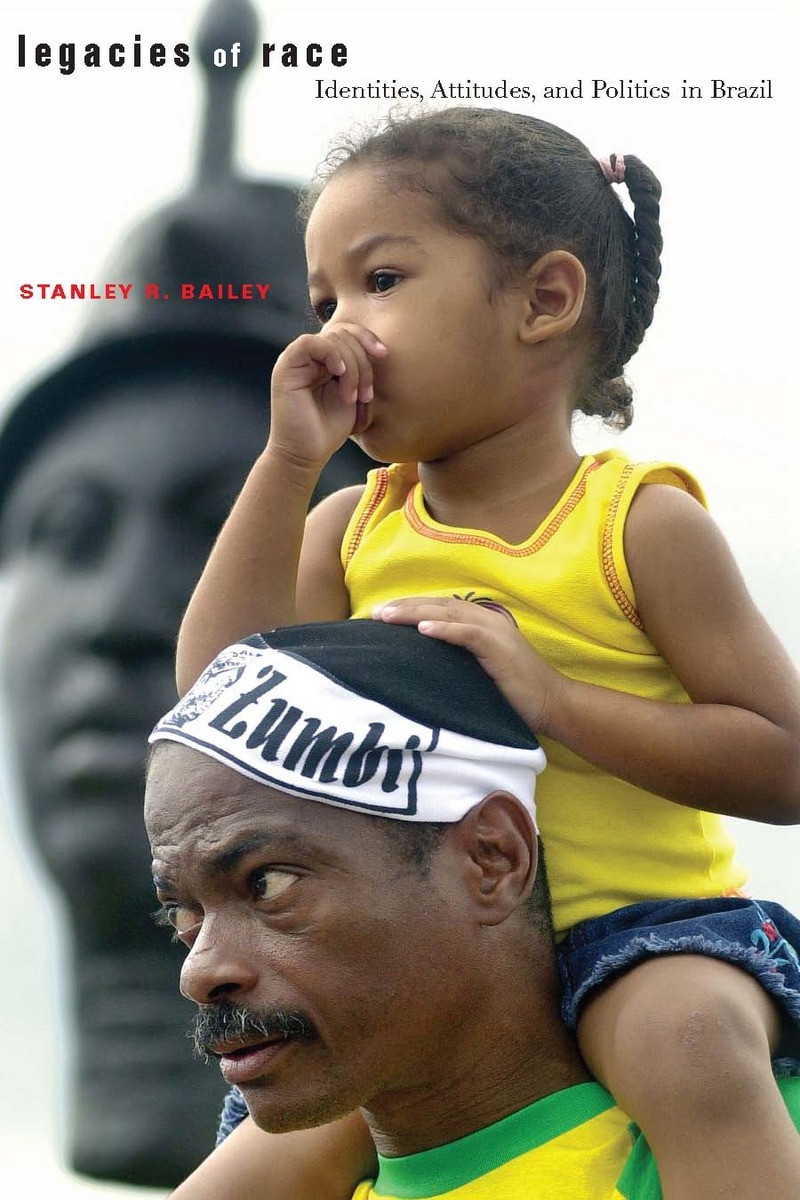
Legacies of Race: Identities, Attitudes, and Politics in Brazil

Posted in Books, Brazil, Caribbean/Latin America, Media Archive, Monographs, Politics/Public Policy, United States on 2009-08-31 03:59Z by Steven

Legacies of Race: Identities, Attitudes, and Politics in Brazil

Stanford University Press
2009
304 pages
31 tables, 2 figures, 1 illustration.
ISBN-10: 0804762775
ISBN-13: 9780804762779

Stanley R. Bailey, Associate Professor of Sociology
University of California, Irvine

The United States and Brazil were the largest slave-trading societies of the New World. The demographics of both countries reflect this shared past, but this is where comparisons end. The vast majority of the “Afro-Brazilian” population, unlike their U.S. counterparts, view themselves as neither black nor white but as mixed-race.  Legacies of Race offers the first examination of Brazilian public opinion to understand racial identities, attitudes, and politics in this racially ambiguous context.

Brazilians avoid rigid notions of racial group membership, and, in stark contrast to U.S. experience, attitudes about racial inequality, African-derived culture, and antiracism strategies are not deeply divided along racial lines.  Bailey argues that only through dispensing with many U.S.-inspired racial assumptions can a general theory of racial attitudes become possible. Most importantly, he shows that a strict notion of racial identification in black and white cannot be assumed universal.

Tags: , ,

From: KNPR in Nevada: A Conversation About Race and Ethnicity in America

Posted in Audio, Live Events, Media Archive, Politics/Public Policy, United States on 2009-08-27 00:05Z by Steven

From: KNPR in Nevada: A Conversation About Race and Ethnicity in America  (2008-08-22)

We continue our conversation about race and ethnicity in America when we host a joint broadcast [on 2008-08-22] with KCEP-FM.  KCEP’s Patricia Cunningham joins us with UNLV [University of Nevada at Las Vegas] Professor Rainier Spencer and Pastor Robert Fowler of The Victory Missionary Baptist Church.

Rainer Spencer appears at 09:35 in the program and discusses ‘Generation Mix’ and other issues.


Pictured right are: KCEP Radio Host Patricia Cunningham, KNPR’s State of Nevada Show Host Dave Berns, KCEP IT Mgr and Asst Program Coordinator Ashton Ridley, Prof Rainier Spencer, KCEP Program Mgr Craig Knight and Pastor Robert Fowler (left to right).

Listen the recorded audio (00:47:28) stream here.
Download the recorded audio (00:47:28) file here.

Tags: , ,