Almighty God Created the Races: Christianity, Interracial Marriage, and American Law

Posted in Books, History, Law, Media Archive, Monographs, Politics/Public Policy, Religion, Social Science, United States on 2009-12-04 17:14Z by Steven

Almighty God Created the Races: Christianity, Interracial Marriage, and American Law

University of North Carolina Press
December 2009
288 pages
6.125 x 9.25, notes, bibl., index
Cloth ISBN: 978-0-8078-3318-6
Paper ISBN: 978-1-4696-0727-6

Fay Botham, Adjunct Professor of Religious Studies
University of Iowa

In this fascinating cultural history of interracial marriage and its legal regulation in the United States, Fay Botham argues that religion–specifically, Protestant and Catholic beliefs about marriage and race–had a significant effect on legal decisions concerning miscegenation and marriage in the century following the Civil War.

Botham argues that divergent Catholic and Protestant theologies of marriage and race, reinforced by regional differences between the West and the South, shaped the two pivotal cases that frame this volume, the 1948 California Supreme Court case of Perez v. Lippold (which successfully challenged California’s antimiscegenation statutes on the grounds of religious freedom) and the 1967 U.S. Supreme Court case Loving v. Virginia (which declared legal bans on interracial marriage unconstitutional). Botham contends that the white southern Protestant notion that God “dispersed” the races, as opposed to the American Catholic emphasis on human unity and common origins, points to ways that religion influenced the course of litigation and illuminates the religious bases for Christian racist and antiracist movements.

Tags: , , , , , ,

The Idea Of Race

Posted in Anthologies, Anthropology, Books, Brazil, History, Media Archive, Philosophy, Politics/Public Policy, Social Science on 2009-12-04 00:08Z by Steven

The Idea Of Race

Hackett Publishing Company
2000
256 pages
Cloth ISBN: 0-87220-459-6, ISBN-13: 978-0-87220-459-1
Paper ISBN: 0-87220-458-8, ISBN-13: 978-0-87220-458-4

Edited by

Robert Bernasconi, Edwin Erle Sparks Professor of Philosophy
Pennsylvania State University

Tommy L. Lott, Professor of Philosophy
San José State University

A survey of the historical development of the idea of race, this anthology offers pre-twentieth century theories about the concept of race, classic twentieth century sources reiterating and contesting ideas of race as scientific, and several philosophically relevant essays that discuss the issues presented. A general Introduction gives an overview of the readings. Headnotes introduce each selection. Includes suggested further readings.

Table of Contents
Introduction

The Classification of Races

  1. Francois Bernier, “A new division of earth, according to the different species or races of men who inhabit it”
  2. Francois-Marie Voltaire, “Of the Different Races of Men,” from The Philosophy of History
  3. Immanuel Kant, “Of the Different Human Races”
  4. Johann Gottfried von Herder, Ideas on the Philosophy of the History of Humankind
  5. Johann Friedrich Blumenbach, On the Natural Variety of Mankind
  6. G. W. F. Hegel, “Anthropology,” from The Encyclopedia of Philosophical Science

Science and Eugenics

  1. Arthur de Gobineau, The Inequality of Human Races
  2. Charles Darwin, “On the Races of Man,” from The Descent of Man
  3. Francis Galton, “Eugenics: Its Definition, Scope and Aims”

Heredity and Culture

  1. Franz Boas, “Instability of Human Types”
  2. Alain Locke, “The Concept of Race as applied to Social Culture”
  3. Ashley Montagu, “The Concept of Race in the Human Species in the Light of Genetics”

Race and Political Ideology

  1. W. E. B. Du Bois, The Conservation of Races
  2. Anthony Appiah, “The Uncompleted Argument: Du Bois and the Illusion of Race”
  3. Leopold Senghor, “What is Negritude?”

Racial Identity

  1. Linda Alcoff, “Mestizo Identity”
  2. Michael Hanchard, “Black Cinderella? Race and the Public Sphere in Brazil”
  3. Michael Omi and Howard Winant, Racial Formation in the United States.
Tags: , , , , , , , , , , , , , , , , , , ,

Dr. Rainier Spencer Guest on Mixed Chicks Chat

Posted in History, Interviews, Live Events, Media Archive, Politics/Public Policy, Social Science, United States on 2009-12-03 02:02Z by Steven

Dr. Rainier Spencer Guest on Mixed Chicks Chat

Mixed Chicks Chat (The only live weekly show about being racially and culturally mixed.  Also, founders of the Mixed Roots Film & Literary Festival)
Website: TalkShoe™ (Keywords: Mixed Chicks)
Episode: #131 – Dr. Rainier Spencer
Wednesday, 2009-12-09  22:00Z

Rainier Spencer, Director and Professor of Afro-American Studies; Professor of Interdisciplinary Studies
University of Nevada, Las Vegas

Rainier Spencer is professor and director of Afro-American Studies at the University of Nevada at Las Vegas. He has published Spurious Issues: Race and Multiracial Identity Politics in the United States (Westview, 1999) and Challenging Multiracial Identity (Lynne Rienner, 2006), as well as numerous book chapters and journal articles on multiracial identity.  Based on a philosophical platform of racial skepticism, his work focuses on the uses of biological race and hypodescent by the American Multiracial Identity Movement, arguing that the movement supports rather than deconstructs biological race.

Listen to the episode here. Download the episode here.

Tags: ,

Stanford profs examine mixed race in U.S. society

Posted in Africa, Articles, Census/Demographics, Identity Development/Psychology, Media Archive, Politics/Public Policy, Social Science, South Africa, United States on 2009-12-01 02:00Z by Steven

Stanford profs examine mixed race in U.S. society

The Dartmouth
Victoria Boggiano, The Dartmouth Staff
2008-04-18

In 2000, the U.S. Census gave Americans the chance to identify themselves by more than one race for the first time. Almost seven million people — over 80 percent of whom were under 25 — checked more than one box, Stanford University professors Harry and Michele Elam told a crowded auditorium in Haldeman Hall on Thursday. A new global “mixed-race movement” has begun, they said in their lecture, titled “The High Stakes of Mixed Race: Post-Race, Post-Apartheid Performances in the U.S. and South Africa.”

The couple’s research stems from studies they have conducted to analyze theatrical performances in the United States and South Africa. Claiming that performance is a “transformative force for institutional and social change,” the Elams examined a variety of plays from these two countries. The research provided the couple with insight into the effect of the worldwide “mixed-race movement” on race politics and cultural identities, Harry said.

“We’re arguing that analyzing mixed race as a type of social performance can help us make sense of some of these new cultural dynamics,” he said…

…In the United States, the “mixed-race movement” is comprised of an uneasy coalition of “interracial couples, transracial adoptees and a new generation of mixed-race-identified youth,” the Elams said…

Read the entire article here.

Tags: , , ,

Who Counts?: Science, Demography and the Social “‘There’s No One as Irish as Barack O’Bama’: The Policy and Politics of American Multiracialism”

Posted in Census/Demographics, Live Events, New Media, Politics/Public Policy, Social Science, United States on 2009-11-29 21:07Z by Steven

Who Counts?: Science, Demography and the Social “‘There’s No One as Irish as Barack O’Bama’: The Policy and Politics of American Multiracialism

Lecture
2009-11-17 21:00Z
Mencoff Hall, 68 Waterman St.

Jennifer L. Hochschild, Henry LaBarre Jayne Professor of Government and Professor of African and African-American Studies
Harvard University

For the first time in American history, the United States’ 2000 census allowed individuals to choose more than one race. That new policy sets up our exploration of whether and how multiracialism is entering Americans’ understanding and practice of race. Using a policy feedback framework, we find that multiracialism is becoming institutionalized, that the small proportion of Americans who define themselves as multiracial is growing, and that the evidence suggests a continued rise.

Increasing multiracial identification is also made more likely by racial mixture’s growing prominence in American society. However, the politics side of the feedback loop is complicated by the fact that identification is not identity; traditional racial or ethnic loyalties and understandings remain strong, including among potential multiracial identifiers. We expect mixed race identity to be contextual, fluid, and additive, so that it can be layered onto rather than substituted for traditional monoracial commitments. If this development continues to take hold, it has the potential to change much of the politics and policy of American race relations.

Tags:

Racial Passing

Posted in Articles, History, Identity Development/Psychology, Law, Media Archive, Passing, Politics/Public Policy, Social Science, United States on 2009-11-28 01:31Z by Steven

Racial Passing

Ohio State Law Journal
Ohio State University Michael E. Moritz College of Law
Vol. 62: 1145 (2001)
Frank R. Strong Law Forum Lecture

Randall Kennedy, Michael R. Klein Professor of Law
Harvard Law School

I. Passing: A Definition

Passing is a deception that enables a person to adopt certain roles or identities from which he would be barred by prevailing social standards in the absence of his misleading conduct. The classic racial passer in the United States has been the “white Negro”: the individual whose physical appearance allows him to present himself as “white” but whose “black” lineage (typically only a very partial black lineage) makes him a Negro according to dominant racial rules. A passer is distinguishable from the person who is merely mistaken—the person who, having been told that he is white, thinks of himself as white, and holds himself out to be white (though he and everyone else in the locale would deem him to be “black” were the facts of his ancestry known). Gregory Howard Williams was, for a period, such a person. The child of a white mother and a light-skinned Negro man who pretended to be white, Williams assumed that he, too, was white. Not until he was ten years old, when his parents divorced, did Williams and his brother learn that they were “black” according to the custom by which any known Negro ancestry makes a person a Negro. Williams recalls vividly the moment at which he was told of his “new” racial identity:

I never had heard anything crazier in my life! How could Dad tell us such a mean lie? I glanced across the aisle to where he sat grim-faced and erect, staring straight ahead. I saw my father as I had never seen him before. The veil dropped from his face and features. Before my eyes he was transformed from a swarthy Italian to his true self—a high-yellow mulatto. My father was a Negro! We were colored! After ten years in Virginia on the white side of the color line, I knew what that meant. When he held himself out as white before learning of his father’s secret, Williams was simply mistaken. When he occasionally held himself out as white after learning the “true” racial identity of his father, Williams was passing. In other words, as I define the term, passing requires that a person be self-consciously engaged in concealment. Such a person knows about his African American lineage—his black “blood”—and either stays quiet about it, hoping that silence along with his appearance will lead observers to perceive him as white, or expressly asserts that he is white (knowing all the while that he is “black” according to ascendant social understandings).

Estimates regarding the incidence of passing have varied greatly. Walter White claimed that annually “approximately 12,000 white-skinned Negroes disappear” into white society. Roi Ottley asserted that there were five million “white Negroes” in the United States and that forty to fifty thousand passed annually. Professor John H. Burma’s estimates were considerably lower. He posited that some 110,000 blacks lived on the white side of the color line and that between 2,500 and 2,750 passed annually. Given its secretive nature, no one knows for sure the incidence of passing. It is clear, however, that at the middle of the twentieth century, large numbers of African Americans claimed to know people engaged in passing…

Read the entire article/lecture here.

Tags: , , ,

The Blurring of the Lines: Children and Bans on Interrracial Unions and Same-Sex Marriages

Posted in Articles, Family/Parenting, Gay & Lesbian, Law, Media Archive, Politics/Public Policy, Social Science, United States on 2009-11-25 18:56Z by Steven

The Blurring of the Lines: Children and Bans on Interrracial Unions and Same-Sex Marriages

Fordham Law Review
May 2008
Volume 76, Number 6
pages 2733-2770

Carlos A. Ball, Professor of Law and Judge Frederick Lacey Scholar
Rutgers University School of Law, Newark

When Richard Loving and Mildred Jeter drove from their hometown of Central Point, Virginia, to Washington, D.C., on June 2, 1958, in order to get married, Mildred was several months pregnant Later that year—a few weeks before the couple pled guilty to having violated Virginia’s antimiscegenation law—Mildred gave birth to a baby girl. Richard and Mildred had two more children, a son born in 1959 and a second daughter born a year after that.

The legal commentary on Loving v. Virginia usually does not discuss the fact that the couple had children. In some ways, this is not surprising given that their status as parents was not directly relevant to either their violation of the Virginia statute, or to their subsequent constitutional challenge to that law. Concerns about the creation of interracial children, however, were one of the primary reasons why antimiscegenation laws were first enacted in colonial America and why they were later adopted and retained by many states. It is not possible, in other words, to understand fully the historical roots and purposes of antimiscegenation laws without an assessment of the role that concerns related to interracial children played in their enactment and enforcement.

The offspring of interracial unions were threatening to whites primarily because they blurred the lines between what many of them understood to be a naturally superior white race and a naturally inferior black race. As long as there was a clear distinction between the two racial categories—in other words, as long as the two categories could be thought to be mutually exclusive—then the hierarchical racial regimes represented first by slavery, and later by legal segregation, could be more effectively defended. The existence of interracial children destabilized and threatened the understanding of racial groups as essentialized categories that existed prior to, and independent of, human norms and understandings. To put it differently, interracial children showed that racial categories, seemingly distinct and immutable, were instead highly malleable. Therefore, from a white supremacy perspective, it was important to try to deter the creation of interracial children as much as possible, and the ban on interracial marriage was a crucial means to attaining that goal.

Although it is possible to disagree on how much progress we have made as a society in de-essentializing race, it is (or it should be) clear that an essentialized and static understanding of race is both descriptively and normatively inconsistent with the multicultural American society in which we live. In fact, it would seem that we have made more progress in deessentializing race than we have in de-essentializing sex/gender. One of the best examples of this difference in progress is that while we no longer, as a legal matter, think of the intersection of race and marriage in essentialized ways, legal arguments against same-sex marriage are still very much grounded in an essentialized (and binary) understanding of sex/gender.

The conservative critique of same-sex marriage is premised on the idea that men and women are different in essential and complementary ways and that these differences justify the denial of marriage to same-sex couples.  One of the most important of these differences relate to the raising of children. The reasoning—which is found in the arguments of conservative commentators, in the briefs of states defending same-sex marriage bans, and in some of the judicial opinions upholding those bans—is that there is something unique to women as mothers and something (separately) unique to men as fathers that makes different-sex couples able to parent in certain valuable ways that same-sex couples cannot.

These arguments continue to resonate legally and politically because our laws and culture continue to think about sex/gender in essentialized and binary ways. In fact, one of the reasons why same-sex marriage is so threatening to so many is that the raising of children by same-sex couples blurs the boundaries of seemingly preexisting and static sex/gender categories in the same way that the progeny of interracial unions blur seemingly preexisting and static racial categories…

Read the entire article here.

Tags: , , , , , ,

The Age of Jim Crow

Posted in Books, History, Law, Media Archive, Monographs, Politics/Public Policy, Social Science, United States on 2009-11-24 16:09Z by Steven

The Age of Jim Crow

W. W. Norton & Company
October 2008
434 pages
5.4 × 8.2 in
Paperback ISBN 978-0-393-92758-0

Jane Dailey, Associate Professor of American History
University of Chicago

America’s racial history has been marked by both hard-won progress and sudden reversals of fortune.

In The Age of Jim Crow, Jane Dailey introduces readers to a fascinating collection of documents on race and segregation in America that were created between the end of the Civil War and the emergence of the Civil Rights Movement a century later.  Organized around two themes, Dailey highlights the role of law in creating, maintaining, and — ultimately — helping to undo segregation.   She also traces the effects of interracial sex and marriage as they shaped the era of Jim CrowThe Age of Jim Crow focuses throughout on sexuality and gender politics as they play out across the legal, social and economic, political, and cultural arenas.

View the Table of Contents here.

Tags: ,

Incorrigible

Posted in Asian Diaspora, Autobiography, Books, Canada, Law, Media Archive, Monographs, Politics/Public Policy on 2009-11-23 02:50Z by Steven

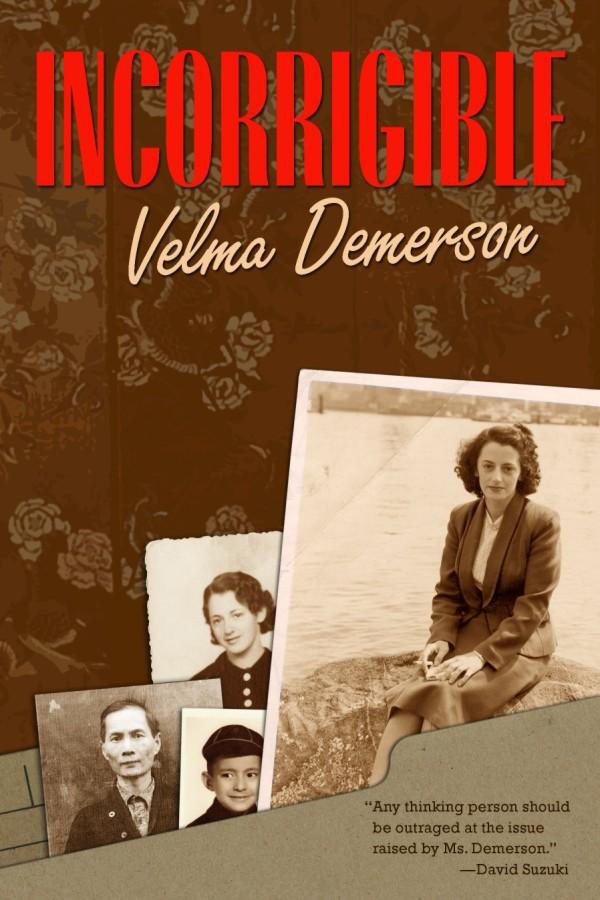
Incorrigible

Wilfrid Laurier University Press
December 2004
184 pages
ISBN13: 978-0-88920-444-7

Velma Demerson

On a May morning in 1939, eighteen-year-old Velma Demerson and her lover were having breakfast when two police officers arrived to take her away. Her crime was loving a Chinese man, a “crime” that was compounded by her pregnancy and subsequent mixed-race child. Sentenced to a home for wayward girls, Demerson was then transferred (along with forty-six other girls) to Toronto’s Mercer Reformatory for Females. The girls were locked in their cells for twelve hours a day and required to work in the on-site laundry and factory. They also endured suspect medical examinations. When Demerson was finally released after ten months’ incarceration weeks of solitary confinement, abusive medical treatments, and the state’s apprehension of her child, her marriage to her lover resulted in the loss of her citizenship status.

This is the story of how Demerson, and so many other girls, were treated as criminals or mentally defective individuals, even though their worst crime might have been only their choice of lover. Incorrigible is a survivor’s narrative. In a period that saw the rise of psychiatry, legislation against interracial marriage, and a populist movement that believed in eradicating disease and sin by improving the purity of Anglo-Saxon stock, Velma Demerson, like many young women, found herself confronted by powerful social forces. This is a history of some of those who fell through the cracks of the criminal code, told in a powerful first-person voice.

Velma Demerson is a widow, and mother of three children—the first child, the son of her interracial marriage, died at age twenty-six. She has worked throughout her life in a variety of positions, mostly as a secretary for governments (provincial and federal) and lawyers. She is self-educated. This is her first book.

Read an excerpt here.

Tags: ,

Constructing “Race” and “Ethnicity” in America: Category-Making in Public Policy and Administration

Posted in Books, Media Archive, Monographs, Politics/Public Policy, United States on 2009-11-20 20:54Z by Steven

Constructing “Race” and “Ethnicity” in America: Category-Making in Public Policy and Administration 

M. E. Sharpe
November 2002
272 pages
Tables, figures, references, index
Cloth ISBN: 978-0-7656-0800-0
Paper ISBN: 978-0-7656-0801-7

Dvora Yanow, Professor of Public Affairs & Administration
California State University, East Bay

  • 2004 Best Book Award, Section on Public Administration Research, American Society for Public Administration
  • 2007 Herbert A. Simon Book Award, Public Administration Section, American Political Science Association

What do we mean in the U.S. today when we use the terms “race” and “ethnicity?” What do we mean, and what do we understand, when we use the five standard race-ethnic categories: White, Black, Asian, Native American, and Hispanic?

Most federal and state data collection agencies use these terms without explicit attention, and thereby create categories of American ethnicity for political purposes. Dvora Yanow shows how “race” and “ethnicity” are socially constructed concepts–not objective, scientifically-grounded variables–and do not accurately represent the real world. She joins the growing critique of the unreflective use of “race” and “ethnicity” in American policy-making through an exploration of how these terms are used in everyday practice. Her book is filled with current examples and analyses from a wealth of social institutions: health care, education, criminal justice, and government at all levels. The questions she raises for society and public policy are endless. Yanow maintains that these issues must be addressed explicitly, publicly, and nationally if we are to make our policy and administrative institutions operate more effectively.

Tags: ,