Nella Larsen, Novelist of the Harlem Renaissance: A Woman’s Life Unveiled

Posted in Biography, Books, Media Archive, Monographs on 2012-05-13 02:49Z by Steven

Nella Larsen, Novelist of the Harlem Renaissance: A Woman’s Life Unveiled

Louisiana State University Press
1994
496 pages
6.00 x 9.00 inches
12 halftones
Paperback ISBN: 9780807120705

Thadious M. Davis, Geraldine R. Segal Professor of American Social Thought; Professor of English
University of Pennsylvania

Nella Larsen (1891–1964) is recognized as one of the most influential, and certainly one of the most enigmatic, writers of the Harlem Renaissance. With the instant success of her two novels, Quicksand (1928) and Passing (1929), she became a bright light in New York’s literary firmament. But her meteoric rise was followed by a surprising fall: In 1930 she was accused of plagiarizing a short story, and soon thereafter she disappeared from both the literary and African American worlds of New York. She lived the rest of her life—more than three decades—out of the public eye, working primarily as a nurse. In a remarkable achievement, Thadious Davis has penetrated the fog of mystery that has surrounded Larsen to present a detailed and fascinating account of the life and work of this gifted, determined, yet vulnerable artist. Davis deftly situates the writer within the broader politics and aesthetics of the Harlem Renaissance and analyzes her life and work in terms of the current literature on race and gender.

Tags: , , , ,

Toms, Coons, Mulattoes, Mammies, and Bucks: An Interpretive History of Blacks in American Films, Fourth Edition

Posted in Books, Literary/Artistic Criticism, Media Archive, Monographs, United States on 2012-05-09 16:49Z by Steven

Toms, Coons, Mulattoes, Mammies, and Bucks: An Interpretive History of Blacks in American Films, Fourth Edition

Continuum Press
2001-10-24 (First published in 1973)
480 pages
Paperback ISBN: 9780826412676

Donald Bogle, Film Historian

Winner of the 1973 Theatre Library Association Award

Completely updated to include the entire twentieth century, this new fourth edition covers all the latest directors, stars, and films including Summer of Sam, Jackie Brown, The Best Man, and The Hurricane. From The Birth of a Nation—the groundbreaking work of independent filmmaker Oscar Micheaux—and Gone with the Wind to the latest work by Spike Lee, John Singleton, Denzel Washington, Halle Berry and Will Smith, Donald Bogle reveals the ways in which the depiction of blacks in American movies has changed–and the shocking ways in which it has remained the same.

Tags: ,

Writing the South through the Self: Explorations in Southern Autobiography

Posted in Autobiography, Books, History, Literary/Artistic Criticism, Media Archive, Monographs, United States on 2012-05-08 00:24Z by Steven

Writing the South through the Self: Explorations in Southern Autobiography

University of Georgia Press
2011-05-01
246 pages
6 x 9
Cloth ISBN: 978-0-8203-3767-8
Paper ISBN: 978-0-8203-3767-8
Ebook ISBN: 978-0-8203-3968-9

John C. Inscoe, Albert B. Saye Professor and University Professor of History
University of Georgia

Using autobiography as an invaluable means for understanding southern history

Drawing on two decades of teaching a college-level course on southern history as viewed through autobiography and memoir, John C. Inscoe has crafted a series of essays exploring the southern experience as reflected in the life stories of those who lived it. Constantly attuned to the pedagogical value of these narratives, Inscoe argues that they offer exceptional means of teaching young people because the authors focus so fully on their confrontations—as children, adolescents, and young adults—with aspects of southern life that they found to be troublesome, perplexing, or challenging.
 
Maya Angelou, Rick Bragg, Jimmy Carter, Bessie and Sadie Delany, Willie Morris, Pauli Murray, Lillian Smith, and Thomas Wolfe are among the more prominent of the many writers, both famous and obscure, upon whom Inscoe draws to construct a composite portrait of the South at its most complex and diverse. The power of place; struggles with racial, ethnic, and class identities; the strength and strains of family; educational opportunities both embraced and thwarted—all are themes that infuse the works in this most intimate and humanistic of historical genres.
 
Full of powerful and poignant stories, anecdotes, and testimonials, Writing the South through the Self explores the emotional and psychological dimensions of what it has meant to be southern and offers us new ways of understanding the forces that have shaped southern identity in such multifaceted ways.

Table of Contents

  • Preface
  • Introduction
  • Chapter 1: Lessons from Southern Lives: Teaching Race through Autobiography
  • Chapter 2: I Learn What I Am”: Adolescent Struggles with Mixed-Race Identities
  • Chapter 3: “All Manner of Defeated, Shiftless, Shifty, Pathetic and Interesting Good People”: Autobiographical Encounters with Southern White Poverty
  • Chapter 4: Railroads, Race, and Remembrance: The Traumas of Train Travel in the Jim Crow South
  • Chapter 5: “I’m Better Than This Sorry Place”: Coming to Terms with Self and the South in College
  • Chapter 6: Sense of Place, Sense of Being: Appalachian Struggles with Identity, Belonging, and Escape
  • Afterword: “Getting Pretty Fed Up with This Two-Tone South”: Moving toward Multiculturalism
  • Notes
  • Selected Bibliography
  • Index
Tags: , , ,

Love on Trial: An American Scandal in Black and White

Posted in Books, History, Law, Media Archive, Monographs, Passing, Social Science, United States on 2012-05-05 21:01Z by Steven

Love on Trial: An American Scandal in Black and White

W. W. Norton & Company
May 2002
320 pages
5.5 × 8.3 in
Paperback ISBN: 978-0-393-32309-2

Earl Lewis, Provost and Executive Vice President for Academic Affairs
Emory University

Heidi Ardizzone, Assistant Professor of American Studies
University of Notre Dame

When Alice Jones, a former nanny, married Leonard Rhinelander in 1924, she became the first black woman to be listed in the Social Register as a member of one of New York’s wealthiest families. Once news of the marriage became public, a scandal of race, class, and sex gripped the nation—and forced the couple into an annulment trial.

Tags: , , , , , , , , ,

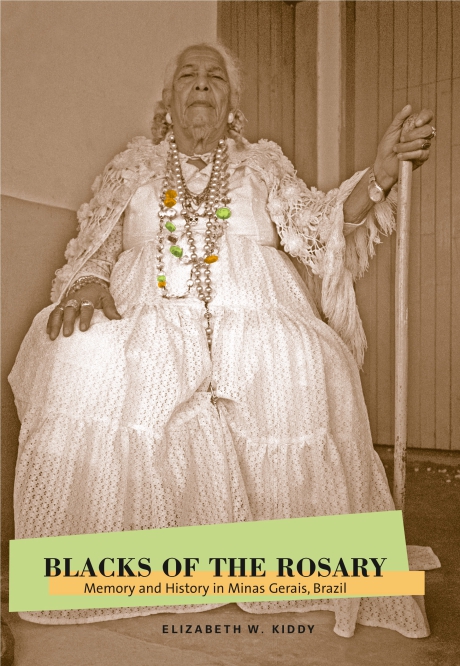
Blacks of the Rosary: Memory and History in Minas Gerais, Brazil

Posted in Anthropology, Books, Brazil, Caribbean/Latin America, History, Media Archive, Monographs, Religion on 2012-04-30 02:12Z by Steven

Blacks of the Rosary: Memory and History in Minas Gerais, Brazil

Penn State University Press
2005-08-18
304 pages
6 x 9, 8 illustrations/5 maps
Hardcover ISBN: 978-0-271-02693-0
Paperback ISBN: 978-0-271-02694-7

Elizabeth W. Kiddy, Associate Professor of History and Director of Latin American and Caribbean Studies
Albright College, Reading, Pennsylvania

Blacks of the Rosary tells the story of the Afro-Brazilian communities that developed within lay religious brotherhoods dedicated to Our Lady of the Rosary in Minas Gerais. It shows how these brotherhoods functioned as a social space in which Africans and their descendants could rebuild a communal identity based on a shared history of an African past and an ongoing devotional practice, thereby giving rise to enduring transnational cultures that have survived to the present day. In exploring this intersection of community, identity, and memory, the book probes the Portuguese and African contributions to the brotherhoods in Part One. Part Two traces the changes and continuities within the organizations from the early eighteenth century to the end of the Brazilian Empire, and the book concludes in Part Three with discussion of the twentieth-century brotherhoods and narratives of the participants in brotherhood festivals in the 1990s. In a larger sense, the book serves as a case study through which readers can examine the strategies that Afro-Brazilians used to create viable communities in order to confront the asymmetry of power inherent in the slave societies of the Americas and their economic and social marginalization in the twentieth century.

Tags: , , ,

The Accidental City: Improvising New Orleans

Posted in Books, History, Louisiana, Media Archive, Monographs, United States on 2012-04-29 22:26Z by Steven

The Accidental City: Improvising New Orleans

Harvard University Press
March 2012
448 pages
Hardcover ISBN: 9780674059870
6-1/8 x 9-1/4 inches
19 halftones, 2 maps

Lawrence N. Powell, Professor of History
Tulane University

This is the story of a city that shouldn’t exist. In the seventeenth century, what is now America’s most beguiling metropolis was nothing more than a swamp: prone to flooding, infested with snakes, battered by hurricanes. But through the intense imperial rivalries of Spain, France, and England, and the ambitious, entrepreneurial merchants and settlers from four continents who risked their lives to succeed in colonial America, this unpromising site became a crossroads for the whole Atlantic world.

Lawrence N. Powell, a decades-long resident and observer of New Orleans, gives us the full sweep of the city’s history from its founding through Louisiana statehood in 1812. We see the Crescent City evolve from a French village, to an African market town, to a Spanish fortress, and finally to an Anglo-American center of trade and commerce. We hear and feel the mix of peoples, religions, and languages from four continents that make the place electric—and always on the verge of unraveling. The Accidental City is the story of land-jobbing schemes, stock market crashes, and nonstop squabbles over status, power, and position, with enough rogues, smugglers, and self-fashioners to fill a picaresque novel.

Powell’s tale underscores the fluidity and contingency of the past, revealing a place where people made their own history. This is a city, and a history, marked by challenges and perpetual shifts in shape and direction, like the sinuous river on which it is perched.

Table of Contents

  • 1. An Impossible River
  • 2. A Landjobbing Scheme
  • 3. Utopian by Design
  • 4. Improvising a City
  • 5. Changing of the Guard
  • 6. In Contraband We Trust
  • 7. A Creole City
  • 8. Slavery and the Struggle for Mastery
  • 9. The Slaves Remake Themselves
  • 10. A New People, a New Racial Order
  • 11. The American Gateway
  • Epilogue
  • Notes
  • Acknowledgments
  • Index
Tags: , , ,

Blackness in the White Nation: A History of Afro-Uruguay

Posted in Anthropology, Books, Caribbean/Latin America, History, Media Archive, Monographs, Social Science on 2012-04-29 17:52Z by Steven

Blackness in the White Nation: A History of Afro-Uruguay

University of North Carolina Press
October 2010
256 pages
6.125 x 9.25, 14 illus., 9 tables, notes, bibl., index
Cloth ISBN: 978-0-8078-3417-6
Paper ISBN: 978-0-8078-7158-4

George Reid Andrews, Distinguished Professor of History
University of Pittsburgh

2011 Arthur P. Whitaker Prize, Middle Atlantic Council of Latin American Studies

Uruguay is not conventionally thought of as part of the African diaspora, yet during the period of Spanish colonial rule, thousands of enslaved Africans arrived in the country. Afro-Uruguayans played important roles in Uruguay’s national life, creating the second-largest black press in Latin America, a racially defined political party, and numerous social and civic organizations.

Afro-Uruguayans were also central participants in the creation of Uruguayan popular culture and the country’s principal musical forms, tango and candombe. Candombe, a style of African-inflected music, is one of the defining features of the nation’s culture, embraced equally by white and black citizens.

In Blackness in the White Nation, George Reid Andrews offers a comprehensive history of Afro-Uruguayans from the colonial period to the present. Showing how social and political mobilization is intertwined with candombe, he traces the development of Afro-Uruguayan racial discourse and argues that candombe’s evolution as a central part of the nation’s culture has not fundamentally helped the cause of racial equality. Incorporating lively descriptions of his own experiences as a member of a candombe drumming and performance group, Andrews consistently connects the struggles of Afro-Uruguayans to the broader issues of race, culture, gender, and politics throughout Latin America and the African diaspora generally.

Tags: , , , , ,

Finding Grace: Two Sisters and the Search for Meaning Beyond the Color Line

Posted in Biography, Books, History, Media Archive, Monographs, Passing, United States on 2012-04-29 17:19Z by Steven

Finding Grace: Two Sisters and the Search for Meaning Beyond the Color Line

Simon & Schuster
July 2007
296 pages
Paperback ISBN-10: 0743200543; ISBN-13: 9780743200547

Shirlee Taylor Haizlip

In her widely acclaimed, bestselling memoir, The Sweeter the Juice, Shirlee Taylor Haizlip asked us to redefine our concepts of race and family by examining her biracial heritage—how different gradations of dark and light skin led to a split in her mother’s nuclear family, and how various relatives have been reunited many years later, some of them previously unaware of their layered racial makeup. In this eloquent, moving, and eagerly awaited continuation of her story, Haizlip pushes further into the fascinating terrain of family, race, and racial passing. Just over ten years ago, Haizlip’s African American mother was reunited with her sister, who had spent her whole life passing for white; both women were in their eighties and had not seen or heard anything about each other since early childhood. Now Haizlip answers the many questions that linger from the previous book: What happened between these long-separated sisters after their reunion? What did they learn about each other, and about themselves? Is it possible to heal the wounds caused by such a rift?

In rich, elegant prose, Haizlip contrasts her mother’s fulfilling adult life with her aunt’s solitary white existence. They lived on opposite sides of the race line, but both women, says Haizlip, were plagued by “America’s twin demons: a paranoia about purity and an anxiety about authenticity.” These women and other members of the author’s extended family come vividly, achingly to life in these pages, turning this astute cultural investigation into a poignant, delightful, and highly personal narrative. Haizlip deftly, fluidly conveys the complexities of this story—the sadness, comedy, danger, anger, confusion, shame, fear, longing, excitement, and joy of her family’s rupture and reunion. We learn how Haizlip’s mother’s abandonment by members of her immediate family affected her daily life; we learn about the lives of relatives who left her behind, and of the members of succeeding generations who knew of the rift, and of those who did not.

Haizlip’s readers, too, appear here—after The Sweeter the Juice, Haizlip was flooded by letters in which people shared similar family stories of bi-racial heritage, passing, and the eventual revelation of an extended racial makeup. She includes some of these letters here, affirming that her own seemingly unusual tale is actually a very familiar, very American story: of the tumultuous, complicated interactions between black and white communities and individuals—interactions marked by fear and distrust, but also by camaraderie, ardor, and love. In sharing her own and her readers’ stories, Haizlip forges a new picture of America’s hidden racial past and its multihued future. Passionate, indomitable, and always generous toward her subjects, Haizlip explores what happens when the race divide exists within one family, and the effect of secret racial histories and their revelation on individuals and America at large.

Contents

  • Part I When the Rainbow Is Not Enough
    • Prologue
    • 1. A Twice-Told Tale
    • 2. The Gift
    • 3. The Etiology of Passing
    • 4. Visible and Invisible
    • 5. Passport to Privilege
    • 6. A Place Beyond Loss
    • 7. Creating a New Vocabulary
    • 8. In the Best of Families
    • 9. A Whiter Shade of White
    • 10. The Indian Who Wasn’t
    • 11. Tracking Will
    • 12. Life Review
    • 13. Eyes Other than Our Own
    • 14. Unexpected Encounters of Kith and Kin
  • Part II Relativity
    • 15. In Their Own Voices
  • Part III The Color of Letters
    • 16. Open Hearts, Open Minds
    • 17. The Last Word
  • Epilogue
Tags: , , ,

Sex and Race in the Black Atlantic: Mulatto Devils and Multiracial Messiahs

Posted in Books, Canada, History, Literary/Artistic Criticism, Media Archive, Monographs, Philosophy, United Kingdom, United States on 2012-04-29 17:10Z by Steven

Sex and Race in the Black Atlantic: Mulatto Devils and Multiracial Messiahs

Routledge: Routledge Studies on African and Black Diaspora
2009-12-15
204 pages
Hardback ISBN: 978-0-415-87226-3
Paperback ISBN: 978-0-415-89391-6
eBook ISBN: 978-0-203-85736-6

Daniel R. McNeil, Associate Professor of History
Carleton University, Ottawa, Ontario, Canada

This is the first book to place the self-fashioning of mixed-race individuals in the context of a Black Atlantic. Drawing on a wide range of sources and a diverse cast of characters – from the diaries, letters, novels and plays of femme fatales in Congo and the United States to the advertisements, dissertations, oral histories and political speeches of Black Power activists in Canada and the United Kingdom – it gives particular attention to the construction of mixed-race femininity and masculinity during the twentieth century. Its broad scope and historical approach provides readers with a timely rejoinder to academics, artists, journalists and politicians who only use the mixed-race label to depict prophets or delinquents as “new” national icons for the twenty-first century.

Table of Contents

  1. New People?
  2. An Individualistic Age?
  3. “Je suis métisse”
  4. “I. Am. A Light Grey Canadian.”
  5. “I’m Black. Not Mixed. Not Canadian. Not African. Just Black”
  6. “Yes, We’re All Individuals!” “I’m Not.”
  7. Conclusion
Tags: , , ,

Blue Coat or Powdered Wig: Free People of Color in Pre-Revolutionary Saint Domingue

Posted in Anthropology, Books, Caribbean/Latin America, History, Monographs on 2012-04-27 18:56Z by Steven

Blue Coat or Powdered Wig: Free People of Color in Pre-Revolutionary Saint Domingue

University of Georgia Press
March 2001
344 pages
6.125 x 9.25
Paper ISBN: 978-0-8203-3029-7

Stewart R. King, Associate Professor of History
Mount Angel Seminary, St. Benedict, Oregon

By the late 1700s, half the free population of Saint Domingue was black. The French Caribbean colony offered a high degree of social, economic, and physical mobility to free people of color. Covering the period 1776-1791, this study offers the most comprehensive portrait to date of Saint Domingue’s free black elites on the eve of the colony’s transformation into the republic of Haiti.

Stewart R. King identifies two distinctive groups that shared Saint Domingue’s free black upper stratum, one consisting of planters and merchants and the other of members of the army and police forces. With the aid of individual and family case studies, King documents how the two groups used different strategies to pursue the common goal of economic and social advancement. Among other aspects, King looks at the rural or urban bases of these groups’ networks, their relationships with whites and free blacks of lesser means, and their attitudes toward the acquisition, use, and sale of land, slaves, and other property.

King’s main source is the notarial archives of Saint Domingue, whose holdings offer an especially rich glimpse of free black elite life. Because elites were keenly aware of how a bureaucratic paper trail could help cement their status, the archives divulge a wealth of details on personal and public matters.

Blue Coat or Powdered Wig is a vivid portrayal of race relations far from the European centers of colonial power, where the interactions of free blacks and whites were governed as much by practicalities and shared concerns as by the law.

Table of Contents

  • Acknowledgements
  • Introduction
  • Part One. The Colony and Its People
    • Chapter One. The Notarial Record and Free Coloreds
    • Chapter Two. The Land
    • Chapter Three. The People
    • Chapter Four. Free Colored in the Colonial Armed Forces
  • Part Two. The Free Colored in Society and the Economy
    • Chapter Five. Slaveholding Practices
    • Chapter Six. Landholding Practices
    • Chapter Seven. Entrepreneurship
    • Chapter Eight. Non-Economic Components of Social Status
    • Chapter Nine. Family Relationships and Social Advancement
  • Part Three. Group Strategies for Economic and Social Advancement
    • Chapter Ten. Planter Elites
    • Chapter Eleven. The Military Leadership Group
    • Chapter Twelve. Conclusion
  • Appendix One. Family Tree of the Laportes of Limonade
  • Appendix Two. Surnames
  • Appendix Three. Incorporation Papers of the Grasserie Marie Josephe
  • Appendix Four. Notarized Sale Contract for a House
  • Notes
  • Works Cited
  • Index
Tags: , , , ,