Creole Crossings: Domestic Fiction and the Reform of Colonial Slavery

Posted in Books, History, Literary/Artistic Criticism, Media Archive, Monographs, Slavery, United States on 2009-11-13 04:47Z by Steven

Creole Crossings: Domestic Fiction and the Reform of Colonial Slavery

Cornell University Press
2005
254 pages, 6 x 9
ISBN: 978-0-8014-4384-8 

Carolyn Vellenga Berman
Department of Humanities
The New School, New York

The character of the Creole woman—the descendant of settlers or slaves brought up on the colonial frontier—is a familiar one in nineteenth-century French, British, and American literature. In Creole Crossings, Carolyn Vellenga Berman examines the use of this recurring figure in such canonical novels as Jane Eyre, Uncle Tom’s Cabin, and Indiana, as well as in the antislavery discourse of the period. “Creole” in its etymological sense means “brought up domestically,” and Berman shows how the campaign to reform slavery in the colonies converged with literary depictions of family life.

Illuminating a literary genealogy that crosses political, familial, and linguistic lines, Creole Crossings reveals how racial, sexual, and moral boundaries continually shifted as the century’s writers reflected on the realities of slavery, empire, and the home front. Berman offers compelling readings of the “domestic fiction” of Honoré de Balzac, Charlotte Brontë, Maria Edgeworth, Harriet Jacobs, George Sand, Harriet Beecher Stowe, and others, alongside travel narratives, parliamentary reports, medical texts, journalism, and encyclopedias. Focusing on a neglected social classification in both fiction and nonfiction, Creole Crossings establishes the crucial importance of the Creole character as a marker of sexual norms and national belonging.

Tags: , , , , , , , ,

Suspect Relations: Sex, Race, and Resistance in Colonial North Carolina

Posted in Books, History, Law, Media Archive, Monographs, Slavery, Social Science, United States on 2009-11-13 03:44Z by Steven

Suspect Relations: Sex, Race, and Resistance in Colonial North Carolina

Cornell University Press
2001
288 pages
6 1/8 x 9 1/4, 2 maps, 13 halftones, 1 line drawing
Paper ISBN: 978-0-8014-8679-1
Cloth ISBN: 978-0-8014-3822-6 

Kirsten Fischer, Associate Professor of History
University of Minnesota

Over the course of the eighteenth century, race came to seem as corporeal as sex. Kirsten Fischer has mined unpublished court records and travel literature from colonial North Carolina to reveal how early notions of racial difference were shaped by illicit sexual relationships and the sanctions imposed on those who conducted them. Fischer shows how the personal–and yet often very public–sexual lives of Native American, African American, and European American women and men contributed to the new racial order in this developing slave society.

Liaisons between European men and native women, among white and black servants, and between servants and masters, as well as sexual slander among whites and acts of sexualized violence against slaves, were debated, denied, and recorded in the courtrooms of colonial North Carolina. Indentured servants, slaves, Cherokee and Catawba women, and other members of less privileged groups sometimes resisted colonial norms, making sexual choices that irritated neighbors, juries, and magistrates and resulted in legal penalties and other acts of retribution. The sexual practices of ordinary people vividly bring to light the little-known but significant ways in which notions of racial difference were alternately contested and affirmed before the American Revolution.

Fischer makes an innovative contribution to the history of race, class, and gender in early America by uncovering a detailed record of illicit sexual exchanges in colonial North Carolina and showing how acts of resistance to sexual rules complicated ideas about inherent racial difference.

Table of Contents

List of Illustrations
Acknowledgments
Introduction: Changing Conceptions of Race
1. Disorderly Women and the Struggle for Authority
2. Cross-Cultural Sex in Native North Carolina
3. The Sexual Regulation of Servant Women and Subcultures of Resistance
4. White Reputations “Blacken’d & Made Loose”
5. Sexualized Violence and the Embodiment of Race
Epilogue: Dangerous Liaisons
Notes
Index

Tags: , ,

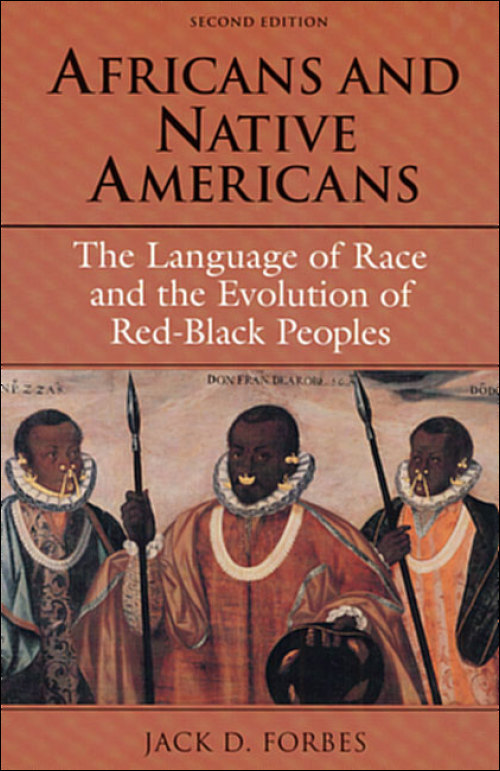
Africans and Native Americans: The Language of Race and the Evolution of Red-Black Peoples (Second Edition)

Posted in Anthropology, Books, Canada, Caribbean/Latin America, Europe, History, Media Archive, Monographs, Native Americans/First Nation, United States on 2009-11-11 18:16Z by Steven

Africans and Native Americans: The Language of Race and the Evolution of Red-Black Peoples (Second Edition)

University of Illinois Press
1993
Paper: 978-0-252-06321-3
352 pages

Jack D. Forbes, Professor Emeritus. Native American Studies and Anthropology
University of California, Davis

This volume will revise the way we look at the modern populations of Latin America and North America by providing a totally new view of the history of Native American and African American peoples throughout the hemisphere. Africans and Native Americans explores key issues relating to the evolution of racial terminology and European colonialists’ perceptions of color, analyzing the development of color classification systems and the specific evolution of key terms such as black, mulatto, and mestizo, which no longer carry their original meanings. Jack Forbes presents strong evidence that Native American and African contacts began in Europe, Africa, and the Caribbean and that Native Americans may have crossed the Atlantic long before Columbus.

Tags: , ,

Hapa Girl: A Memoir

Posted in Asian Diaspora, Autobiography, Books, Media Archive, Monographs, United States, Women on 2009-11-11 04:13Z by Steven

Hapa Girl: A Memoir

Temple University Press
March 2007
232 pages
5.5×8.25, 12 halftones
Paper EAN: 978-1-59213-616-2 (ISBN: 1592136168)
Cloth EAN: 978-1-59213-615-5 (ISBN: 159213615X

May-lee Chai

  • Named one of the Notable Books in the Kiriyama Prize, 2008
  • Honorable Mention at the Gustavus Myers Outstanding Book Awards, 2007

A vivid depiction of the racism suffered by a mixed-race family in rural South Dakota

In the mid-1960s, Winberg Chai, a young academic and the son of Chinese immigrants, married an Irish-American artist. In Hapa Girl (“hapa” is Hawaiian for “mixed”) their daughter tells the story of this loving family as they moved from Southern California to New York to a South Dakota farm by the 1980s. In their new Midwestern home, the family finds itself the object of unwelcome attention, which swiftly escalates to violence. The Chais are suddenly socially isolated and barely able to cope with the tension that arises from daily incidents of racial animosity, including random acts of cruelty.

May-lee Chai’s memoir ends in China, where she arrives just in time to witness a riot and demonstrations. Here she realizes that the rural Americans’ “fears of change, of economic uncertainty, of racial anxiety, of the unknowable future compared to the known past were the same as China’s. And I realized finally that it had not been my fault.”

Table of Contents

Prologue
Chapter 1: The Wearing of the Green
Chapter 2: The Sexy Artist Meets the Boy From New York City
Chapter 3: How to Charm a Mother-in-Law
Chapter 4: California Dreamin’
Chapter 5: The Banana
Chapter 6: The Banana’s Revenge
Chapter 7: Autumn in the Country
Chapter 8: Hunting Season
Chapter 9: The Little Things
Chapter 10: The Closet
Chapter 11: My Last Confession
Chapter 12: Bugs
Chapter 13: The Fall of the Prince
Chapter 14: The Jade Tree
Chapter 15: The Nights of Many Prayers
Chapter 16: What You Don’t Know Can Hurt You
Chapter 17: Stephen King High
Chapter 18: Barbarians
Chapter 19: Glamour Puss
Chapter 20: The Cannibals
Chapter 21: The Fine Art of Denial

Tags: ,

Rise and Fall of the Cosmic Race: The Cult of Mestizaje in Latin America

Posted in Anthropology, Books, Brazil, Caribbean/Latin America, History, Identity Development/Psychology, Media Archive, Monographs, Politics/Public Policy, Social Science on 2009-11-10 04:31Z by Steven

Rise and Fall of the Cosmic Race: The Cult of Mestizaje in Latin America

University of Texas Press
2004
6 x 9 in.
216 pp., 3 b&w illus.
ISBN: 978-0-292-70596-8

Marilyn Grace Miller, Assistant Professor of Spanish and Portuguese
Tulane University, New Orleans

Latin America is characterized by a uniquely rich history of cultural and racial mixtures known collectively as mestizaje. These mixtures reflect the influences of indigenous peoples from Latin America, Europeans, and Africans, and spawn a fascinating and often volatile blend of cultural practices and products. Yet no scholarly study to date has provided an articulate context for fully appreciating and exploring the profound effects of distinct local invocations of syncretism and hybridity. Rise and Fall of the Cosmic Race fills this void by charting the history of Latin America’s experience of mestizaje through the prisms of literature, the visual and performing arts, social commentary, and music.

In accessible, jargon-free prose, Marilyn Grace Miller brings to life the varied perspectives of a vast region in a tour that stretches from Mexico and the Caribbean to Brazil, Ecuador and Argentina. She explores the repercussions of mestizo identity in the United States and reveals the key moments in the story of Latin America’s cult of synthesis. Rise and Fall of the Cosmic Race examines the inextricable links between aesthetics and politics, and unravels the threads of colonialism woven throughout national narratives in which mestizos serve as primary protagonists.

Illuminating the ways in which regional engagements with mestizaje represent contentious sites of nation building and racial politics, Miller uncovers a rich and multivalent self-portrait of Latin America’s diverse populations.

Tags: , , ,

Undoing Empire: Race and Nation in the Mulatto Caribbean

Posted in Books, Caribbean/Latin America, History, Media Archive, Monographs, Social Science on 2009-11-08 19:20Z by Steven

Undoing Empire: Race and Nation in the Mulatto Caribbean

University of Minnesota Press
2003
336 pages, 27 halftones
5 7/8 x 9
Paper ISBN: 0-8166-3574-9
Paper ISBN-13: 978-0-8166-3574-0
Cloth ISBN: 0-8166-3573-0
Cloth ISBN-13: 978-0-8166-3573-3

José F. Buscaglia-Salgado, Professor and Chair of Cultures, Societies and Global Studies
Northeastern University, Boston, Massachusetts

A revelatory account that places mulatto experience at the center of Caribbean history.

This ambitious book brings to light the story of what José F. Buscaglia-Salgado terms mulataje-the ways Caribbean aesthetics offer the possibility of the ultimate erasure of racial difference. Undoing Empire gives a broad panorama stretching from the complex politics of medieval Iberian societies to the beginning of direct U.S. hegemony in the Caribbean at the end of the nineteenth century.

Buscaglia-Salgado begins with an examination of Washington Irving‘s “American Columbiad” as an act of historical and territorial plundering. He then traces the roots of mulatto society to the pre-1492 Iberian world, not only finding a connection between the Moors of “Old Spain” and the morenos-the blacks and mulattos of the New World-but also offering a profound critique of creole and imperial discourses. Buscaglia-Salgado reads the pursuit and contestation of what he terms the European Ideal in colonial texts, architecture, and paintings; then identifies the mulatto movement of “undoing” the Ideal in the wars that shook the nineteenth-century Caribbean from Haiti to Cuba, arguing that certain projects of national liberation have moved contrary to the historical claims to freedom in the mulatto world.

Tags: , , , , ,

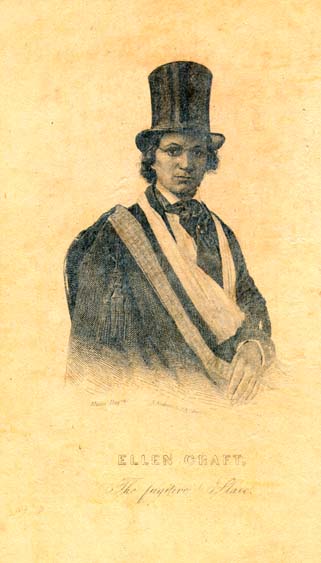
Running a Thousand Miles for Freedom or The Escape of William and Ellen Craft from Slavery

Posted in Autobiography, Books, History, Media Archive, Monographs, Passing, Slavery, United States on 2009-11-08 04:41Z by Steven

Running a Thousand Miles for Freedom or The Escape of William and Ellen Craft from Slavery

Louisiana State University Press
Originally Published: 1860
Published by LSU Press: 1999
120 pages
Trim: 6 x 9
Illustrations: 5 halftones
ISBN-13: 978-0-8071-2320-1 Paper

William Craft

With a Foreword and Biographical Essay by

Richard J. M. Blackett,  Andrew Jackson Professor of History
Vanderbilt University

Husband and wife William and Ellen Craft’s [her mother was a slave and her father was her mother’s owner.] break from slavery in 1848 was perhaps the most extraordinary in American history. Numerous newspaper reports in the United States and abroad told of how the two—fair-skinned Ellen disguised as a white slave master and William posing as her servant—negotiated heart-pounding brushes with discovery while fleeing Macon, Georgia, for Philadelphia and eventually Boston. No account, though, conveyed the ingenuity, daring, good fortune, and love that characterized their flight for freedom better than the couple’s own version, published in 1860, a remarkable authorial accomplishment only twelve years beyond illiteracy. Now their stirring first-person narrative and Richard Blackett’s excellent interpretive pieces are brought together in one volume to tell the complete story of the Crafts.


Ellen Craft

Summary by Monique Pierce of Documenting The South:

Published in 1860, shortly before the start of the Civil War, Running a Thousand Miles for Freedom is the narrative of William and Ellen Craft‘s escape from slavery. Both were born and grew up in Georgia, and they lived in Macon prior to their escape. In December 1848 they devised a plan in which Ellen Craft, who was very light- skinned, would dress as a man and pretend to be a rheumatic seeking better treatment in Philadelphia. William was to accompany her and act as her slave. Relying exclusively on means of public transportation, including trains and steamers, they made their way to Savannah, then to Charleston, Wilmington, North Carolina, Washington, D.C., Baltimore, and Philadelphia, where they arrived on Christmas Day. They then relocated to Boston and sailed for England after the Fugitive Slave Law enabled slave hunters to pursue them even in free states. At the time this work was published, they were living in England with their sons. The narrative includes many anecdotes about slavery and freedom for Blacks and discusses how they were treated in both the South and the North.

Read the entire book in HTML format here.  You may also obtain it here.

Tags: , , , , , , , ,

The Hairstons: An American Family in Black and White

Posted in Books, History, Media Archive, Monographs, Slavery, United States on 2009-11-05 20:56Z by Steven

The Hairstons: An American Family in Black and White

St. Martin’s Press an imprint of Macmillan
February 1999
ISBN: 978-0-312-25393-6
ISBN10: 0-312-25393-1
6-1/8 x 9-1/4 inches
400 pages, Plus 16-page b&w photo insert

Henry Wiencek

Winner of the National Book Critics Circle Award

The Hairstons is the extraordinary story of the largest family in America, the Hairston clan. With several thousand black and white members, the Hairstons share a complex and compelling history: divided in the time of slavery, they have come to embrace their past as one family.

The black family’s story is most exceptional. It is the account of the rise of a remarkable people—the children, grandchildren, and great-grandchildren of slaves—who took their rightful place in mainstream America.

In contrast, it has been the fate of the white family—once one of the wealthiest in America—to endure the decline and fall of the Old South, and to become an apparent metaphor for that demise. But the family’s fall from grace is only part of the tale. Beneath the surface lay a hidden history—the history of slavery’s curse and how that curse plagued slaveholders for generations.

For the past seven years, journalist Wiencek has listened raptly to the tales of hundreds of Hairston relatives, including the aging scions of both the white and black clans. He has crisscrossed the old plantation country in Virginia, North Carolina, and Mississippi to seek out the descendants of slaves. Visiting family reunions, interviewing family members, and exploring old plantations, Wiencek combs the far-reaching branches of the Hairston family tree to gather anecdotes from members about their ancestors and piece together a family history that involves the experiences of both plantation owners and their slaves. He expertly weaves the Hairstons’ stories from all sides of historical events like slave emancipation, Reconstruction, school segregation, and lynching.

Paradoxically, Wiencek demonstrates that these families found that the way to come to terms with the past was to embrace it, and this lyrical work, a parable of redemption, may in the end serve as a vital contribution to our nation’s attempt to undo the twisted historical legacy of the past.

Tags: ,

Pure Beauty: Judging Race in Japanese American Beauty Pageants

Posted in Asian Diaspora, Books, Media Archive, Monographs, United States, Women on 2009-11-05 02:08Z by Steven

Pure Beauty: Judging Race in Japanese American Beauty Pageants

University of Minnesota Press
2006
280 pages, 6 halftones, 10 tables
5 7⁄8 x 9
Paper ISBN: 0-8166-4790-9
Paper ISBN-13: 978-0-8166-4790-3
Cloth ISBN: 0-8166-4789-5
Cloth ISBN-13: 978-0-8166-4789-7

Rebecca Chiyoko King-O’Riain, Lecturer in Sociology
National University of Ireland, Maynooth

Examines the question, Who is Japanese American?

With a low rate of immigration and a high rate of interracial marriage, Japanese Americans today compose the Asian ethnic group with the largest proportion of mixed-race members. Within Japanese American communities, increased participation by mixed-race members, along with concerns about overassimilation, has led to a search for cultural authenticity, giving new answers to the question, Who is Japanese American?

In Pure Beauty, Rebecca Chiyoko King-O’Riain tackles this question by studying a cultural institution: Japanese American community beauty pageants in San Francisco, Los Angeles, Seattle, and Honolulu. King-O’Riain employs rich ethnographic fieldwork to discover how these pageants seek to maintain racial and ethnic purity amid shifting notions of cultural identity. She uses revealing in-depth interviews with candidates, queens, and community members, her experiences as a pageant committee member, and archival research—including Japanese and English newspapers, museum collections, private photo albums, and mementos—to establish both the importance and impossibility of racial purity. King-O’Riain examines racial eligibility rules and tests, which encompass not only ancestry but also residency, community service, and culture, and traces the history of pageants throughout the United States. Pure Beauty shows how racial and gendered meanings are enacted through the pageants, and reveals their impact on Japanese American men, women, and children.

King-O’Riain concludes that the mixed-race challenge to racial understandings of Japanese Americanness does not necessarily mean an end to race as we know it and asserts that race is work—created and re-created in a social context. Ultimately, she determines that the concept of race, fragile though it may be, is still one of the categories by which Japanese Americans are judged.

Table of Contents

  • Preface
  • Introduction: Negotiating Racial Hybridity in Community Beauty Pageants
  1. Race Work and the Effort of Racial Claims
  2. The Japanese American Community in Transition
  3. Japanese American Beauty Pageants in Historical Perspective
  4. Cultural Impostors and Eggs: Race without Culture and Culture without Race
  5. Patrolling Bodies: The Social Control of Race through Gender
  6. The “Ambassadress” Queen: Moving Authentically between Racial Communities in the United States and Japan
  7. Percentages, Parts, and Power: Racial Eligibility Rules and Local Versions of Japanese Americanness in Context
  • Conclusion: Japanese Americanness, Beauty Pageants, and Race Work
  • Notes
  • Bibliography
  • Index
Tags: , ,

Mestizaje: Critical Uses of Race in Chicano Culture

Posted in Books, History, Identity Development/Psychology, Media Archive, Monographs, United States on 2009-11-05 01:43Z by Steven

Mestizaje: Critical Uses of Race in Chicano Culture

University of Minnesota Press
2006
272 pages
15 halftones; 5 7⁄8 x 9
Paper ISBN: 0-8166-4595-7
Paper ISBN-13: 978-0-8166-4595-4
Cloth ISBN: 0-8166-4594-9
Cloth ISBN-13: 978-0-8166-4594-7

Rafael Pérez-Torres, Professor and Chair of English
University of California, Los Angeles

A major reassessment of how mixed-race identity affects Chicano culture and politics.

Focusing on the often unrecognized role race plays in expressions of Chicano culture, Mestizaje is a provocative exploration of the volatility and mutability of racial identities. In this important moment in Chicano studies, Rafael Pérez-Torres reveals how the concepts and realities of race, historical memory, the body, and community have both constrained and opened possibilities for forging new and potentially liberating multiracial identities.

Informed by a broad-ranging theoretical investigation of identity politics and race and incorporating feminist and queer critiques, Pérez-Torres skillfully analyzes Chicano cultural production. Contextualizing the history of mestizaje, he shows how the concept of mixed race has been used to engage issues of hybridity and voice and examines the dynamics that make mestizo and mestiza identities resistant to, as well as affirmative of, dominant forms of power. He also addresses the role that mestizaje has played in expressive culture, including the hip-hop music of Cypress Hill and the vibrancy of Chicano poster art. Turning to issues of mestizaje in literary creation, Pérez-Torres offers critical readings of the works of Emma Pérez, Gil Cuadros [1962-1996], and Sandra Cisneros, among others. This book concludes with a consideration of the role that the mestizo body plays as a site of elusive or displaced knowledge.

Moving beyond the oppositions—nationalism versus assimilation, men versus women, Texans versus Californians—that have characterized much of Chicano studies, Mestizaje synthesizes and assesses twenty-five years of pathbreaking thinking to make a case for the core components, sensibilities, and concerns of the discipline.

Table of Contents

Acknowledgments
Introduction

PART I. Creating Mestizaje
1. The Critical Mixture of Race
2. The Mestizo Voice

PART II. Fashioning Mestizaje
3. Popular Music and Postmodern Mestizaje
4. Land and Race in Chicano Public Art

PART III. Challenging Mestizaje
5. The Transgressive Body and Sexual Mestizaje
6. Narrative and Loss

Notes
Works Cited
Index

Tags: , , , , , , ,