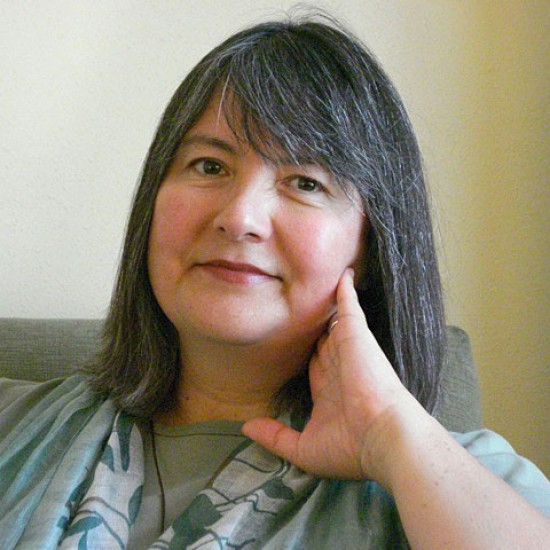
How I Found My Way to Hapa

Posted in Articles, Asian Diaspora, Autobiography, Media Archive, United States on 2015-10-16 20:43Z by Steven

How I Found My Way to Hapa

The Mash-Up Americans
2010-10-06

Tanya Tarr

Being mixed race can make people look at you like you’re a unicorn. We’re the changing face of America! We have a racial passport to anywhere! We can also grow up confused, and challenged on our identity on every front. Is half ever enough? What standards do we have to meet in order to fit in? Our Korean-Brazilian-American Mash-Up Tanya Tarr shares with us her struggle for belonging, and her choice. We’re in.

The identity of a racially mixed person is a squishy place to live.

I never identified as a person of color until I was in my mid twenties. My mom is first-generation Korean-American, and my dad has Brazilian, Finnish, and Scottish ancestry. Though I grew up in a Korean Baptist Bible church outside of Washington, D.C., I never felt that I truly belonged in a Korean community.

To put it bluntly, Koreans are super group-oriented and can sometimes be unflinchingly xenophobic. An outsider is and often will remain an outsider. Among the church kids I grew up with, I was too tall. Too loud. Too fat, by Korean standards. I was nerdy but not nerdy enough to inhabit the rarified air of magnet school kids and Korean-level competition. I wasn’t captain of the mathlete team and my piano skills were not concert-ready…

Read the entire article here.

Tags: ,

Lecture, forum at UH-Hilo to explore Filipino identity

Posted in Articles, Asian Diaspora, Live Events, Media Archive, Philosophy, United States on 2015-10-14 00:54Z by Steven

Lecture, forum at UH-Hilo to explore Filipino identity

Hawaii Tribune-Herald
Hilo, Hawaii
2015-10-13


Dr. Ronald R. Sundstrom

Dr. Ronald Sundstrom, professor of philosophy at the University of San Francisco, will deliver a public lecture titled “The Filipino-American Experience and The Post-Racial State” from 4-5:30 p.m. Friday at the University of Hawaii at Hilo UCB 127.

The presentation, part of UH-Hilo’s Filipino-American Heritage Month events, is open to the public.

There also will be an academic forum titled “Knowledge, Power and Identity” from 11-11:50 a.m. Friday in UCB 111.

Dr. Celia Bardwell Jones, UH-Hilo philosophy professor, and the Filipino-American Heritage Month committee organized the academic forum and public lecture to tackle sensitive and provocative issues of Filipino identity.

Sundstrom comes from a mixed-race Filipino heritage and was born as a Filipino Amerasian child in Olongapo, Subic Bay. He later had to nationalize in order to claim his U.S. citizenship.

Additionally, he teaches for USF’s African-American studies program and the master of public affairs program for the Leo T. McCarthy Center of Public Service and the Common Good…

Read the entire article here.

Tags: , , ,

The Invisible Asian

Posted in Articles, Asian Diaspora, Media Archive, Philosophy, United States on 2015-10-11 02:31Z by Steven

The Invisible Asian

The New York Times
2015-10-07

George Yancy, Professor of Philosophy
Emory University, Atlanta, Georgia

David Haekwon Kim, Associate Professor of Philosophy
University of San Francisco

This is the latest in a series of interviews about philosophy of race that I am conducting for The Stone. This week’s conversation is with David Haekwon Kim, an associate professor of philosophy and the director of the Global Humanities initiative at the University of San Francisco and the author of several essays on Asian-American identity. — George Yancy

George Yancy: A great deal of philosophical work on race begins with the white/black binary. As a Korean-American, in what ways does race mediate or impact your philosophical identity?

David Haekwon Kim: In doing philosophy, I often approach normative issues with concerns about lived experience, cultural difference, political subordination, and social movements changing conditions of agency. I think these sensibilities are due in large part to my experience of growing up bicultural, raced, and gendered in the U.S., a country that has never really faced up to its exclusionary and often violent anti-Asian practices. In fact, I am sometimes amazed that I have left so many tense racialized encounters with both my life and all my teeth. In other contexts, life and limb were not at issue, but I did not emerge with my self-respect intact.

These sensibilities have also been formed by learning a history of Asian-Americans that is more complex than the conventional watered-down immigrant narrative. This more discerning, haunting, and occasionally beautiful history includes reference to institutional anti-Asian racism, a cultural legacy of sexualized racism, a colonial U.S. presence in East Asia and the Pacific Islands, and some truly inspiring social struggles by Asians, Asian-Americans, and other communities of color…

Read the entire interview here.

Tags: , , , , , ,

Grace Lee Boggs, Human Rights Advocate for 7 Decades, Dies at 100

Posted in Articles, Asian Diaspora, Biography, Media Archive, United States, Women on 2015-10-09 15:29Z by Steven

Grace Lee Boggs, Human Rights Advocate for 7 Decades, Dies at 100

The New York Times
2015-10-05

Robert D. McFadden


Ms. Boggs and her husband, James. Credit LeeLee Films, Inc.

Grace Lee Boggs, one of the nation’s oldest human rights activists, who waged a war of inspiration for civil rights, labor, feminism, the environment and other causes for seven decades with an unflagging faith that revolutionary justice was just around the corner, died on Monday at her home in Detroit. She was 100.

Her death was confirmed by Alice Jennings, her friend and legal trustee.

Born to Chinese immigrants, Ms. Boggs was an author and philosopher who planted gardens on vacant lots, founded community organizations and political movements, marched against racism, lectured widely on human rights and wrote books on her evolving vision of a revolution in America.

Her odyssey took her from the streets of Chicago as a tenant organizer in the 1940s to arcane academic debates about the nature of communism, from the confrontational tactics of Malcolm X and the Black Power movement to the nonviolent strategies of the Rev. Dr. Martin Luther King Jr., and finally to her own manifesto for change — based not on political and economic upheavals but on community organizing and resurgent moral values…

…In 1953, she moved to Detroit and married James Boggs, a black autoworker, writer and radical activist. The city, with its large black population, racial inequalities and auto industry in its postwar heyday, seemed poised for changes, and the couple focused on African-Americans, women and young people as vanguards of a social movement…

Read the entire obituary here.

Tags: , , , , , , ,

Employee’s Change in Racial Self-Identification Cannot Support Discrimination Claim if Employer Unaware of Change

Posted in Articles, Asian Diaspora, Law, Media Archive, United States on 2015-10-08 20:28Z by Steven

Employee’s Change in Racial Self-Identification Cannot Support Discrimination Claim if Employer Unaware of Change

JD Supra Business Advisor
2015-10-05

Jonathan Crotty
Parker Poe Adams & Bernstein LLP, Charlotte, North Carolina

Michael Vanesse
Parker Poe Adams & Bernstein LLP, Charlotte, North Carolina

In recent years, more Americans have begun identifying themselves as biracial or of mixed racial heritage. This shift has resulted in changes to census and other forms where people are asked to self-identify by race. In addition, some persons of mixed heritage may change their personal identification with one racial category over time. However, as recently pointed out by the Eleventh Circuit Court of Appeals, this change cannot form the basis for a race discrimination claim if unknown to the employer at the time the questioned decisions were made.

In Fagerstrom v. City of Savannah, the plaintiff was a police captain of Swedish and Japanese heritage. When filling out forms used for affirmative action purposes, the plaintiff had identified himself as white. When passed over for promotion to major, the plaintiff sued, alleging that he had been discriminated against based on his race in favor of two white captains. The plaintiff said that he changed his self-identification to Asian-American several years previously…

Read the entire article here.

Tags: , , , , ,

Liminality as Inheritance: On Being Mixed and Third Culture

Posted in Articles, Asian Diaspora, Autobiography, Media Archive, United States on 2015-10-08 19:17Z by Steven

Liminality as Inheritance: On Being Mixed and Third Culture

Mixed Roots Stories
2015-10-07

Mari L’Esperance

The following is adapted from previous posts published at Discover Nikkei and Best American Poetry.

“To be hybrid anticipates the future.”Isamu Noguchi, 1942

Noguchi’s prescient words are manifesting on every level in our time. Just look around you: rigid binaries and categories continue to shift, dissolve, and flow into one another, creating a new “third”. As a woman of mixed heritage I’m compelled by the process that unfolds in this liminal space—a space that isn’t this or that, but is its own realm—a borderland of both/and. It is a space of fluidity and potentiality where all my “selves” are free to be, where I’m beholden to no one culture, camp, or tribe, but can instead move between and among them. It’s an exciting, and destabilizing, time in which to be alive.

The symbolic and psychological meanings of “borderlands”—both internal and external—have been my preoccupation for years. It’s a preoccupation that comes with the territory. I am the daughter of a Japanese mother born before World War II in Tokyo to an upper middle-class family and a French CanadianNew Englander father who grew up during the Great Depression in a working class, bilingual family. My parents raised my brother and me with both cultures in various locations in California, Micronesia, and Japan. This last is why I also consider myself an adult Third Culture Kid—a person who’s been raised in places and cultures other than her parents’ passport country/countries. TCKs internalize aspects of all the cultures in which they’ve been immersed while not having full ownership in any. Consequently, I’m adaptable, curious, restless, and can live pretty much anywhere. My least favorite question is “Where are you from?” because it is impossible to answer. If I were to use a food metaphor to describe my internal experience, Asian hot pot (or nabemono in Japanese) probably comes closest. Although I often felt “other” as a younger person, in midlife I’m finally learning to settle into and appreciate my unique background and have mostly let go of struggling to fit in. I’ve come to learn that I prefer the in-between…

Read the entire article here.

Tags:

How the Hawaiian word ‘hapa’ came to be used by people of mixed heritage

Posted in Arts, Asian Diaspora, Audio, Media Archive, United States on 2015-10-08 01:10Z by Steven

How the Hawaiian word ‘hapa’ came to be used by people of mixed heritage

Public Radio International (PRI)
2015-09-15

Nina Porzucki, Producer

Recently, an old friend of mine, Julie Jimenez had a language question she wanted me to investigate: Where does the word “hapa” come from?

Julie considers herself hapa. Her father is from Chile, her mom is Japanese American. And she calls herself “hapa,” that is, half Asian, half something else. Julie had never questioned this definition before until one day she was at the market and she met a women who she thought was hapa like herself.

“She looked half Chinese and half white and I said, ‘Oh, you’re hapa!’ and she said ‘that’s a Hawaiian word, you’re not supposed to use it.’ And I had never heard anyone say that before. I was kind of shocked because I had never thought it was offensive,” she said…

Listen to the story (00:38:09) here. Download the story here.

Tags: , , , , ,

Illicit Labor: MacArthur’s Mistress and Imperial Intimacies

Posted in Articles, Asian Diaspora, Biography, History, Media Archive, United States on 2015-10-06 18:04Z by Steven

Illicit Labor: MacArthur’s Mistress and Imperial Intimacies

Radical History Review
Volume 2015, Number 123 (October 2015)
pages 87-114
DOI: 10.1215/01636545-3088168

Vernadette Vicuña Gonzalez, Associate Professor of American Studies
University of Hawaii, Mānoa

This essay examines a brief affair between General Douglas MacArthur and a mixed-race Filipina vaudeville actress named Isabel Rosario Cooper. It focuses on Cooper’s little-documented and underexamined life as a way to understand how the intimate politics of the bedroom overlapped with the libidinal economies of the cosmopolitan Philippine entertainment industry, American military occupation, and broader geopolitical relations of imperial desire. Cooper and MacArthur’s liaison was constitutive of as well as constituted by the larger international “romance” between the United States and the Philippines that MacArthur himself oversaw in the early and middle part of the twentieth century. Going beyond the salacious details of an illicit love affair, this study seeks to illuminate how intimacy made up a type of imperial labor writ small, which served to underpin the project of US imperialism as crucially as colonial administration or military occupation.

Read or purchase the article here.

Tags: , , , , , , , ,

The Fabulous World of Harumi Klossowska de Rola

Posted in Articles, Arts, Asian Diaspora, Biography, Europe, Media Archive on 2015-09-28 02:14Z by Steven

The Fabulous World of Harumi Klossowska de Rola

The New York Times Magazine
2015-09-22

Hilary Moss


“Benoît, my partner, took this photo in 2013 in front of the Grand Chalet, which was a hotel until my father bought it. It is still loaded with thousands of books and even old skis from English clients. My mom has her studio there, Benoît has his studio, I have my own studio. It’s almost like apartments in a city — you can hear everyone’s muffled footsteps.” Credit: Benoît Peverelli

Balthus’s jewelry-designing daughter reflects on her ethereal life in a historic Swiss chalet — and on memories of a singular childhood.

HARUMI KLOSSOWSKA DE ROLA’S first home was the massive Renaissance Villa Medici at the edge of the Borghese gardens, residence of the French Academy in Rome, which was run throughout the 1960s and much of the 1970s by her father, the painter Balthazar Klossowski de Rola, known as Balthus. Klossowska, now in her 40s, scoured the grounds for treasures such as pale pink stones and bits of blue-green glass from mosaics to show him. Later, she found that he had kept them all, close, in his bedside top drawer.

Such moments shaped the playful, Zen, otherworldly aesthetic of the designer, who conceives high jewelry pieces for Chopard and Boucheron and for her own line. After Balthus’s stint at the Academy ended when she was 5, the family home became the Grand Chalet in Rossinière, Switzerland, built in the mid-1700s, one of the largest wooden residential structures in Europe. She lives and works there still, with her partner, the photographer Benoît Peverelli, and their two children, as well as her mother, the Japanese-born painter Setsuko Klossowska de Rola, who was 34 years Balthus’s junior. They spend time as well at Castello de Montecalvello, a medieval Italian castle that her father bought in 1967, where a half-brother, Stanislas, lives…

Read the entire article here.

Tags: , , , , , , , ,

Zun Lee’s Polaroid Archive Preserves African-American Self-Representation

Posted in Articles, Arts, Asian Diaspora, Media Archive, United States on 2015-09-27 15:28Z by Steven

Zun Lee’s Polaroid Archive Preserves African-American Self-Representation

Photo District News
2015-08-26

Holly Hughes

Photographer Zun Lee is dedicated to countering stereotypical, often negative views of the African-American family. While he was working on Father Figure, his book about African-American fathers, he stumbled on some old Polaroids that appeared to have fallen from a family photo album. He was intrigued to see how the Polaroids —”the Instagrams of their day,” he calls them — reflected “the way black people saw themselves in private spaces and in ways not intended to be seen, or judged, by others.” By searching yard sales and e-Bay, Lee has amassed 3,000 of these now “orphaned” mementoes and recently began posting them on a Tumbler and an Instagram feed named “Fade Resistance.” After winning a Magnum Foundation Fellowship last week, Lee now plans to develop his Fade Resistance collection into an interactive digital archive that will allow the public and collaborators from other disciplines to add their own stories, videos and images. His long-term goal, he says, is “to encourage new ways of understanding black identity and representation in today’s world.”…

Read the entire article here.

Tags: , , , ,