Revisiting The Hollow Hope: The U.S. Supreme Court and the Repeal of Interracial Marriage Restrictions

Posted in Law, Media Archive, Papers/Presentations, United States on 2009-10-07 01:41Z by Steven

Revisiting The Hollow Hope: The U.S. Supreme Court and the Repeal of Interracial Marriage Restrictions

Paper presented at the annual meeting of the American Sociological Association
Atlanta Hilton Hotel
Atlanta, Georgia
2003-08-13

21 pages

Nancy Martin

This paper outlines a research proposal for the analysis of the state-by-state repeal of interracial marriage restrictions, and particularly the role of the U.S. Supreme Court’s 1967 decision in this process. Rosenberg (1991) argues that the Supreme Court actions are largely inconsequential to progress and social reform. This proposal develops the repeal of interracial marriage restrictions as an important test case for Rosenberg’s theory.  What happened at the state-level in the years leading up to and after the Supreme Court’s 1967 decision declaring interracial marriage prohibitions unconstitutional?  Was this decision a key moment in ensuring the repeal of these laws in Southern states? Alternatively, was Loving v. Virginia (1967) nothing more than a punctuation mark in the already advancing progress of state-level reforms?  This project has the potential to make three important contributions: update our knowledge on the history of state-by-state repeal of interracial marriage laws; confirm, modify or extend Rosenberg’s thesis from The Hollow Hope; and provide valuable insights for contemporary activists who continue to work for social reforms.

Read the entire paper here.

Tags: , ,

The Historical Legal Construction of Black Racial Identity of Mixed Black-White Race Individuals: The Role of State Legislatures

Posted in Law, Media Archive, Papers/Presentations, United States on 2009-09-28 04:27Z by Steven

The Historical Legal Construction of Black Racial Identity of Mixed Black-White Race Individuals: The Role of State Legislatures

Paper presented at the annual meeting of the Western Political Science Association
Manchester Hyatt
San Diego, California
2008-03-20

Richard T. Middleton, IV, Associate Professor of Political Science
University of Missouri, St. Louis

This research paper is an analysis of the historical legal construction of black racial identity of mixed black-white race individuals in America.  In particular, I investigate how state legislatures in the United States constructed black racial identity through the enactment of laws and constitutional provis ions. This research identifies the following two-part framework by which state legislatures historically used the language of the law to coerce mixed black-white race individuals to adopt a personal sense of collective identity with people of black African ancestry: (1) identification of mixed black-white race individuals and blacks/Negroes as constituting two separate racial groups yet speaking of them in the same blush and disadvantaging them the same, and (2) abandoning recognition of mixed black-white race individuals (mulattoes) as a distinct racial group from Negroes/blacks through the enactment of statutes that espoused the rule of hypodescent. To provide empirical support for this paper’s thesis, a survey of statutes across all fifty states ranging from the colonial period up to the mid-1900s is conducted.

Read the entire paper here.  Supporting documents: 1 and 2.

Tags: , , ,

Nation and Miscegenation: Comparing Anti-Miscegenation Regulations in North America

Posted in Canada, History, Law, Media Archive, Papers/Presentations, United States on 2009-09-24 01:40Z by Steven

Nation and Miscegenation: Comparing Anti-Miscegenation Regulations in North America

Canadian Political Science Association
80th Annual Conference
2008-06-04 through 2008-06-06

Paper Dated: 2008-05

Debra Thompson, Assistant Professor of Political Science
Ohio University

Nearly forty years after Loving v. Virginia, the historical prohibition of interracial relationships in the United States exemplifies the state’s regulation of intimate life.  Anti-miscegenation laws were not simply about the prevention interracial sexual relations; rather, the discourse also concerned the transgression of gendered/raced social boundaries, the exposure of raced/gendered sexualities, the threat of non-white access to white capital, and the potential of mixed-race progeny and the predicament of racial categorization.  While a number of legal and historical studies consider the emergence and existence of anti-miscegenation laws in the United States (Williamson, 1980; Davis, 1991;) comparative studies on this subject in political science are virtually non-existent.  However, the Canadian state also enacted antimiscegenation laws in the same era throughout various Indian Act regimes and informally regulated other white/non-white sexual relations.  This paper will explore the similarities and differences among discourses of anti-miscegenation in North America, seeking to demonstrate that: a) the decision to enact formal legislation can be partially attributed to a number of factors, including the demographic size of the non-white population and the threat posed by mixed-race progeny to the dominant group’s access to power, privilege and resources; b) contrary to the popular belief of the so-called ‘tolerance’ of Canadians, racist sentiments towards non-whites existed during the same era that anti-miscegenation laws were created and implemented in the United States; and c) the differences in anti-miscegenation regulation in Canada and the United States are strongly linked to discourses of white masculine nationalism.

Read the entire paper here.

Tags: , ,

The (Mono-) Racial Contract: Mixed-Race Implications

Posted in Canada, Law, Media Archive, Papers/Presentations, Passing, Philosophy on 2009-09-24 01:32Z by Steven

The (Mono-) Racial Contract: Mixed-Race Implications

Canadian Political Science Association
79th Annual Conference
2007-05-30 through 2007-06-01

Paper Dated: 2007-05-17

Debra Thompson, Assistant Professor of Political Science
Ohio University

Nearly a decade ago, Charles Mills brought ‘race’ into mainstream political theory through his theory of the Racial Contract; namely, that all social contracts are underwritten by the meta-political system of domination which privileges whites over nonwhites. Yet in Mills’ analysis – like most literature in the social sciences – the subjectivity of mixed-race identities is scarcely considered. Thus, the purpose of this paper is to consider the implications of the Racial Contract for (s)he who is neither white nor nonwhite: the mixed-race subject. I contend applying the terms of the Racial Contract within the context of multiraciality in Canada will demonstrate both the unique racial positioning of the mixed-race subject and will further solidify Mills’ contention that the Racial Contract is explanatorily superior to the raceless social contract.  Using The Racial Contract as a theoretical and methodological guide, this paper will follow three of Mills’ main arguments, incorporating mixed-race subjectivities and proving that: the Racial Contract has unique political, moral and epistemological implications for multiracials in Canada; the Racial Contract norms (and races) the individual, establishing not just personhood and subpersonhood, but also liminal personhood; and the ideological conditioning required by the Racial Contract involves a solidification of discrete racial categories, thus rendering the mixed-race subject as theoretically and vernacularly invisible. Using historical and contemporary examples from Canadian law and society, the scholarly contribution of this work is its merging of Canadian content and foci with the emerging, American-dominated literature known as critical mixed-race theory…

…Though a powerful legal paradigm in the U.S. dictated the racial identities of mixed-race children as ‘nonwhite’ from birth, the phenomenon of ‘passing’ erupted while miscegenation laws were still firmly in place. The lighter one’s skin happened to be, the finer his or her hair, the further away from a nonwhite racial identity (s)he could move, the less stigmatisation from dominant society (s)he faced. ‘Passing,’ therefore, always refers to passing as white. This phenomenon reinforces racial aesthetics as one of the means through which the biological construction of ‘race’ was able to negate the existence of multiraciality.  If a multiracial person could pass for white and gain access to social and economic opportunities denied to people of colour, self-identifying as such was never a solidification of mixed-race heritage. Rather, it was a forced denial borne from the necessity to identify as something – but the choice of categories were strictly divided in broad strokes of black, white, yellow and red, leaving no room for anything that was some (or even all) of the above. Further, this phenomenon elucidates another aspect of multiraciality deemed threatening by the dominant race: that of identifiability. Using ‘race’ to distinguish between persons and subpersons, the Racial Contract requires a means of identifying each from the other. Those who blur this distinction indeed pose a problem for the maintenance of the racial hierarchy itself. Subpersons must be kept firmly in place through proactive measures; being able to identify them was crucial to the Racial Contract’s continued existence. The alleged racial determinants of identity (and therefore destiny) were superficial morphological characteristics such as hair texture, eye, nose, and mouth shape and size, and, above all else, skin colour. Without these tell-tale signs of inferiority, the hierarchy itself would be in danger…

Read the entire paper here.

Tags: , , ,

Amalgamation and Hypodescent: The Question of Ethnoracial Mixture in the History of the United States

Posted in Articles, History, Law, Media Archive, United States on 2009-09-20 01:30Z by Steven

Amalgamation and Hypodescent: The Question of Ethnoracial Mixture in the History of the United States

The American Historical Review
Volume 108, Number 5 (December 2003)
pages 1363-1390

David A. Hollinger, Preston Hotchkis Professor of American History
University of California at Berkeley

In the middle of a July night in 1958, a couple living in a small town in Virginia were awakened when a party of local police officers walked into their bedroom and arrested them for a felony violation of Virginia’s miscegenation statute. The couple had been married in the District of Columbia, which did allow blacks and whites to marry each other, but the two Virginians were subsequently found guilty of violating the statute’s prohibition on marrying out of state with the intent of circumventing Virginia law.

That same summer, Hannah Arendt, the distinguished political theorist, an émigré from Hitler’s Germany then living in New York City, was writing an essay on school integration. That issue had been brought to flashpoint the previous year in Little Rock, Arkansas, by President Eisenhower’s use of federal troops to enforce the ruling of the U.S. Supreme Court that public schools were no longer to be racially segregated. But Arendt used her essay on school integration, which had been commissioned by the editors of Commentary, to talk also about miscegenation laws. Arendt seems not to have known of what was happening in Virginia that summer to Richard and Mildred Loving, the couple whose last name was such a fitting emblem for a relationship that was being denied the sanction of law. But Arendt insisted that, whatever the injustice entailed by the segregation of public schools, a deeper injustice by far was any restriction on an individual’s choice of a spouse. The laws that make “mixed marriage a criminal offense,” Arendt declared, were “the most outrageous” of the racist regulations then in effect in the American South.

The stunned editors of Commentary balked. An aghast Sidney Hook, to whom the editors showed a copy, rushed into print in another magazine to complain that Arendt was making “equality in the bedroom” seem more important than “equality in education.”  Arendt’s essay daring to suggest that the civil rights movement had gotten its priorities wrong later appeared in yet another magazine, the more radical Dissent, but only as prefaced by a strong editorial disclaimer and then followed by two rebuttals, one of which actually defended legal restrictions on interracial marriage.  A well-meaning European refugee, said by friends to be hopelessly naïve about the United States, had raised publicly the very last topic that advocates of civil rights for black Americans wanted to discuss in the 1950s: the question of ethnoracial mixture.

To what extent are the borders between communities of descent to be maintained and why? The question is an old one of species-wide relevance, more demanding of critical study than ever at the start of the twenty-first century as more nations are diversified by migration, and as the inhibitions of the 1950s recede farther into the past. The history of this question in the United States invites special scrutiny because this country is one of the most conspicuously multi-descent nations in the industrialized North Atlantic West.  The United States has served as a major site for engagement with the question, both behaviorally and discursively.  Americans have mixed in certain ways and not others, and they have talked about it in certain ways and not others.

From 1958, I will look both backward and forward, drawing on recent scholarship to observe what the history of the United States looks like when viewed through the lens of our question. Certain truths come into sharper focus when viewed through this lens, and whatever instruction the case of the United States may afford to a world facing the prospect of increased mixture comes more fully into view…

…But we must distinguish between the empirically warranted narrative of amalgamation, punctuated as it is by hypodescent racialization, and the extravagance of the amalgamation fantasy.  The latter is increasingly common in the public culture of the United States today. We see it in journalistic accounts not only of the lives of Tiger Woods, Mariah Carey, and other mixed-descent celebrities but also of the cross-color marriages by leading politicians.  Some commentators predict that ethnoracial distinctions in the United States will disappear in the twenty-first century.  Perhaps they are right, but there is ample cause to doubt it. And a glance at the history of Brazil, where physical mixing even of blacks and whites has magnificently failed to achieve social justice and to eliminate a color hierarchy, should chasten those who expect too much from mixture alone. Moreover, inequalities by descent group are not the only kind of inequalities. In an epoch of diminished economic opportunities and of apparent hardening of class lines, the diminution of racism may leave many members of historically disadvantaged ethnoracial groups in deeply unequal relation to whites simply by virtue of class position.  Even the end of racism at this point in history would not necessarily ensure a society of equals…

Read the entire article here.

Tags: , , , , , , , ,

The One-Drop Rule in Reverse? Interracial Marriages in Napoleonic and Restoration France

Posted in Articles, Europe, History, Law, New Media, Slavery on 2009-09-19 20:47Z by Steven

The One-Drop Rule in Reverse? Interracial Marriages in Napoleonic and Restoration France

Law and History Review
Volume 27, Number 3
Fall 2009
University of Illinois

Jennifer Heuer, Associate Professor
Department of History
University of Massachusetts at Amherst

In the early nineteenth century, an obscure rural policeman petitioned the French government with an unusual story.  Charles Fanaye had served with Napoleon’s armies in Egypt.  Chased by Mameluks, he was rescued in the nick of time by a black Ethiopian woman and hidden in her home.  Threatened in turn by the Mameluks, Marie-Hélène (as the woman came to be called) threw in her lot with the French army and followed Fanaye to France.  The couple then sought to wed.  They easily overcame religious barriers when Marie-Hélène was baptized in the Cathedral of Avignon.  But another obstacle was harder to overcome: an 1803 ministerial decree banned marriage between blacks and whites.  Though Fanaye and Marie-Héléne begged for an exception, the decree would plague them for the next sixteen years of their romance.

As we will see, Fanaye’s history was atypical in several regards.  But he was far from the only person to confront the ban on interracial marriage. The decree, which seemed to reinstate a 1778 edict, went hand in hand with the reestablishment of slavery after the French Revolution.  It was officially applied to metropolitan France, rather than the colonies, and was circulated throughout the continental Napoleonic Empire.  It would remain in effect even after Napoleon fell from power, quietly disappearing only in late 1818 and early 1819.

This quiet disappearance has persisted in the historical record: both the ban and its application have been almost completely forgotten.  The reasons for this oversight are both conceptual and practical.  While there is burgeoning interest in the history of slavery in the French empire, historians tend to focus on the drama of emancipation during the Revolution, rather than on the more painful return of slavery after 1802.  When scholars of European history think of miscegenation laws, we often turn immediately to colonial arenas, or look to the later nineteenth and twentieth century when social commentators were particularly obsessed with interracial sex; metropolitan France in the early nineteenth century seems an unlikely site for contestations over racial and family law.  More generally, the supposedly race-blind French model of citizenship, that of republican universalism, has often made it difficult to think about racial categories when discussing French history and politics.

There are also pragmatic reasons why the decree has been forgotten.  The black and mulatto population in metropolitan France was small in the period, at most 5000 people, and there are few records that address them as a group.  Many of the relevant documents are buried in a series at the French National Archives on dispensations for marriage.  While a few are grouped together thematically, many are organized alphabetically, within at least 160 cartons of records.  Others are in a series of administrative correspondence catalogued geographically.  A few are scattered in municipal and departmental archives, often under the rubric of local administration.  These are not categories that promise obvious connections to racial or colonial history…

Read the entire article here.

Tags: , , , , ,

Racial Ideas and Gendered Intimacies: the Regulation of Interracial Relationships in North America

Posted in Articles, Canada, History, Law, Media Archive, Native Americans/First Nation, Social Science, United States on 2009-09-15 18:05Z by Steven

Racial Ideas and Gendered Intimacies: the Regulation of Interracial Relationships in North America

Social & Legal Studies
Volume 18, Number 3 (September 2009)
DOI: 10.1177/0964663909339087
pages 353-371

Debra Thompson, Assistant Professor of Political Science
Ohio University

This article compares the regulation of interracial intimacies in North America, contending that anti-miscegenation laws in the United States and Canada’s Indian Act regimes are both striking and comparable examples of the state’s regulation of the intimate sphere. The author argues that the social signifiers of race and gender, tied together with sexuality, are interlocking sets of power relations and these intersecting discourses are integral to understanding the comparative regulation of interracial intimacy in North America.  In the circumstances of anti-miscegenation laws and the Indian Act, the transgression of gendered/raced social boundaries, the control of raced/gendered sexualities, the interlocking and mutually reinforcing nature of patriarchal, white supremacist and capitalist systems of domination, the threat of non-white access to white capital, and the predicament of racial categorization exist as a corollary of the state’s regulation of interracial intimate life. This article reveals the law and state as important sites of the creation and manipulation of racial boundaries, acting as producers and reproducers of racial ideas, and demonstrates that the interracial transgressions of sexual space were also perceived as transgressions of social, economic, and political boundaries between races, posing a threat to the dominant white and masculine hegemony in North America in the late 19th and early 20th centuries.

Read or purchase the article here.

Tags: , ,

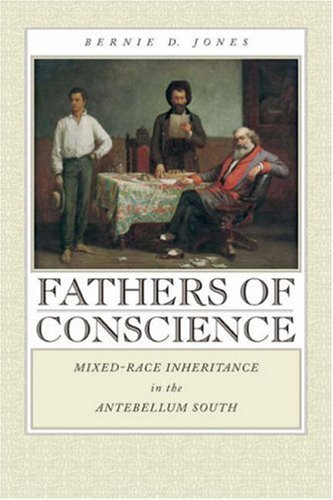
Fathers of Conscience: Mixed-Race Inheritance in the Antebellum South

Posted in Books, History, Law, Media Archive, Monographs, Slavery, United States on 2009-08-30 01:29Z by Steven

Fathers of Conscience: Mixed-Race Inheritance in the Antebellum South

University Of Georgia Press
February 2009
216 pages
6 x 9 in.
ISBN: 0820332518 (paper), 0820329800 (cloth)

Bernie D. Jones, Associate Professor of Law
Suffolk University

How the courts dealt with wills bequeathing property or freedom to mixed race children.

Fathers of Conscience examines high-court decisions in the antebellum South that involved wills in which white male planters bequeathed property, freedom, or both to women of color and their mixed-race children. These men, whose wills were contested by their white relatives, had used trusts and estates law to give their slave partners and children official recognition and thus circumvent the law of slavery. The will contests that followed determined whether that elevated status would be approved or denied by courts of law.

Bernie D. Jones argues that these will contests indicated a struggle within the elite over race, gender, and class issues-over questions of social mores and who was truly family. Judges thus acted as umpires after a man’s death, deciding whether to permit his attempts to provide for his slave partner and family. Her analysis of these differing judicial opinions on inheritance rights for slave partners makes an important contribution to the literature on the law of slavery in the United States.

Contents

  • Preface
  • Introduction. Inheritance Rights in the Antebellum South
  • Chapter One. Righteous Fathers, Vulnerable Old Men, and Degraded Creatures
  • Chapter Two. Slavery, Freedom, and the Rule of Law
  • Chapter Three. Justice and Mercy in the Kentucky Court of Appeals
  • Chapter Four. Circling the Wagons and Clamping Down: The Mississippi High Court of Errors and Appeals
  • Chapter Five. The People of Barnwell against the Supreme Court of South Carolina: The Case of Elijah Willis
  • Conclusion. The Law’s Paradox of Property and Power: The Significance of Geography
  • Appendix One. Case Indexes
  • Appendix Two. Opinions on the Emancipation of Slaves during George Robertson’s Tenure as Chief Justice
  • Appendix Three. Supplementary Information Regarding Willis v. Jolliffe
  • Notes
  • Bibliographic essay
  • Index
Tags: , , ,

Loving v. Virginia

Posted in Definitions, History, Law, Virginia on 2009-08-21 16:50Z by Steven

From Wikipedia: Loving v. (versus) [Commonwealth of] Virginia, 388 U.S. 1 (1967), was a landmark civil rights case in which the United States Supreme Court by a [unanimous] 9-0 vote declared [on 1967-06-12] Virginia’s anti-miscegenation statute, the “Racial Integrity Act of 1924“, unconstitutional, thereby overturning Pace v. Alabama (1883) and ending all race-based legal restrictions on marriage in the United States.


Source: Talking Points Memo

The plaintiffs, Mildred Loving (nee Mildred Delores Jeter, a woman of African and Rappahannock Native American descent, July 22, 1939 – May 2, 2008) and Richard Perry Loving (a white man, October 29, 1933 – June 1975), were residents of the Commonwealth of Virginia who had been married in June 1958 in the District of Columbia, having left Virginia to evade the Racial Integrity Act, a state law banning marriages between any white person and any non-white person. Upon their return to Caroline County, Virginia, they were charged with violation of the ban.

Comments by Steven F. Riley:

Read the entire decision here.

It should be noted that the Loving v. Virginia ruling in 1967 applied to the 16 remaining states that had enacted anti-miscegenation statutes.  Thus it is a fallacy to state that ‘interracial marriage was illegal in the United States until Loving v. Virginia. Most states had in fact, repealed their anti-miscegenation laws and a few never enacted any such laws at all (New Jersey, New York, Connecticut, Vermont, New Hampshire, Minnesota, Wisconsin, District of Columbia, Hawaii and Alaska).

Tags: , , ,

The Browning of America and the Evasion of Social Justice (Review)

Posted in Articles, Book/Video Reviews, History, Law, Media Archive, Philosophy, Politics/Public Policy, United States on 2009-08-14 18:53Z by Steven

The Browning of America and the Evasion of Social Justice (Review)
by Ronald R. Sundstrom

SUNY Press
2008, 190pp., $24.95 (pbk.)
ISBN: 9780791475867

Notre Dame Philisophical Reviews
2009-06-29

Reviewed by Lucius T. Outlaw (Jr.)
Vanderbilt University

The United States is undergoing the most profound demographic changes in the country’s history so that in a few decades, if not sooner, persons identified (and identifying themselves) as white and tracing their ancestry to Europe will have become part of the nation’s racial and ethnic plurality, no longer its numerically dominant racial group. This historic development portends others equally historic and transformative, among these the gradual — possibly even dramatic — displacement of white people as the dominating group politically, economically, socially, even culturally…

…Some persons envision a United States no longer ordered by racial or ethnic considerations, where color-consciousness has been dissipated by practicing color-blindness, and by the demographic predominance of “brown” Americans to such an extent that the sorting of persons into hierarchically valued, color-coded racial and ethnic groups will not have a demographic basis.  Such was the wish of Frederick Douglass: that the nation’s racial population groups would intermingle and interbreed — in his words “amalgamate’ — to such an extent that a new “blended” race, neither black nor white, would emerge and rescue our country from the scourge of color-conscious, color-valuing racialisms and racisms…

…In the midst of all of the many aspects of invidious racial and ethnic oppressions that have been devised and practiced across the history of the United States, the aspect most sensitive and productive of the most grotesque violence has been that having to do with the most intimate and consequential of human involvements: intimate relations, intimate sexual relations especially, between persons of different and differently ranked racial groups. These are subjects, Sundstrom argues, that have been systematically avoided by contemporary thinkers who wrestle with race matters. He would have us stop avoiding the subject, not least because of the foundational importance of intimate relations for the formation and continuation of polities. Without such relationships, there can be no polities. There can be no resolution of our racial and ethnic difficulties without being forthright about intimate and sexual interracial matters.  These, argues Sundstrom, must not be relegated to the realm of privacy and thus put off limits to philosophers and theorists of the social and political. Moreover, he would not have these matters be wedded to the “browning of America” as their presumed resolution, as Frederick Douglass had hoped out of anguished alienation and desperation. Chapter four, “Interracial Intimacies: Racism and the Political Romance of the Browning of America” is required reading for us all, if social justice is not to be evaded.

So, too, chapter 5, “Responsible Multiracial Politics”. Here the reader will experience, as well as come to understand, the personal existential weight and philosophical significance for Sundstrom of political endeavours for persons whose identities are neither easily nor accurately given fulfilling, coherent, authentic, and healthy articulation and lived-experience if forced into a seemingly singular, unitary, and thus supposedly harmonious racial designation. Persons who are descendants of multiracial, multiethnic unions — even when the races and ethnic groups are understood as social, rather than biological, constructs — need the terms and concepts by which they can identify, identify with, and live their important various heritages, by which they can, in all appropriate instances, ‘remember their grandmothers’.  Needed, too, are modes of politics that sanction and nurture this important existential work as another crucial aspect of multiracial, multiethnic democratic polities, modes of politics by which persons of complex identities can be made ready for and welcomed to shared and responsible political life.  Social justice without evasion…

Read the entire review here.
Tags: , , , , , ,