The Age of Jim Crow

Posted in Books, History, Law, Media Archive, Monographs, Politics/Public Policy, Social Science, United States on 2009-11-24 16:09Z by Steven

The Age of Jim Crow

W. W. Norton & Company
October 2008
434 pages
5.4 × 8.2 in
Paperback ISBN 978-0-393-92758-0

Jane Dailey, Associate Professor of American History
University of Chicago

America’s racial history has been marked by both hard-won progress and sudden reversals of fortune.

In The Age of Jim Crow, Jane Dailey introduces readers to a fascinating collection of documents on race and segregation in America that were created between the end of the Civil War and the emergence of the Civil Rights Movement a century later.  Organized around two themes, Dailey highlights the role of law in creating, maintaining, and — ultimately — helping to undo segregation.   She also traces the effects of interracial sex and marriage as they shaped the era of Jim CrowThe Age of Jim Crow focuses throughout on sexuality and gender politics as they play out across the legal, social and economic, political, and cultural arenas.

View the Table of Contents here.

Tags: ,

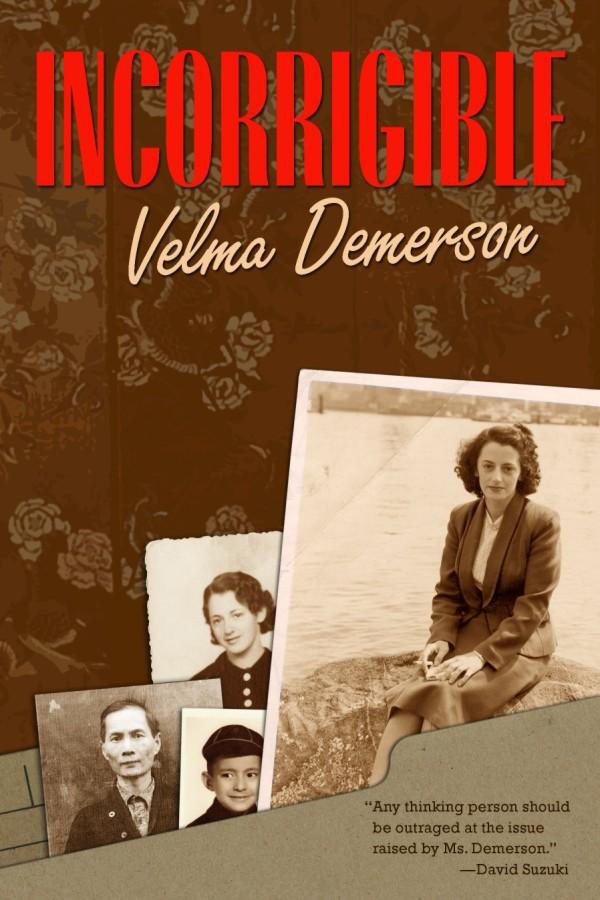
Incorrigible

Posted in Asian Diaspora, Autobiography, Books, Canada, Law, Media Archive, Monographs, Politics/Public Policy on 2009-11-23 02:50Z by Steven

Incorrigible

Wilfrid Laurier University Press
December 2004
184 pages
ISBN13: 978-0-88920-444-7

Velma Demerson

On a May morning in 1939, eighteen-year-old Velma Demerson and her lover were having breakfast when two police officers arrived to take her away. Her crime was loving a Chinese man, a “crime” that was compounded by her pregnancy and subsequent mixed-race child. Sentenced to a home for wayward girls, Demerson was then transferred (along with forty-six other girls) to Toronto’s Mercer Reformatory for Females. The girls were locked in their cells for twelve hours a day and required to work in the on-site laundry and factory. They also endured suspect medical examinations. When Demerson was finally released after ten months’ incarceration weeks of solitary confinement, abusive medical treatments, and the state’s apprehension of her child, her marriage to her lover resulted in the loss of her citizenship status.

This is the story of how Demerson, and so many other girls, were treated as criminals or mentally defective individuals, even though their worst crime might have been only their choice of lover. Incorrigible is a survivor’s narrative. In a period that saw the rise of psychiatry, legislation against interracial marriage, and a populist movement that believed in eradicating disease and sin by improving the purity of Anglo-Saxon stock, Velma Demerson, like many young women, found herself confronted by powerful social forces. This is a history of some of those who fell through the cracks of the criminal code, told in a powerful first-person voice.

Velma Demerson is a widow, and mother of three children—the first child, the son of her interracial marriage, died at age twenty-six. She has worked throughout her life in a variety of positions, mostly as a secretary for governments (provincial and federal) and lawyers. She is self-educated. This is her first book.

Read an excerpt here.

Tags: ,

Racial Union: Law, Intimacy, and the White State in Alabama, 1865-1954

Posted in Books, Law, Media Archive, Monographs, Politics/Public Policy, Social Science, United States on 2009-11-18 02:42Z by Steven

Racial Union: Law, Intimacy, and the White State in Alabama, 1865-1954

University of Michigan Press
2008
368 pages
6 x 9
Cloth: 978-0-472-09885-9
Paper: 978-0-472-06885-2
Ebook: 978-0-472-02287-8

Julie Novkov, Associate Professor of Political Science and Women’s Studies
State University of New York, Albany

Co-winner of the American Political Science Association’s 2009 Ralph J. Bunche Award for the best scholarly work in political science.

A stunning exploration of America’s attitudes on interracial marriage.

In November 2001, the state of Alabama opened a referendum on its long-standing constitutional prohibition against interracial marriage. A bill on the state ballot offered the opportunity to relegate the state’s anti-miscegenation law to the dustbin of history.  The measure passed, but the margin was alarmingly slim: more than half a million voters, 40 percent of those who went to the polls, voted to retain a racist and constitutionally untenable law.

Julie Novkov’s Racial Union explains how and why, nearly forty years after the height of the civil rights movement, Alabama struggled to repeal its prohibition against interracial marriage—the last state in the Union to do so. Novkov’s compelling history of Alabama’s battle over miscegenation shows how the fight shaped the meanings of race and state over ninety years. Novkov’s work tells us much about the sometimes parallel, sometimes convergent evolution of our concepts of race and state in the nation as a whole.

Tags: , ,

White Enough to Be American? Race Mixing, Indigenous People, and the Boundaries of State and Nation

Posted in Books, History, Identity Development/Psychology, Law, Media Archive, Monographs, Native Americans/First Nation, United States on 2009-11-17 19:45Z by Steven

White Enough to Be American? Race Mixing, Indigenous People, and the Boundaries of State and Nation

University of North Carolina Press
February 2008
256 pages
6.125 x 9.25, 7 illus., notes, bibl., index
Cloth ISBN:  978-0-8078-3143-4
Paper ISBN:  978-0-8078-5837-0

Lauren L. Basson, Assistant Professor of Politics and Government
Ben-Gurion University, Israel

Racial mixture posed a distinct threat to European American perceptions of the nation and state in the late nineteenth century, says Lauren Basson, as it exposed and disrupted the racial categories that organized political and social life in the United States. Offering a provocative conceptual approach to the study of citizenship, nationhood, and race, Basson explores how racial mixture challenged and sometimes changed the boundaries that defined what it meant to be American.

Drawing on government documents, press coverage, and firsthand accounts, Basson presents four fascinating case studies concerning indigenous people of “mixed” descent. She reveals how the ambiguous status of racially mixed people underscored the problematic nature of policies and practices based on clearly defined racial boundaries. Contributing to timely discussions about race, ethnicity, citizenship, and nationhood, Basson demonstrates how the challenges to the American political and legal systems posed by racial mixture helped lead to a new definition of what it meant to be American—one that relied on institutions of private property and white supremacy.

Read a review of the book by Daniel Lipson here.

Tags: , ,

Property Rites: The Rhinelander Trial, Passing, and the Protection of Whiteness

Posted in Books, History, Law, Media Archive, Monographs, Passing, United States on 2009-11-17 19:23Z by Steven

Property Rites: The Rhinelander Trial, Passing, and the Protection of Whiteness

University of North Carolina Press
April 2009
408 pages
6.125 x 9.25, 10 illus., notes, bibl., index
Cloth ISBN  978-0-8078-3268-4
Paper ISBN  978-0-8078-5939-1

Elizabeth M. Smith-Pryor, Assistant Professor of History
Kent State University

In 1925 Leonard [Kip] Rhinelander, the youngest son of a wealthy New York society family, sued to end his marriage to Alice [Beatrice] Jones, a former domestic servant and the daughter of a “colored” cabman. After being married only one month, Rhinelander pressed for the dissolution of his marriage on the grounds that his wife had lied to him about her racial background. The subsequent marital annulment trial became a massive public spectacle, not only in New York but across the nation—despite the fact that the state had never outlawed interracial marriage.

Elizabeth Smith-Pryor makes extensive use of trial transcripts, in addition to contemporary newspaper coverage and archival sources, to explore why Leonard Rhinelander was allowed his day in court. She moves fluidly between legal history, a day-by-day narrative of the trial itself, and analyses of the trials place in the culture of the 1920s North to show how notions of race, property, and the law were—and are—inextricably intertwined.

Tags: , , , , , , , , ,

Legalizing Identities: Becoming Black or Indian in Brazil’s Northeast

Posted in Anthropology, Books, Brazil, Caribbean/Latin America, History, Identity Development/Psychology, Law, Media Archive, Monographs, Social Science on 2009-11-17 05:40Z by Steven

Legalizing Identities: Becoming Black or Indian in Brazil’s Northeast

University of North Carolina Press
June 2009
272 pages
6.125 x 9.25, 18 illus., 2 maps, notes, bibl., index
Cloth ISBN  978-0-8078-3292-9
Paper ISBN  978-0-8078-5951-3

Jan Hoffman French, Assistant Professor of Anthropology
University of Richmond

Anthropologists widely agree that identities—even ethnic and racial ones—are socially constructed. Less understood are the processes by which social identities are conceived and developed. Legalizing Identities shows how law can successfully serve as the impetus for the transformation of cultural practices and collective identity. Through ethnographic, historical, and legal analysis of successful claims to land by two neighboring black communities in the backlands of northeastern Brazil, Jan Hoffman French demonstrates how these two communities have come to distinguish themselves from each other while revising and retelling their histories and present-day stories.

French argues that the invocation of laws by these related communities led to the emergence of two different identities: one indigenous (Xocó Indian) and the other quilombo (descendants of a fugitive African slave community). With the help of the Catholic Church, government officials, lawyers, anthropologists, and activists, each community won government recognition and land rights, and displaced elite landowners. This was accomplished even though anthropologists called upon to assess the validity of their claims recognized that their identities were “constructed.” The positive outcome of their claims demonstrates that authenticity is not a prerequisite for identity. French draws from this insight a more sweeping conclusion that, far from being evidence of inauthenticity, processes of construction form the basis of all identities and may have important consequences for social justice.

Tags: , , ,

A Beautiful Lie: Exploring Rhinelander v. Rhinelander as a Formative Lesson on Race, Marriage, Identity, and Family

Posted in Family/Parenting, History, Identity Development/Psychology, Law, Media Archive, Papers/Presentations, Passing, Social Science, United States on 2009-11-13 22:44Z by Steven

A Beautiful Lie: Exploring Rhinelander v. Rhinelander as a Formative Lesson on Race, Marriage, Identity, and Family

California Law Review
Volume 95, Issue 6 (2007)
pages 2393-2458

Angela Onwuachi-Willig, Professor of Law and Charles M. and Marion J. Kierscht Scholar
University of Iowa College of Law

During the mid-1920s, the story of the courtship, marriage, and separation of Alice Beatrice Jones and Leonard Kip Rhinelander astounded the American public, especially the citizens of New York and black Americans across the country.  Alice, a chambermaid and the racially mixed daughter of English immigrants who had worked as servants on a large estate in Bradford, England, had committed the social faux pas of falling in love with and marrying Leonard Kip Rhinelander, the son of a white multi-millionaire who descended from the French Huguenots.  Or rather, as certain arguments from Leonard’s trial attorney Isaac Mills and later the jury’s verdict would together suggest, Leonard had committed a social offense by “knowingly” loving and marrying Alice, a colored woman.

Scandal arose about the marriage of Alice and Leonard when a story with the title “Rhinelanders’ Son Marries Daughter of a Colored Man” ran in the Standard Star of New Rochelle on November 13, 1924.  Two weeks later, on November 26, 1924, Leonard filed for an annulment of his marriage to Alice. In his Complaint, Leonard alleged that Alice had misrepresented her race to him by improperly leading him to believe that she was white, “not colored,” before their nuptials. New York law did not ban interracial marriages between Blacks and Whites at the time; thus, Alice and Leonard’s marriage was not automatically void.  In the state of New York, the law did not identify interracial marriages as so odious to public policy that they were legally impossible; however, fraud as to a spouse’s race before marriage signaled that there had been no meeting of the minds between husband and wife. Given the importance of racial classifications and their corresponding status in society, New York courts readily accepted knowledge about a spouse’s race to be a factor so crucial to the understanding of the marital contract that fraud about it rendered the marriage voidable and thus eligible to be annulled from its start.  In other words, the primary basis for recognizing knowledge of a spouse’s race as a material fact that went to the essence of marriage, a requirement for annulling voidable marriages based on fraud after consummation, was racial prejudice and social opprobrium of intermixing. Additionally, although New York had not followed many southern states in adopting the “one drop rule,” many Whites in New York agreed that any taint of colored blood removed a person from the class of white citizens. In essence, because of long-held beliefs about racial genetics and community expectations about social barriers of race in 1920s New York, knowledge of a spouse’s race was considered to be as central to marriage as the ability to consummate it.  Thus, no question was ever raised about whether Leonard’s alleged basis for annulment, racial fraud, could legitimately serve as a reason for legally declaring his marriage to Alice to be void…

Read the entire article here.

Tags: , , , , , , , ,

The Racial Contract

Posted in Books, History, Law, Literary/Artistic Criticism, Media Archive, Monographs, Philosophy, Politics/Public Policy, Slavery, Social Science on 2009-11-13 22:25Z by Steven

The Racial Contract

Cornell University Press
1997
192 pages
5 1/2 x 8 1/2
Paper ISBN: 978-0-8014-8463-6
Cloth ISBN: 978-0-8014-3454-9

Charles W. Mills, John Evans Professor of Moral and Intellectual Philosophy
Northwestern University

Winner of the Myers Outstanding Book Award, given by the Gustavus Myers Center for the Study of Bigotry and Human Rights in North America

The Racial Contract puts classic Western social contract theory, deadpan, to extraordinary radical use. With a sweeping look at the European expansionism and racism of the last five hundred years, Charles W. Mills demonstrates how this peculiar and unacknowledged “contract” has shaped a system of global European domination: how it brings into existence “whites” and “non-whites,” full persons and sub-persons, how it influences white moral theory and moral psychology; and how this system is imposed on non-whites through ideological conditioning and violence. The Racial Contract argues that the society we live in is a continuing white supremacist state.

Holding up a mirror to mainstream philosophy, this provocative book explains the evolving outline of the racial contract from the time of the New World conquest and subsequent colonialism to the written slavery contract, to the “separate but equal” system of segregation in the twentieth-century United States. According to Mills, the contract has provided the theoretical architecture justifying an entire history of European atrocity against non-whites, from David Hume’s and Immanuel Kant’s claims that blacks had inferior cognitive power, to the Holocaust, to the kind of imperialism in Asia that was demonstrated by the Vietnam War.

Mills suggests that the ghettoization of philosophical work on race is no accident. This work challenges the assumption that mainstream theory is itself raceless. Just as feminist theory has revealed orthodox political philosophy’s invisible white male bias, Mills’s explication of the racial contract exposes its racial underpinnings.

Tags: , ,

Suspect Relations: Sex, Race, and Resistance in Colonial North Carolina

Posted in Books, History, Law, Media Archive, Monographs, Slavery, Social Science, United States on 2009-11-13 03:44Z by Steven

Suspect Relations: Sex, Race, and Resistance in Colonial North Carolina

Cornell University Press
2001
288 pages
6 1/8 x 9 1/4, 2 maps, 13 halftones, 1 line drawing
Paper ISBN: 978-0-8014-8679-1
Cloth ISBN: 978-0-8014-3822-6 

Kirsten Fischer, Associate Professor of History
University of Minnesota

Over the course of the eighteenth century, race came to seem as corporeal as sex. Kirsten Fischer has mined unpublished court records and travel literature from colonial North Carolina to reveal how early notions of racial difference were shaped by illicit sexual relationships and the sanctions imposed on those who conducted them. Fischer shows how the personal–and yet often very public–sexual lives of Native American, African American, and European American women and men contributed to the new racial order in this developing slave society.

Liaisons between European men and native women, among white and black servants, and between servants and masters, as well as sexual slander among whites and acts of sexualized violence against slaves, were debated, denied, and recorded in the courtrooms of colonial North Carolina. Indentured servants, slaves, Cherokee and Catawba women, and other members of less privileged groups sometimes resisted colonial norms, making sexual choices that irritated neighbors, juries, and magistrates and resulted in legal penalties and other acts of retribution. The sexual practices of ordinary people vividly bring to light the little-known but significant ways in which notions of racial difference were alternately contested and affirmed before the American Revolution.

Fischer makes an innovative contribution to the history of race, class, and gender in early America by uncovering a detailed record of illicit sexual exchanges in colonial North Carolina and showing how acts of resistance to sexual rules complicated ideas about inherent racial difference.

Table of Contents

List of Illustrations
Acknowledgments
Introduction: Changing Conceptions of Race
1. Disorderly Women and the Struggle for Authority
2. Cross-Cultural Sex in Native North Carolina
3. The Sexual Regulation of Servant Women and Subcultures of Resistance
4. White Reputations “Blacken’d & Made Loose”
5. Sexualized Violence and the Embodiment of Race
Epilogue: Dangerous Liaisons
Notes
Index

Tags: , ,

‘No Such Thing as a Mulatto Slave’: Legal Pluralism, Racial Descent and the Nuances of Slave Women’s Sexual Vulnerability in the Legal Odyssey of Steyntje van de Kaap, c.1815-1822

Posted in Articles, History, Law, Media Archive, Slavery, South Africa, United Kingdom on 2009-11-06 18:15Z by Steven

‘No Such Thing as a Mulatto Slave’: Legal Pluralism, Racial Descent and the Nuances of Slave Women’s Sexual Vulnerability in the Legal Odyssey of Steyntje van de Kaap, c.1815-1822

Fiona Vernal
Department of History
University of Connecticut

Slavery & Abolition
Volume 29, Issue 1
January 2008
pages 23 – 47
DOI: 10.1080/01440390701841034

In 1815, a contentious case came before the Court of Justice in the Cape Colony. Steyntje Van de Kaap, a creole slave, claimed manumission for herself and four children based on her status as a concubine. Harkening back to the Dutch period at the Cape, her suit resurrected a little-known 1772 statute, which, upon the death of slave owners, granted freedom to their concubines and any children from such unions. So indicative was the case of sexual relations at the Cape that one contemporary observer declared that the outcome could threaten one-third of the local slave property, while a Privy Councilor in England who heard the case on appeal, predicted grave consequences if the case should set a precedent. The protracted suit became enmeshed in the nineteenth-century struggle between slaveholders, abolitionists and colonial administrators at the Cape, and in Great Britain. On the eve of amelioration in British colonies like the Cape, Steyntje’s case demonstrated how white paternity and the status of concubine became legal grounds for freedom. This article explores how one woman’s sexual relations with her masters transcended the boundaries of her personal life to challenge the local system of matrilineal descent, to complicate the issue of consent in slave-master sexual relations, and to invoke the worst fears of slaveholders as they confronted a new imperial legal regime interested in reforming slavery.

Tags: , , , , ,