TCK TALENT: Neil Aitken, Computer Gaming Whiz Kid Turned Award-Winning Poet

Posted in Articles, Asian Diaspora, Autobiography, Canada, Media Archive on 2015-05-01 19:56Z by Steven

TCK TALENT: Neil Aitken, Computer Gaming Whiz Kid Turned Award-Winning Poet

The Displaced Nation
2015-04-29

Elizabeth (Lisa) Liang
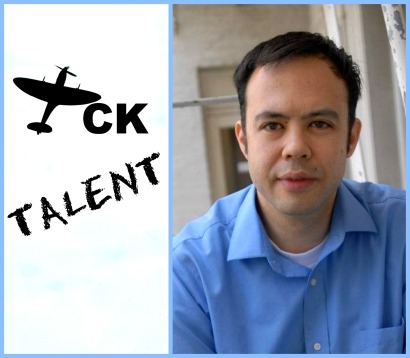

Neil Aitken (photo supplied)

Elizabeth (Lisa) Liang is back with her column featuring interviews with Adult Third Culture Kids (ATCKs) who work in creative fields. Lisa herself is a prime example. A Guatemalan-American of Chinese-Spanish-Irish-French-German-English descent, she has developed her own one-woman show about growing up as a TCK, called Alien Citizen, which premiered nearly two years ago and is still going strong. In fact, she will soon be taking the production to Valencia, Spain, and Capetown, South Africa!

—ML Awanohara

Welcome back, readers! Today’s interviewee is poet Neil Aitken: winner of the prestigious Philip Levine Prize for Poetry for his book of poems, The Lost Country of Sight and founding editor of Boxcar Poetry Review. Neil and I met at the Mixed Roots Literary & Film Festival in 2009. I am so pleased to have the chance to interview him this month for TCK Talent.

* * *

Welcome to The Displaced Nation, Neil. I understand that you’re a multi-ethnic ATCK like me! Please tell us about your heritage.

My father was born in the Okanogan Valley in British Columbia, Canada, of Scottish and English descent. My mother was born on Hainan Island, south of China, in the midst of the conflict between the Nationalists and the Communists in China. Shortly after her birth, her parents—her father was a high-ranking officer in the Nationalist Army and her mother, the daughter of one of the elite island families—fled to Taiwan to escape the Communists. Despite growing up a world apart, my parents met in the middle, Hawaii, while both attending university there.

Where were you born, and where did you live growing up?

I was born in Vancouver. My father’s bachelor’s degree was in Linguistics & ESL. His first job took us to Dhuhran, Saudi Arabia, where he taught English in the oil universities. But then my mother developed severe asthma due to the extreme heat and dust, and the doctors warned her that if she stayed any longer, she would be putting her life in peril. So she took my younger sister and me (I was four, my sister two-and-half) to Taiwan to live with relatives while my father completed the last nine months of his teaching contract. While in Taiwan, my sister and I forgot all our English, switched completely to Mandarin Chinese, and attended a Chinese-speaking pre-school. When my father finally arrived to pick us up, apparently we were so frustrated in our inability to communicate with him, we refused to speak Chinese until we relearned English. By the time we returned to Canada, we’d made the switch—but lost our Chinese in the process. My father returned to school in Vancouver, concluding that it was too hard to raise a family as an ESL professor. He completed a Masters in Library Science degree at the University of British Columbia and, when I was eight, we moved to North Battleford, Saskatchewan, a small city surrounded by farmland in the northern part of the province. Later we moved to Regina, the province’s capital and a much more vibrant multicultural center, where my father took his dream job as the supervisor over a special book collection focused on local, regional, and family histories of the Central Plains and Prairie Provinces. I completed elementary school and high school there…

Read the entire interview here.

Tags: , , ,

In Ferguson, Obama missed his chance to transcend race

Posted in Articles, Barack Obama, Media Archive, Politics/Public Policy, United States on 2015-05-01 19:31Z by Steven

In Ferguson, Obama missed his chance to transcend race

The Orlando Sentinal
Orlando, Florida
2015-04-29

Charles Michael Byrd, Guest Columnist

Pundits habitually wonder what happened to the post-racial America they believed Barack Obama’s election would herald. The president, however, has never indicated his willingness to lead the country out of the race-consciousness wilderness.

Many thought his multiracial inheritance would trump his proclivity to further the stale politics of racial identity — that individuals are forever tethered to the philosophy of a specific voting bloc that countenances no competition of views.

Group-think compels us to create mutually exclusive racial groups to determine how many chairs we need position at the table of government largesse. We convince ourselves that the only way to track racial discrimination is by keeping racial statistics, although using race to monitor race prevents us from ever seeing beyond race…

Read the entire article here.

Tags: , ,

The Forgotten Supervillain of Antebellum Tennessee

Posted in Articles, Biography, History, Media Archive, Slavery, United States on 2015-05-01 11:31Z by Steven

The Forgotten Supervillain of Antebellum Tennessee

Narratively: Human Stories, Boldy Told.
2015-04-28

Betsy Phillips


(Photo Source: commons.wikimedia.org/wiki/File:Isaac-franklin-by-wb-cooper.jpg)

In a brutal business defined by cruelty, Isaac Franklin was perhaps the worst slave trader in all of cotton country—and the richest man in the south. Yet today his heinous crimes are long forgotten.

The people of Nashville hear slave trader Isaac Franklin’s great annual parade of misery long before they see it. The rhythmic thud of 400 trudging feet carries quite a way. Then comes the sound of men singing, “Cut him down, cut him down, catch him if you can.”

There’s a river and a field and a few scattered houses between Nashville and Franklin’s coffle coming down Gallatin Pike, but once it crests the hill at what will one day be known as Eastland Avenue, everyone up on the bluff can see it. A great centipede of 200 men chained together at the waist, their hands locked behind their backs, marching toward Nashville. A hundred women and children follow behind in wagons, destined for sale. A man with a fiddle walks alongside the chained men, playing to keep them moving at the same speed.

The time is late August 1833. Nashville is a village of 5,500 people living near the crumbling remains of Fort Nashborough. Log cabins are finally giving way to wood-framed buildings and, for the rich, brick. For the past seven years, it has been the state capitol, but it still has the feel of a frontier village. Most people are related or married into each other’s families. Gossip, drinking and duels provide most of the town’s entertainment.

The only bridge into town is the old stone-pillared toll bridge. In five years, when the Cherokee are forced across this bridge, sick, starving, afraid, Nashvillians will claim they were so moved by the suffering that they tried to help the refugees, but were rebuked by the soldiers escorting them. Yet the people in Franklin’s coffle are also sick and afraid. They’ve been walking clear from Alexandria, D.C., and they’ll keep walking all the way to Natchez, Mississippi.

From historical accounts of such marches, notably George William Featherstonhaugh’sExcursion Through the Slave States” and Edward Baptist’sThe Half Has Never Been Told: Slavery and the Making of American Capitalism,” the picture comes into focus. The men’s bare feet are blistered and bloody. The haunted-looking women try to keep the spirits of the children up, but every night brings new horror. People are beaten and whipped. Franklin and the three other white men traveling with him take women off into the brush. Not far enough off. Everyone hears the women pleading. Later, they hear the women crying.

Almost everyone in Nashville has known Isaac Franklin since he was born. They all know about the women he keeps trapped on his farm outside of town. And they all know that, when Franklin’s captives get to Natchez, whatever hell they’ve faced on the road — the beatings, the rapes, the forced marches — will seem like the good old days. King Cotton will grind most of these people to a bloody pulp. The ones not destined for the plantation are likely destined for the brothel.

No one rescues them. A couple of local traders come out to talk to Franklin. He doesn’t even bother to get off his horse. He’s not as imposing as you might expect such a man to be. In portraits from the period, his black hair is fine and perpetually messy. He frowns instead of smiles and his eyes are dark with some secret disappointment.

One of the traders gestures to the middle of the coffle. The dark corners of history leave us to imagine their conversation. “I’ll give you $350 for the tall one over there,” he says.

“Gentlemen,” Franklin snorts, “that’s a buying price, not a selling price.” The man will bring eight to nine hundred dollars in Mississippi.

Franklin’s victims pass briefly among the villagers and then disappear down the Natchez Trace

…Perhaps most chilling, though, is the idle chit-chat about the young women they raped and sold for sex, the “maids” and “fancy girls” — code words for light-skinned slave women. Every “your” in that phrasing — “your girl Minerva,” “your fancy girl Allice,” “your Charlottesville maid” — indicates that Isaac is teasing Ballard about his fondness for “fancy maids.” Not that Franklin saw anything wrong with that. Indeed, his disappointment at not finding the Charlottesville maid in the most recent shipment of slaves seems an admission he was hoping to get his turn.

Later letters between the two men and another nephew, James Franklin, make clear that the Charlottesville maid, a woman named Martha, was eventually raped by all three of them. This practice — not just of raping one’s slaves, but of openly bragging and joking about raping them — was so widespread that in his essay “‘Cuffy,’ ‘Fancy Maids,’ and ‘One-Eyed Men’: Rape Commodification, and the Domestic Slave Trade in the United States,” Edward E. Baptist maintains that “coerced sex was the secret meaning of the commerce in human beings.” In other words, this wasn’t some moral failing of a few rotten men. This was an important privilege of slave ownership.

Franklin and Armfield were making a lot of money specifically from selling women to men so that the men could rape them. White men were especially eager to pay for young, light-skinned women. Ethan Andrews wrote of the practice, “[M]ulattoes are not so much valued for field-hands, they are purchased for domestics, and the females to be sold for prostitutes…no objection seems to be felt to keeping in one’s house female slaves, who have been guilty of crimes for which a white female would forfeit her life.”

As Franklin noted in his letter, he was getting $800 to $900 for the kind of slave usually considered the most expensive — a strong male field hand — and the same for unskilled “fancy maids.” He thought a “fancy maid” who could also sew would bring more than that: $1,000. The letters the traders sent each other are peppered with references to “the fancy white maid” and “the fair maid” and “our white Caroline.” But Isaac’s letter hints at the cost of this abuse to the women. He couldn’t sell Minerva because she had become “a caution,” an old term for a woman who is too difficult to deal with.

What became of Minerva isn’t clear from the letter. A slave suitable for sex work must be somewhat compliant. If Isaac couldn’t break her will, likely she would have been be sold as a field hand. That Minerva hadn’t already been sold as such is surprising, unless Franklin was keeping her for his own pleasure. The traders had their favorite fancies, which they alternately shared with each other and held back for their own use…

Read the entire article here.

Tags: , , , ,

One-Dropping and Multi-Dropping: Embracing Contradictions of the Racialized Self (A Personal Journey)

Posted in Articles, Autobiography, Media Archive, United States on 2015-04-30 20:02Z by Steven

One-Dropping and Multi-Dropping: Embracing Contradictions of the Racialized Self (A Personal Journey)

Musings of a Mixed Race Feminist: Random diatribes from a mixed race feminist scholar.

Donna J. Nicol, Associate Professor Women & Gender Studies
California State University, Fullerton

My exploration of my mixed race identity began in my early 20’s after an incident I describe in my blog post entitled “There I Said It: Reflections on Identity from a Feminist Racial Hybrid”. But I didn’t exactly get thrown out of the Black community on Monday and proclaim myself as “mixed race” by Thursday.

My process for coming into my mixed race identity was slow because though I was socially ostracized from many Black peers by my junior year in college for outing myself as a “feminist”,  I was still embraced by other Black people who didn’t feel threatened by my public declaration.  Likewise, in my neighborhood which was predominantly Black but had a good number of Filipinos who settled in the area post World War II, people knew we were a mixed family.  I don’t recall there ever being a situation where people treated me like anyone but a full member of that community.  I think why I experienced this ease was due to the fact that I was raised to be Black with Filipino traditions passed on by my Filipina great-gram. My great-gram placed more emphasis on us keeping her cultural traditions alive rather than insisting we call ourselves Filipino because she was acutely aware of how her mixed race children, grands, and great-grams were judged as Black.  So, I didn’t go around saying I was “part this, or part that” which might have led to harassment or ostracism from the Black community.  I just said I was Black in public and in private, I could be both or neither if I wanted…

Read the entire article here.

Tags: , , ,

“There is nothing ‘black’ about rioting”: Actor Jesse Williams unloads on Baltimore critics in passionate Twitter essay

Posted in Articles, Law, Media Archive, United States on 2015-04-30 19:55Z by Steven

“There is nothing ‘black’ about rioting”: Actor Jesse Williams unloads on Baltimore critics in passionate Twitter essay

Salon
2015-04-28

Joanna Rothkopf, Assistant Editor


(Credit: DFree via Shutterstock)

The “Grey’s Anatomy” actor wrote about the prevelance of rioting throughout history

On Monday evening, as Baltimore was rocked by violent and nonviolent protests alike, actor Jesse Williams, known for his role on “Grey’s Anatomy” and for occasionally weighing in on issues of race and police brutality, wrote what amounted to an essay on the history of rioting.

Read the whole thing below:..

Read the entire article here.

Tags: , , , ,

Dragons in the Land of the Condor: Writing Tusán in Peru

Posted in Articles, Books, Caribbean/Latin America, Literary/Artistic Criticism, Media Archive, Monographs on 2015-04-29 19:51Z by Steven

Dragons in the Land of the Condor: Writing Tusán in Peru

University of Arizona Press
2014
264 pages
6.00 x 9.00
Cloth ISBN: 978-0-8165-3111-0

Ignacio López-Calvo, Professor of Latin American Literature
University of California, Merced

Foreword by Eugenio Chang-Rodríguez, Professor Emeritus

Building on his 2013 study on Nikkei cultural production in Peru, in Dragons in the Land of the Condor Ignacio López-Calvo studies the influence of a Chinese ethnic background in the writing of several twentieth- and twenty-first-century Sino-Peruvian authors.

While authors like Siu Kam Wen and Julia Wong often rely on their Chinese cultural heritage for inspiration, many others, like Pedro Zulen, Mario Wong, and Julio Villanueva Chang, choose other sources of inspiration and identification. López-Calvo studies the different strategies used by these writers to claim either their belonging in the Peruvian national project or their difference as a minority ethnic group within Peru. Whether defending the rights of indigenous Peruvians, revealing the intricacies of a life of self-exploitation among Chinese shopkeepers, exploring their identitarian dilemmas, or re-creating—beyond racial memory—life under the political violence in Lima of the 1980s, these authors provide their community with a voice and a collective agency, while concomitantly repositioning contemporary Peruvian culture as transnational.

López-Calvo bridges from his earlier study of Peruvian Nikkei’s testimonials and literature and raises this question: why are Chinese Peruvian authors seemingly more disconnected from their Asian heritage than Japanese Peruvian authors from theirs? The author argues that the Chinese arrival in Peru half a century earlier influenced a stronger identification with the criollo world. Yet he argues that this situation may soon be changing as the new geopolitical and economic influence of the People’s Republic of China in the world, particularly in Latin America and the Caribbean, affects the way Chinese and Sino–Latin American communities and their cultures are produced and perceived.

Tags: , , , , , , , , ,

Brian Bantum on Redeeming Mulatto

Posted in Articles, Audio, Interviews, Media Archive, Religion, United States on 2015-04-29 17:05Z by Steven

Brian Bantum on Redeeming Mulatto

Homebrewed Christianity
2014-08-17

Bo Sanders

Brian Bantum teaches theology at Seattle Pacific University out in the mighty Northwest. This spring when he and Callid were both at the Christian Leadership Forum of FTE they sat down to talk about Brian’s book Redeeming Mulatto: A Theology of Race and Christian Hybridity. Because they are in a hotel lobby there a bit of background noise, but it is such a terrific interview that you’ll want to listen all the way through anyway If you want to followup on this conversation another great resource is this video of Brian giving a talk called “The Church Cannot be About Multiculturalism” at Quest Church‘s annual day conference on Faith & Race. Bantum is on twitter as well…

Listen to the interview here.

Tags: , ,

President Obama Condemns Both the Baltimore Riots and the Nation’s ‘Slow-Rolling Crisis’

Posted in Articles, Barack Obama, Law, Media Archive, Politics/Public Policy, United States on 2015-04-29 16:56Z by Steven

President Obama Condemns Both the Baltimore Riots and the Nation’s ‘Slow-Rolling Crisis’

The New York Times
2015-04-28

Julie Hirschfeld Davis, White House Correspondent

Matt Apuzzo

WASHINGTON — President Obama responded with passion and frustration on Tuesday to the violence that has rocked Baltimore and other cities after the deaths of young black men in confrontations with the police, calling for a period of soul-searching about what he said had become a near-weekly cycle of tragedy.

Speaking from the White House Rose Garden, Mr. Obama condemned the chaos unfolding just 40 miles north of the White House and called for “full transparency and accountability” in a Department of Justice investigation into the death of Freddie Gray, the young black man who died of a spinal cord injury suffered while in police custody.

He said that his thoughts were also with the police officers injured in Monday night’s unrest in Baltimore, which he said “underscores that that’s a tough job, and we have to keep that in mind.”…

…He spoke as Loretta E. Lynch, the new attorney general, dispatched two of her top deputies to Baltimore to handle the fallout: Vanita Gupta, her civil rights chief, and Ronald L. Davis, her community-policing director. The unrest there and the epidemic Mr. Obama described of troubled relations between white police officers and black citizens have consumed Ms. Lynch’s first two days on the job and could define her time in office.

They have also raised difficult and familiar questions for Mr. Obama about whether he and his administration are doing enough to confront the problem, questions made all the more poignant because he is the first African-American to occupy the White House…

Read the entire article here.

Tags: , , , , , , , , , ,

“A Chosen Exile” by History Professor Allyson Hobbs, has won two prizes from the Organization of American Historians

Posted in Articles, History, Media Archive, Passing, United States on 2015-04-28 01:54Z by Steven

“A Chosen Exile” by History Professor Allyson Hobbs, has won two prizes from the Organization of American Historians

Stanford University Department of History
Palo Alto, California

2015-04-20

A Chosen Exile: A History of Racial Passing in American Life” by History Professor Allyson Hobbs has won two prizes from the Organization of American Historians: the Frederick Jackson Turner Award for best first book in American history and the Lawrence Levine Award for best book in American cultural history.

Tags: , ,

Trevor Noah’s World

Posted in Africa, Articles, Arts, Biography, Media Archive, South Africa on 2015-04-27 22:17Z by Steven

Trevor Noah’s World

The Atlantic
2015-04-05

Douglas Foster, Associate Professor of Journalism
Medill School of Journalism
Northwestern University, Evanston, Illinois

What makes The Daily Show’s new host unique—according to South African comics

CAPE TOWN, South Africa—When word circulated on Monday that standup comic Trevor Noah had been chosen to succeed Jon Stewart as host of The Daily Show, South Africans hailed Noah in hyper-caffeinated terms as the country’s “next great export” after Nelson Mandela, Desmond Tutu, and Charlize Theron. On that day, I happened to be in Johannesburg shepherding students through the newsroom of The Star, where the lineup of stories at the morning editorial conference included a series of firefights between gangsters and police on public highways, allegations of corruption at every level of government, and the teetering condition of the state-run utility company, which regularly plunges the country into rolling blackouts. It was no wonder that news of a major U.S. television show hiring a 31-year-old mixed-race South African phenom as anchor had proven so welcome.

By now, the basics about Trevor Noah are well-known. He’s the young, super-cool comedian with the cherubic face and itchy Twitter finger who, beginning in 2012, achieved global recognition by way of Jay Leno, David Letterman, and Jon Stewart. In a series of solo performances around the world over the last three years, he has blown up in ways that cultural figures from South Africa haven’t since the 1960s and 1970s, when musicians like Hugh Masekela and Miriam Makeba packed music halls during the height of racial oppression back home…

…What makes Noah’s comedy unique? “He’s slick as fuck!” Evans replied. “But also super charming,” added the young comic sitting next to him. He was a slight, Afrikaans-speaking man named Schalk Bezuidenhout, who sometimes opens for Noah when he’s performing in town. Only 22 years old—the same age as Noah when he jump-started his career as a comedian—Bezuidenhout had just come off stage after a set about the hazards of dating a flight attendant (“a non-smoking fuck”) and the unintended consequences of imposing a non-racial ideal on young people from South Africa’s 11 different language groups (“There’s nothing more messed up than a bunch of Afrikaans kids singing an African song”).

Both men said Noah distinguished himself from other comics by resisting labels and “genre-based comedy.” Bezuidenhout noted that Noah always identified himself as a mixed-race South African raised in straitened circumstances in Soweto without “using it as a crutch.” Contemporaries who have shared the stage with him say he’s unusually attuned to the audience, shifting direction based on the feel in the room, and Bezuidenhout has seen Noah drop chunks of material based on the city he’s performing in. This was a quality that a number of immigrants in South Africa had already mentioned to me. Omega Chembhere, a waiter, told me that when he had arrived from Zimbabwe 10 years earlier, much of South African pop culture had seemed inaccessible. “Trevor’s different, so good at it,” he said. “His strength is that everything springs from his experience in life, but you understand his reality because he makes an effort to explain.”…

Read the entire article here.

Tags: , , ,