The Challenge of Mixed-Blood Nations

Posted in Anthropology, Articles, Canada, Caribbean/Latin America, Media Archive, Native Americans/First Nation, United States on 2015-05-13 22:06Z by Steven

The Challenge of Mixed-Blood Nations

Indian Country Today Media Network
2015-04-25

Duane Champagne, Professor of Sociology and American Indian Studies; Professor of Law
University of California, Los Angeles

Countries with indigenous nations usually also have mixed-blood nations composed of people of indigenous descent and other nations or races. In an increasingly shrinking world where ethnicity is a quantity in flux, it is sometimes difficult to get a handle on how they relate to one another. The two groups would seem to be natural allies. But the reality isn’t that simple.

To begin with, much depends on the relations of the mixed bloods to the larger nation state. Take Canada, where the mixed-blood community is called Métis, a French word meaning—well, mixed blood. The Métis historically have had friendly relations with Indian communities. But currently they claim their own history and culture, a hybrid of European and indigenous community. Some Métis identify and live with tribal communities, while others do not. These separatists believe themselves to be a distinct nation or ethnic group from the indigenous nations and from Canada. Métis communities in Canada have separate land claims and negotiations with the Canadian government.

Meanwhile, in Latin and South America, as well as in Africa, people of mixed blood usually do not strongly identify with indigenous nations. They tend to reject indigenous ways in favor of national culture. Mestizos, for instance, are persons of indigenous ancestry who have taken up national culture and do not live in or engage with members of indigenous tribal communities.

This disengagement, in fact, can be quite vehement. Mestizo nations like Mexico, El Salvador, Honduras, and many others segregate their indigenous communities and maintain hostile and repressive political and cultural relations over indigenous nations. As for assimilated Mestizos, they can generally be relied on to embrace the values and lifestyles of modern market economies and broad national culture while openly rejecting their indigenous counterparts.

In the United States, the situation is particularly complex because there is no official designation of a mixed-blood nation…

Read the entire article here.
Tags: ,

No Charges for Wisconsin Officer in Killing of Unarmed Black Teenager

Posted in Articles, Law, Media Archive, United States on 2015-05-13 13:42Z by Steven

No Charges for Wisconsin Officer in Killing of Unarmed Black Teenager

The New York Times
2015-05-12

Richard Pérez-Peña (@perezpena), National Desk

A Madison, Wis., police officer who killed an unarmed black man in March, in one of a spate of similar incidents that have set off protests around the country, will not face criminal charges, a prosecutor said Tuesday.

The shooting of the man, Anthony Robinson Jr., had led to protests in Madison and raised concerns of potential unrest if the officer, Matt Kenny, who is white, was not charged, particularly after rioting in Baltimore recently following the death of an unarmed black man from a severe spinal injury sustained while in police custody.

Walking through the case in detail for a room full of reporters at the Public Safety Building, the Dane County district attorney, Ismael Ozanne, repeatedly stressed that on the day he died, March 6, Mr. Robinson was behaving erratically and violently, assaulting several people — apparently including Officer Kenny. He left the room without taking questions

“My decision will not bring Tony Robinson Jr. back,” he said. “My decision will not end the racial disparities that exist in the justice system, in our justice system. My decision is not based on emotion. Rather, this decision is based on the facts as they have been reported to me.

Although Mr. Ozanne did not mention either man’s race, he discussed his own identity at some length — the biracial son of a black woman from Anniston, Ala., who, he said, worries that his skin color puts him at risk…

Read the entire interview (00:26:30) here.

Tags: , , , , , , ,

New Bill Would Let New Yorkers Identify As Multiracial On Official City Forms

Posted in Articles, Law, Media Archive, Politics/Public Policy, United States on 2015-05-12 20:44Z by Steven

New Bill Would Let New Yorkers Identify As Multiracial On Official City Forms

The Huffington Post
2015-05-12

Christopher Mathias (@letsgomathias), New York Reporter

New York City has the largest population in the United States of people who identify as multiracial. Even its mayor, Bill de Blasio, and its first lady, Chirlane McCray, have two multiracial children.

And yet, on the various official city documents New Yorkers often have to fill out, there are only five racial categories: “white, not of Hispanic origin”; “black, not of Hispanic origin”; “Hispanic”; “Asian or Pacific Islander”; and “American Indian or Alaskan Native.”

In testimony submitted at a City Council hearing Monday, a New Yorker named Daniel Reckart explained why this can be a problem.

“You see, my mother is half Jamaican and half British-Caucasian,” he said. “My father is half Mexican, half German.”

“My siblings and I — as siblings do — look both alike and, at the same time, a spectrum of our multiple races,” he continued. “Some of us look more Latino and some of us look more white and some look more black. But the fact is that we have all always identified proudly as multiracial, and to ask us to choose just one box is like asking us to choose allegiance with just one of our grandparents.”

Reckart is one of more than 325,000 New Yorkers who identify as multiracial. His testimony Monday was submitted in support of a piece of legislation that would require “city agencies to amend their official forms and databases to accommodate multiracial identification where racial identification is required.”

Those forms include applications for after-school programs, public housing and taxi licenses, as well as discrimination complaint forms and registration with the Department of Small Business Services — not to mention all the paperwork filled out by the 300,000 or so city employees.

The new multiracial designation, say the bill’s supporters, would help the city collect more accurate demographic data. Such information is important for crafting legislation and policy, and for keeping track of how various policies affect people of different races. In some cases, that data can also help determine how much state or federal funding the city will receive.

Council member Margaret Chin, lead sponsor of the bill, told The Huffington Post that it’s “important for government to recognize multicultural heritage.”

“We wanted to allow individuals to celebrate their heritage and be able to identify themselves as they want to,” she said…

Read the entire article here.

Tags: , , , , , ,

‘Typical American Families’ photo exhibit to be unveiled at Emory

Posted in Articles, Arts, Family/Parenting, Media Archive, Social Science, United States on 2015-05-12 16:55Z by Steven

‘Typical American Families’ photo exhibit to be unveiled at Emory

Emory News Center
Emory University, Atlanta, Georgia
2015-05-04

Kimber Williams


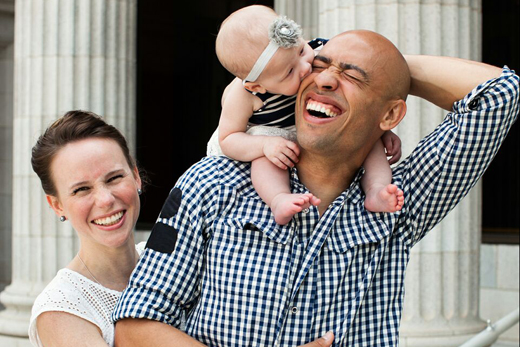
“Typical American Families” highlights the many configurations that family life can take in America. Photos in the exhibit will be unveiled at a public reception at the Center for Ethics on May 7. Photo by Ross Oscar Knight.

“Typical American Families,” a new photographic exhibit that explores a wider view of American families, will be unveiled Thursday, May 7, from 6:30-8:30 p.m. at the Emory Center for Ethics, 1531 Dickey Drive.

Conceived by Carlton Mackey, director of Emory’s Ethics and the Arts Program, the exhibit offers a photographic glimpse into the lives of 15 Atlanta-area families, celebrating “the vast landscape of manifestations of family” across spectrums of culture, faith and ability, Mackey says.

The event includes a public reception and formal unveiling of the exhibit. Guests will also have a chance to meet families that participated in the community project, which showcases the diversity of the American family through the lens of international photographer/photoculturalist Ross Oscar Knight, Mackey’s creative partner.

The families — who haven’t yet seen their photographs — will share stories and insights into how they bridge faith, culture and difference in Atlanta, Mackey says…

…”Typical American Families” was inspired by Mackey’s ongoing work on “Beautiful in Every Shade,” an empowerment campaign that celebrates the breadth and depth of beauty in every human being.

That campaign grew out of  “50 Shades of Black,” a multi-media art project launched by Mackey in 2013 — and funded in part by a grant from Emory’s Center for Creativity & Arts — that explores the intersection of skin tone and sexuality in the shaping of identity through images and personal narrative…

Read the entire article here.

Tags: , , , ,

In Twilight of Term, Obama Finds More Urgent Voice on Race

Posted in Articles, Barack Obama, Media Archive, Politics/Public Policy, United States on 2015-05-12 15:14Z by Steven

In Twilight of Term, Obama Finds More Urgent Voice on Race

Bloomberg News
2015-05-11

Mike Dorning, White House Correspondent

Angela Greiling Keane, White House Correspondent

Polls show racial polarization in the U.S. is at the highest in decades.

With his time in office waning, President Obama is speaking out on race and poverty in increasingly blunt terms as violent protests in U.S. cities highlight the unrealized promise of his election.

Searing images of a burning CVS pharmacy in Baltimore and armored vehicles arrayed along the streets of Ferguson, Mo., are a grim contrast to the elated, multiracial crowd celebrating in Chicago’s Grant Park on the warm November night in 2008 after the nation elected its first black president.

Many of the hopes of that night haven’t been fulfilled. Polls show racial polarization in the U.S. is at the highest in decades. Poverty is higher among Americans in general and blacks in particular. The gap between rich and poor has grown.

A president who throughout his two terms has been restrained in addressing racial controversies now is raising his voice and declaring he’ll make lifting up impoverished communities and the young men within them the cause of his post-presidency years…

…Obama, 53, began his career as a community organizer working on economic issues in impoverished black neighborhoods on Chicago’s South Side. His life story as the child of a mixed-race marriage contributed to his political rise. A speech on race relations, titled “A More Perfect Union,” was a high point in his 2008 campaign.

Yet as president, with few exceptions, Obama has acted cautiously in addressing race…

Read the entire article here.

Tags: , ,

DNA survey finds all humans are 99.9pc the same

Posted in Articles, Health/Medicine/Genetics, Media Archive on 2015-05-11 15:36Z by Steven

DNA survey finds all humans are 99.9pc the same

The Telegraph
2002-12-20

Roger Highfield, Science Editor

Whether you hail from Surbiton, Ulan Bator or Nairobi, your genetic make-up is strikingly similar to that of every other person on Earth, an analysis concludes today.

Although scientists have long recognised that, despite physical differences, all human populations are genetically similar, the new work concludes that populations from different parts of the world share even more genetic similarities than previously assumed.

All humans are 99.9 per cent identical and, of that tiny 0.1 per cent difference, 94 per cent of the variation is among individuals from the same populations and only six per cent between individuals from different populations….

Read the entire article here.

Tags: , ,

Transatlantic Spectacles of Race: The Tragic Mulatta and the Tragic Muse by Kimberly Snyder Manganelli (review)

Posted in Articles, Book/Video Reviews, Literary/Artistic Criticism, Media Archive, Women on 2015-05-10 01:37Z by Steven

Transatlantic Spectacles of Race: The Tragic Mulatta and the Tragic Muse by Kimberly Snyder Manganelli (review)

Callaloo
Volume 38, Number 2, Spring 2015
pages 405-408

Justin Rogers-Cooper, Associate Professor of English
LaGuardia Community College/City University of New York, Long Island City, New York

Manganellia, Kimberly S., Transatlantic Spectacles of Race: The Tragic Mulatta and the Tragic Muse (New Brunswick: Rutgers University Press, 2012)

In her accessible and original book, Kimberly Synder Manganelli examines the circulation of two key figures in nineteenth-century culture and literature, the Tragic Mulatta and the Tragic Muse, by following their evolution over the course of the nineteenth century. The book’s novelty arises from its insistence that these “two crucial literary types” should be compared across national boundaries, and should be understood as complimentary cultural archetypes (6). On both counts she succeeds, though her discussions about the life-choices possible for these figures reveal much of the text’s power. Victorianists will mark Manganelli’s transnational methodology, and literary scholars may enjoy her parallel analysis of African American and Jewish characters. Feminist and women’s studies scholars will note her attention to the sexual politics of erotic commodification linked to the commercial circulation of these genre types. The general reader will follow how “mixed-race” female protagonists won social mobility and confronted male exploitation as they maneuvered the auction block, the public stage, and the home.

Manganelli’s introduction provides a general context for her themes. She notes the transnational cult of true womanhood in the nineteenth century, and how the figures of the Tragic Muse and Tragic Mulatta intersected and diverged from it. Relying on scholars such as Shawn Michelle Smith, Manganelli asserts that these two types upset codes of ideal womanhood, an idea structured around white women, by creating a “crisis of visibility in the public sphere” (9). Many narratives revolved around the vulnerability of mixed-race women to male predation. For the enslaved Tragic Mulatta, this danger was particularly acute, and often reduced her choices to sexual submission or death. The Tragic Muse, on the other hand, functioned somewhat differently. Her artistic prowess and magnetic sexuality often allowed her other options. Transatlantic Spectacles of Race emphasizes how both types of heroines attempted “to resist the conventional narratives” (16).

In her first chapter, Manganelli looks to British, French, and American travel narratives from Jamaica and Saint-Domingue to examine how “contradictory images of white and mixed-race Creoles . . . created the Transnational Mulatta, an imperial figure who preceded the imperiled Tragic Mulatta in the eighteenth-century transatlantic imaginary” (18). The mixed-race West Indian woman inspired fears that cycled throughout the nineteenth century: she might “threaten the purity of English blood,” in this case through intermarriages by families seeking her wealth and property (26). In turn, Manganelli turns to texts such as Laurette Ravinet’s Mémoires d’une Créole du Port-au-Prince (1844) to elaborate on the ways colonial societies tried to differentiate mixed-race and white women. She argues the Transnational Mulatta morphed from mistress to heiress in novels such as the anonymously published The Woman of Color (1808) and Leonara Samsay’s Zelica, the Creole (1820), a development that would see wider reproduction decades later in novels such as Jane Eyre (1847). She argues that the Saint-Domingue Revolution altered the depiction of mixed-race West Indian women for British and American authors, from a voiceless body of anxiety and fantasy into a domestic dependent.

The second chapter extends Manganelli’s inquiry into the formation of the Tragic Mulatta by looking at the practice of plaçage in antebellum New Orleans, where free women of color could arrange financial and sexual relationships with wealthy men. Manganelli maps their transformation from “self-marketing and self-commodification to the stereotypical Tragic Mulatta, who had no sexual agency and possessed no ownership of her body” (38). As in West Indian travel narratives, some in New Orleans showed concern over segregating free women of color from white women, and therefore were upset by integrated dancehalls and by the public display of wealth by beautiful placées. In the abolitionist era, though, she tells that writers romanticized placées more frequently as “victims of interracial marriage laws” (42). Although the relative autonomy of the placées gave them “a purchase on whiteness and a certain degree of protection and economic freedom,” they remained exposed to the “racial peril” of enslavement: auctions for fair-skinned “fancy girls” brought high prices (55). Rendered both “virtuous and wanton,” the placées inspired Joseph Ingraham’s sensation novel The Quadroone, or, St. Michael’s Day

Tags: , , , ,

The Nine Lives Of Dianne White

Posted in Articles, Biography, Media Archive, United States, Women on 2015-05-09 21:03Z by Steven

The Nine Lives Of Dianne White

St. Louis Magazine
August 2005

Nancy Larson


Photograph by Katherine Bish

“‘Old what’s-her-face–is she still alive?’ About half of you folks thought I was pushing daisies. Well, surprise, surprise–I’m still here.”

That’s the way Dianne White Clatto imagines that fans from her Channel 5 days think about her–if they think about her at all. Still strikingly attractive at 66, the celebrity best known as Dianne White is a living contradiction: accomplished yet self-deprecating, engaging yet shy, religious yet irreverent.

Her career is a study in firsts: White was one of the first African-American students at the University of Missouri. Before the age of 21, she was the first black model for a major St. Louis department store, working for both Stix, Baer & Fuller and Saks Fifth Avenue. Only a few years later, she became the first full-time African-American weathercaster in the nation, at what was then KSD-TV. From the weather map to the anchor desk to live news, reporting from the field, there were few positions she didn’t try during her 26-year television stint.

She’s also enjoyed a semiprofessional singing career with the Russ David Orchestra, helped raise bonds to build the Arch and opened 11 Girls Clubs–all while raising a son, marrying three times and maintaining an enviable social life. Her past also includes a bank scandal that resulted in a federal larceny conviction.

But White never planned to be famous, infamous or even a pioneer. She says every opportunity she had–good or bad–came looking for her. Now a special assistant to Mayor Francis Slay, she begins each morning by telling herself: “This is going to be the most wonderful day!” Laughing, she adds, “which is a bunch of beans and potatoes. But I’m on the right track–I’m trying, right?” Wild optimism, quickly blunted by down-home realism, is an attitude White cultivated growing up as an only child in a poor St. Louis family in the 1940s…

…White was soon ready for her first weathercast, but the question loomed: Was St. Louis in 1962 ready to accept, much less embrace, a black woman on the air?

“How are we going to do this Dianne White thing?” she remembers the station’s decisionmakers wondering. “Were they going to offend the people, or the ones the station was more concerned about than the people–the advertisers?” Even as management debated the impact of her on-air presence, White refused to be stereotyped.

“The application at Channel 5 still had all those boxes about races and what color you are. I checked all the boxes; then, on the back, I wrote ‘G-u-e-s-s!’ I am African American, but I am also Irish and American Indian.”…

Read the entire article here.

Tags: , , , , , ,

Dianne White Clatto, Weathercaster Who Broke a Color Barrier, Dies at 76

Posted in Articles, Biography, Communications/Media Studies, Media Archive, United States, Women on 2015-05-09 18:31Z by Steven

Dianne White Clatto, Weathercaster Who Broke a Color Barrier, Dies at 76

The New York Times
2015-05-07

Sam Roberts, Urban Affairs Correspondent (@samrob12)


Dianne White Clatto, in 1967, giving the weather report on KSD-TV. Credit St. Louis Post-Dispatch

Twelve years before Al Roker started as a weather anchor for a CBS affiliate in Syracuse, Dianne White Clatto made broadcasting history in St. Louis. In 1962, according to industry colleagues, she became the first full-time black television weathercaster in the country.

Ms. Clatto, who died at 76 on Monday at a retirement center in St. Louis, broke into television by way of radio. She was a manager for Avon, the cosmetics company, and hosted a live radio show when Russ David, a bandleader with whom she sang in an impromptu performance on the air, referred her to an executive of KSD-TV in St. Louis. She was hired as a $75-a-week “weathergirl” in 1962.

“What am I supposed to do?” she recalled asking her new bosses, in an interview with the Weather Channel. “They said to me, ‘This is called television.’ They said to me, ‘When those two red lights come on, start talking.’ And I said, ‘About what?’ And they said, ‘Preferably something about the weather.’ ”

Dianne Elizabeth Johnson was born in St. Louis on Dec. 28, 1938, the daughter of Milton and Nettie Johnson and a descendant of a Civil War general’s slave mistress. She was among the first black students to enroll at the University of Missouri at Columbia…

Read the entire obituary here.

Tags: , , , , , , , , , ,

The Blue Eyes of a Black Nationalist

Posted in Articles, Autobiography, Media Archive, Passing, United States on 2015-05-08 19:36Z by Steven

The Blue Eyes of a Black Nationalist

Meduim
The Secret History of America: Writings and Revelations from an American Studies Seminar at UC Berkeley
2015-05-06

Maliq Hunsberger

When I was four years old, I came home from preschool and said to my mother, “they think I’m one of the white kids.” To their credit, I have always looked like one of the white kids. Unfortunately for those not interested in giving evidence to the proverb about books and their covers, my appearance is phenotypically misleading.

My mother is white and my father is Black. My older brother Miles looks, as he describes it, “ambiguously brown.” I on the other hand look unambiguously white. And not just in the way you tell your lightskinned friend he looks white. But invisible to the police, pre-Tiger Woods golf course, Applebee’s in the suburbs white.

The way I look has allowed me to occupy a space of “accessible Blackness” to many of my white peers. In other words, I have Black blood but not Black skin, meaning I can be seen as interesting but not scary. This has also functioned as my greatest tool of influence. I often find myself in discussions around race that I know my father, brother, or anyone visibly non-white are not included in. This is because I evoke much of the white fascination directed toward Black communities without donning the Black skin that the white world has been taught to fear so strongly. In this space I am able to “be a part of” genuine conversations about cultural appropriation, white privilege, racial common sense, etc. within white spaces because I pass so easily. These conversations have become taboo in multiracial spaces for fear of upsetting the colorblind “politically correct” balance that has pushed both straightforward racism and productive conversation underground. Unfortunately I have also become the acceptable target of much of that pent up racism that can no longer be expressed explicitly to those identifiably Black. It is this constant grappling of placement, membership, and authenticity that have provided my greatest privileges and contributed to my strongest feelings of isolation.

It is an odd feeling to be one race at the beginning of a conversation and another by the end…

Read the entire article here.

Tags: , , ,