In Japan, Will Hafu Ever Be Considered Whole?

Posted in Articles, Asian Diaspora, Census/Demographics, Media Archive on 2013-12-07 16:32Z by Steven

In Japan, Will Hafu Ever Be Considered Whole?

The Diplomat
Tokyo, Japan
2013-10-03

J.T. Quigley, Assistant Editor

Mixed-race individuals and their families seek acceptance in a homogeneous Japan.

“Spain! Spain!” the boys shouted at her and her brother, day in and day out at a summer camp in Chiba prefecture. The incessant chanting eventually turned into pushing and hitting. One morning, she even discovered that her backpack full of clothes had been left outside in the rain.

“It was the worst two weeks of our lives,” recalls Lara Perez Takagi, who was six years old at the time. She was born in Tokyo to a Spanish father and Japanese mother.

“When our parents came to pick us up at the station, we cried for the whole day. I remember not ever wanting to do any activities that involved Japanese kids and lost interest in learning the language for a long time, until I reached maturity and gained my interest in Japan once again.”

By the year 2050, 40 percent of the Japanese population will be age 65 or older. With Japanese couples having fewer children than ever before, Japan is facing a population decline of epic proportions. However, one demographic continues to grow: Japanese and non-Japanese mixed-race couples. But in one of the world’s most homogeneousous countries, is Japan ready to accept their offspring?

Biracial Japanese nationals like Takagi are an increasingly common sight in Japan. The latest statistics from the Japanese Ministry of Health, Labor, and Welfare indicate that one out of every 50 babies born in 2012 had one non-Japanese parent. Additionally, 3.5 percent of all domestic marriages performed last year were between Japanese and foreigners. To put those numbers into perspective, the earliest reliable census data that includes both mixed race births and marriages shows that fewer than one out of 150 babies born in 1987 were biracial and only 2.1 percent of marriages that year were between Japanese and non-Japanese.

Takagi is one of a growing number of hafu – or half Japanese – who have grown up between two cultures. The term itself, which is derived from the English word “half,” is divisive in Japan. Hafu is the most commonly used word for describing people who are of mixed Japanese and non-Japanese ethnicity. The word is so pervasive that even nontraditional-looking Japanese may be asked if they are hafu.

Rather than calling someone mixed-race or biracial, some believe that the term hafu insinuates that only the Japanese side is of any significance. That could reveal volumes about the national attitude toward foreigners, or perhaps it’s just the word that happened to stick in a country where mixed-race celebrities are increasingly fixtures on television…

Read the entire article here.

Tags: , ,

Obama’s Path Was Shaped by Mandela’s Story

Posted in Africa, Barack Obama, Media Archive, Politics/Public Policy, South Africa, United States on 2013-12-06 16:36Z by Steven

Obama’s Path Was Shaped by Mandela’s Story

The New York Times
2013-12-05

Michael D. Shear

WASHINGTON — Without Nelson Mandela, there might never have been a President Obama.

That is the strong impression conveyed from Mr. Obama, whose political and personal bonds to Mr. Mandela, the former South African president, transcended their single face-to-face meeting, which took place at a hotel here in 2005.

It was the fight for racial justice in South Africa by Mr. Mandela that first inspired a young Barack Obama to public service, the American president recalled on Thursday evening after hearing that Mr. Mandela, the 95-year-old world icon, had died. Mr. Obama delivered his first public speech, in 1979, at an anti-apartheid rally.

Mr. Obama’s first moment on the public stage was the start of a life and political career imbued with the kind of hope that Mr. Mandela personified. “The day that he was released from prison gave me a sense of what human beings can do when they’re guided by their hopes and not by their fears,” Mr. Obama said on Thursday.

“Hope” would eventually become the mantra for his ascension to the White House.

On two continents separated by thousands of miles and vastly different political cultures, the lives of the two men rarely intersected. Weeks before their only meeting, Mr. Obama wrote Mr. Mandela a letter that Oprah Winfrey carried to South Africa. As Mr. Obama later emerged as a national political leader, he and Mr. Mandela occasionally traded phone calls or letters.

But the trajectories of the two leaders, who broke political and social barriers in their own countries, were destined to be connected, even if mostly from afar. Mr. Obama wrote about Mr. Mandela as a distant but inspirational figure in the forward to Mr. Mandela’s 2010 book, “Conversations With Myself.”

“His sacrifice was so great that it called upon people everywhere to do what they could on behalf of human progress,” Mr. Obama wrote. “In the most modest of ways, I was one of those people who tried to answer his call.”

Mr. Mandela and Mr. Obama served as the first black leaders of their nations and both were looked to by some as the vehicles for reconciliation between polarized electorates. Both won the Nobel Peace Prize, in part for their charisma and their ability to inspire and communicate…

Read the entire article here.

Tags: , , ,

Ivey describes herself as ‘Trayvon Martin’s mom’

Posted in Articles, Media Archive, Politics/Public Policy, United States, Women on 2013-12-05 20:45Z by Steven

Ivey describes herself as ‘Trayvon Martin’s mom’

The Baltimore Sun
2013-10-14

Erin Cox


(Lloyd Fox / Baltimore Sun)

Gansler’s running mate is first African-American woman to seek lieutenant governor post

After Del. Jolene Ivey told a Baltimore crowd she hopes to be Maryland’s first African-American female lieutenant governor, she discussed what it means to be a fair-skinned black woman whose racial heritage is often questioned.

Ivey, 51, is the daughter of a white woman who was raised by her black father and stepmother. She said her racial heritage was the “No.1 issue” when she launched her first political campaign in 2006 — repeatedly being asked by voters to “clarify” her racial identity.

“As much as I’d like to believe that we’re in a post-racial country, we’re not,” Ivey said during an interview after Democrat Douglas F. Gansler announced her as his running mate in the 2014 race for governor.

The Prince George’s County lawmaker emphasized her roles as a black woman and mother of five boys. “I am Trayvon Martin’s mom,” she said…

Read the entire article here.

Tags: , , , , , , ,

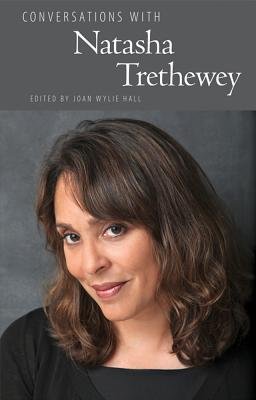
Conversations with Natasha Trethewey

Posted in Anthologies, Biography, Books, Media Archive, United States, Women on 2013-12-05 20:32Z by Steven

Conversations with Natasha Trethewey

University Press of Mississippi
2013-08-28
256 pages
6 x 9 inches, introduction, chronology, index
Hardback ISBN: 9781617038792
Paperback ISBN: 9781617039515

Edited by:

Joan Wylie Hall, Lecturer in English
University of Mississippi

United States Poet Laureate Natasha Trethewey (b. 1966) describes her mode as elegiac. Although the loss of her murdered mother informs each book, Trethewey’s range of forms and subjects is wide. In compact sonnets, elegant villanelles, ballad stanzas, and free verse, she creates monuments to mixed-race children of colonial Mexico, African American soldiers from the Civil War, a beautiful prostitute in 1910 New Orleans, and domestic workers from the twentieth-century North and South.

Because her white father and her black mother could not marry legally in Mississippi, Trethewey says she was “given” her subject matter as “the daughter of miscegenation.” A sense of psychological exile is evident from her first collection, Domestic Work (2000), to the recent Thrall (2012). Biracial people of the Americas are a major focus of her poetry and her prose book Beyond Katrina, a meditation on family, community, and the natural environment of the Mississippi Gulf Coast.

The interviews featured within Conversations with Natasha Trethewey provide intriguing artistic and biographical insights into her work. The Pulitzer Prize-winning poet cites diverse influences, from Anne Frank to Seamus Heaney. She emotionally acknowledges Rita Dove’s large impact, and she boldly positions herself in the southern literary tradition of Faulkner and Robert Penn Warren. Commenting on “Pastoral,” “South,” and other poems, Trethewey guides readers to deeper perception and empathy.

Tags: , ,

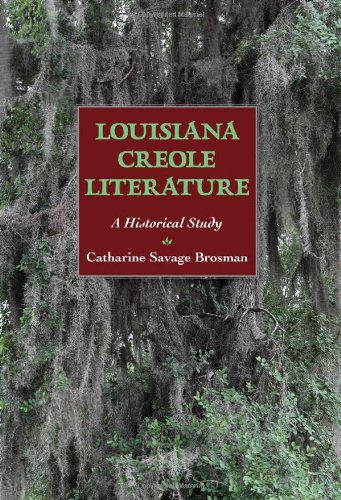
Louisiana Creole Literature: A Historical Study

Posted in Biography, Books, Literary/Artistic Criticism, Louisiana, Media Archive, Monographs, United States on 2013-12-05 20:01Z by Steven

Louisiana Creole Literature: A Historical Study

University Press of Mississippi
2013-10-17
256 pages
6 x 9 inches, bibliography, index
Hardback ISBN: 9781617039102

Catharine Savage Brosman, Professor Emerita of French
Tulane University, New Orleans, Louisiana

Louisiana Creole Literature is a broad-ranging critical reading of belles lettres—in both French and English—connected to and generally produced by the distinctive Louisiana Creole peoples, chiefly in the southeastern part of the state. The book covers primarily the nineteenth and twentieth centuries, the flourishing period during which the term Creole had broad and contested cultural reference in Louisiana.

The study consists in part of literary history and biography. When available and appropriate, each discussion–arranged chronologically–provides pertinent personal information on authors, as well as publishing facts. Readers will find also summaries and evaluation of key texts, some virtually unknown, others of difficult access. Brosman illuminates the biographies and works of Kate Chopin, Lafcadio Hearn, George Washington Cable, Grace King, and Adolphe Duhart, among others. In addition, she challenges views that appear to be skewed regarding canon formation. The book places emphasis on poetry and fiction, reaching from early nineteenth-century writing through the twentieth century to selected works by poets still writing in the early twenty-first century. A few plays are treated also, especially by Victor Séjour. Louisiana Creole Literature examines at length the writings of important Francophone figures, and certain Anglophone novelists likewise receive extended treatment. Since much of nineteenth-century Louisiana literature was transnational, the book considers Creole-based works which appeared in Paris as well as those published locally.

Catharine Savage Brosman, Houston, Texas, is professor emerita of French at Tulane University. She is the author of numerous books of French literary history and criticism, two volumes of nonfiction prose, and nine collections of poetry.

Contents

  • Preface
  • Chapter One. Louisiana and Its Population: The Historical Background
  • Chapter Two. Features of Early Louisiana Literature and the Cultural Milieu
  • Chapter Three. Pere Rouquette and Other Early Francophone Poets
  • Chapter Four. Mercier and Other Novelists Born in the Early Nineteenth Century
  • Chapter Five. Mid-Nineteenth-Century Immigrant Francophone Authors
  • Chapter Six. Fiction and Drama by Mid-Nineteenth-Century Free People of Color
  • Chapter Seven. Poetry by Mid-Nineteenth-Century Free People of Color
  • Chapter Eight. Cable and Hearn
  • Chapter Nine. Late Francophone Figures: de la Houssaye, du Quesnay, Dessommes
  • Chapter Ten. Kate Chopin
  • Chapter Eleven. King, Stuart, and Others
  • Chapter Twelve. Some Twentieth-Century Louisiana Prose Writers
  • Chapter Thirteen. Louisiana Creole Poets of the Twentieth and Twenty-First Centuries
  • Notes
  • Selected Bibliography
  • Index
Tags: , , , , , , ,

The symbolics of blood: Mestizaje in the Americas

Posted in Anthropology, Articles, Caribbean/Latin America, Media Archive on 2013-12-05 19:26Z by Steven

The symbolics of blood: Mestizaje in the Americas

Identities: Global Studies in Culture and Power
Volume 3, Issue 4, 1997 (Special Issue: Race and Place)
pages 495-521
DOI: 10.1080/1070289X.1997.9962576

Carol A. Smith, Professor Emerita of Anthropology
University of California, Davis

Mestizaje, a significant process of identity formation in Latin America based on presumed race mixture, rests on certain sustaining ideologies about race, class, gender, and sexuality that are specific to Latin America. This essay attempts a preliminary discussion of how mestizaje has affected marriage and gender relations in several Latin American regions as the marital/kinship pattern, together with its sustaining ideologies, changed over time. Questions are asked about differences in beliefs held by different kinds of individuals (mestizos and “whites,” lower classes and elites, women and men) about mestizaje and the sexual and/or kinship relations appropriate between different races and classes. Examination of a few well documented historical cases suggests that what lower-class mestizos believe about race, class, gender, and sexuality involves resistance to as well as acceptance of elite beliefs about them. It appears that there are also significant differences in beliefs held by mestizo women and men about appropriate female and male sexuality, though we have less information about this.

Read or purchase the article here.

Tags: , ,

Rejecting Blackness and Claiming Whiteness: Antiblack Whiteness in the Biracial Project

Posted in Books, Chapter, Media Archive, Politics/Public Policy, United States on 2013-12-05 19:09Z by Steven

Rejecting Blackness and Claiming Whiteness: Antiblack Whiteness in the Biracial Project

Chapter in: White Out: The Continuing Significance of Racism (pages 81-94)

Routledge
2003-08-14
344 pages
Paperback ISBN: 978-0-415-93583-8
Hardback ISBN: 978-0-415-93582-1

Edited by:

Ashley W. Doane, Associate Dean for Academic Administration; Professor of Sociology
University of Hartford, West Hartford, Connecticut

Eduardo Bonilla-Silva, Professor of Sociology
Duke University

Chapter Author:

Minkah Makalani, Assistant Professor of African and African Diaspora Studies
University of Texas, Austin

Over the past fifteen years in the United States, there has emerged a concerted push to reclassify people with one Black and one white parent as biracial. Advocates of this biracial project seek to have people of mixed parentage (PMP) recognized as a distinct, biracial race. They maintain that a biracial identity is more mentally healthy than a Black one and challenges popular notions of race in the United States, therefore making it the basis for “ultimately disabus[ing] Americans of their false beliefs in the biological reality of race” (Zack 2001:34). This will lead society away from racial classifications, hasten racism’s demise, and bring about a color-blind society (Gilanshah 1993; Spickard 2001; Zack 2001). Still, the progressive qualities of a biracial identity are more apparent than real.

The presence of a biracial race would certainly disrupt popular ideas about race, but to suggest it would precipitate the end of racial classifications is spec ulation (Parker and Song 2001). Changing popular ideas about race can occur without addressing racial oppression (Mosley 1997), and abolishing racial classifications to create a color-blind society is more likely to contribute to the persistence of racism than to its demise (Carr 1997; Neville et al. 2000; Bonilla-Silva 2001). Additionally, most arguments for a biracial race ignore the sociohistorical character of race and roots biracialty in biological notions of race “mixture” (powell 1997). This raises serious doubts about the biracial project’s claim to be a progressive social movement. Rather than seeking to overthrow the racialized social system, it is a reactionary political response to the racialization of people of African descent in the United States as Black. Specifically, it uses whiteness to distinguish PMP from African Americans as a new race that would be positioned between Blacks and whites in a reordered, racialized social system.

Several historians have addressed the historical role of whiteness in ordering racial oppression, giving special attention to how white racial identity develops in different racial formations (Roediger 1991; Allen 1994; on racial formations, see Baron 1985; Cha-Jua 2001). Putting these together with other works on race (C. Harris 1993; Malik 1997; Mills 1997), we can see whiteness as primarily a component part of racism. Cheryl Harris (1993:1735) alludes to this when she argues that whiteness is used by whites to maintain a superordinate position in the racial hierarchy: “the state’s official recognition of a racial identity that subordinated Blacks and of privileged rights in property based on race elevated whiteness from a passive attribute to an object of law and a resource deployable at the social, political, and institutional level to maintain control.” This identifies a link between white racial identity and Black subordination and more importantly conceptualizes whiteness as a material object used to maintain white supremacy rather than as merely an aspect of white identity.

This chapter analyzes the biracial project’s deployment of whiteness to argue that PMP constitute a new race. With the role whiteness plays in racism in mind, this accomplishes two things. First, it builds on Cheryl Harris (1993) to argue that whiteness is a dynamic social property that people of color might use to negotiate the racial hierarchy and it cautions against the tendency to essentialize whiteness as something only whites have. Second, it examines the biracial project as a particular instance of people of color using whiteness, by looking at the assertion that PMP are racially distinct from African Americans because whiteness is an immutable biosocial attribute. Using a materialist theory of race and racism, I argue that a biracial race has no social, historical, or cultural basis and that claims for its existence ignore the sociohistorical character of race and conflate racial identity with racial identification. Focusing in part on congressional testimonies on the census, but primarily on biracial-identity Internet Web sites, I examine the arguments of biracial-identity advocates to show how whiteness is deployed as a tool to distance PMP from African Americans politically, socially, and culturally…

Tags: , ,

American Sons & Daughters: Mixed Race, Identity in Southern California

Posted in Articles, Campus Life, Media Archive, United States on 2013-12-05 18:32Z by Steven

American Sons & Daughters: Mixed Race, Identity in Southern California

KCET Television
Burbank, California
2013-12-04

Susan Straight, Professor of Creative Writing
University of California, Riverside

This is how we began. I looked out at the 300 faces before me and said, “How many of you in this classroom are often asked, in a bar or a store or at a party, What are you?” Maybe a hundred young people raised their hands, and they couldn’t believe that’s what we would spend ten weeks talking about.

“People will guess, all the time, and they’re never right,” one young woman said.

“People think I’m black because of my hair. But I’m Ashkenazi Jewish,” a young man said.

“People think I’m Asian because of my eyes,” someone else said.

“My son is really light, because he’s Mexican-Irish,” said Arely, who is Mexican-American, standing in front of the class and showing her children from a cell phone photo onto the screens. “But my daughter is darker, since she’s Mexican-Colombian, and everyone talks about that. I already know how hard that’s going to be for her.”

The class is “The Mixed Race Novel and the American Experience.” But of course we didn’t talk only about books — we talked about who we are, how America sees us, how our families see us, and most importantly, how we see ourselves. We talked about America’s ongoing obsession with hair and melanin, about what it means to be undocumented, what it means to be a mother, what it means to witness a murder or to lose a dog. But all those discussions began with what it means to be of mixed racial and cultural heritage, and many students in this class at UC Riverside say this was their first time ever talking about these very personal things in an open forum…

Read the entire article here.

Tags: , , ,

‘Mixed Race Stereotypes in South African and American Literature’: A Reading

Posted in Africa, Literary/Artistic Criticism, Live Events, Media Archive, South Africa, United States on 2013-12-04 19:03Z by Steven

‘Mixed Race Stereotypes in South African and American Literature’: A Reading

Denison University
A. Blair Knapp Hall
Room 201
300 Ridge Road
Granville, Ohio 43023

Thursday, 2013-12-05, 16:30 EST (Local Time)

The Women’s Studies Program welcomes Diana Mafe.

The Women’s Studies Program welcomes Diana Mafe reading from her new book, Mixed Race Stereotypes in South African and American Literature: Coloring Outside the (Black and White) Lines. In this work, she examines the popular literary stereotype, the tragic mulatto, from a comparative perspective and considers the ways in which specific South African and American writers have used this controversial literary character to challenge the logic of racial categorization.

For more information, click here.

Tags: , ,

Representing the Race: A New Political History of African American Literature

Posted in Barack Obama, Books, History, Literary/Artistic Criticism, Media Archive, Monographs, Politics/Public Policy, United States on 2013-12-04 02:07Z by Steven

Representing the Race: A New Political History of African American Literature

New York University Press
August 2011
256 pages
Cloth ISBN: 9780814743386
Paper ISBN: 9780814743393

Gene Andrew Jarrett, Professor of English and African American Studies
Boston University

The political value of African American literature has long been a topic of great debate among American writers, both black and white, from Thomas Jefferson to Barack Obama. In his compelling new book, Representing the Race, Gene Andrew Jarrett traces the genealogy of this topic in order to develop an innovative political history of African American literature. Jarrett examines texts of every sort—pamphlets, autobiographies, cultural criticism, poems, short stories, and novels—to parse the myths of authenticity, popular culture, nationalism, and militancy that have come to define African American political activism in recent decades. He argues that unless we show the diverse and complex ways that African American literature has transformed society, political myths will continue to limit our understanding of this intellectual tradition.

Cultural forums ranging from the printing press, schools, and conventions, to parlors, railroad cars, and courtrooms provide the backdrop to this African American literary history, while the foreground is replete with compelling stories, from the debate over racial genius in early American history and the intellectual culture of racial politics after slavery, to the tension between copyright law and free speech in contemporary African American culture, to the political audacity of Barack Obama’s creative writing. Erudite yet accessible, Representing the Race is a bold explanation of what’s at stake in continuing to politicize African American literature in the new millennium.

Contents

  • Preface and Acknowledgments
  • Introduction: Toward a New Political History of African American Literature
  • 1. The Politics of Early African American Literature
  • 2. The Intellectual Culture of Racial Politics after Slavery
  • 3. New Negro Politics from Reconstruction to the Harlem Renaissance
  • 4. The Geopolitics of African American Autobiography between the World Wars
  • 5. Copyright Law, Free Speech, and the Transformative Value of African American Literature
  • 6. The Political Audacity of Barack Obama’s Literature
  • Epilogue: The Politics of African American Literature after Obama
  • Notes
  • Index
  • About the Author

Introduction: Toward a New Political History of African American Literature

What is the political value of African American literature? This question has united the intellectual interests of American authors as historically far apart as Thomas Jefferson at the end of the eighteenth century and Barack Obama at the start of the twenty-first. Over the past two centuries, it has united the social interests of literary works as different as pamphlets, autobiographies, cultural criticism, poems, short stories, and novels. And it has united the rhetorical interests of intellectual debate occurring in cultural forums as remarkable as the printing press, conventions, schools, parlors, railroad cars, and courtrooms. Certainly, the lists of authors, works, and venues can go on and on, almost in an unwieldy fashion. The challenges facing anyone interested in the opening question, then, are to think about it in systematic and sophisticated ways, to learn from its history, and to understand why it is still salient today.

Measuring the political value of African American literature begins with introducing what Jefferson and Obama have in common. As we all know, both men achieved the highest political office in the United States of America. One of the nation’s “Founding Fathers,” Jefferson was elected its third president in 1801, after having served, most notably, as secretary of state under George Washington and then as vice president under John Adams. Two centuries later, Obama was elected the forty-fourth president in 2008, after having served in the Illinois Senate for the state’s thirteenth district and then in the U.S. Senate for the state of Illinois. Prior to their careers as elected officials, both men wrote books that had been influential in shaping public opinion on the nation’s democratic potential as well as on their own personal, political, and presidential qualifications. In 1776, Jefferson coauthored the Declaration of Independence, and, in 1787, he published an authoritative ethnography of early America, Notes on the State of Virginia. Obama released three bestselling books of autobiographical nonfiction and public policy: in 1995, Dreams from My Father: A Story of Race and Inheritance; in 2006, The Audacity of Hope: Thoughts on Reclaiming the American Dream; and in 2008, Change We Can Believe In: Barack Obama’s Plan to Renew America’s Promise. Both Jefferson and Obama invested themselves in public service; both proved their commitment to “the life of the mind,” as Hannah Arendt, a political theorist, once put it.

Less obvious, Jefferson and Obama both entered office as “black” presidents—but not in the customary sense of who or what they are. Jefferson’s birth to a white mother from London and a white father from Virginia would suggest that he was white. Obama’s birth to a white mother from Kansas and a black father from Kenya would likewise suggest that he is neither just white nor black yet both. In either case, the terms white and black connote genealogical meanings of “race” that, given our allegedly “postidentitarian” era today, threaten to oversimplify the American identities of these two storied men. Nonetheless, I submit that they were “black” presidents insofar as whom they represented. As Jefferson was running for office, the “three-fifths compromise” or “federal ratio,” thanks to a provision in the U.S. Constitution, granted a man (but not a woman, who could not yet vote) an extra three votes in the House of Representatives and the presidential Electoral College for every five slaves that he owned. The large ownership of slaves in the South accorded this region—and, indirectly, its elected officers or office-seekers—leverage in securing more electoral votes and greater political representation. Jefferson’s election to the presidency benefited from the Southern advantage.

Obama’s election likewise benefited from securing votes from a large swath of the African American electorate. Whereas Jefferson’s candidacy exploited a constitutional loophole that counted slaves while denying them the political entitlements enjoyed by white slaveholders, Obama’s presidential campaign attracted African Americans in unprecedented numbers. The electoral power of African Americans and the political power of his own Democratic Party grew. Drawing on his experience as a community organizer in Chicago, he led staffers, volunteers, and Internet bloggers as they worked to register for the first time many African Americans to vote and as they reminded others how to do so again. The more experienced African American voters were persuaded to cast their ballots early on Election Day and to galvanize others to vote as well. About seventy million Americans voted for Obama in the end, helping him defeat his Republican opponent, John McCain, a senior U.S. senator from Arizona, by about ten million votes. In the history of U.S. presidential elections, Obama earned the biggest percentage and number of “black votes”—over 95 percent and sixteen million, respectively…

Read the entire introduction here.
Tags: , ,