In France, a Baby Switch and a Test of a Mother’s Love

Posted in Articles, Europe, Family/Parenting, Media Archive on 2015-02-24 22:48Z by Steven

In France, a Baby Switch and a Test of a Mother’s Love

The New York Times
2015-02-24

Maïa de la Baume

GRASSE, France — When Sophie Serrano finally held her daughter, Manon, in her arms after the newborn, suffering from jaundice, had been placed under artificial light, she was taken aback by the baby’s thick tufts of hair.

“I hadn’t noticed it before and it surprised me,” Ms. Serrano said in an interview at her home here in southern France, not far from the Côte d’Azur.

Ms. Serrano, now 39, was baffled again a year later, when she noticed that her baby’s hair had grown frizzy and that her skin color was darker than hers or her partner’s.

But her love for the child trumped any doubts. Even as her relationship unraveled, in part, she said, over her partner’s suspicions, she painstakingly looked after the baby until a paternity test more than 10 years later showed that neither she nor her partner were Manon’s biological parents. Ms. Serrano later found out that a nurse had accidentally switched babies and given them to the wrong mothers…

…Ms. Serrano’s love for Manon, she said, grew stronger after she learned that the girl was not her biological daughter. She also said that, after meeting the girl she had given birth to, she felt no particular connection with her.

“It is not the blood that makes a family,” Ms. Serrano said. “What makes a family is what we build together, what we tell each other. And I have created a wonderful bond with my nonbiological daughter.”…

Read the entire article here.

Tags: , , , , ,

Black Slaves, Indian Masters: Slavery, Emancipation, and Citizenship in the Native American South

Posted in Books, History, Media Archive, Monographs, Native Americans/First Nation, Slavery, United States on 2015-02-24 21:59Z by Steven

Black Slaves, Indian Masters: Slavery, Emancipation, and Citizenship in the Native American South

University of North Carolina Press
February 2015
232 pages
6.125 x 9.25
11 halftones, notes, bibl., index
Paper ISBN: 978-1-4696-2187-6

Barbara Krauthamer, Associate Professor of History
University of Massachusetts, Amherst

From the late eighteenth century through the end of the Civil War, Choctaw and Chickasaw Indians bought, sold, and owned Africans and African Americans as slaves, a fact that persisted after the tribes’ removal from the Deep South to Indian Territory. The tribes formulated racial and gender ideologies that justified this practice and marginalized free black people in the Indian nations well after the Civil War and slavery had ended. Through the end of the nineteenth century, ongoing conflicts among Choctaw, Chickasaw, and U.S. lawmakers left untold numbers of former slaves and their descendants in the two Indian nations without citizenship in either the Indian nations or the United States. In this groundbreaking study, Barbara Krauthamer rewrites the history of southern slavery, emancipation, race, and citizenship to reveal the centrality of Native American slaveholders and the black people they enslaved.

Krauthamer’s examination of slavery and emancipation highlights the ways Indian women’s gender roles changed with the arrival of slavery and changed again after emancipation and reveals complex dynamics of race that shaped the lives of black people and Indians both before and after removal.

Tags: , , ,

Box Marked Black + Futility of Nicknames

Posted in Audio, Autobiography, Live Events, Media Archive, United States on 2015-02-24 21:52Z by Steven

Box Marked Black + Futility of Nicknames

Stage and Studio with Dmae Roberts: The Best of Performing, Literary and Media Arts
KBOO 90.7 FM or KBOO.FM
Portland, Oregon
2015-02-24, 11:00-12:00 PST (Local Time)

Dmae Roberts, Host

Dmae spotlights two different writers: Damaris Webb who’s performing her autobiographical play The Box Marked Black about growing up mixed race and Matt Kolbet, a writer in Newberg who’s just published his debut novel The Futility of Nicknames which is inspired by some elements of his life but is an entirely fictional story. Two varied stories: one real, one imaginary on the next Stage & Studio.

Damaris Webb is a performer, director and teaching artist who recently (re) relocated to Portland, OR after 26 years making and producing work in New York City. Ms Webb holds her MFA from Naropa’s Contemporary Performance Program, and her BFA from NYU’s Experimental Theater Wing. Her original work is often seen in non-traditional performance venues such as late night parties, warehouses and church basements, it is sometimes epic and may involve zombies, superheroes or sock puppets. Recent projects include directing Rich Rubin’s “Cottonwood in the Flood” staged reading for the 2015 Fertile Ground. In Portland, she offers Contemplative Dance Practice through Be Space and is a coach for PlayWrite, Inc. For more info: www.DamarisWebb.com.

The Box Marked Black is a tender solo performance piece, tracing the experience of growing up mulatto in the pre-Huxtable era. With only Jenny Willis from The Jeffersons as a guide, our multi-disciplinary storyteller creates narrative from the perspective of both sides of her interracial family, embodying multiple characters, childhood memories (including a Roots sock puppet re-enactment) and fantasy…

For more information, click here. Download the episode (00:32:01) here.

Tags: , , , , , , ,

Building a Face, and a Case, on DNA

Posted in Articles, Health/Medicine/Genetics, Law, Media Archive, United States on 2015-02-24 02:39Z by Steven

Building a Face, and a Case, on DNA

The New York Times
2015-02-23

Andrew Pollack


The police in Columbia, S.C.,  released this sketch of a possible suspect based on DNA left at the crime scene. Parabon NanoLabs, which made the image, has begun offering DNA phenotyping services to law enforcement agencies.

There were no known eyewitnesses to the murder of a young woman and her 3-year-old daughter four years ago. No security cameras caught a figure coming or going.

Nonetheless, the police in Columbia, S.C., last month released a sketch of a possible suspect. Rather than an artist’s rendering based on witness descriptions, the face was generated by a computer relying solely on DNA found at the scene of the crime.

It may be the first time a suspect’s face has been put before the public in this way, but it will not be the last. Investigators are increasingly able to determine the physical characteristics of crime suspects from the DNA they leave behind, providing what could become a powerful new tool for law enforcement.

Already genetic sleuths can determine a suspect’s eye and hair color fairly accurately. It is also possible, or might soon be, to predict skin color, freckling, baldness, hair curliness, tooth shape and age.

Computers may eventually be able to match faces generated from DNA to those in a database of mug shots. Even if it does not immediately find the culprit, the genetic witness, so to speak, can be useful, researchers say…

…Law enforcement authorities say that information about physical traits derived from DNA is not permitted in court because the science is not well established. Still, the prospect of widespread DNA phenotyping has unnerved some experts.

Duana Fullwiley, an associate professor of anthropology at Stanford, said that she worried that use of such images could contribute to racial profiling. She noted that Dr. Shriver developed his system by analyzing the DNA and faces of people with mixed West African and European ancestry.

“This leads to a technology that is better able to make faces that are African-American,” she said. The image produced in the South Carolina case, Dr. Fullwiley added, “was of a generic young black man.”

Dr. Shriver said he initially studied people of mixed European and African ancestry, many of them from Brazil, because that made the analysis easier. His more recent research has involved people of many different ethnicities, he said…

Read the entire article here.

Tags: , , , , , , , , , , , , , , , ,

Physics of Blackness: Beyond the Middle Passage Epistemology

Posted in Books, Literary/Artistic Criticism, Media Archive, Monographs, Philosophy on 2015-02-24 02:12Z by Steven

Physics of Blackness: Beyond the Middle Passage Epistemology

University of Minnesota Press
February 2015
240 pages
5 1/2 x 8 1/2
Paper ISBN: 978-0-8166-8730-5
Cloth ISBN: 978-0-8166-8726-8

Michelle M. Wright, Associate Professor of Black European and African Diaspora Studies
Northwestern University, Evanston, Illinois

What does it mean to be Black? If Blackness is not biological in origin but socially and discursively constructed, does the meaning of Blackness change over time and space? In Physics of Blackness: Beyond the Middle Passage Epistemology, Michelle M. Wright argues that although we often explicitly define Blackness as a “what,” it in fact always operates as a “when” and a “where.”

By putting lay discourses on spacetime from physics into conversation with works on identity from the African Diaspora, Physics of Blackness explores how Middle Passage epistemology subverts racist assumptions about Blackness, yet its linear structure inhibits the kind of inclusive epistemology of Blackness needed in the twenty-first century. Wright then engages with bodies frequently excluded from contemporary mainstream consideration: Black feminists, Black queers, recent Black African immigrants to the West, and Blacks whose histories may weave in and out of the Middle Passage epistemology but do not cohere to it.

Physics of Blackness takes the reader on a journey both known and unfamiliar—from Isaac Newton’s laws of motion and gravity to the contemporary politics of diasporic Blackness in the academy, from James Baldwin’s postwar trope of the Eiffel Tower as the site for diasporic encounters to theoretical particle physics’ theory of multiverses and superpositioning, to the almost erased lives of Black African women during World War II. Accessible in its style, global in its perspective, and rigorous in its logic, Physics of Blackness will change the way you look at Blackness.

Contents

  • Introduction. Many Thousands Still Coming: Theorizing Blackness in the Postwar Moment
  • 1. The Middle Passage Epistemology
  • 2. The Problem of Return in the African Diaspora
  • 3. Quantum Baldwin and the Multidimensionality of Blackness
  • 4. Axes of Asymmetry
  • Acknowledgments
  • Notes
  • Bibliography
  • Index
Tags: , ,

The Kidnapping of Mollie Digby: Was the Fair-Haired Stranger Actually Mollie?

Posted in Articles, Law, Louisiana, Media Archive, United States on 2015-02-24 01:37Z by Steven

The Kidnapping of Mollie Digby: Was the Fair-Haired Stranger Actually Mollie?

All Things Crime
2015-02-20

Darcia Helle

In 1870, New Orleans was a city divided by politics, class, and race. The Civil War had left much of the south reeling, and now the government’s Radical Reconstruction attempted to force change by integrating the black population into the white-dominated hierarchy. Some whites rebelled, clinging to their Confederate roots, while others who supported the change suffered ridicule and disdain within their community. The atmosphere was tumultuous. Racism was not only openly practiced but encouraged.

Former United States Supreme Court Justice John Campbell, who resigned in order to join the Confederacy, illustrates this point well. He had this to say to his fellow New Orleanians: “We have Africans in place all about us, they are jurors, post office clerks, custom house officers & day by day they barter away their obligations and duties.”

By 1870, this self-appointed elite class had become the minority. Foreign born immigrants made up 75% of the city’s population. Prejudices went much deeper than skin color. Irish and German immigrants were considered lowlifes, their presence tolerated by the upper class only slightly more than the presence of African-Americans. This hostile environment made New Orleans one of the most dangerous places in America during the late 1800s.

Thomas and Bridgette Digby were two of the city’s Irish immigrants living in relative obscurity. They had fled their country during the mid-1800s, along with thousands of others known as the “Famine Irish”. By June of 1870, the couple had three children and were living in a working class section of New Orleans. Thomas drove a hackney cab, and Bridgette took in laundry and sewing from the wealthy residents. Nothing about them or their lives was remarkable at the time. Certainly nothing suggested that their names would be committed to history…

…The details of this case are too complicated and convoluted to share here. For a full account of this story, as well as fascinating details of the historical period, I highly recommend reading The Great New Orleans Kidnapping Case: Rage, Law, and Justice in the Reconstruction Era by Michael A. Ross. The short version of this story is that the outraged and outspoken media and citizens pushed the police department toward an arrest. In fact, they demanded nothing less…

Read the entire article here.

Tags: , , ,

Metis actress Tantoo Cardinal to receive lifetime achievement award

Posted in Articles, Arts, Canada, Interviews, Media Archive, Native Americans/First Nation, Women on 2015-02-24 01:19Z by Steven

Metis actress Tantoo Cardinal to receive lifetime achievement award

CTV News
2015-02-05

The Canadian Press

TORONTO — As Metis actress Tantoo Cardinal prepares to receive a lifetime achievement award, she remembers what originally inspired her to begin acting more than 40 years ago: anger.

“It wasn’t about a career at all — it was about having a voice,” the Edmonton-raised 64-year-old said in a telephone interview this week.

“I don’t know if people really can appreciate what that experience is — of attempted genocide, generations and generations and generations where your language is outlawed, your creativity is outlawed, anything you think or say or do is actually outlawed…

Read the entire interview here.

Tags: ,

The white man who pretended to be black

Posted in Articles, Biography, History, Media Archive, Passing, United States on 2015-02-23 21:45Z by Steven

The white man who pretended to be black

The Telegraph
2015-02-05

Tim Stanley

With the release of the movie Selma, a lot of Americans are asking how far race relations have really come in the United States. On the one hand, the movie depicts the success of the Sixties civil rights crusade – its victory confirmed by Barack Obama’s election in 2008.

On the other hand, the recent deaths of young black men at the hands of white cops and vigilantes, and the resulting race riots, suggest that a lot of things haven’t changed at all. Whites may ask, “Why are working-class blacks angry? They have the right to vote and an African-American president – everything Martin Luther King Jr fought for.”

But some of the apparent triumph of black civil rights is a veneer. Racism isn’t just about law but about attitudes. Attitudes that are hard to change because of the gulf of understanding between different communities.

Can a white person ever really understand how a black person sees the world? Back in 1959, six years before Martin Luther King marched for civil rights in Selma, one man tried. A white Texan writer called John Howard Griffin walked into a doctor’s office in New Orleans and asked him to turn his skin colour black. Griffin took oral medication and was bombarded with ultraviolet rays; he cut off his hair to hide an absence of curls and shaved the back of his hands. Then he went on a tour of the Deep South.

The result was a bestselling book called Black Like Me, which is still regarded as an American classic. Griffin wanted to test the claim that although the southern United States was segregated it was essentially peaceful and just – that the two races were separate but equal…

Read the entire article here.

Tags: , ,

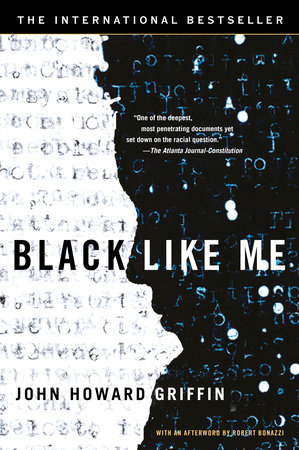
Black Like Me

Posted in Autobiography, Books, Media Archive, Monographs, Passing, United States on 2015-02-23 21:30Z by Steven

Black Like Me

Penguin Books
2003-05-06 (originally published in 1961)
208 pages
Paperback ISBN 9780451208644

John Howard Griffin (1920-1980)

In the Deep South of the 1950s, journalist John Howard Griffin decided to cross the color line. Using medication that darkened his skin to deep brown, he exchanged his privileged life as a Southern white man for the disenfranchised world of an unemployed black man. His audacious, still chillingly relevant eyewitness history is a work about race and humanity-that in this new millennium still has something important to say to every American.

Tags: ,

Fresh Off the Boat Is Not Science Fiction

Posted in Articles, Asian Diaspora, Communications/Media Studies, Literary/Artistic Criticism, Media Archive, United States on 2015-02-23 21:15Z by Steven

Fresh Off the Boat Is Not Science Fiction

David Shih
2015-02-10

David Shih, Associate Professor of English
University of Wisconsin, Eau Claire

I have always known that moment of disappearance and the even uglier truth is that I have long treasured it. That always honorable-seeming absence. It appears I can go anywhere I wish. Is this my assimilation, so many years in the making? Is this the long-sought sweetness? —Chang-rae Lee, Native Speaker

Lost amid the well-deserved fanfare accompanying the premiere of ABC’s new prime-time comedy Fresh Off the Boat was the launch of another major-studio show featuring an Asian American family. Like Eddie Huang’s brainchild, it is a big-budget vehicle as well, with stars such as Olivia Munn, George Takei, Bill Nye, Mark Hamill, and Adrian Grenier lending their talents to its production. However, unless you are like me, a parent or caregiver to a preschool-aged child, you may not know what I’m talking about. Miles from Tomorrowland is an animated series for Disney Junior that made its debut only a few days after that of Fresh Off the Boat. (Disney-ABC owns both titles.) In this blog entry I will discuss these new shows, particularly how they represent extant and potential relationships between Asian Americans and other racial groups, particularly white people. What does it mean that traditional and social media have christened Fresh Off the Boat as the “Asian American” show, while the publicity for Miles from Tomorrowland makes no mention of race? The latter is a “postracial” narrative while the former is decidedly “racial” in its intent and reception.

Miles from Tomorrowland chronicles the planet-hopping adventures of a family of four, members of an institution familiar to anyone who has visited the Magic Kingdom–the “Tomorrowland Transit Authority.” The star of the show is Miles Callisto, an intrepid young boy who learns about science while solving problems with his creative use of technology. His mother, Phoebe, is the captain of their spaceship. Father Leo and sister Loretta round out the foursome. With the exception of Leo, who is white, the other Callistos are of Asian descent. To be clear, nothing from the official publicity for Miles from Tomorrowland overtly states that Phoebe is an Asian American. The voice actor for Phoebe is the well-regarded Olivia Munn, whose mother is Chinese. Just to be sure, I contacted the creator of the show, Sascha Paladino. Paladino told me that Miles is Chinese American. Moreover, Paladino revealed, later episodes of the show will explore Miles’ Chinese heritage. Targeted at preschoolers, the show is a developmentally-appropriate multicultural narrative: the star is a mixed-race boy who maintains a connection to his ethnic identity, and the Asian American characters do not exhibit any stereotypical behaviors. It promises to honor cultural diversity while understanding it as no barrier to social potential. My mixed-race son loves it, and I’m glad that there is once again an animated protagonist who shares his heritage…

Read the entire article here.

Tags: ,