The Historical Legal Construction of Black Racial Identity of Mixed Black-White Race Individuals: The Role of State Legislatures

Posted in Law, Media Archive, Papers/Presentations, United States on 2009-09-28 04:27Z by Steven

The Historical Legal Construction of Black Racial Identity of Mixed Black-White Race Individuals: The Role of State Legislatures

Paper presented at the annual meeting of the Western Political Science Association
Manchester Hyatt
San Diego, California
2008-03-20

Richard T. Middleton, IV, Associate Professor of Political Science
University of Missouri, St. Louis

This research paper is an analysis of the historical legal construction of black racial identity of mixed black-white race individuals in America.  In particular, I investigate how state legislatures in the United States constructed black racial identity through the enactment of laws and constitutional provis ions. This research identifies the following two-part framework by which state legislatures historically used the language of the law to coerce mixed black-white race individuals to adopt a personal sense of collective identity with people of black African ancestry: (1) identification of mixed black-white race individuals and blacks/Negroes as constituting two separate racial groups yet speaking of them in the same blush and disadvantaging them the same, and (2) abandoning recognition of mixed black-white race individuals (mulattoes) as a distinct racial group from Negroes/blacks through the enactment of statutes that espoused the rule of hypodescent. To provide empirical support for this paper’s thesis, a survey of statutes across all fifty states ranging from the colonial period up to the mid-1900s is conducted.
Read the entire paper here.  Supporting documents: 1 and 2.

Tags: , , ,

Essentialism and the Perception of Mixed-Race Individuals: Implications for the Sociopolitical Assimilation of Ethnic Minorities

Posted in Identity Development/Psychology, Media Archive, Papers/Presentations, United Kingdom on 2009-09-28 04:07Z by Steven

Essentialism and the Perception of Mixed-Race Individuals: Implications for the Sociopolitical Assimilation of Ethnic Minorities

Paper presented at the annual meeting of the International Society of Political Psychology (ISPP) 32nd Annual Scientific Meeting
Trinity College
Dublin, Ireland
2009-07-14

Arnold Ho
Harvard University

James Sidanius, Professor of Psychology and of African and African American Studies
Harvard University

Previous work examining hypodescent, the process whereby persons of mixed-race descent are assigned to their socially subordinate racial status, showed that hypodescent may be applied to both Asian-White and Black-White targets (Ho & Sidanius, 2008).  However, no research has uncovered attitudinal covariates of hypodescent.  Thus, while hypodescent has been shown to occur, little is known about its antecedents.  Across two survey studies, we show that essentialism, or the tendency to see racial group boundaries and differences as being biological rather than socially constructed, can lead to hypodescent. Establishing essentialism as a precursor to hypodescent further establishes the role of essentialist thinking in intergroup relations, a topic of recent interest in social and political psychology (Prentice & Miller, 2007).  The relationship between essentialism and classical (“old fashioned”) racism, as well as the implications of hypodescent for the sociopolitical assimilation of African- and Asian-Americans, are discussed.

Read the entire paper here.

Tags:

The Shifting Politics of Multiracialism in the United States

Posted in Census/Demographics, Media Archive, Papers/Presentations, Politics/Public Policy, United States on 2009-09-28 03:14Z by Steven

The Shifting Politics of Multiracialism in the United States

Paper presented at the annual meeting of the American Political Science Association (APSA) 2008 Annual Meeting
Hynes Convention Center
Boston, Massachusetts
2008-08-28

38 pages

Awarded the American Political Science Association Public Policy Section 2008 prize for her paper, co-authored with Vesla Weaver, of the University of Virginia Government Department, “The Shifting Politics of Multiculturalism in the United States.”  The award will be presented at the APSA Annual Meeting, 2009-09-03 through 2009-09-06  in Toronto, Canada.

Jennifer L. Hochschild, Henry LaBarre Jayne Professor of Government & Professor of African and African American Studies
Harvard University

Vesla Weaver, Assistant Professor
The Woodrow Wilson Department of Politics
University of Virginia

For the first time in American history, the 2000 census allowed respondents to identify with more than one race. That change resulted, in part, from mobilization of activists and an increasing population of mixed-race partnerships and multiracial offspring.  However, despite both supporters’ and opponents’ predictions of rapid growth in multiracial identification, less than 3 percent of the population chose more than one race in 2000.  And the largest recent surveys show similar results.

This paper explores whether and how far multiracialism has become embedded in Americans’ practice and understanding of race, and considers what might happen in the foreseeable future. Starting from theories that elegantly explicate various forms of policy feedback and transformation but are weaker on causal explanations for them, we identify four factors that lead an enacted policy to endure or be blocked.  They are: whether other agencies have incentives to institutionalize the policy, whether the policy triggers development of a committed constituency, whether opposing groups remain strong, and whether the change is supported by independent societal trends. We find that the first and fourth factors encourage consolidation of multiracial identification, while the second and third work toward keeping it very low. Thus institutional procedures and underlying societal trends tend in one direction while individuals’ active and intentional choices are tending the opposite way: a fascinating and unusual situation with important implications for theories of path dependency and policy transformation.

The trajectory of multiracial identification could change the racial order in the United States, for better or for worse. If it increases, it might portend a shift in classification norms that could break down racial boundaries and even reduce interracial hostility and fear.  Alternatively, an increase could signal Americans’ desire to find one more route out of blackness and into some less denigrated status, to the detriment of African Americans. If multiracial identification does not increase, that will indicate the power of old single race understandings regardless of demographic changes, with all of their implications for prejudice and group loyalty.

Read the entire paper here.

Tags: , , , ,

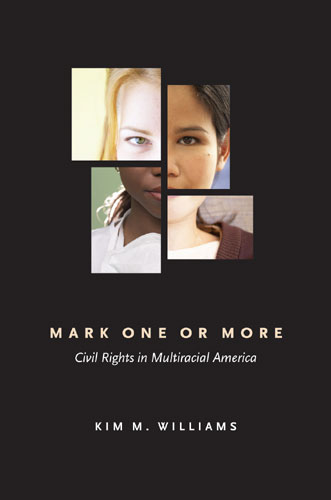
Mark One or More: Civil Rights in Multiracial America

Posted in Books, Census/Demographics, Media Archive, Monographs, Politics/Public Policy, United States on 2009-09-28 00:42Z by Steven

Mark One or More: Civil Rights in Multiracial America

University of Michigan Press
2006
208 pages
6 x 9; 11 Tables & 8 Figures.
Paper ISBN: 978-0-472-03280-8

Kim M. Williams, Associate Professor of Political Science; Academic Director of the Center for Women, Politics & Policy at the Hatfield School of Government
Portland State University, Portland, Oregon

The little-known story of the struggle to include a multiracial category on the U.S. census, and the profound changes it wrought in the American political landscape.

Mark One or More tells the little-known story of the struggle to include a multiracial category on the U.S. census, and the profound changes it wrought in the American political landscape.

The movement to add a multiracial category to the 2000 U.S. Census provoked unprecedented debates about race. The effort made for strange bedfellows.  Republicans like House Speaker Newt Gingrich and affirmative action opponent Ward Connerly took up the multiracial cause. Civil rights leaders opposed the movement on the premise that it had the potential to dilute the census count of traditional minority groups. The activists themselves—a loose confederation of organizations, many led by the white mothers of interracial children—wanted recognition. What they got was the transformation of racial politics in America.

Mark One or More is the compelling account of how this small movement sparked a big change, and a moving call to reassess the meaning of racial identity in American life.

Tags: , ,

The Politics of Multiracialism: Challenging Racial Thinking

Posted in Anthologies, Books, Census/Demographics, Media Archive, Politics/Public Policy, United States on 2009-09-27 23:39Z by Steven

The Politics of Multiracialism: Challenging Racial Thinking

State University of New York Press
June 2004
263 pages
Hardcover ISBN-10: 0-7914-6153-X; ISBN-13: 978-0-7914-6153-2
Paperback ISBN-10: 0-7914-6154-8; ISBN13: 978-0-7914-6154-9

Editor:

Heather M. Dalmage, Professor of Sociology and Director
Mansfield Institute for Social Justice
Roosevelt University

A provocative analysis of current thought and discourse on multiracialism.

This is the first book to critically look at the political issues and interests surrounding the broadly defined Multiracial Movement and at what is being said about multiracialism. Many of the multiracial family organizations that exist across the United States developed socially, ideologically, and politically during the conservative Reagan years. While members of the Multiracial Movement differ widely in their political views, the concept of multiracialism has been taken up by conservative politicians in ways that are often inimical to the interests of traditionally defined minorities.

Contributors look at the Multiracial Movement’s voice and at the political controversies that attend the notion of multiracialism in academic and popular literature, internet discourse, census debates, and discourse by and about pop culture celebrities. The work discusses how multiracialism, hybridity, and racial mixing have occurred amidst existing academic discussions of authenticity, community borders, identity politics, the social construction of race, and postmodern fragmentation. How the Multiracial Movement is shaping and transforming collective multiracial identities is also explored.

Contributors include Erica Chito Childs, Kimberly McClain DaCosta, Heather M. Dalmage, Abby L. Ferber, Charles A. Gallagher, Terri A. Karis, Rebecca Chiyoko King-O’Riain, Kerry Ann Rockquemore, Barbara Katz Rothman, Rainier Spencer, Eileen T. Walsh, and Kim M. Williams.

Table of Contents

Part One: Context of the Multiracial Movement

1. All in the Family: The Familial Roots of Racial Divisions
Kimberly McClain DaCosta

2. Defending the Creation of Whiteness: White Supremacy and the Threat of Interracial Sexuality
Abby L. Ferber

3. Racial Redistricting: Expanding the Boundaries of Whiteness
Charles A. Gallagher

4. Linking the Civil Rights and Multiracial Movements
Kim M. Williams

Part Two: Discourses of the Multiracial Movement

5. Beyond Pathology and Cheerleading: Insurgency, Dissolution, and Complicity in the Multiracial Idea
Rainier Spencer

6. Deconstructing Tiger Woods: The Promise and Pitfalls of Multiracial Identity
Kerry Ann Rockquemore

7. Multirace.com: Multiracial Cyberspace
Erica Chito Childs

8. “I Prefer to Speak of Culture”: White Mothers of Multiracial Children
Terri A. Karis

Part Three: Lessons from the Multiracial Movement

9. Model Majority? The Struggle for Identity among Multiracial Japanese Americans
Rebecca Chiyoko King-O’Riain

10. Transracial Adoption: Refocusing Upstream
Barbara Katz Rothman

11. Protecting Racial Comfort, Protecting White Privilege
Heather M. Dalmage

12. Ideology of the Multiracial Movement: Dismantling the Color Line and Disguising White Supremacy?
Eileen T. Walsh

List of Contributors

Index

Tags: , , , , , , , , , , , , , , , ,

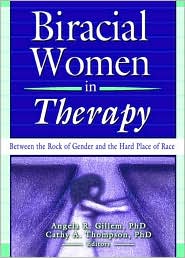
Biracial Women in Therapy: Between the Rock of Gender and the Hard Place of Race

Posted in Anthologies, Books, Identity Development/Psychology, Media Archive, Women on 2009-09-27 21:05Z by Steven

Biracial Women in Therapy: Between the Rock of Gender and the Hard Place of Race

Routledge
2004-03-04
280 pages
Hardback ISBN: 9780789021441; Hardback ISBN-10: 0789021447
Paperback ISBN: 9780789021458; Paperback ISBN-10: 0789021455

Editor: Cathy A. Thompson, Psychologist
Counseling and Psychological Services (CAPS)
University of California at San Diego

Editor: Angela R. Gillem, Professor & Clinical Psychologist
Arcadia University

Get a unique perspective on the female biracial experience!

Biracial Women in Therapy: Between the Rock of Gender and the Hard Place of Race examines how physical appearance, cultural knowledge, and cultural stereotypes affect the experience of mixed-race women in belonging to, and being accepted within, their cultures. This unique book combines empirical research, theoretical papers, and first-person narrative to address issues relevant to providing therapy to biracial women and girls, helping therapists and counselors develop a treatment framework based on sociocultural factors. Researchers, practitioners, and academics provide insight into the biracial reality, taking multiple aspects of clients’ lives into account rather than looking for simple hierarchies of well-being based on race.

Biracial Women in Therapy is a building block for mental health practitioners in the construction of theory and practice in working with biracial females. The book examines how a biracial women’s racial/ethnic identity intersects with her gender and sexual identity to affect her sense of belonging and acceptance, addressing issues of appearance, social class, disability, power and guilt, and dating and marriage. Topics addressed in the book include:

  • the complexities of multiple minority status
  • how ethnic differences affect biracial adolescents
  • issues encountered by biracial women from a sociohistorical context
  • biracial women’s attitudes toward counseling
  • stereotypes of marginalization and identity confusion
  • a multicultural feminist approach to counseling
  • and a first-person narrative of one author’s racial and sexual identity development

Table of Contents

  • Introduction: Biracial Women in Therapy: Between the Rock of Gender and the Hard Place of Race
  • From Exotic to a Dime a Dozen – Maria P. P. Root
  • Utilizing the Strengths of Our Cultures: Therapy with Biracial Women and Girls
  • Biracial (Black/White) Women: A Qualitative Study of Racial Attitudes and Beliefs and Their Implications for Therapy
  • Understanding and Assisting Black/White Biracial Women in Their Identity Development
  • Negotiating Racial Identity: Biracial Women and Interactional Validation
  • Dating Practices, Racial Identity, and Psychotherapeutic Needs of Biracial Women
  • When Face and Soul Collide: Therapeutic Concerns with Racially Ambiguous and Nonvisible Minority Women
  • Counseling Biracial Women: An Intersection of Multiculturalism and Feminism
  • Depressive Symptoms and Attitudes Toward Counseling as Predictors of Biracial College Women’s Psychological Help-Seeking Behavior
  • Biracial Lesbian and Bisexual Women: Understanding the Unique Aspects and Interactional Processes of Multiple Minority Identities
  • Conversations, Not Categories: The Intersection of Biracial and Bisexual Identities
  • Out of the Closet but Still in Hiding: Conflicts and Identity Issues for a Black-White Biracial Lesbian
  • Therapeutic Considerations in Work with Biracial Girls
  • Fitting In and Feeling Good: Patterns of Self-Evaluation and Psychological Stress Among Biracial Adolescent Girls
  • Mixed Race Women: One More Mountain to Climb
  • Index
  • Reference Notes Included
Tags: , , , , ,

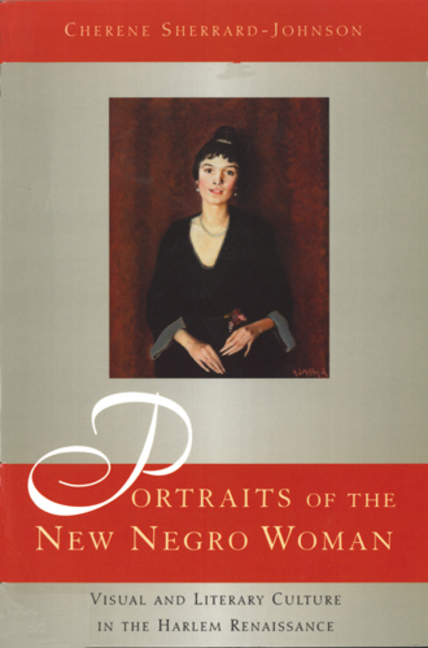
Portraits of the New Negro Woman: Visual and Literary Culture in the Harlem Renaissance

Posted in Books, History, Literary/Artistic Criticism, Media Archive, Monographs, Passing, United States, Women on 2009-09-25 23:13Z by Steven

Portraits of the New Negro Woman: Visual and Literary Culture in the Harlem Renaissance

Rutgers University Press
2006
224 pages
b&w illustrations
Paper ISBN: 978-0-8135-3977-5
Cloth ISBN: 978-0-8135-3976-8

Cherene Sherrard-Johnson, Professor of English
University of Wisconsin-Madison

Of all the images to arise from the Harlem Renaissance, the most thought-provoking were those of the mulatta. For some writers, artists, and filmmakers, these images provided an alternative to the stereotypes of black womanhood and a challenge to the color line. For others, they represented key aspects of modernity and race coding central to the New Negro Movement. Due to the mulatta’s frequent ability to pass for white, she represented a variety of contradictory meanings that often transcended racial, class, and gender boundaries.

Portraits of the New Negro Woman investigates the visual and literary images of black femininity that occurred between the two world wars. Cherene Sherrard-Johnson traces the origins and popularization of these new representations in the art and literature of the Harlem Renaissance and how they became an ambiguous symbol of racial uplift constraining African American womanhood in the early twentieth century.

In this engaging narrative, the author uses the writings of Nella Larsen and Jessie Fauset as well as the work of artists like Archibald Motley and William H. Johnson to illuminate the centrality of the mulatta by examining a variety of competing arguments about race in the Harlem Renaissance and beyond.

Tags: , , , , , , ,

Black, Jewish, and Interracial: It’s Not the Color of Your Skin, but the Race of Your Kin, and Other Myths of Identity

Posted in Books, Family/Parenting, Identity Development/Psychology, Judaism, Media Archive, Monographs, Religion, United States on 2009-09-25 03:50Z by Steven

Black, Jewish, and Interracial: It’s Not the Color of Your Skin, but the Race of Your Kin, and Other Myths of Identity

Duke University Press
1997
232 pages
Cloth – ISBN13 978-0-8223-1975-7
Paperback – ISBN13 978-0-8223-1971-9

Katya Gibel Azoulay [Mevorach], Professor
Anthropology and American Studies
Grinnell College, Grinnell Iowa

How do adult children of interracial parents—where one parent is Jewish and one is Black—think about personal identity?  This question is at the heart of Katya Gibel Azoulay’s Black, Jewish, and Interracial.  Motivated by her own experience as the child of a Jewish mother and Jamaican father, Gibel Azoulay blends historical, theoretical, and personal perspectives to explore the possibilities and meanings that arise when Black and Jewish identities merge. As she asks what it means to be Black, Jewish, and interracial, Gibel Azoulay challenges deeply ingrained assumptions about identity and moves toward a consideration of complementary racial identities.

Beginning with an examination of the concept of identity as it figures in philosophical and political thought, Gibel Azoulay moves on to consider and compare the politics and traditions of the Black and Jewish experience in America. Her inquiry draws together such diverse subjects as Plessy v. Ferguson, the Leo Frank case, “passing,” intermarriage, civil rights, and anti-Semitism. The paradoxical presence of being both Black and Jewish, she argues, leads questions of identity, identity politics, and diversity in a new direction as it challenges distinct notions of whiteness and blackness.  Rising above familiar notions of identity crisis and cultural confrontation, she offers new insights into the discourse of race and multiculturalism as she suggests that identity can be a more encompassing concept than is usually thought. Gibel Azoulay adds her own personal history and interviews with eight other Black and Jewish individuals to reveal various ways in which interracial identities are being lived, experienced, and understood in contemporary America.

Tags: , , ,

American Anthropological Association Statement on “Race”

Posted in History, Media Archive, Statements, United States on 2009-09-25 03:27Z by Steven

American Anthropological Association Statement on “Race”

1998-05-17

The following statement was adopted by the Executive Board of the American Anthropological Association, acting on a draft prepared by a committee of representative American anthropologists. It does not reflect a consensus of all members of the AAA, as individuals vary in their approaches to the study of “race.”  We believe that it represents generally the contemporary thinking and scholarly positions of a majority of anthropologists.

In the United States both scholars and the general public have been conditioned to viewing human races as natural and separate divisions within the human species based on visible physical differences. With the vast expansion of scientific knowledge in this century, however, it has become clear that human populations are not unambiguous, clearly demarcated, biologically distinct groups. Evidence from the analysis of genetics (e.g., DNA) indicates that most physical variation, about 94%, lies within so-called racial groups. Conventional geographic “racial” groupings differ from one another only in about 6% of their genes. This means that there is greater variation within “racial” groups than between them. In neighboring populations there is much overlapping of genes and their phenotypic (physical) expressions. Throughout history whenever different groups have come into contact, they have interbred. The continued sharing of genetic materials has maintained all of humankind as a single species….

Read the entire statement here.

Tags: ,

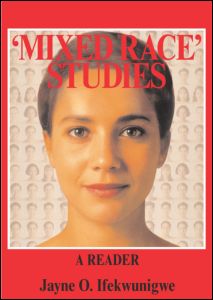
‘Mixed Race’ Studies: A Reader

Posted in Anthologies, Anthropology, Books, Census/Demographics, Media Archive, Politics/Public Policy, Social Science on 2009-09-25 00:53Z by Steven

‘Mixed Race’ Studies: A Reader

Routledge
2004-06-17
352 pages
Trim Size: 246mm x 174mm
Binding(s): Hardback, Paperback
ISBN13: 9780415321631; ISBN-10: 0415321638

Editor:  Jayne O. Ifekwunigwe, Visiting Associate Professor of African and African American Studies
Duke University

Mixed race studies is one of the fastest growing, as well as one of the most important and controversial areas in the field of race and ethnic relations. Bringing together pioneering and controversial scholarship from both the social and the biological sciences, as well as the humanities, this reader charts the evolution of debates on ‘race’ and ‘mixed race’ from the nineteenth to the twenty-first century. The book is divided into three main sections:

  • tracing the origins: miscegenation, moral degeneracy and genetics
  • mapping contemporary and foundational discourses: ‘mixed race’, identities politics, and celebration
  • debating definitions: multiraciality, census categories and critiques.

This collection adds a new dimension to the growing body of literature on the topic and provides a comprehensive history of the origins and directions of ‘mixed race’ research as an intellectual movement. For students of anthropology, race and ethnicity, it is an invaluable resource for examining the complexities and paradoxes of ‘racial’ thinking across space, time and disciplines.

Table of Contents

  • Part 1:  Tracing the Origins: Miscegenation, Moral Degeneracy, and Genetics
  • Part 2:  Mapping Contemporary and Foundational Discourses: ‘Mixed Race’, Identities Politics, and Celebration
  • Part 3:  Debating Definitions: Multiraciality, Census Categories, and Critique.  Index.
Tags: , , , ,