Social Work Response to the Needs of Biracial Americans

Posted in Articles, Identity Development/Psychology, Media Archive, Social Work, United States on 2010-02-18 02:20Z by Steven

Social Work Response to the Needs of Biracial Americans

Surjit Singh Dhooper, Assistant Professor of Social Work
University of Kentucky

Journal of Ethnic And Cultural Diversity in Social Work
Volume 12, Issue 4 (April 2004)
pages 19 – 47
DOI: 10.1300/J051v12n04_02

The number of interracial marriages is rising. The offspring of these marriages are a special group that is experiencing the complexities and frustrations of multiracial existence. Over six million Americans identified themselves as biracial in the 2000 census. These people are different from biracial Americans of the past. They do not want to disown any part of their ancestry and are resisting the societal practice of forcing them to identify with only the racial community of one parent. This paper examines the social realities and worldviews of these Americans and identifies their major needs. It discusses these and suggests a social work response at the micro, mezzo, and macro levels of practice.

Read or purchase the article here.

Tags: , , ,

Nikkei Heritage: Intermarriages and Hapas: An Overview – Parts 1 and 2

Posted in Articles, Asian Diaspora, Family/Parenting, History, Identity Development/Psychology, Media Archive, Social Science, United States on 2010-02-17 17:59Z by Steven

Nikkei Heritage: Intermarriages and Hapas: An Overview – Parts 1 and 2

Discover Nikkei (Japanese Migrans and Their Descendants)
Republished from Nikkei Heritage (The quarterly journal of the National Japanese American Historical Society)
2007-05-11

George Kitahara Kich, Senior Trial Consultant
Bonora D’Andrea

Rebecca Chiyoko King-O’Riain, Lecturer in Sociology
National University of Ireland, Maynooth

Larry Hajime Shinagawa, Associate Professor Director of Asian American Studies
University of Maryland

Shizue Seigel

To be biracial and Japanese American means having many different labels from which to choose. For this historical overview, we will use “Hapa”, a term popularized by the Hapa Issues Forum, to mean people who have an Asian/Asian Pacific Islander parent and a parent of any other race. Our focus here is on those with a Japanese or a Japanese American parent.

There is no single Hapa experience. Over the decades, Hapas have had widely different experiences based on individual circumstance and background, as well as the time period and environment into which they were born. The history of people of mixed-race has been deeply influenced by the evolving social and legal contexts for interracial relationships and marriages, along with community attitudes about culture, tradition and belongingness. Legal barriers against mixed marriages have fallen; however, discrimination, prejudice, community fears and stereotyping still affect interracial marriages and interracial people today. Nonetheless, about half* of all Japanese American marriages since 1970 have been to non-JAs, and the birthrate of interracial and interethnic children with some Japanese ancestry now exceeds that of JA/JA children. The Japanese American community has been gradually welcoming Hapas as a significant and growing part of the Japanese American community…

Read the entire Part 1 of the article here.
Read Part 2 here.

Tags: , , , , ,

Who am I?

Posted in Articles, Campus Life, Identity Development/Psychology, Media Archive, United States, Women on 2010-02-17 04:26Z by Steven

Who am I?

Middlebury Magazine
Middlebury College, Middlebury, Vermont
Winter 2010

Kevin Charles Redmon, [class of 20]10

As Janet Mondlane Rodrigues [class of 20]12 grapples with her own complex racial identity, she implores others to take a look in the mirror, as well, and ask themselves this loaded question.

Early in Barack Obama’s presidential campaign, before clips of the Reverend Jeremiah Wright’s more polemical sermons looped endlessly on cable television and Obama was forced to publicly denounce his pastor, the neologism “postracial” was on a lot of lips. A hopeful word with an elusive definition, it seemed to have as much to do with Obama’s fair skin and poise as it did with any message he espoused. Indeed, postracial was more about what the junior senator didn’t say than what he did—here was a man of color who appeared to transcend his mother’s whiteness and father’s African heritage, an editor of the Harvard Law Review who could acknowledge the tribulations of being a black man in America without letting it consume him. In short, a man who had moved beyond race. The implication being, so should we.

Janet Mondlane Rodrigues ’12 hasn’t moved beyond race, and she’s determined not to let others move beyond it, either. Mozambican born and Brooklyn raised, she shoulders a complicated identity: Her maternal grandfather was a black African revolutionary, her maternal grandmother a tenacious, white Indiana girl. Her mother is a multiracial world musician; her father is white Portuguese. From this vantage point, Rodrigues sees an America and a campus still struggling to address racism and privilege. To her, talk of a post-racial era is a way of silencing an argument mid-sentence…

…In high school, Rodrigues was already probing what it meant to have a multiracial identity, particularly in a borough so heavily segregated. With her Latina friends, “I was known as the white girl, because of how I spoke.” Others mistook her for Dominican or Puerto Rican. “By the black community, I was seen as privileged because I didn’t have the hair; I didn’t have the totally dark skin; I could pretend like I didn’t have this black identity. But among whites, I didn’t have the privileges they had; I didn’t go to private school.” Indeed, race was as much about the deep chasms between socioeconomic classes as it was about skin color…

Read the entire article here.

Tags: , ,

Beyond Race: Examining the Facets of Multiracial Identity Through a Life-span Developmental Lens

Posted in Articles, Identity Development/Psychology, Media Archive, Social Work on 2010-02-17 04:11Z by Steven

Beyond Race: Examining the Facets of Multiracial Identity Through a Life-span Developmental Lens

Journal of Ethnic And Cultural Diversity in Social Work
Volume 18, Issue 4 (October 2009)
pages 293-310
DOI: 10.1080/15313200903310759

Kelly F. Jackson, Assistant Professor of Social Work
Arizona State University

Using a social work developmental lens, this qualitative study explored some of the numerous social and environmental factors that shape a multiracial individual’s cultural identity. Results from transcript analysis portray the cultural identity of multiracial persons as significantly influenced by (1) personal experiences of racism and discrimination; (2) social interactions and relationships with peers and family; and (3) the racial climate of the school and community. The findings from this study support more fluid, ecological models of multiracial identity development that are more effective at explicating some of the highly complex and influential contextual factors that impact a multiracial person’s cultural identity development.

Read or purchase the article here.

Tags: , , ,

TALK: India and Gaugin’s Tahitian Nudes: Mapping Modernism In A Global Frame

Posted in Arts, Biography, Live Events, Media Archive, United States, Women on 2010-02-16 22:54Z by Steven

TALK: India and Gaugin’s Tahitian Nudes: Mapping Modernism In A Global Frame

Interdisciplinary Humanities Center
University of California, Santa Barbara
3041 HSSB
2010-02-17 16:00 PST (Local Time)

Saloni Mathur, Associate Professor of Art History
University of California, Los Angeles

This presentation will revisit the legacy of Amrita Sher-Gil, the part-Indian/part-Hungarian painter who stands at the cosmopolitan helm of modern Indian art, by focusing on a single under-examined painting that she produced in 1934. The painting, provocatively titled “Self-Portrait as Tahitian,” depicts the artist’s own nude body in the romantic space of Gauguin’s Tahitian nudes. The talk will examine how Sher-Gil’s mixed race heritage, her insider/outsider status, and her sense of both distance and belonging in relation to India became a powerful driver of her short but influential artistic career.  Saloni Mathur is Associate Professor of Art History at UCLA and author of India by Design: Colonial History and Cultural Display (2007).

Sponsored by the IHC’s South Asian Religions and Cultures RFG.

Tags: , ,

Ambiguity and Ambivalence in the Voting Booth and Beyond: A Social-Psychological Perspective on Racial Attitudes and Behavior in the Obama Era

Posted in Articles, Barack Obama, Identity Development/Psychology, Media Archive, Social Science, United States on 2010-02-16 21:20Z by Steven

Ambiguity and Ambivalence in the Voting Booth and Beyond: A Social-Psychological Perspective on Racial Attitudes and Behavior in the Obama Era

Du Bois Review: Social Science Research on Race
Volume 6, Issue 01, March 2009
pages 71-82
DOI: 10.1017/S1742058X09090067

Destiny Peery
Department of Psychology
Northwestern University, Evanston, Illinois

Galen V. Bodenhausen, Lawyer Taylor Professor of Psychology in the Weinberg College of Arts & Sciences
Northwestern University, Evanston, Illinois

The issue of race has followed Barack Obama since he emerged on the national political scene, continuing unabated throughout his successful 2008 presidential campaign. Although the issue of race is not always explicitly acknowledged or discussed by Obama himself, the implications of his successful candidacy for U.S. politics and the ways people in the United States think about race more generally have been of great interest to media pundits, social scientists, and laypersons alike. Race has been considered a substantial barrier to the electoral success of previous non-White political candidates; therefore Obama’s success requires reconsideration of how race can be expected to influence political outcomes in the future. In addition, his biracial identity also raises questions about how his role as a prominent cultural figure will affect existing racial categories in the United States. A review of social psychological evidence highlights the importance of understanding the ambivalence that characterizes contemporary racial attitudes, as well as the ways in which definitions of race and racial categories may be changing, in order to understand the impact that Obama could have on the future of racial politics. We conclude that Obama’s victory represents a large step in the direction of increasingly positive racial attitudes and more sophisticated public conceptualizations of race, but steady progress in the coming years is not guaranteed. We consider some of the opportunities and obstacles that may affect the trajectory of future gains in the struggle for racial equality in the Obama era.

INTRODUCTION

President Obama considers himself a Black man with mixed racial heritage. His mother was a White Kansan, his father was Kenyan. Obama is now the president of the United States and the first person of color elected to the highest office in a nation previously led exclusively by White men. Obama’s electoral success has rightfully been regarded as an indication of important progress in the struggle for racial equality. Nevertheless, Obama’s success may raise more questions than it answers about the role of race in the United States. When Obama emerged on the national political scene and an entry into the 2008 presidential race became a possibility, the issue of race followed him. A full year before announcing his candidacy for president, but long after the rumblings of his possible candidacy began, pollsters were already asking people about Obama’s race (White 2006). What did they think his race was? Did it matter that he had a White mother? The media’s fascination with Obama’s racial identity reflects the historical and continued salience of race as a social category and the importance racial issues have acquired in U.S. politics.

Here we explore the implications of recent social psychological research on racial attitudes and behavior for understanding the politics of race in the Obama era. We begin with a brief review of evidence regarding the ambivalence underlying racial attitudes and discuss in particular the complex structure that is likely to characterize many White voters’ racial attitudes. As we will show, there is an ample empirical basis for assuming that the right question about racial discrimination is not whether it still exists, but when and how it exists. Next, we consider the important and intriguing question of how our understanding of racial bias is complicated when multiracial people, such as Obama, enter the picture. We consider whether such individuals are better positioned to avoid discrimination by potentially defying simplistic, habitual racial classifications. Finally, we consider the implications of these issues for understanding the changing landscape of race in U.S. politics and U.S. life…

Read the entire article here.

Tags: , , ,

Research Report: Black + White = Black: Hypodescent in Reflexive Categorization of Racially Ambiguous Faces

Posted in Articles, Media Archive, Reports, Social Science, United States on 2010-02-16 21:03Z by Steven

Research Report: Black + White = Black: Hypodescent in Reflexive Categorization of Racially Ambiguous Faces

Psychological Science
Volume 19, Number 10 (2008)
pages 973-977

Destiny Peery
Department of Psychology, Northwestern University

Galen V. Bodenhausen, Lawyer Taylor Professor of Psychology in the Weinberg College of Arts & Sciences
Northwestern University

Historically, the principle of hypodescent specified that individuals with one Black and one White parent should be considered Black. Two experiments examined whether categorizations of racially ambiguous targets reflect this principle. Participants studied ambiguous target faces accompanied by profiles that either did or did not identify the targets as having multiracial backgrounds (biological, cultural, or both biological and cultural). Participants then completed a speeded dual categorization task requiring Black/not Black and White/ not White judgments (Experiments 1 and 2) and deliberate categorization tasks requiring participants to describe the races (Experiment 2) of target faces. When a target was known to have mixed-race ancestry, participants were more likely to rapidly categorize the target as Black (and not White); however, the same cues also increased deliberate categorizations of the targets as ‘‘multiracial.’’ These findings suggest that hypodescent still characterizes the automatic racial categorizations of many perceivers, although more complex racial identities may be acknowledged upon more thoughtful reflection.

After being told that Barack Obama’s mother was White and father was Black, a majority of White and Hispanic interviewees said they considered him multiracial (White, 2006). Does this result highlight the inadequacy of monoracial categories in understanding multiracial people, or does it merely reflect a superficial semantic distinction, with Obama still largely viewed and evaluated in terms of his Black heritage? The categories applied to multiracial persons carry important implications for their self-esteem and experiences of discrimination (Herman, 2004). Thus, it is important to understand how multiracial people are categorized by others…

Read the entire report here.

Tags: , , , ,

Ethnic and Urban Intersections in the Classroom: Latino Students, Hybrid Identities, and Culturally Responsive Pedagogy

Posted in Articles, Identity Development/Psychology, Media Archive, Teaching Resources, United States on 2010-02-16 02:02Z by Steven

Ethnic and Urban Intersections in the Classroom: Latino Students, Hybrid Identities, and Culturally Responsive Pedagogy

Multicultural Perspectives
Volume 9, Issue 3 (July 2007)
pages 21-28
DOI: 10.1080/15210960701443599

Jason G. Irizarry, Assistant Professor of Multicultural Education
Neag School of Education, University of Connecticut

Drawing from data collected through classroom observations and in-depth interviews, this article describes and analyzes practices identified as culturally responsive by Latinos students in an urban, multiethnic/racial context. The findings suggest that culturally responsive pedagogy must be more broadly conceptualized to address the cultural identities of students who have complex identities because of their experiences with peers of many varied identities, those whose urban roots have resulted in hybrid identities, and those who are multiethnic/multiracial. Based on these findings, the article forwards the concept of “cultural connectedness” as a framework for practicing a non-essentializing, dynamic approach to culturally responsive pedagogy that acknowledges the hybrid nature of culture and identity.

Read or purchase the article here.

Tags: ,

The Impossibility of Return: Black Women’s Migrations to Africa

Posted in Anthropology, Articles, Autobiography, Identity Development/Psychology, Media Archive, Social Science, Women on 2010-02-16 01:11Z by Steven

The Impossibility of Return: Black Women’s Migrations to Africa

Frontiers: A Journal of Women Studies
Volume 27, Number 2, 2006
pages 54-86
E-ISSN: 1536-0334 Print ISSN: 0160-9009
DOI: 10.1353/fro.2007.0009

Piper Kendrix-Williams, Professor of African-American Studies
The College of New Jersey

I was on an international flight, traveling from New York to Paris, when an older French woman inquired about my origins. She began with the questions about where I was from that seem to attend many trans-Atlantic encounters, deftly moving from geography to race when seemingly exasperated by my answers of America, Connecticut, and, finally, the place of my birth, Atlanta, Georgia. She finally asked, “But where were your people from before that?” Clearly she was asking about social or racial origins, not national ones. I told her I was African American with African, European, and Native American ancestry, but because I could trace back seven generations in the U.S., I could not tell her where “my people were from before,” although Africa seemed a good if not vague and oversimplified answer. Of course, I had to wonder, “before” what, the Atlantic slave trade, miscegenation, (un)forced migrations, returns and departures? This woman’s need to know my race exemplifies the preoccupation many people have with origins, other people’s as well as their own. It is as if she felt that when she could identify me within an established place or origin, she could then “know” me. Thinking of it in this way almost immediately becomes problematic, for it revolves around fictions of identifiable origins and consequently complicates for personal, individual identities that recognize the intersectional nature of race and gender.

The idea that people’s origins are somehow clear and not clouded by diverse histories, migrations, and relationships is for me a romantic (read: unrealistic) one, especially for blacks in the African diaspora, for whom “Africa” the continent, and not a particular nation, must be the answer to the question: “Where were your people from before?” As complicated a notion as the idea of identifiable origins is for me, many people who locate themselves in a larger diaspora engage in just this kind of thinking…

Read or purchase the entire here.

Tags: ,

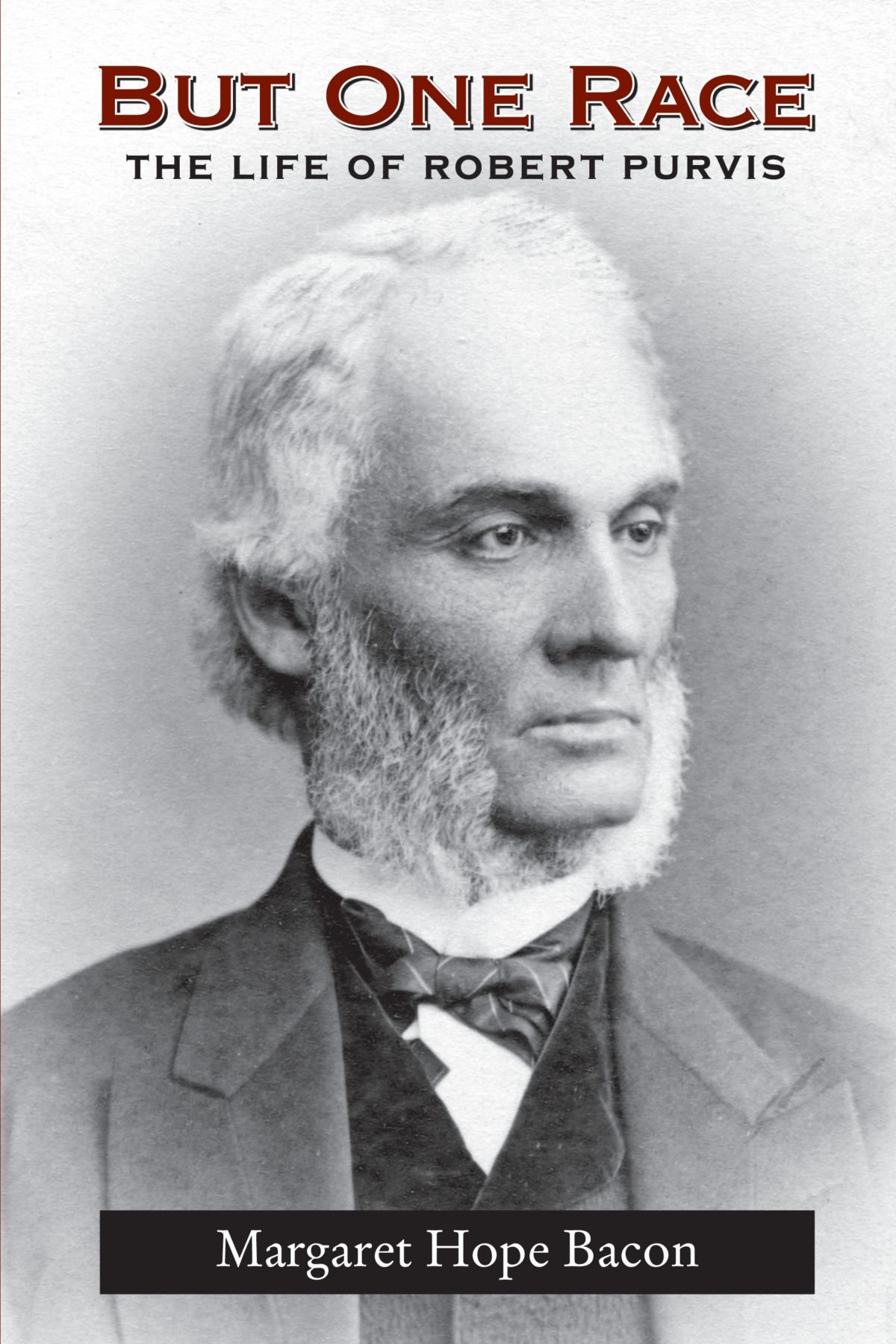
But One Race: The Life of Robert Purvis

Posted in Biography, Books, History, Media Archive, Monographs, Slavery, United States on 2010-02-16 00:12Z by Steven

But One Race: The Life of Robert Purvis

State University of New York Press
January 2007
293 pages
Hardcover ISBN10: 0-7914-7007-5; ISBN13: 978-0-7914-7007-7
Paperback ISBN13: 978-0-7914-7008-4

Margaret Hope Bacon (1921-2011)

Biography of famous black abolitionist and voting rights advocate, Robert Purvis.

Born in South Carolina to a wealthy white father and mixed race mother, Robert Purvis (1810–1898) was one of the nineteenth century’s leading black abolitionists and orators. In this first biography of Purvis, Margaret Hope Bacon uses his eloquent and often fierce speeches to provide a glimpse into the life of a passionate and distinguished man, intimately involved with a wide range of major reform movements, including abolition, civil rights, Underground Railroad activism, women’s rights, Irish Home Rule, Native American rights, and prison reform. Citing his role in developing the Philadelphia Vigilant Committee, an all black organization that helped escaped slaves secure passage to the North, the New York Times described Purvis at the time of his death as the president of the Underground Railroad. Voicing his opposition to a decision by the state of Pennsylvania to disenfranchise black voters in 1838, Purvis declared “there is but one race, the human race.” But One Race is the dramatic story of one of the most important figures of his time.

Table of Contents

  • Acknowledgments
  • Ancestral Chart of the Purvis Family
  • Introduction
  • 1. Of Southern Birth
  • 2. The City of Brotherly Love
  • 3. Present at the Beginning
  • 4. World Traveler
  • 5. “We are Not Intruders Here”
  • 6. To Aid the Fleeing Slave
  • 7. A Time of Loss
  • 8. Gentleman Farmer
  • 9. “This Wicked Law”
  • 10. “Are We Not Men?”
  • 11. “A Proud Day for the Colored Man”
  • 12. “Equality of Rights for All”
  • 13. The Freedmen’s Savings Bank
  • 14. “We are To the Manner Born”
  • 15. “His Magnificent Record”
  • Notes
  • Bibliography
  • Index

Read the first chapter here.

Tags: , , ,