World Premiere of “Family Portrait in Black and White” at 2011 Sundance Film Festival

Posted in Articles, Europe, Live Events, Media Archive, United States, Videos on 2010-12-04 19:56Z by Steven

World Premiere of “Family Portrait in Black and White” at 2011 Sundance Film Festival

Family Portrait in Black and White
2011
Interfilm Productions, Inc.
Vancouver, British Columbia, Canada
Directed by: Julia Ivanova
Producted by Boris Ivanov
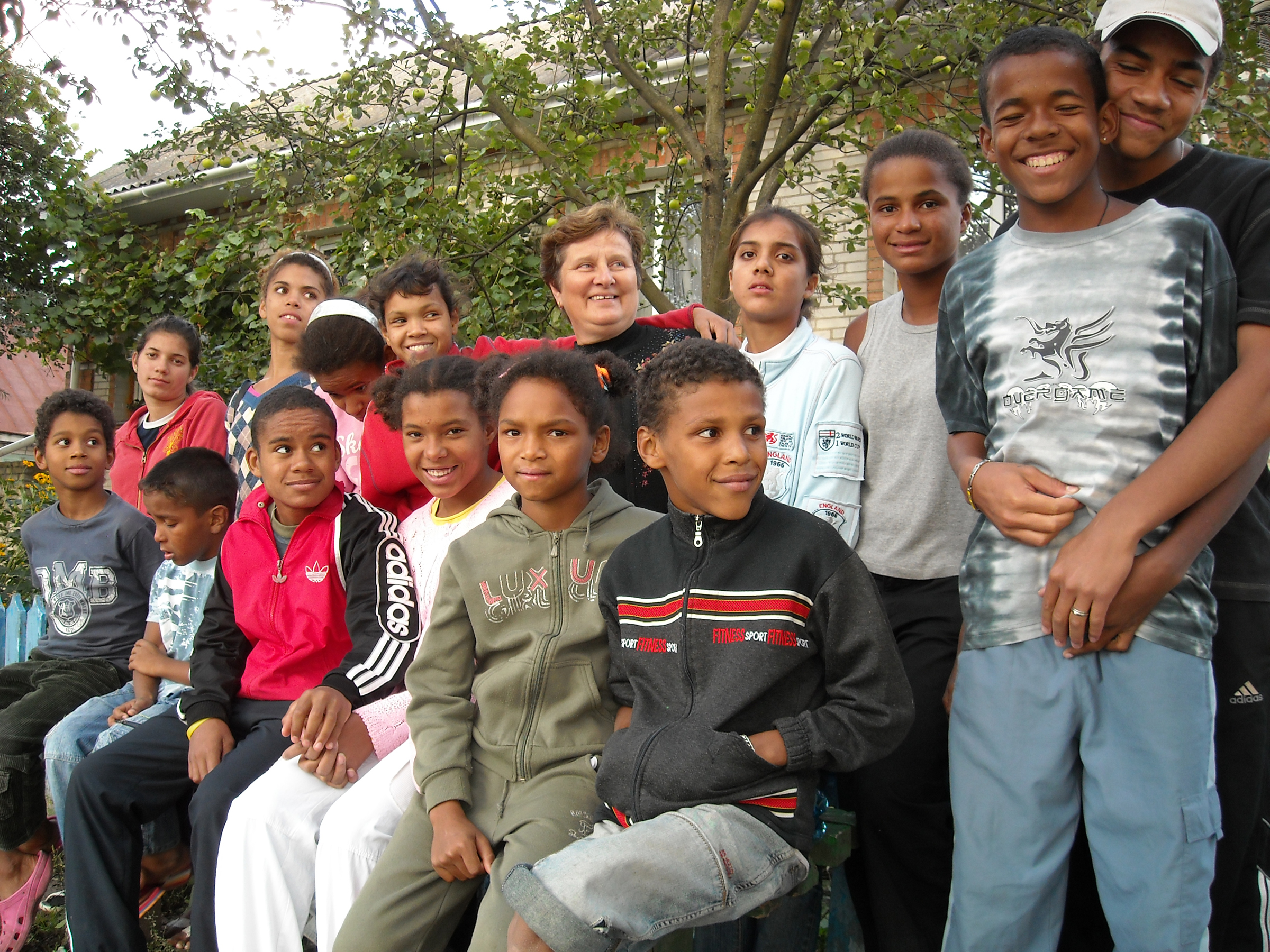
OLGA NENYA is a foster mother to SIXTEEN BLACK ORPHANS in Ukraine—where 99.9% of the population is white and where race DOES matter. Forced to constantly defend themselves from racist neighbors and skinheads, these children have to be on guard against the world that surrounds them.
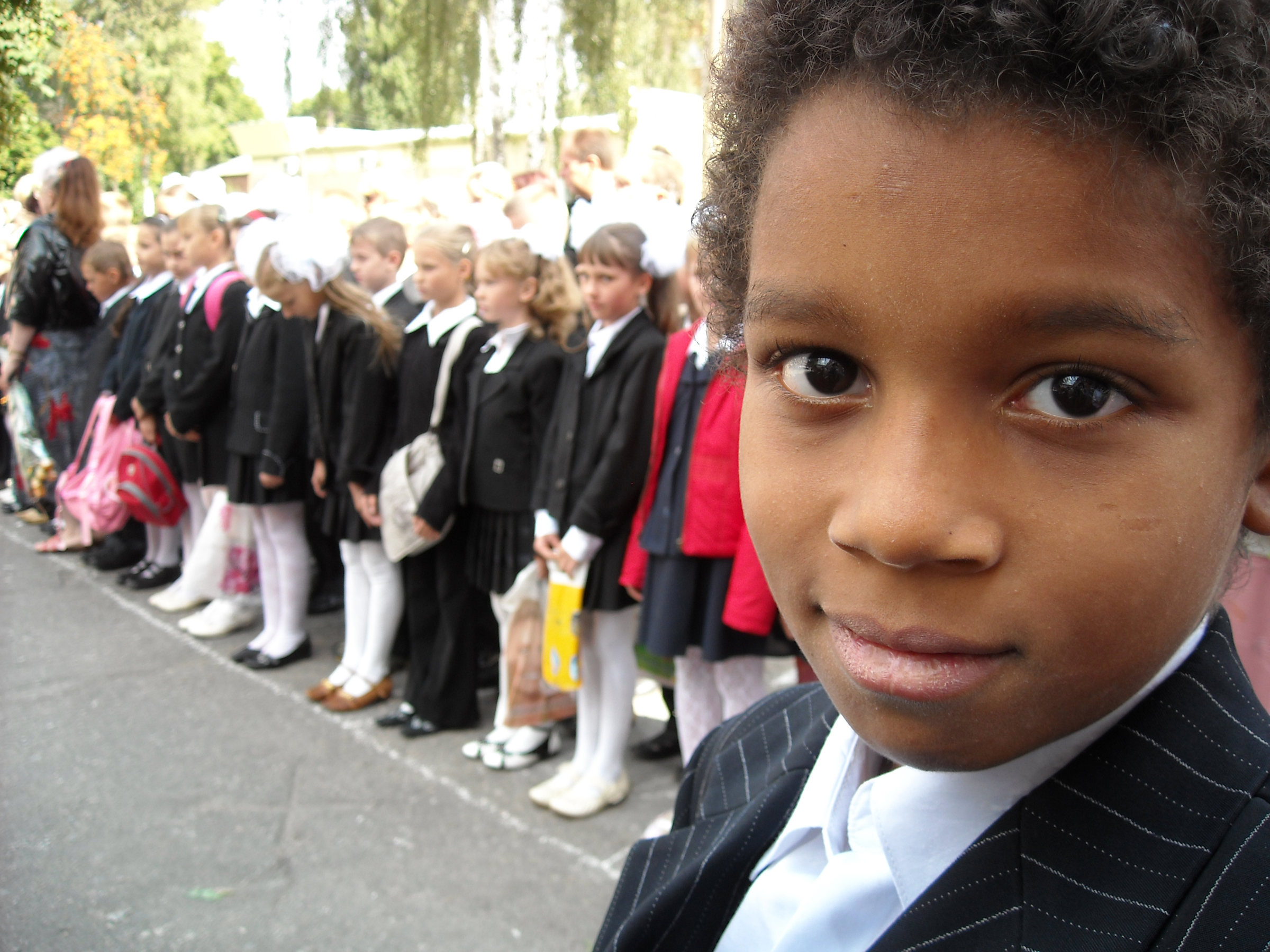
No one is related by blood in this family, but everyone is connected by the color of their skin and by the woman who chose to be their foster mother. Olga is a loving mother but she is not Mother Teresa; she bears much more resemblance to a platoon leader. Some kids have learned to manipulate her, some obey, and only one constantly battles with her. Kiril, a 16-year-old boy nicknamed ‘Mr. President’ for his intelligence and effortless aristocracy, is the one who dares to openly argue with Olga—and pays dearly for it. The modern world is interconnected: not only did the British Charity buy the house for the family, but these kids from a tiny place in Ukraine have been spending summers with host families in France and Italy year after year. When European families offer to adopt the kids, Olga refuses despite being aware of what awaits a black Ukrainian beyond the protective shield of her family. For her, these children already have a family and, as she says, “The bird should only have one nest”. This film is a multi-dimensional portrait of one family, the country they live in, and the bigger world they are a part of.

For more information, click here.

2010-12-01
Park City, Utah

PARK CITY, UT – Sundance Institute announced today the lineup of films selected to screen in the U.S. and World Cinema Dramatic and Documentary Competitions for the 2011 Sundance Film Festival. In addition to the four Competition Categories, the Festival presents films in six out-of-competition sections to be announced on December 2. The 2011 Sundance Film Festival runs January 20-30 in Park City, Salt Lake City, Ogden and Sundance, Utah. The complete list of films is available at www.sundance.org/festival

…World Cinema Documentary Competition

This year’s 12 films were selected from 796 international documentary submissions.

Family Portrait in Black and White / Canada (Director: Julia Ivanova) – In a small Ukrainian town, Olga Nenya, raises 16 black orphans amidst a population of Slavic blue-eyed blondes. Their stories expose the harsh realities of growing up as a bi-racial child in Eastern Europe. World Premiere

Tags: , , , , ,

American Mixed-Race Literature: Cultural History, Precursors, Identities, and Forms of Expression

Posted in Dissertations, Identity Development/Psychology, Literary/Artistic Criticism, Media Archive, United States on 2010-12-04 03:37Z by Steven

American Mixed-Race Literature: Cultural History, Precursors, Identities, and Forms of Expression

Purdue University
2004
116 pages
Publication Number: AAT 3166693
ISBN: 9780542022999

Gino Michael Pellegrini, Adjust Assistant Professor of English
Pierce College, Woodland Hills, California

This dissertation focuses on recent instances of mixed race literature in American culture such as Danzy Senna’s novel Caucasia, Rebecca Walker’s Black, White, and Jewish: Autobiography of a Shifting Self, and Kip Fulbeck’s Paper Bullets: A Fictional Autobiography. This dissertation suggests that these mixed race literary texts, as well as the multiracial experiences, sensibilities, themes, and expressions communicated therein, differ from traditional conceptions and descriptions of race and mixed race in American society, history, and literature that are based on the logic of the binary racial system. Mixed race literature attempts to phrase and communicate suppressed, distorted, and/or neglected multiracial experiences, sensibilities, and possibilities. Mixed race literature is also coextensive with the emergence of the multiracial social formation and movement in the post-civil rights era. “Precursors” to mixed race literature fall short in their attempt to phrase and to communicate complexities and experiences of mixed race lived existence. I read Jean Toomer’s Cane as one of the most significant precursors to mixed race literature in American literature. Mixed race literature also differs from “mixed race in American literature” insofar as the later, in the presentation of mixed race characters and themes, both relies on and validates the categorical, hierarchical, and dichotomous logic of the binary racial system. Notable examples in the canon of American and American Ethnic literature are William Faulkner and Toni Morrison who, from a mixed race perspective, extend and promote in their texts the suppression and distortion of multiracial complexities, possibilities, and lived realities in the service of the binary racial system.

Table of Contents

  • Abstract
  • Chapter One: Multiracial Identity in the Post-Civil Rights Era: A Personal Narrative Essay
    • The Summer of 1999
    • Growing up Racially Mixed in the 1970s and 1980s
    • Negotiating Raciated University in the 1990s
    • Conclusion
  • Chapter Two: Cane and Jean Toomer: Percursors, American Mixed Race Literature
  • Chapter Three: Danzy Senna’s Caucasia: A Novel About Growing Up Racially Mixed and Becoming Multiracial in the Post-Civil Rights Era
  • Chapter Four: American Mixed Race Ficiational Autobiographies: Rebecca Walker’s Black, White and Jewish and Kip Fulbeck’s Paper Bullets
  • List of References
  • Vita

Purchase the dissertation here.

Tags: , , , , , , ,

From Manenberg to Soweto: race and coloured identity in the black consciousness poetry of James Matthews

Posted in Africa, Articles, Identity Development/Psychology, Literary/Artistic Criticism, Media Archive, South Africa on 2010-12-03 19:29Z by Steven

From Manenberg to Soweto: race and coloured identity in the black consciousness poetry of James Matthews 

African Studies
Volume 62, Issue 2 (December 2003)
pages 171-186
DOI: 10.1080/0002018032000148740

Mohamed Adhikari, Associate Professor of Historical Studies,
University of Cape Town

The Black Consciousness poetry of James Matthews, internationally recognised Coloured writer from the Cape Flats, reflects the growing popularisation amongst politicised Coloured people during the 1970s of the idea that racial distinctions in general, and Coloured identity in particular, had historically been used by the white supremacist establishment to divide and rule the black majority. This insight, by no means novel, provided the main thrust to the popular rejection of Coloured identity in the anti-apartheid movement of the 1980s. Coloured rejectionism had, however, originated within a small section of the Coloured intelligentsia, in particular amongst those active within the Non-European Unity Movement (NEUM) in the early 1960s (Adhikari 2002: 186-87, 213-14, 243-48) and grew into a significant movement by the time it peaked at the end of the 1980s. Though confined to a politicised minority within the Coloured community itself, and observed mainly in public discourse or for pragmatic reasons, the disavowal of Coloured identity had by the early 1980s nevertheless become a politically correct orthodoxy within the anti-apartheid movement, especially in the Western Cape. In response to the overt racism of apartheid, the democratic movement embraced non-racism as a cornerstone of its philosophy and any recognition of Coloured identity was condemned as a concession to apartheid thinking. This tendency was, however, reversed during the four-year transition to democratic rule as radical changes to the political landscape in the first half of the 1990s once again made the espousal of Coloured identity acceptable in left-wing and “progressive” circles (Adhikari 2000: 349; 2002: 23-24, 281-87). 

Read or purchase the article here.

Tags: , , ,

Race Classification at the University of KwaZulu-Natal: Purposes, Sites and Practices

Posted in Africa, Campus Life, Media Archive, Politics/Public Policy, Reports, South Africa on 2010-12-03 18:35Z by Steven

Race Classification at the University of KwaZulu-Natal: Purposes, Sites and Practices

IOLS‐Research, Dr. Shaun Ruggunan and ccrri
For: Centre for Critical Research on Race and Identity (ccrri)
University of Kwazulu-Natal
2010-11-08
59 pages

Race classification has long been a feature of South African life, in daily life and its cognitive processes, and also in formal state-driven bureaucratic forms. In the post-apartheid period, classification of individuals on the basis of race has continued despite a stated commitment to principles of non-racialism. Primarily, this is justified in its formal manifestation because of the acknowledged need for redress of apartheid generated inequalities both in the labour market and in access to opportunities and resources (such as higher education).

Investigating the purposes and practices of race classification in an institution of higher learning in South Africa—in this case, the University of KwaZulu-Natal as one of the largest employers in the province of KwaZulu-Natal, as well as one of the largest national universities—offers a particularly interesting insight into these issues and provides an example of sites where this occurs. The research project has three key aims. Firstly it seeks broadly to identify the purpose of race classification, secondly the project investigates the processes followed in classifying people according to race, thirdly the study is interested in the effects, if any, of both classifying and being classified (from the perspective of the classifier) and the challenges involved in race classification. The project concludes by suggesting alternatives to race based classification.

7. Challenges of classification

The challenges of classification on the basis of race at UKZN identified by interviewees mainly relate to ‘misclassifications’ (a term that holds true only if there is a notion of true/accurate classification of race). These cases of misclassification result from a myriad of problems including:

  1. Problems with inaccurate data capturing. For example the data capturer could accidentally misclassify someone, or even make a subjective judgement call and change the person’s self classification to match a racial category deemed more appropriate by the data capturer.
  2. The difficulties in making judgements of race classification in a society that is increasingly integrated and becoming increasing racially mixed. This problem extends beyond the mixed race category of ‘coloured’ (Erasmus, 2007).
  3. The problem presented by the current four categories in use (African, Indian, Coloured and White). The use of these four categories has meant that Chinese South Africans, for example, have seen their identity collapsed under the generic category of Black. Racial classification in this sense assumes an economic currency and imperative (see Erasmus and Park, 2008) when related to Broad-Based Black Economic Empowerment (BBBEE) for example.
  4. The challenges related to race classification where it is perceived to relate to access to jobs, funding or placement at University were noted…

7.2. The ‘Coloured’ question

Classifying people of ‘mixed race’ heritage is becoming more and more difficult and this challenge was noted by a number of respondents. ‘Coloured’ in South Africa may be understood to refer to people of ‘mixed race’ heritage but it is also sometimes seen as tied to a particular cultural identity, that of ‘Cape Coloured’; or of specific races in the mix. As a result, people of mixed race heritage that do not belong to this cultural formation that is tied to a ‘black-white’ racial heritage may feel uncomfortable adopting this category for classification. Interviewees observed:

The one might be when it comes to this classification of coloured which is a bit of a, you know, what does it mean (Interview Fihlela, 2009).

If they want to keep the mixed box or the bi-racial box they can maybe have subsections under that because I think that is really going to grow in the future. There’s more interracial families […] coming forward (Interview Van Soelen et al, 2009).

Read the entire report here.

Tags: , , , ,

Biracial Youth and Families in Therapy: Issues and Interventions

Posted in Articles, Identity Development/Psychology, Media Archive, United States on 2010-12-03 01:55Z by Steven

Biracial Youth and Families in Therapy: Issues and Interventions

Journal of Marital and Family Therapy
Volume 26, Issue 3
(July 2000)
pages 305–315
DOI: 10.1111/j.1752-0606.2000.tb00300.x

Stephanie Milan, Assistant Professor of Psychology
University of Connecticut

Margaret K. Keiley, Professor Director of Clinical Research
Center for Children, Youth, and Families
Auburn University

Empirical research and clinical resources focusing specifically on minority youth and families have increased tremendously in the last 2 decades. Despite this trend, certain groups continue to be relatively neglected. In particular, very few resources exist for understanding the unique challenges that often face biracial youth and their families. In this article, we use a nationally representative database to compare functioning in biracial youth to white adolescents and other minority adolescents. Results suggest that biracial/biethnic youth are a particularly vulnerable group in terms of self-reported delinquency, school problems, internalizing symptoms, and self-regard. As a group, they are also more likely to receive some form of psychological intervention. Given these findings and the shortcoming of clinical resources for work with this population, we provide an in-depth discussion of why biracial youth may be particularly vulnerable from a social-constructionist framework and offer several strategies based on narrative family therapy for working with biracial youngsters and their families.

Read or purchase the article here.

Tags: , , ,

Characterizing the Admixed African Ancestry of African Americans

Posted in Africa, Anthropology, Articles, Health/Medicine/Genetics, Media Archive, United States on 2010-12-03 01:08Z by Steven

Characterizing the Admixed African Ancestry of African Americans

Genome Biology
Volume 10, Issue 12 (2009)
R141
DOI: 10.1186/gb-2009-10-12-r141

Fouad Zakharia
Department of Genetics
Stanford University School of Medicine

Analabha Basu
Institute for Human Genetics
University of California, San Francisco

Devin Absher
HudsonAlpha Institute for Biotechnology, Huntsville, Alabama

Themistocles L. Assimes
Division of Cardiovascular Medicine
Stanford University School of Medicine

Alan S. Go
Division of Research
Kaiser Permanente, Oakland, California

Mark A. Hlatky
Department of Health, Research and Policy
Stanford University School of Medicine

Carlos Iribarren
Division of Research
Kaiser Permanente, Oakland, California

Joshua W. Knowles
Division of Cardiovascular Medicine
Stanford University School of Medicine

Jun Li
Department of Human Genetics
University of Michigan

Balasubramanian Narasimhan
Department of Health, Research and Policy
Stanford University School of Medicine

Steven Sidney
Division of Research
Kaiser Permanente, Oakland, California

Audrey Southwick
Department of Infectious Diseases
Stanford University School of Medicine

Richard M. Myers
HudsonAlpha Institute for Biotechnology, Huntsville, Alabama

Thomas Quertermous
Division of Cardiovascular Medicine
Stanford University School of Medicine

Neil Risch
Institute for Human Genetics
University of California, San Francisco

Division of Research
Kaiser Permanente, Oakland, California

Department of Epidemiology and Biostatistics
University of California, San Francisco

Hua Tang
Department of Genetics
Stanford University School of Medicine

Background: Accurate, high-throughput genotyping allows the fine characterization of genetic ancestry. Here we applied recently developed statistical and computational techniques to the question of African ancestry in African Americans by using data on more than 450,000 single-nucleotide polymorphisms (SNPs) genotyped in 94 Africans of diverse geographic origins included in the HGDP, as well as 136 African Americans and 38 European Americans participating in the Atherosclerotic Disease Vascular Function and Genetic Epidemiology (ADVANCE) study. To focus on African ancestry, we reduced the data to include only those genotypes in each African American determined statistically to be African in origin.

Results: From cluster analysis, we found that all the African Americans are admixed in their African components of ancestry, with the majority contributions being from West and West-Central Africa, and only modest variation in these African-ancestry proportions among individuals. Furthermore, by principal components analysis, we found little evidence of genetic structure within the African component of ancestry in African Americans.

Conclusions: These results are consistent with historic mating patterns among African Americans that are largely uncorrelated to African ancestral origins, and they cast doubt on the general utility of mtDNA or Y-chromosome markers alone to delineate the full African ancestry of African Americans. Our results also indicate that the genetic architecture of African Americans is distinct from that of Africans, and that the greatest source of potential genetic stratification bias in case-control studies of African Americans derives from the proportion of European ancestry.

…Although much attention has been paid in the genetics literature to the continental admixture underlying the genetic makeup of African Americans, less attention has been paid to the within-continental contribution to African Americans, in particular from the continent of Africa. Studies have focused primarily on the matrilineally inherited mitochondrial DNA(mtDNA) and patrilineally inherited Y chromosome. These two DNA sources have gained wide prominence owing, in part, to their use by ancestry-testing companies to identify the regional and ethnic origins of their subscribers. Yet these two sources provide a very narrow perspective in delineating only two of possibly thousands of ancestral lineages in an individual.

The majority of African Americans derive their African ancestry from the approximately 500,000 to 650,000 Africans that were forcibly brought to British North America as slaves during the Middle Passage. These individuals were deported primarily from various geographic regions of Western Africa, ranging from Senegal to Nigeria to Angola. Thus, it has been estimated that the majority of African Americans derive ancestry from these geographic regions, although more central and eastern locations also have contributed.  Recent studies of African and African-American mtDNA haplotypes and autosomal microsatellite markers also confirmed a broad range of Western Africa as the likely roots of most African Americans…

Read the entire article here.

Tags: , , , , , , , , , , , , , , , , , , , , , ,

Will there ever be a rainbow Japan?

Posted in Anthropology, Articles, Asian Diaspora, Identity Development/Psychology, Media Archive on 2010-12-02 22:10Z by Steven

Will there ever be a rainbow Japan?

CNN International
CNN Go
2010-12-01

Tracy Slater

Government statistics suggest multiculturalism is on the rise, but social organizations for mixed-race Japanese say ‘hafus’ still face challenges

Japan, which closed its borders from 1639 to 1854 and later colonized its neighbors, has an uneasy history with foreigners, national identity, and multiculturalism.

Yet government statistics and grassroots organizations say multiculturalism in the famously insular country is now on the rise…
Japan: The new melting pot?

Japan’s national government recently announced it is turning to travelers in a foreigner-friendly mission to boost diversity — at least in tourist spots — by paying them to provide feedback on how to increase accessibility for non-Japanese speakers.

David Askew, associate professor of law at Kyoto’s Ritsumeikan University, identifies more profound changes.

In 1965, a mere 1 in 250 of all marriages in Japan were international, he notes. By 2004, the number had climbed to 1 in 15 across the nation and 1 in 10 in Tokyo…

Celebrating diversity

A handful of new organizations are tied, at least in part, to the increase in multicultural marriages.

Groups such as Mixed Roots Japan and Hapa Japan, founded by children of mixed-Japanese couples, aim to celebrate the broadening scope of Japanese identity, both nationally and globally.

“There is a real need now to recognize that Japan is getting more multiracial,” says Mixed Roots founder Edward Sumoto, a self-described “hafu” of Japanese/Venezuelan ethnicity. “The Japanese citizen is not simply a traditional Japanese person with Japanese nationality anymore.”

The issue of the identity of hafu is also being explored in a new film titled “Hafu,” currently under production by the Hafu Project.

In support of multiracial families, Mixed Roots holds Halloween and Christmas parties, picnics and beach days…

Read the entire article here.

Tags: , , ,

Cross ’12, Castagno ’12 Participate in Mixed Race Conference

Posted in Articles, Campus Life, Media Archive, United States, Women on 2010-12-02 20:14Z by Steven

Cross ’12, Castagno ’12 Participate in Mixed Race Conference

The Wesleyan Connecton
Welyean University’s Newsletter
2010-12-02

Olivia Drake

Rachel Cross ’12 and Alicia Castagno ’12 participated as panel members in a session of the Critical Mixed Race Conference sponsored by dePaul University in Chicago Nov. 5-6 [2010].

The conference was attended by academicians and students (primarily graduate students) from across the country. Cross and Castagno co-taught a Wesleyan student forum on mixed race last year and were on a panel discussing the development and teaching of this topic as students. In the question and answer period someone asked how many student-taught classes on mixed race there were in the country. A member of the University of Washington group said that as far as they could find out, only the UW and Wesleyan had student-taught classes…

Read the entire article here.

Tags: , , , ,

The Re-Emergence of Race as a Biological Category: The Societal Implications—Reaffirmation of Race

Posted in Articles, Law, Media Archive, Social Science on 2010-12-01 23:52Z by Steven

The Re-Emergence of Race as a Biological Category: The Societal Implications—Reaffirmation of Race

The Iowa Law Review
Volume 94, Number 5 (July 2009)
pages 1547-1587

Alex M. Johnson, Jr., Perre Bowen Professor of Law; Thomas F. Bergin Teaching Professor of Law and Director, Center for the Study of Race and Law
University of Virginia

Table of Contents

  • I. INTRODUCTION
  • II. PLACING RACE IN CONTEXT: DEFINING THE ISSUE
    • A. AN HISTORICAL ANALYSIS
    • B. REALISTS AND ANTIREALISTS—COMPETING CONSTRUCTIONS OF RACE IN THE LEGAL COMMUNITY
  • III. THE SOCIETAL COSTS OF USING RACE IN BIOMEDICAL RESEARCH
  • IV. ETHNICITY VERSUS RACE: DEVELOPING A NEW, SOFTER PARADIGM
  • V. CONCLUSION

As the Dean of the University of Minnesota Law School in 2005, I was privileged to host and attend a conference at the Law School entitled, “Proposals for the Responsible Use of Racial and Ethnic Categories in Biomedical Research: Where Do We Go from Here?”1 To say the least, it was a fascinating conference replete with interesting speakers engaged with topical and controversial issues. The papers presented and discussed were proof of the success of the conference and the relevance of issues addressed.2 Professor Susan Wolf prepared a concise summary of those articles for Nature Genetics, and the reader is encouraged to review that summary before continuing with this Article.

Although the conference quite appropriately focused on the topic at hand—the use of racial categories in biomedical research—my thoughts kept drifting to a related, and perhaps more important, issue: the re-emergence of race as a biological category rather than as a social construct. I also pondered the implications of that development in a society in which race continues to be the most prominent social issue, even though an African-American was recently sworn in as President of the United States.6 I kept returning to this thought because of the topics addressed during the conference, topics which were not new to me.

As a scholar who has written several articles about “race” and its place in in legal scholarship, have given a lot of thought as to how “race” impacts every significant facet of American society and how this society’s history is inextricably tied to its legacy of slavery and the vestiges (for example, “separate but equal” comes to mind) of that awful chapter in American history. I have gone so far as to advocate, in two separate articles, the destabilization of racial categories as a vehicle to eliminate “race” and, ultimately, the effects of race (i.e., racism and racialism) in American society.

As a result, during the twenty-plus years I have been researching, writing, and thinking about race and race-related issues, I have always been puzzled by an event that happens regularly: the release of medical reports and studies that report differential results, findings, or outcomes based on the race of the test subjects. It is fairly common for some reporter to quote a statistic indicating that African-Americans have a higher rate of, say, hypertension than whites…

Read the entire article here.

Tags: , ,

Destabilizing Racial Classifications Based on Insights Gleaned from Trademark Law

Posted in Articles, Law, Media Archive, Politics/Public Policy, United States on 2010-12-01 23:22Z by Steven

Destabilizing Racial Classifications Based on Insights Gleaned from Trademark Law

California Law Review
Volume 84, Number 4 (July, 1996)
pages 887-952

Alex M. Johnson, Jr., Perre Bowen Professor of Law; Thomas F. Bergin Teaching Professor of Law and Director, Center for the Study of Race and Law
University of Virginia

Analogy to trademark law offers solutions to the problematic binary system of race classification in the US by exposing and deconstructing the notion of whiteness as a property right. Maintaining the racial dichotomy between blacks and whites preserves whiteness as the position of privilege and blackness as the marginalized other. Promotion of multi-racial categories would make racial identification generic and would destroy the value of marking as a way of protecting the property right of being white. Ethnic identities could be retained because of the benefits of voluntary identification.

Tags: , ,