Chicago’s Jazz Age still lives in Archibald Motley’s art

Posted in Articles, Arts, History, Media Archive, United States on 2015-03-21 23:43Z by Steven

Chicago’s Jazz Age still lives in Archibald Motley’s art

The Chicago Tribune
2015-03-20

Howard Reich

Where does Chicago’s Jazz Age still live? In the paintings of Archibald Motley, on view in a new exhibition

Trumpets blared, saxophones thundered, singers belted and dancers swayed from nighttime to past sunup.

Walk along “the Stroll” — a very hot stretch of State Street from 31st to 35th streets — and you could hear and feel the music without so much as stepping inside any of the clubs, saloons, cafes, cabarets, theaters and whatnot. Nearby boulevards shook with the music, as well, for no place on Earth swung harder than the South Side of Chicago during the Jazz Age.

Roughly speaking, the epoch when Jelly Roll Morton, Louis Armstrong, Earl Hines, Joe “King” Oliver and other jazz immortals lit up Chicago began in 1910, when Morton arrived from New Orleans, and extended into the 1950s.

Few of us around today were there in the Roaring ’20s heyday, but we’re fortunate that Archibald John Motley Jr. walked “the Stroll,” heard the music, ogled the dancers, treasured the proceedings and captured the scene for all time — on canvas. That glorious fact radiates from every corner of a newly opened exhibition at the Chicago Cultural Center, “Archibald Motley: Jazz Age Modernist” (curated by Richard J. Powell and running through Aug. 31)…

…And though the subject is music, the theme surely is the meaning of race.

“In all my paintings where you see a group of people you’ll notice that they’re all a little different color,” Motley once said in an oral history interview. “They’re not all the same color, they’re not all black, they’re not as they used to say years ago, high yellow, they’re not all brown. I try to give each of them character as individuals.”

That respect for humanity issues from all of Motley’s jazz paintings and, of course, from the music itself. Like the range of complexions in Motley’s work, jazz emerged at the turn of the previous century as a heady mix of African-American and Creole cultures in New Orleans, these societies rubbing up against one another in church, in street parades and in the city’s Storyville vice district. The shuttering of that collection of brothels and other nightspots in 1917 drove Crescent City musicians north to Chicago, where Motley — who similarly was born in New Orleans and came to Chicago in his youth — was ready to see and hear them…

Read the entire article here.
Tags: , , , , , , , , , ,

The Evolution of the Idea of Race: From Scientific Racism to Genomics

Posted in Anthropology, Health/Medicine/Genetics, History, Live Events, Media Archive, Social Science on 2015-03-20 00:40Z by Steven

The Evolution of the Idea of Race: From Scientific Racism to Genomics

Oxford University Press Webinar
Oxford University Press
Friday, 2015-03-20, 18:00-19:00Z, 14:00-15:00 EDT

Join Oxford University Press on Friday, March 20th for a Webinar featuring Tanya Golash-Boza.

Tanya Golash-Boza is an Associate Professor in the School of Social Sciences, Humanities, and Arts at the University of California, Mereced, and the author of the acclaimed textbook, Race and Racisms: A Critical Approach.

In 1735, Swedish botanist Carolus Linnaeus divided the world into four groups: Americanus, Asiaticus, Europeanus, and Africanus. In the 1850s, Samuel George Morton measured human skulls to prove European superiority. His successor, Paul Broca, compared brain sizes. Psychologist R. M. Yerkes used IQ tests to the same end in the early 20th century, as did Herrnstein and Murray in the late 20th century. Today, scientists use genomics to prove there are biological differences between the races. What has changed and what has not? In this webinar, we will develop a sociological analysis of the evolution of the idea of race and of the persistence of racism.

For more information, click here.

Tags: , , ,

Old Glory: The Symbol of One America

Posted in Articles, Biography, History, Media Archive, United States, Virginia on 2015-03-18 16:19Z by Steven

Old Glory: The Symbol of One America

1696 Heritage Group
2015-03-16

Keith Stokes, Vice President


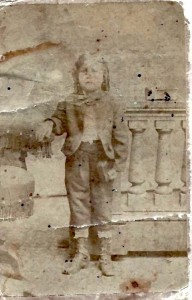
Richard Gill Forrester, c. 1850

The photograph taken in 1850 during the earliest years of a new-fangled technology called photography, captures a well-dressed, handsome five year old boy named Richard Gill Forrester, of antebellum Richmond, Virginia. Just as the photograph represented a new era in the technology of imagery, young Forrester, and others like him, represented a new-fangled generation of what it meant to be an American. Our national motto, “E Pluribus UnumOut of Many, One, whose meaning some have come to suggest that out of many ethnicities, races, and religions would emerge a single people and America, seems to be embodied by the little boy pictured. And Forrester, who was my great, grandfather, with blended Jewish and Christian religion; black, Indian and white race; and northern and southern political persuasion, would grow and defend his right to be called an American.

After four long years of war, Union Troops on the morning of April 3, 1865 entered the city of Richmond, Virginia then capital of the Confederate States of America. Richmond had become the single-minded focus of the Union war effort, in a civil war between Americans of Northern and Southern persuasions that would claim an estimated three quarter of a million combatants…

Read the entire article here.

Tags: , , , , ,

‘Kiss me, I’m Irish’ took on a new meaning when DNA proved that I was

Posted in Articles, Europe, History, Media Archive, Slavery, United States on 2015-03-17 14:57Z by Steven

‘Kiss me, I’m Irish’ took on a new meaning when DNA proved that I was

The Guardian
2015-03-17

Michael W. Twitty

New tests confirmed what my family had long known: our ancestors were children of their Irish-American slaveholders

Like many African Americans, I was excited by the possibility of using DNA tests to learn about my cultural roots before they were severed by centuries of slavery, obfuscation and the destruction of records. Today, I’m proud to say that multiple tests have confirmed my roots among ethnic groups living Ghana, Sierra Leone and other countries in West and Central Africa.

But the tests also confirmed the legacy of slavery in quite another way: my family, like most black American families, has not one but several white ancestors – men who took advantage of their access to young enslaved women and, in the process, increased the number of human beings they called property.

“Kiss Me, I’m Irish” took on a whole new meaning for me, when I discovered that I was…

Read the entire article here.

Tags: , , ,

‘A Chosen Exile:’ Examining African Americans Passing As White In America [VIDEO]

Posted in Articles, History, Interviews, Media Archive, Passing, United States, Videos on 2015-03-15 02:13Z by Steven

‘A Chosen Exile:’ Examining African Americans Passing As White In America [VIDEO]

NewsOne Now
NewsOne
2015-02-27

Author Allyson Hobbs joined Roland Martin on “NewsOne Now” to discuss her new book, “A Chosen Exile: A History of Racial Passing in American Life.”

Hobbs an assistant professor of American History at Stanford University told Martin that when individuals decided to pass as a White person, “People had to separate from their families … if someone were to die, they would not let the family know” until a month later in some cases.

According to Hobbs, there were instances when people did not find out that a relative who was passing as White had died until they read it in an obituary in a news paper or someone happened to tell them long after the person had passed away…

Read the entire article and watch the interview here.

Tags: , , , ,

San Francisco Lithographer: African American Artist Grafton Tyler Brown

Posted in Biography, Book/Video Reviews, History, Media Archive, United States on 2015-03-12 20:39Z by Steven

San Francisco Lithographer: African American Artist Grafton Tyler Brown

Arts Libraries Society of North America (ARLIS/NA)
July 2014

Amy De Simone, Research Consultant
Kansas State University

by Robert J. Chandler. University of Oklahoma Press, February 2014. 264 p. ill. ISBN 9780806144108 (cl.), $36.95.

More than just a book about one man, San Francisco Lithographer: African American Artist Grafton Tyler Brown is about the emerging lithography scene in nineteenth-century San Francisco and Brown’s role in it as a mixed race artist and businessman. Author Robert J. Chandler, previously the senior research historian for Wells Fargo Bank, has done extensive research on the life and times of Brown. Though other scholars have written about Brown, Chandler’s work is the first comprehensive biography, which seamlessly references appropriate field literature to piece together Brown’s life from his birth in Pennsylvania to his death in Minnesota

Read the entire review here.

Tags: , , , , ,

Diversity Week Keynote Speaker 2015: “One Drop of Love” perfomed by Fanshen DiGiovanni Cox

Posted in Arts, Autobiography, Census/Demographics, History, Live Events, Media Archive, Social Science, United States on 2015-03-12 01:38Z by Steven

Diversity Week Keynote Speaker 2015: “One Drop of Love” perfomed by Fanshen DiGiovanni Cox

Miami University
Oxford-Armstrong Student Center
Harry T. Wilks Theater
550 E. Spring Street
Oxford, Ohio
Thursday, 2015-03-12, 19:00-21:00 EDT (Local Time)

One Drop of Love produced by Ben Affleck and Matt Damon, performed by Fanshen Cox Digiovanni is a multimedia solo show that tells the story of how the notion of ‘race’ came to be in the United States. In addition, Fanshen whom is of mixed race shares personal accounts of how it affected the relationship with her father.

Every spring, specifically in the month of March, the Diversity Affairs Council (DAC) plans and coordinates a week-long program known as “Diversity Week.” This week serves as a campaign that seeks to raise awareness of social differences, promote an appreciation for such differences, and encourage open dialogue about topics involving diversity.

The Diversity Keynote Address provides an opportunity for open dialogue about various diversity topics with students and the speaker.

For more information, click here.

Tags: , ,

First Look at Matthew McConaughey in The Free State of Jones

Posted in Articles, Arts, History, Media Archive, Mississippi, United States on 2015-03-10 01:39Z by Steven

First Look at Matthew McConaughey in The Free State of Jones

ComingSoon.net
2015-03-09

Max Evry

Motion picture and television studio STX Entertainment has begun principal photography on the theatrical feature The Free State of Jones in and around New Orleans, Louisiana, it was announced by Adam Fogelson, Chairman of STX Entertainment’s Motion Picture Group.

The epic action-drama is written and directed by four-time Oscar nominee Gary Ross (The Hunger Games, Seabiscuit, Pleasantville), and stars Oscar-winner Matthew McConaughey (Interstellar, Dallas Buyers Club), Gugu Mbatha-Raw (Beyond the Lights), Keri Russell (Dawn of the Planet of the Apes) and Mahershala Ali (The Hunger Games: Mockingjay Part 1, “House of Cards”)…

…Set during the Civil War, The Free State of Jones tells the story of defiant Southern farmer Newt Knight, and his extraordinary armed rebellion against the Confederacy. Banding together with other small farmers, and with the assistance of local slaves, Knight launched an uprising that led Jones County, Mississippi to secede from the Confederacy, creating a Free State of Jones.

His marriage to a former slave, Rachel, and his subsequent establishment of a mixed race community was unique in the post-war South. Knight continued his struggle into Reconstruction, which distinguished him as a compelling, if controversial, figure of defiance long beyond the War.

Read the entire article here.

Tags: , , , , , , , , , ,

Book Discussion on A Chosen Exile

Posted in History, Media Archive, Passing, United States, Videos on 2015-03-09 01:29Z by Steven

Book Discussion on A Chosen Exile

C-SPAN: Created by Cable

Recorded on 2015-02-27 at:

The National Archives Museum
William G. McGowan Theater
Washington, D.C.

Allyson Hobbs talked about her book A Chosen Exile: A History of Racial Passing in American Life, in which she examines the lives of African Americans who chose to pass as white between the 18th and mid-20th centuries. In her book, the author reports on the political and social ramifications of “passing,” which included greater rights and opportunities but also isolation and disregard from the greater African American community.

[I ask Dr. Hobbs the final question for her at 00:56:26.]

Watch the entire video and read the transcript here.

Tags: ,

Katherine Johnson: National Visionary

Posted in Articles, Biography, History, Media Archive, United States, Women on 2015-03-09 01:08Z by Steven

Katherine Johnson: National Visionary

National Visionary Leadership Project
2005


Image of Katherine Johnson at NASA Langley Research Center in 1971.

NASA mathematician and physicist whose work successfully guided astronauts throughout the historic early era of manned space flight including the first mission to the moon

BIOGRAPHY

Katherine Coleman Goble Johnson is a pioneer of the American space movement. She is a research mathematician and physicist who calculated trajectories and orbits for historic missions including the first flight to put a man on the moon. She also helped develop space navigation systems to guide the astronauts. But her career might never have gotten off the ground if not for perseverance. Both her father’s determined effort to send his children to school and her own resolution to pursue her dreams overcame race and gender discrimination and led to an extraordinary life of personal fulfillment and professional achievements.

Katherine Coleman was born on August 26, 1918 in White Sulphur Springs, West Virginia. Her mother, Joylette, was a former teacher and her father, Joshua, a farmer who worked extra jobs as a janitor. At a very young age, Katherine, who was the youngest of four, showed signs of being a math prodigy. She says she counted everything. “I counted the steps. I counted the plates that I washed.” And, “I knew how many steps there were from our house to church.” Katherine believes she inherited her gift for numbers from her father. “He originally worked with lumber. He could look at a tree and tell how many boards he could get out of it.” One of Katherine’s favorite stories explains how her father could figure out arithmetic problems that confounded some of her teachers…

…On the bus ride to this first assignment (in Marion, VA), Katherine says she had her first experience with racism. She says when they crossed from West Virginia into Virginia, the bus stopped and all of the Black people had to move to the back, which Katherine did. Later, they had to change buses. All of the white passengers were allowed on the bus, but the Blacks were put into taxis. Katherine says the driver said “All you colored folk, come over here.” But she would not move until he asked her politely. Katherine also said her mother warned her, “Remember, you’re going to Virginia.” And that she said, “Well, tell them I’m coming.” Katherine says the racism was not as blatant in West Virginia as it was in Virginia.


Katherine Johnson in 1985 at NASA Langley Research Center.

In 1939, Katherine married James Francis Goble and started a family. The Gobles had three daughters, Constance, Joylette and Kathy. Though Katherine had resigned her teaching position, in 1940 she was invited to return to her alma mater for a graduate program in math. She believes that college administrators were quietly trying to avoid a segregation-related lawsuit. As a result, she became one of the first blacks to enroll in the graduate program. But she was unable to earn her advanced degree. Her husband fell ill in what would become a protracted fight with cancer. To help support her family, Katherine quit school and returned to teaching.

During a trip to visit relatives in Newport News, Virginia in 1952, her sister and brother-in-law told Katherine they believed that opportunities were opening up for Black women in mathematics at a nearby aeronautics research facility. The next week, the Gobles relocated so Katherine could pursue her dream.

It took a year of effort, but in June 1953, Katherine was contracted as a research mathematician at the Langley Research Center with the National Advisory Committee for Aeronautics (NACA), the agency that preceded NASA. At first she worked in a pool of women performing math calculations…

Read the entire article here.

Tags: , , , ,