The Forgotten Supervillain of Antebellum Tennessee

Posted in Articles, Biography, History, Media Archive, Slavery, United States on 2015-05-01 11:31Z by Steven

The Forgotten Supervillain of Antebellum Tennessee

Narratively: Human Stories, Boldy Told.
2015-04-28

Betsy Phillips


(Photo Source: commons.wikimedia.org/wiki/File:Isaac-franklin-by-wb-cooper.jpg)

In a brutal business defined by cruelty, Isaac Franklin was perhaps the worst slave trader in all of cotton country—and the richest man in the south. Yet today his heinous crimes are long forgotten.

The people of Nashville hear slave trader Isaac Franklin’s great annual parade of misery long before they see it. The rhythmic thud of 400 trudging feet carries quite a way. Then comes the sound of men singing, “Cut him down, cut him down, catch him if you can.”

There’s a river and a field and a few scattered houses between Nashville and Franklin’s coffle coming down Gallatin Pike, but once it crests the hill at what will one day be known as Eastland Avenue, everyone up on the bluff can see it. A great centipede of 200 men chained together at the waist, their hands locked behind their backs, marching toward Nashville. A hundred women and children follow behind in wagons, destined for sale. A man with a fiddle walks alongside the chained men, playing to keep them moving at the same speed.

The time is late August 1833. Nashville is a village of 5,500 people living near the crumbling remains of Fort Nashborough. Log cabins are finally giving way to wood-framed buildings and, for the rich, brick. For the past seven years, it has been the state capitol, but it still has the feel of a frontier village. Most people are related or married into each other’s families. Gossip, drinking and duels provide most of the town’s entertainment.

The only bridge into town is the old stone-pillared toll bridge. In five years, when the Cherokee are forced across this bridge, sick, starving, afraid, Nashvillians will claim they were so moved by the suffering that they tried to help the refugees, but were rebuked by the soldiers escorting them. Yet the people in Franklin’s coffle are also sick and afraid. They’ve been walking clear from Alexandria, D.C., and they’ll keep walking all the way to Natchez, Mississippi.

From historical accounts of such marches, notably George William Featherstonhaugh’sExcursion Through the Slave States” and Edward Baptist’sThe Half Has Never Been Told: Slavery and the Making of American Capitalism,” the picture comes into focus. The men’s bare feet are blistered and bloody. The haunted-looking women try to keep the spirits of the children up, but every night brings new horror. People are beaten and whipped. Franklin and the three other white men traveling with him take women off into the brush. Not far enough off. Everyone hears the women pleading. Later, they hear the women crying.

Almost everyone in Nashville has known Isaac Franklin since he was born. They all know about the women he keeps trapped on his farm outside of town. And they all know that, when Franklin’s captives get to Natchez, whatever hell they’ve faced on the road — the beatings, the rapes, the forced marches — will seem like the good old days. King Cotton will grind most of these people to a bloody pulp. The ones not destined for the plantation are likely destined for the brothel.

No one rescues them. A couple of local traders come out to talk to Franklin. He doesn’t even bother to get off his horse. He’s not as imposing as you might expect such a man to be. In portraits from the period, his black hair is fine and perpetually messy. He frowns instead of smiles and his eyes are dark with some secret disappointment.

One of the traders gestures to the middle of the coffle. The dark corners of history leave us to imagine their conversation. “I’ll give you $350 for the tall one over there,” he says.

“Gentlemen,” Franklin snorts, “that’s a buying price, not a selling price.” The man will bring eight to nine hundred dollars in Mississippi.

Franklin’s victims pass briefly among the villagers and then disappear down the Natchez Trace

…Perhaps most chilling, though, is the idle chit-chat about the young women they raped and sold for sex, the “maids” and “fancy girls” — code words for light-skinned slave women. Every “your” in that phrasing — “your girl Minerva,” “your fancy girl Allice,” “your Charlottesville maid” — indicates that Isaac is teasing Ballard about his fondness for “fancy maids.” Not that Franklin saw anything wrong with that. Indeed, his disappointment at not finding the Charlottesville maid in the most recent shipment of slaves seems an admission he was hoping to get his turn.

Later letters between the two men and another nephew, James Franklin, make clear that the Charlottesville maid, a woman named Martha, was eventually raped by all three of them. This practice — not just of raping one’s slaves, but of openly bragging and joking about raping them — was so widespread that in his essay “‘Cuffy,’ ‘Fancy Maids,’ and ‘One-Eyed Men’: Rape Commodification, and the Domestic Slave Trade in the United States,” Edward E. Baptist maintains that “coerced sex was the secret meaning of the commerce in human beings.” In other words, this wasn’t some moral failing of a few rotten men. This was an important privilege of slave ownership.

Franklin and Armfield were making a lot of money specifically from selling women to men so that the men could rape them. White men were especially eager to pay for young, light-skinned women. Ethan Andrews wrote of the practice, “[M]ulattoes are not so much valued for field-hands, they are purchased for domestics, and the females to be sold for prostitutes…no objection seems to be felt to keeping in one’s house female slaves, who have been guilty of crimes for which a white female would forfeit her life.”

As Franklin noted in his letter, he was getting $800 to $900 for the kind of slave usually considered the most expensive — a strong male field hand — and the same for unskilled “fancy maids.” He thought a “fancy maid” who could also sew would bring more than that: $1,000. The letters the traders sent each other are peppered with references to “the fancy white maid” and “the fair maid” and “our white Caroline.” But Isaac’s letter hints at the cost of this abuse to the women. He couldn’t sell Minerva because she had become “a caution,” an old term for a woman who is too difficult to deal with.

What became of Minerva isn’t clear from the letter. A slave suitable for sex work must be somewhat compliant. If Isaac couldn’t break her will, likely she would have been be sold as a field hand. That Minerva hadn’t already been sold as such is surprising, unless Franklin was keeping her for his own pleasure. The traders had their favorite fancies, which they alternately shared with each other and held back for their own use…

Read the entire article here.

Tags: , , , ,

“A Chosen Exile” by History Professor Allyson Hobbs, has won two prizes from the Organization of American Historians

Posted in Articles, History, Media Archive, Passing, United States on 2015-04-28 01:54Z by Steven

“A Chosen Exile” by History Professor Allyson Hobbs, has won two prizes from the Organization of American Historians

Stanford University Department of History
Palo Alto, California

2015-04-20

A Chosen Exile: A History of Racial Passing in American Life” by History Professor Allyson Hobbs has won two prizes from the Organization of American Historians: the Frederick Jackson Turner Award for best first book in American history and the Lawrence Levine Award for best book in American cultural history.

Tags: , ,

On Slave Ownership, Privilege and One Drop

Posted in Articles, History, Media Archive, Slavery, United States on 2015-04-25 23:09Z by Steven

On Slave Ownership, Privilege and One Drop

One Drop of Love: A Daughter’s Search for Her Father’s Racial Approval
2015-04-21

Fanshen Cox DiGiovanni, Writer, Performer and co-Producer

For just a little over two years I have traveled across the United States performing the one-woman show I wrote and produce, One Drop of Love. One Drop is about history and family, race, class, gender, privilege. One of the central themes – which I express decisively in the closing monologue – is the importance of having the courage to confront painful pasts in order to heal, and to help make real change in the present.

One of the reasons I’m invited to perform across the country – besides that One Drop resonates with a large cross-section of people – is that Ben Affleck and Matt Damon are also producers. I met both when we were young (Matt in elementary school and Ben in high school), and we became fast friends because we shared a strong interest in theater. We spent many hours after school and on summer vacations in rehearsals and performing together. They have supported me – and many people from our community and others – in pursuing dreams, and sharing our interests and skills with others.

My heart sank when I learned of the leaked Sony e-mail revealing Ben’s actions upon learning of his family’s history of slave ownership…

Read the entire article here.

Tags: , , , ,

Visualizing Racial Mixture and Movement: Music, Notation, Illustration

Posted in Articles, History, Literary/Artistic Criticism, Media Archive, United States on 2015-04-23 00:40Z by Steven

Visualizing Racial Mixture and Movement: Music, Notation, Illustration

J19: The Journal of Nineteenth-Century Americanists
Volume 3, Number 1, Spring 2015
pages 146-155
DOI: 10.1353/jnc.2015.0009

Brigitte Fielder, Assistant Professor of English
University of Wisconsin, Madison

The archive of nineteenth-century visual culture abounds with illustrations of racial difference reflect anxieties about racial mixture and movement. Race extends beyond visual expression and detection, but racialized bodies have been continually represented by images meant to convey racial difference, often via racist caricatures. The piece I discuss here adds, to the depiction of racial difference, mixture and movement conveyed through the representation of sound, in written music (fig. 1). Layering illustrations of figures in dance atop the symbolic notation of the aural, the music conveys its narrative of race via musical rather than literary genres: the waltz and the march. In this brief essay I will begin to unpack this particular representation of racialized bodies as visualized in a remarkable, and remarkably little-known, piece of sheet music distributed by George P. Reed, a Boston music store owner and seller of musical instruments, instruction books, and sheet music during the 1830s and 1840s.

Racial representation has often been confined by the media used to depict its complexity—from language that describes race via metaphors of color to the technology of racial representation in black-and-white that obscures nondualistic racial gradation. Written music, like the written word, is a technology of representation. The visual representation of music and the visual representation of race are similar in that they are not mimetic but symbolic. Just as quarter and half notes stand in for certain pitches and durations that might be interpreted through variations such as instrumentation and style, the presence and absence of black ink represents racial difference that in reality is nuanced by gradations in complexion, historical contexts, and cultural resonances of racialization.

Music here implies the aural, but also the movement of dance; the waltz and the march produce bodies in motion. The movement of racialized bodies through geopolitical spaces and with relation to one another hints at race’s fluidity. In the two genres on this single sheet, we see what might be understood as different methodological frames for understanding their respective narratives of race. The waltz’s male and female pairing of partners suggests heterosexuality. The march denotes a different kind of movement, not simply interpersonal but movement through geopolitical spaces and in militaristic endeavors.

The limitations of the musical form for representing race correspond to other limitations of racial representation in metaphors of color, racialized value, and racial distinctions that forgo complexity in favor of legibility. The extent to which race becomes legible through musical notation is admittedly limited. This sheet music is, in many ways, difficult to read. The stick-figure drawings crowd the notes, making one wonder at the practicality of playing the musical annotation. In this respect, the sheet is poised to function less as legible musical notation and more as a visual showpiece. Notwithstanding its visuality, the flatness of stick-figure characters obscures the political import that is clearer in other racial/racist caricatures. Nevertheless, these juxtapositions of the movement of racialized bodies and the movement of music thematize relations of race within musical form, marking race as always in motion, unfixed, and progressing through a specific, readable generic narrative.

Amalgamation Waltz

In nineteenth-century America, the image of a racially integrated dance was a popular site for American anxieties about race relations. Illustrations of integrated dances appeared throughout the antebellum period, in Amalgamation Waltz from Edward Williams Clay’s 1839 “Practical Amalgamation” series of lithographs, his 1845 Amalgamation Polka, and the 1864 political caricature The Miscegenation Ball. The underlying movement of music composes a compelling backdrop for understanding popular depictions of and reactions to racial mixture in nineteenth-century America. Illustrations of dance, movement, and music signal the similarly fluid notions of race that permeated antebellum discourse. While Clay’s Amalgamation Waltz is emphatic in its illustrated pairings of black men and white women, the musical notation of Reed’s music literalizes these juxtapositions of racial integration within the music itself. The three-beat measure of the waltz is composed of stick-figure illustrations, mostly of pairings of black men and white…

Tags: , , , , , ,

Racial Reflections

Posted in Articles, Book/Video Reviews, History, Media Archive, Passing, United States on 2015-04-23 00:28Z by Steven

Racial Reflections

American Book Review
Volume 36, Number 2, January/February 2015
page 13
DOI: 10.1353/abr.2015.0007

Ben Railton, Associate Professor of English
Fitchburg State University, Fitchburg, Massachusetts

Hobbs, Allyson, A Chosen Exile: History of Racial Passing in American Life (Cambridge: Harvard University Press, 2014)

Even without a back-cover blurb from Isabel Wilkerson, it seems inevitable that Allyson Hobbs’s A Chosen Exile: A History of Racial Passing in America would be compared to Wilkerson’s The Warmth of Other Suns: The Epic Story of America’s Great Migration (2010). Both books focus on an American history with which we’re all vaguely familiar but know far too little of its specifics and complexities. Both works use the individual, intimate stories of American lives, families, and communities to consider these sweeping cultural and historical issues. And both are entirely successful in bringing their readers into those stories and histories, helping them understand American identities and communities in a way that perhaps no prior work has accomplished.

However, Hobbs’s most fundamental choice to structure each of her chapters around a different time period differentiates her book from Wilkerson’s in an important way. That is, most of the collective narratives of passing have focused on the same late nineteenth–through mid–twentieth–century time period that comprised the Great Migration—the period between, let’s say, Charles Chesnutt’s The House Behind the Cedars (1900) and the 1950s version of the film Imitation of Life (1959; a remake of the 1934 original), with James Weldon Johnson’s Autobiography of an Ex-Colored Man (1912) and Nella Larsen’s Passing (1929) marking significant stages along the way. Hobbs’s third and fourth chapters also focus on this period, but through her extended attention to all the aforementioned works and figures and many others (such as the pioneering turn of the century sociologist E. Franklin Frazier, who both analyzed and experienced these issues of identity; or the Harlem Renaissance poet and novelist Jean Toomer, whose writings and life complement each other to provide a rounded picture of passing in 1920s and 1930s), she urges the reader to better understand breadth and depth of the era.

But by the time Hobbs brings her readers to those chapters and that new look at a somewhat familiar time period, she has already provided an even more striking shift in our perspectives on passing through her first and second chapters. In those chapters, she narrates and analyzes the far different yet still interconnected histories and stories of passing in the pre-Civil War and Reconstruction periods, convincingly portraying the issue as one that has persisted and evolved alongside American society and culture throughout the centuries. Indeed, these earlier chapters expanded and challenged some of my most basic understandings of passing: it’s impossible to think of it as simply a choice between different possible identities and communities, for example, when considering the case of William and Ellen Craft, the fugitive slaves who used both racial and gender passing as a conjoined strategy to gain their freedom. Is passing a choice if it is necessary for freedom and even survival? If not, might that also help us see the necessities and even at times inevitabilities of twentieth-century acts of passing as well? Such are the kinds of questions prompted by Hobbs’s Chapter 1 investigation of antebellum passing.

These striking earlier chapters have another, corollary effect: they also force us to reexamine the time periods under consideration through the new lens provided by the issue of passing. Ever since Frederick Douglass highlighted in the first chapter of his Narrative of the Life of Frederick Douglass (1845) the prevalence of master-slave rape and thus miscegenation on plantations, we’ve had at least some collective sense of how arbitrary the racial categories and definitions by which the slave system was divided were—of why Douglass was defined as an African American slave while his father’s other children were free white men and women. But what Hobbs’s stories and analyses remind us is that, thanks to such racial mixing as well as many other factors, race was also a slippery, liminal category in the era—one that could be manipulated and altered in the right moments and circumstances. Successful manipulations were, no doubt, as rare as escapes such as Douglass’s, but, still, the existence of slave passing at all underscores the instability of race and other identity markers in…

Read the entire review here.

Tags: , , ,

In Puerto Rico, a push to revive indigenous culture

Posted in Anthropology, Articles, Caribbean/Latin America, Census/Demographics, History, Media Archive, United States on 2015-04-22 19:18Z by Steven

In Puerto Rico, a push to revive indigenous culture

The Associated Press
2015-04-20

Anica Coto

SAN LORENZO, Puerto Rico (AP) — In Puerto Rico’s misty, bamboo-studded mountains, elementary school students are studying a nearly extinct language, beating on drums and growing native crops like cassava and sweet potato as they learn about the indigenous people who lived on the island before Christopher Columbus.

The children in four towns in the island’s southeast corner play a ceremonial ball game that was called batey by the native Tainos, who were all but wiped out during colonial times. The boys and girls also learn words from the local Arawak language, which was in part rebuilt with help from linguists, and still exists in varying forms among other native groups in the hemisphere.

Now, a group of academics and educators hope to expand the Taino education program to other public schools around the U.S. territory in an effort to teach children this little known part of the territory’s history.

“If you don’t know your roots, you don’t know yourself,” said anthropologist Carlalynne Yarey Melendez, director of the Taino cultural organization that runs the educational program. “There are so many communities and schools that want the classes, but I can’t keep up with the demand.”

Puerto Ricans’ interest in the territory’s indigenous past has grown in recent years, with 42,000 of the 3.7 million people then living on the island identifying themselves as at least partially Taino in the 2010 Census.

But even though that’s just a little more than 1 percent, Puerto Rico’s legislature is considering a proposal to declare Melendez’s Naguake organization to be the island’s first indigenous-based community. The designation would allow it to receive federal funds under a program that aids native groups, and expand the program to other towns…

Read the entire article here.

Tags: , , , ,

See First Photos of Matthew McConaughey in The Free State of Jones

Posted in Articles, Arts, History, Media Archive, Mississippi, United States on 2015-04-21 20:40Z by Steven

See First Photos of Matthew McConaughey in The Free State of Jones

Time
2015-04-21

Sarah Begley, Culture Reporter


Matthew McConaughey stars in The Free State of Jones (Murray Close)

He’s basically your Civil War boyfriend

For an actor, there’s no better awards bait than an appearance-transforming role in a biographical war movie. World, meet The Free State of Jones.

Matthew McConaughey will star in the action-drama as Newt Knight, a Mississippi farmer who led a southern rebellion against the Confederates during the Civil War. He and his followers “seceded” from the Confederacy, calling Jones County “The Free State of Jones.” After the war, he distinguished himself from fellow southerners once again by marrying a former slave named Rachel…

Read the entire article here.

Tags: , , , , , , , ,

Conjugal Rights: Marriage, Sexuality, and Urban Life in Colonial Libreville, Gabon

Posted in Africa, Books, History, Media Archive, Monographs on 2015-04-21 01:05Z by Steven

Conjugal Rights: Marriage, Sexuality, and Urban Life in Colonial Libreville, Gabon

Ohio University Press
2014
336 pages
6 × 9 in., 7 b&w photos, 4 maps
Paperback ISBN: 978-0-8214-2120-8
Hardcover ISBN: 978-0-8214-2119-2
Electronic ISBN: 978-0-8214-4503-7

Rachel Jean-Baptiste, Assistant Professor of African History
University of California, Davis

Conjugal Rights is a history of the role of marriage and other arrangements between men and women in Libreville, Gabon, during the French colonial era, from the mid–nineteenth century through 1960. Conventional historiography has depicted women as few in number and of limited influence in African colonial towns, but this book demonstrates that a sexual economy of emotional, social, legal, and physical relationships between men and women indelibly shaped urban life.

Bridewealth became a motor of African economic activity, as men and women promised, earned, borrowed, transferred, and absconded with money to facilitate interpersonal relationships. Colonial rule increased the fluidity of customary marriage law, as chiefs and colonial civil servants presided over multiple courts, and city residents strategically chose the legal arena in which to arbitrate a conjugal-sexual conflict. Sexual and domestic relationships with European men allowed some African women to achieve a greater degree of economic and social mobility. An eventual decline of marriage rates resulted in new sexual mores, as women and men sought to rebalance the roles of pleasure, respectability, and legality in having sex outside of kin-sanctioned marriage.

Rachel Jean-Baptiste expands the discourse on sexuality in Africa and challenges conventional understandings of urban history beyond the study of the built environment. Marriage and sexual relations determined how people defined themselves as urbanites and shaped the shifting physical landscape of Libreville. Conjugal Rights takes a fresh look at questions of the historical construction of race and ethnicity. Despite the efforts of the French colonial government and society to enforce boundaries between black and white, interracial sexual and domestic relationships persisted. Black and métisse women gained economic and social capital from these relationships, allowing some measure of freedom in the colonial capital city.

Tags: , , ,

Legacies of war

Posted in Articles, Asian Diaspora, History, Media Archive, United States on 2015-04-18 18:09Z by Steven

Legacies of war

The Washington Post
2015-04-17

Annie Gowen, Bureau chief — New Delhi

Linda Davidson, Photography

Forty years after the fall of Saigon, soldiers’ children are still left behind

Vo Huu Nhan was in his vegetable boat in the floating markets of the Mekong Delta when his phone rang. The caller from the United States had stunning news — a DNA database had linked him with a Vietnam vet believed to be his father.

Nhan, 46, had known his father was an American soldier named Bob, but little else.

“I was crying,” Nhan recalled recently. “I had lost my father for 40 years, and now I finally had gotten together with him.”

But the journey toward their reconciliation has not been easy. News of the DNA match set in motion a chain of events involving two families 8,700 miles apart that is still unfolding and has been complicated by the illness of the veteran, Robert Thedford Jr., a retired deputy sheriff in Texas.

When the last American military personnel fled Saigon on April 29 and 30, 1975, they left behind a country scarred by war, a people uncertain about their future and thousands of their own children. These children — some half-black, some half-white — came from liaisons with bar girls, “hooch” maids, laundry workers and the laborers who filled sandbags that protected American bases.

They are approaching middle age with stories as complicated as the two countries that gave them life. Growing up with the face of the enemy, they were spat on, ridiculed, beaten. They were abandoned, given away to relatives or sold as cheap labor. The families that kept them often had to hide them or shear off their telltale blond or curly locks. Some were sent to reeducation or work camps, or ended up homeless and living on the streets.

They were called “bui doi,” which means “the dust of life.”

Forty years later, hundreds remain in Vietnam, too poor or without proof to qualify for the program created by the Amerasian Homecoming Act of 1987 that resettles the children of American soldiers in the United States.

Now, an Amerasian group has launched a last-chance effort to reunite fathers and children with a new DNA database on a family heritage Web site. Those left behind have scant information about their GI dads — papers and photographs were burned as the communist regime took hold, and memories faded. So DNA matches are their only hope…

Read the entire photo-essay here.

Tags: , , , , ,

The officer who refused to lie about being black

Posted in Articles, Biography, History, Media Archive, Passing, United Kingdom on 2015-04-17 21:59Z by Steven

The officer who refused to lie about being black

BBC News Magazine
2015-04-17

Leslie Gordon Goffe

Today it’s taken for granted that people of all ethnic groups should be treated equally in the armed forces and elsewhere. But as Leslie Gordon Goffe writes, during World War One black officers in the British armed forces faced a system with prejudice at its core.

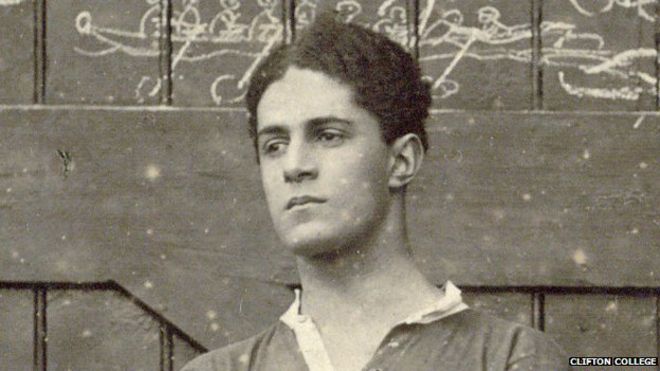
When war was declared in 1914, a Jamaican, David Louis Clemetson, was among the first to volunteer.

A 20-year-old law student at Cambridge University when war broke out, Clemetson was eager to show that he and others from British colonies like Jamaica – where the conflict in Europe had been dismissed by some as a “white man’s war” – were willing to fight and die for King and Country.

He did die. Just 52 days before the war ended, he was killed in action on the Western Front…

…Another candidate for the first black officer is Jamaican-born George Bemand. But he had to lie about his black ancestry in order to become an officer. Bemand, whose story was unearthed by historian Simon Jervis, became a 2nd lieutenant in the Royal Field Artillery on 23 May 1915, four months before Clemetson became an officer and two years before Walter Tull.

When the teenage Bemand and his family migrated to Britain from Jamaica in 1907, and the ship he was on made a brief stopover in New York, Bemand, the child of a white English father and a black Jamaican mother, was categorised by US immigration officials as “African-Black”. Yet, asked in a military interview seven years later, in 1914, whether he was “of pure European descent”, Bemand said yes. His answer was accepted.

But Clemetson took a different approach.

“Are you of pure European descent?” he was asked, in an interrogation intended to unmask officer candidates whose ethnicity was not obvious and who were perhaps light-skinned enough to pass for white. “No,” answered Clemetson, whose grandfather Robert had been a slave in Jamaica, he was not “of pure European descent”.

By telling the truth about his ancestry, Clemetson threatened to disrupt the military’s peculiar “Don’t ask, don’t tell” racial practices, which were conducted with a wink and a nod…

Read the entire article here.

Tags: , , , , ,