The Future of the ‘Tan Generation’

Posted in Articles, Census/Demographics, Interviews, Media Archive, Politics/Public Policy, Social Justice, Social Science, United States on 2012-06-08 18:12Z by Steven

The Future of the ‘Tan Generation’

The Root
2012-06-08

Jenée Desmond-Harris

Browner America: Marcia Alesan Dawkins says an increase in nonwhite births doesn’t mean more social justice.

(The Root)—Recent census data reveal that, for the first time, racial and ethnic minorities make up more than half of all children born in the United States, with 50.4 percent of children under age 1 identified as Hispanic, black, Asian American or members of another ethnic minority group.

In terms of the overall population, African Americans are the second-largest minority group in the nation (after Hispanics), with a 1.6 percent increase between 2010 and 2011. Minorities now make up nearly 37 percent of the overall U.S. population, and it’s predicted that by 2042, a minority of Americans will be non-Hispanic whites.

What do all these numbers mean for our understanding of race, for the issues that affect communities of color and for our very concept of who is a “minority” in this country? The Root has gathered a variety of perspectives on the significance of America’s becoming a browner nation for a series of interviews on whether, and why, we should pay attention to these demographic changes.

For the second in the series, The Root talked to Marcia Alesan Dawkins, visiting scholar at Brown University and author of the forthcoming Clearly Invisible: Racial Passing and the Color of Cultural Identity. She describes her extensive writing on racial identity as an expression of her interest in “how people figure out who they are and how they connect with others,” and has warned against rushing to assume that demographic changes will do away with America’s troubled racial past

…The Root: Are we going to need a new vocabulary, a new word for “minority,” when minorities become the majority? As more Americans have nonwhite ancestry, will the definition of whiteness itself be affected?

Marcia Dawkins: Yes, on both counts. We are going to need new terms that reflect numerical reality and social-political reality. Part of that implies thinking about what race and ethnicity mean in general and what specific racial and ethnic, and multiracial and multiethnic, identities mean in particular. At the same time, we’ve got to remember that every racial or ethnic community has some issues and experiences in common and is also unique.

For one, these changes mean that the white-black and white-people of color binaries need to be rethought and replaced with a full-color perspective on race and ethnicity. A full-color perspective acknowledges that racial and ethnic mixing has been part of our social fabric since Europeans met and mated with Native Americans; that it continued on through African enslavement and segregation and Asian exclusion and internment; that it progressed with increased rates of Hispanic immigration and is still with us as increasing numbers of interracial and multiracial couples get together and have children today. A full-color perspective must also acknowledge that racial and ethnic mixing has been occurring for centuries in same-sex communities as well.

On one hand, sociologists predict that the definition of whiteness will expand to include Hispanic and Asian groups but will always exclude those with African-American descent in order to maintain political and social power. On the other hand, this prediction is reductive because it assumes that only those who will continue to identify as white will be privileged and that those who will continue to identify as black will be non-privileged. It also ignores the fact that, generally speaking, to be African American is to be racially mixed

Read the entire article here.

Tags: , , , ,

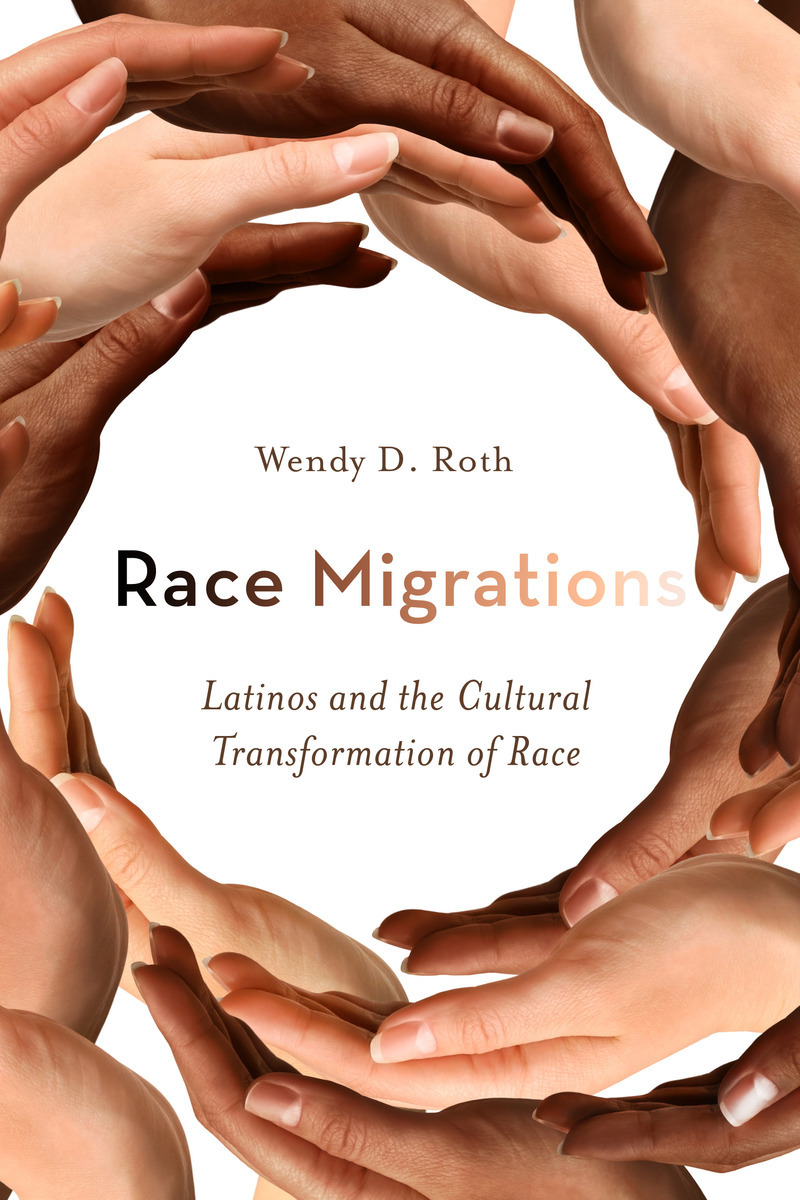
Race Migrations: Latinos and the Cultural Transformation of Race

Posted in Books, Caribbean/Latin America, Media Archive, Monographs, Social Science, United States on 2012-06-07 20:49Z by Steven

Race Migrations: Latinos and the Cultural Transformation of Race

Stanford University Press
April 2012
268 pages
6 tables, 1 figure, 20 photographs
Cloth ISBN: 9780804777957
Paper ISBN: 9780804777964
E-book ISBN: 9780804782531

Wendy D. Roth, Associate Professor of Sociology
University of British Columbia, Canada

In this groundbreaking study of Puerto Rican and Dominican migration to the United States, Wendy D. Roth explores the influence of migration on changing cultural conceptions of race—for the newcomers, for their host society, and for those who remain in the countries left behind. Just as migrants can gain new language proficiencies, they can pick up new understandings of race. But adopting an American idea about race does not mean abandoning earlier ideas. New racial schemas transfer across borders and cultures spread between sending and host countries.

Behind many current debates on immigration is the question of how Latinos will integrate and where they fit into the U.S. racial structure. Race Migrations shows that these migrants increasingly see themselves as a Latino racial group. Although U.S. race relations are becoming more “Latin Americanized” by the presence of Latinos and their views about race, race in the home countries is also becoming more “Americanized” through the cultural influence of those who go abroad. Ultimately, Roth shows that several systems of racial classification and stratification co-exist in each place, in the minds of individuals and in their shared cultural understandings of “how race works.”

Contents

  • List of Illustrations
  • Acknowledgments
  • 1. How Immigration Changes Concepts of Race [Read an excerpt here.]
  • 2. Beyond the Continuum: Race in the Dominican Republic and Puerto Rico
  • 3. Migrant Schemas: Race in the United States
  • 4. Transnational Diffusion
  • 5. Multiple Forms of Racial Stratification
  • 6. Performing Race Strategically
  • 7. Is Latino Becoming a Race?
  • Cultural Change and Classifications
  • Appendix: Notes on Methodology
  • Notes
  • Index
Tags: , , , ,

A Color Problem in England

Posted in Articles, Media Archive, Social Science, Social Work, United Kingdom on 2012-06-07 01:05Z by Steven

A Color Problem in England

The Journal of the American Medical Association
Volume 95, Number 3 (1930-07-19)
Foreign Letters: London Letter
pages 210-211
DOI: 10.1001/jama.1930.02720030040020

From Our Regular Correspondent (1930-06-21)

There is no color line in England such as exists in America. This does not mean that the English do not appreciate differences of race. They are keen on such differences, even between European races, and often contrast the Latin races with themselves. They are by no means without race prejudices but at the same time they have a strong tendency to take a man for what he is, regardless of race or of color. His color may arouse prejudice but this may be overcome when he is known. This absence of a color line has given rise to a color problem. The great seaport of Liverpool is frequented by seamen of many races, including Chinese and many Negroes from West Africa. The cohabitation of these races with the women of the city has given rise to a half-caste population. The number of Anglo-Negroid families is about 450 and the children born of this union amount to about 1,350. On the other hand, the Anglo-Chinese children do not provide any particular problem. The Anglo-Chinese child is declared to be mentally equal if not superior to the white, and since coloring and features are far less distinctive than those of the Anglo-Negroids they are not such a handicap. Further, the family life appears to be stable, the man remaining faithful to one woman though not married to her. The Anglo-Negroid family is far different. A Liverpool association for the welfare of half-caste children has been formed. The chairman, Prof. P. M. Roxby, says that the conditions under which colored seamen from West Africa enter Liverpool are a social menace and detrimental to the best interests of blacks and whites alike.

Miss Muriel E. Fletcher has for nearly two years been occupied with an inquiry for the association into the condition of half-caste children in Liverpool, where they are more numerous than in any other port. Of the Anglo-Negroid unions she says there is little harmony between the parents; the colored man generally despises the woman with whom he consorts, while the majority of the women have little affection for the men. They regret their union but stay for the sake of the children. The mothers are generally good to the children while they are small but later resent the fact that the children cannot get work and grudge having to keep them. The children find their lives full of conflict, and all the circumstances give undue prominence to sex. These families have a low standard of life morally and economically, and there appears to be little future for the children. They attend school in the poor districts and do not show any inferiority of health or proneness to infections compared with white children. The balance of evidence is that their intelligence is below the average. Their relations with the white children are friendly but they begin to feel outcast when they leave school and this feeling develops rapidly. There is no evidence that they have any special delinquent tendencies, but all their circumstances give undue prominence to sex. Owing to their unemployment, fondness of dress and finery, and the persistence of men, it is practically impossible for them to remain chaste, even if they desire to do so. As employers are unwilling to engage colored labor, the association has tried training schemes for colored girls but with limited success. It is thought that a larger and more intensive scheme might have greater success. It has been suggested that the obvious solution of the difficulty is to replace colored firemen by white on all British ships coming to this country, but the shipowners say that white men could not work in the heat of the stokeholds on the West Coast of Africa. However, the National Union of Seamen denies this. Other suggestions are the signing on of men in Africa so that they would be obliged to take the round trip and receive no pay in this country, and greater discrimination in the issue of British passports.

Tags: , , , , , ,

AmSt 201 W: The American Experience: Institutions and Movements: Mixed Race in America

Posted in Course Offerings, Law, Media Archive, Native Americans/First Nation, Social Science, United States on 2012-06-06 18:29Z by Steven

AmSt 201 W: The American Experience: Institutions and Movements: Mixed Race in America

University of Hawaii
Spring 2010

Students will gain familiarity with American Mixed Race theory, and politics as well as explore first hand literary accounts by mixed race individuals. Analysis of social and political narratives about Mixed Race people will be facilitated by examining fiction, media, and popular culture as well as government documents and official U.S. Government websites. Topics include European and Native American contact; the Dawes Commission; Jim Crow laws and One Drop ideology; U.S. anti-miscegenation laws; Supreme Court decisions; Blood Quotas in Native American and Hawaiian contexts; the Homestead Act and the Akaka Bill; the U.S. Census and Multi-Racial Americans; Mixed Race activism; and the political effect of bi-raciality on President Obama’s election campaign.

Tags:

ASTD 393-03 – Mixed Race America

Posted in Course Offerings, History, Media Archive, Social Science, United States on 2012-06-05 18:09Z by Steven

ASTD 393-03 – Mixed Race America

Saint Louis University
Fall 2012

Heidi Ardizzone, Assistant Professor of American Studies 

Despite popular images of American as a “melting” both of races and ethnicities, our institutions, values, and practices have often tried to create or maintain spatial and social distance between groups defined as racially different. This course will explore that ways in which Americans have transgressed those boundaries or found other ways of interacting across cultural lines, primarily in the 19th and 20th centuries. We will examine popular cultural perceptions of people of mixed ancestry, their social experiences, the development of various mixed-ancestry communities, and historical attempts to limit interracial socializing, relationships, and marriage. These issues were and are deeply embedded in debates over the meaning of race, gender expectations and ideas about sex and sexuality. We will also pay close attention to how minority communities have understood people of mixed ancestry in the United States, and how mixed-race identities intersect with African American, Native American, Asian, White, and Latino identities.

View the Syllabus here.

Tags: ,

“Out of an obscure place”: Japanese War Brides and Cultural Pluralism in the 1950s

Posted in Articles, Asian Diaspora, History, Media Archive, Social Science, United States, Women on 2012-06-05 17:32Z by Steven

“Out of an obscure place”: Japanese War Brides and Cultural Pluralism in the 1950s

differences: A Journal of Feminist Cultural Studies
Volume 10, Number 3 (1998)
pages 47-81

Caroline Chung Simpson, Associate Professor of English
University of Washington

In the spring of 1954, the American philosopher Horace Kallen was invited to deliver a series of lectures at the University of Pennsylvania reviewing the state of cultural pluralism in American postwar society. The concept of cultural pluralism was Kallen’s own invention, an idea of American society first expressed in his 1915 essay, “Democracy Versus the Melting Pot,” in which he defended America’s growing racial and ethnic diversity-“the federation or commonwealth of nationalities” that seemed to emerge in the wake of early-twentieth-century immigration-as the strength rather than the curse of the nation. Although by 1954 the supposed menace of immigration had long since been checked, most notably by the 1924 Immigration Act that imposed severe restrictions on immigration from Europe and Asia, the diversity Kallen had defended earlier in the century was once more poised to overwhelm the national imagination. As Kallen delivered his lectures that spring, the Supreme Court was hearing the Brown case, the culmination of a stream of compelling legal arguments that contested the notion of “separate but equal” established in 1896 in Plessy v. Ferguson. Given the anxiety that racial desegregation provoked in many whites, Kallen and the liberal intellectuals attending his lectures understood the need to reassess and restate the case for cultural pluralism.

In the face of tense public and legal debate over desegregation, Kallen reasserted the promise of pluralism in stirring strains that seemed at times to evoke an almost radiant vision of what Americans might yet achieve. His vision depended on the willingness of white Americans in particular to embrace change. As he put it, “the dogma that we cannot change the past is not an understanding of the process of change but a prejudice of our resistance to it and a static illusion symbolizing our fear of it” (“Meanings” 24). The chief effect of his lectures and the published responses to them was to affirm that the coming changes in race relations anticipated by the Brown deliberations would be generative rather than enervating:

It is the variety and range of his participations, which does in fact distinguish a civilized man from an uncivilized man, a man of faith and reason from an unreasoning fanatic, a democrat from a totalitarian, a man of culture from a barbarian. Such a man obviously orchestrates a growing pluralism of associations into the wholeness of his individuality.

In descriptions like this one, Kallen recasts the threat of integration as a deft “orchestration” of differences that would leave the nation “whole” rather than fractured. But while most Americans might have assumed this orchestration would soon occur through increased interactions between blacks and whites, as indeed it did, there were other, less visible avenues by which public voices sought to orchestrate or imagine the successful transition to racial integration in the mid-1950s…

….Such is the case of Japanese Americans in the postwar period, a group often neglected in considerations of American pluralism and postwar integration despite the fact that the meaning and shape of Japanese American identity was caught in a tremendous crisis. The relocation and internment experience was, of course, the most startling evidence of that crisis. But the postwar dilemma of Japanese Americans as citizen-subjects, while often limited to discussions of the internment experience of the West Coast population, in fact incorporates a range of national experiences and histories, including the resettlement program after the war and the impact of the immigration of Japanese war brides on the meaning of Japanese American citizenship.

Japanese war brides were perhaps the most visible representatives of Japanese American life in the postwar period, although they did not always self-identify as Japanese Americans. Still they were often presented as emergent members of a new kind of Japanese American community, which was primarily attractive because the war brides were seen solely as compliant wives and mothers unfettered by the disturbing public history of internment. Settling into domestic life in the 1950s, with little fanfare, as unfamiliar national subjects who had formerly been citizens of an enemy nation, Japanese war brides soon became meaningful figures in the discourse on racial integration and cultural pluralism. As white Americans tried to negotiate the threat of black integration, and government programs tried in vain to resettle interned Japanese Americans, Japanese war brides provided at least one “unofficial or obscure place” out of which the redemption of cultural pluralism, as an ideal that stabilized relations rather than disrupted them, would reemerge as a distinct possibility. In significant ways, the postwar popular media’s changing view of Japanese war brides projects them as an early form of the Asian American model minority. The 1950s transformation of the Japanese war bride from an opportunistic and ignorant alien seeking to penetrate the suburban affluence of white America to the gracious and hard-working middle-class housewife was an early exemplar for achieving the integrated future in America, a halcyon story of domestic bliss and economic mobility difficult to extract from the stories of long-time racialized citizen-subjects…

…But even more troubling for the concept of national identity was the issue of “the Eurasian children of these marriages.” In tow with their mothers, they promised to increase “the Japanese-race population back home” (25). However, the underlying concern of the Post authors is less that the Japanese American race would be replenished by these immigrant women than that their mixed race marriages and their “Eurasian children” would eventually erode the distinctions between the white and Japanese races. “The effect of these mixed marriages on American life at home is still to come,” conclude the authors, who imagine in mythic terms “the arrival of thousands of dark-skinned, dark-eyed brides in Mississippi cotton hamlets and New Jersey factory cities, on Oregon ranches or in Kansas country towns” where “their bright-eyed children soon will be knocking on school doors in most of the forty-eight states” (25). The probability of mixed race families living openly in formerly white or non-Asian areas of the nation not only renders these regions unfamiliar; it also disturbs miscegenation anxieties that are the bedrock of white resistance to racial integration. The interracial marriages of Japanese war brides, then, established the limits of white-Japanese relations, limits that had been checked in the case of resettled Nisei by the idiom of patronage that defined their contacts with whites. Although, as the passage of time revealed, these limits did not necessarily contain the ambivalent feelings often expressed by most of the fifteen Nisei respondents to the 1943 study…

Read the entire article here.

Tags: , , ,

AFAM 349a/AMST 326a/WGSS 388a: Interraciality and Hybridity

Posted in Census/Demographics, Course Offerings, History, Law, Media Archive, Social Science, United States on 2012-06-05 17:01Z by Steven

AFAM 349a/AMST 326a/WGSS 388a: Interraciality and Hybridity

Yale University
Fall 2011

Naomi Pabst, Assistant Professor of African American Studies and American Studies
Yale University

Examination of mixed-race matters in both literary and critical writings, primarily within the black/white schema.  Historical and current questions of black and interracial identity; the contemporary “mixed race movement” and the emerging rubric of “critical mixed race studies”; historical genealogy and interraciality and hybridity.  Analysis of longstanding debates on race mixing in the realms of legal classification, transracial adoption, census taking, grassroots movements, the discursive, the ideological, and the popular.

Tags: ,

Upfront (With Guests Mark Christian and Anna Rothery)

Posted in Audio, Live Events, New Media, Social Science, United Kingdom, United States on 2012-06-04 02:34Z by Steven

Upfront (With Guests Mark Christian and Anna Rothery)

Upfront
BBC Radio: Merseyside
2012-06-02

Phina Oruche, Host

Guests

Mark Christian, Professor & Chair of African & African American Studies
Lehman College, City University of New York

Anna Rothery, Councillor
Liverpool City Council, Princes Park Ward

Host Phina Oruche discusses the current state of the African diaspora in the United States and Britain with Dr. Mark Christian and Liverpool Councilor Anna Rothery. Dr. Christian is author of the book Multiracial Identity: An International Perspective, the chapter “Mixing Up the Game: Social and Historical Contours of Black Mixed Heritage Players in British Football” in the anthology Race, Ethnicity and Football: Persisting Debates and Emergent Issues, and article “The Fletcher Report 1930: A Historical Case Study of Contested Black Mixed Heritage Britishness.”

Download the interview here (00:18:27/15.0 MB).

Tags: , , , ,

The Biologistical Construction of Race: ‘Admixture’ Technology and the New Genetic Medicine

Posted in Anthropology, Articles, Health/Medicine/Genetics, Media Archive, Politics/Public Policy, Social Science on 2012-06-03 15:22Z by Steven

The Biologistical Construction of Race: ‘Admixture’ Technology and the New Genetic Medicine

Social Studies of Science
Volume 38, Number 5 (2008)
pages 695-735
DOI: 10.1177/0306312708090796

Duana Fullwiley, Associate Professor of African and African American Studies and of Medical Anthropology
Harvard University

This paper presents an ethnographic case study of the use of race in two interconnected laboratories of medical genetics. Specifically, it examines how researchers committed to reducing health disparities in Latinos with asthma advance hypotheses and structure research to show that relative frequencies of genetic markers characterize commonly understood groupings of race. They do this first by unapologetically advancing the idea that peoples whom they take to be of the `Old World’, or `Africans’, `Europeans’, `East Asians’, and `Native Americans’, can serve as putatively pure reference populations against which genetic risk for common diseases such as asthma can be calculated for those in the `New World’. Technologically, they deploy a tool called ancestry informative markers (AIMs), which are a collection of genetic sequence variants said to differ in present-day West Africans, East Asians, Europeans, and (ideally Pre-Columbian) Native Americans. I argue that this technology, compelling as it may be to a range of actors who span the political spectrum, is, at base, designed to bring about a correspondence of familiar ideas of race and supposed socially neutral DNA. This correspondence happens, in part, as the scientists in question often bracket the environment while privileging racialized genetic variance as the primary source of health disparities for common disease, in this case between Mexicans and Puerto Ricans with asthma. With their various collaborators, these scientists represent a growing movement within medical genetics to re-consider race and `racial admixture’ as biogenetically valid points of departure. Furthermore, many actors at the center of this ethnography focus on race as a function of their personal identity politics as scientists of color. This to say, they are driven not by racist notions of human difference, but by a commitment to reduce health disparities and to include `their’ communities in what they describe as the `genetic revolution’.

The very word ‘race’ applies to a hypothetical past, or to a problematical future, not to the actual present … the only way to measure the genetic relationship of ethnic groups would be by ascertaining the quantitative values of their coefficients of common ancestry, which would be based entirely upon the statistical methods of probability theory. (We Europeans [Julian Huxley and Alfred Court Haddon, 1939: 114])

To me, the refusal to use race in medicine is political correctness gone awry. It’s a lot of white researchers gone political. (Esteban Gonzàles Burchard, asthma geneticist at the University of California, San Francisco Lung Biology Center; field notes 2003)

The Molecularization of ‘Admixture’: A History of the Present

In 1949, the year before the first United Nations Educational Scientific and Cultural Organization (UNESCO) statement rallying against the race concept, Linus Pauling characterized sickle cell anemia as the first ‘molecular disease’ (Pauling et al., 1949). At the time, most experts and lay people considered sickle cell a ‘black-race disorder’. Despite global good will and contrition for the violence perpetuated in the name of racial purification in Germany and elsewhere a few short years before, some North American scientists called the UNESCO statement an ‘incautious affirmation’ and claimed that sickle cell anemia in American blacks (who by definition, it was assumed, had white ancestry) was a perfect example of how ‘race mixture can be disadvantageous in its racial effects’ (Gates, 1952: 896). The then ‘odd’ observation that ‘hybrids’ (black Americans) seemed to have more sickle cell disease than their ‘pure’ (African) counterparts who had more sickle cell trait (which was actually mistaken for a milder form of the disease in many cases) gave immediate rise to theories that ‘racial admixture’ could affect disease risk and/or severity (Gates, 1952). With Pauling’s Nobel-winning observations came the first intellectual opening for the molecularization of race. Immediately with it came the idea that racialized ancestral mixing, or ‘admixture’, constituted increased risk of disease pathology. In what follows, I examine a present-day resurgence of the concept of human biological admixture as a factor in disease risk in some quarters of contemporary American medical genetics…

…Over the past few years, social scientists studying genetics and race have urged their colleagues to ‘go to the very sites’ of scientific production and ‘document how [racial] categories are being constructed’ anew (Reardon, 2005: 18; Duster, 2006a: 12). Following from this, it is as imperative that ethnographers also attempt to understand better scientists’ motives for wanting to resuscitate such troubled categories. To this end, it is important for me to note how my informants’ social experiences shape the tautological product of genetic racial admixture they use on a daily basis. In particular, one challenge these scientists have posed for themselves is to ‘care’ for their own disproportionately sick communities of ‘racially admixed subjects’ by recruiting and enrolling them in genetic research. A crucial aspect of their effort to reduce health disparities is a search for the biological component of these communities’ mixed racial heritage. For several of my informants, this heritage is a point of biological difference that may contain clues about present-day health differences. Here it is many ‘drops of blood’ – rather than one – that now constitute the brown bodies in question. Today, Mexicans and Puerto Ricans in the US are assumed to be differentially constituted from African-Americans and Native Americans, based on their varying amounts of African, European, and Native (pre-Columbian) genetic ancestral contributions. Yet, contrary to earlier American norms of hypo-descent, these mixed groups must remain conceptually separate, ‘ethnically’ and ‘politically’, from the referent groups that make them up. Today, Mexicans’ and Puerto Ricans’ African ancestries are deemed important for reasons that will become clear below, but they are rarely collapsed into a category of ‘blackness’. In fact, as one of the main researchers featured in this ethnography reminded himself and his team time and again, as of the 2000 census, Latinos surpassed African-Americans as the largest minority group in the US. Over the course of my fieldwork in his lab, I heard this feat by numbers repeated, as if to say that this researcher’s ‘community’ needed and deserved the same kind of attention, political courtship, and scientific resources as one of the most historically ‘important’ and visible American minority groups…

Read the entire artcle here.

Tags: , ,

Race and the Genetic Revolution: Science, Myth, and Culture

Posted in Anthologies, Anthropology, Books, Health/Medicine/Genetics, History, Law, Media Archive, Politics/Public Policy, Social Science on 2012-06-03 15:12Z by Steven

Race and the Genetic Revolution: Science, Myth, and Culture

Columbia University Press
September 2011
304 pages
1 illus; 4 tables
Paper ISBN: 978-0-231-15697-4
Cloth ISBN: 978-0-231-15696-7

Edited by:

Sheldon Krimsky, Professor of Urban & Environmental Policy & Planning; Adjunct Professor of Public Health and Family Medicine
Tufts School of Medicine
Tufts University, Medford, Massachusetts

Kathleen Sloan

Do advances in genomic biology create a scientific rationale for long-discredited racial categories? Leading scholars in law, medicine, biology, sociology, history, anthropology, and psychology examine the impact of modern genetics on the concept of race. Contributors trace the interplay between genetics and race in forensic DNA databanks, the biology of intelligence, DNA ancestry markers, and racialized medicine. Each essay explores commonly held and unexamined assumptions and misperceptions about race in science and popular culture.

This collection begins with the historical origins and current uses of the concept of “race” in science. It follows with an analysis of the role of race in DNA databanks and racial disparities in the criminal justice system. Essays then consider the rise of recreational genetics in the form of for-profit testing of genetic ancestry and the introduction of racialized medicine, specifically through an FDA-approved heart drug called BiDil, marketed to African American men. Concluding sections discuss the contradictions between our scientific and cultural understandings of race and the continuing significance of race in educational and criminal justice policy.

Table of Contents

  • A short history of the race concept / Michael Yudell
  • Natural selection, the human genome, and the idea of race / Robert Pollack
  • Racial disparities in databanking of DNA profiles / Michael T. Risher
  • Prejudice, stigma, and DNA databases / Helen Wallace
  • Ancestry testing and DNA : uses, limits, and caveat emptor / Troy Duster
  • Can DNA witness race? Forensic uses of an imperfect ancestry testing technology / Duana Fullwiley
  • BiDil and racialized medicine / Jonathan Kahn
  • Evolutionary versus racial medicine : why it matters? / Joseph L. Graves Jr.
  • Myth and mystification : the science of race and IQ / Pilar N. Ossorio
  • Intelligence, race, and genetics / Robert J. Sternberg … [et al.]
  • The elusive variability of race / Patricia J. Williams
  • Race, genetics, and the regulatory need for race impact assessments / Osagie K. Obasogie.
Tags: , , ,