Becoming black, becoming president

Posted in Articles, Barack Obama, Native Americans/First Nation, Politics/Public Policy, Social Science, United States on 2012-07-17 03:04Z by Steven

Becoming black, becoming president

Patterns of Prejudice
Volume 45, Issue 1-2, 2011
pages 62-85
DOI: 10.1080/0031322X.2011.563145

Richard H. King, Professor Emeritus of American and Canadian Studies
University of Nottingham

Speculation about the relationship between Barack Obama’s election to the presidency and race in the United States was rife prior to, during and after his successful campaign. King looks at three aspects of this issue. First, as a kind of outsider, Obama had to prove himself black enough for African Americans of the traditional sort and not too dangerous for Whites. How did he achieve this? Second, Obama’s election was made possible by changes in the voting behaviour of white Americans, particularly in the North, and the way that African Americans like Obama gained a foothold in, and at times control of, urban political machines, such as, in his case, Chicago. How have American historians treated this shift in white voting behaviour? Finally, the central question of how race still impinges on President Obama’s performance as president. King concludes with a look at issues such as colour blindness and whiteness, the nature of black political identity and solidarity, and the variety of political roles from which a black leader such Obama can choose.

Read or purchase the article here.

Tags: , ,

Betwixt And Between: Studying Multiracial Identity

Posted in Audio, Interviews, Media Archive, Social Science, United States on 2012-07-17 01:42Z by Steven

Betwixt And Between: Studying Multiracial Identity

National Public Radio
Talk of the Nation
2012-06-21

Neal Conan, Host

G. Reginald Daniel, Professor of Sociology
University of California, Santa Barbara

In 1989, Reginald Daniel began teaching a university course on multiracial identity called Betwixt and Between. It remains the longest-running college course addressing the multiracial experience. For his continuing studies and research on multiraciality, Daniel received the Loving Prize.

Note from Steven F. Riley: The “Loving Prize” is the awarded by the Mixed Roots Film & Literary Festival co-founders Fanshen Cox and Heidi Durrow to artists and educators who have shown a dedication to celebrating and illuminating the Mixed experience. Past recipients include best-selling writer James McBride, NFL star Hines Ward, Hapa artist Kip Fulbeck, scholars Dr. Maria P. P. Root and Paul Spickard, writer and educator Maya Soetoro-Ng, and writer and TV producer Angela Nissel.


G. Reginald Daniel Accepts Loving Prize at Mixed Roots Film & Literary Festival (2012-06-16) ©2012, Steven F. Riley

This is TALK OF THE NATION. I’m Neal Conan.

In the spring of 1989, Professor Reginald Daniel started teaching a university course on multiracial identity called Betwixt and Between. The class is one of the first of its kind. He’s continued to teach it ever since. Last week, he received the Loving Prize, named after the couple in the famous Loving v. Virginia case where the Supreme Court struck down laws that banned interracial marriage. The award recognized his contributions to the national dialogue about multiracial identity.

Well, we want to hear from multiracial listeners today. What’s changed in your experience over the last two decades and more? Give us a call: 800-989-8255. Email us: talk@npr.org. You can also join the conversation at our website, that’s at npr.org. Reginald Daniel teaches at the University of California, Santa Barbara and joins us now from his home in Santa Barbara. Congratulations.

REGINALD DANIEL: Thank you very much. It is quite an honor and also quite—sort of something to get my head around. It was—having that kind of public recognition…

Read the transcript here.  Listen to the interview here. Download the interview here.

Tags: , , , ,

Two Classes, Divided by ‘I Do’

Posted in Articles, Family/Parenting, Social Science, United States on 2012-07-15 21:01Z by Steven

Two Classes, Divided by ‘I Do’

The New York Times
2012-07-15

Jason Deparle


Also see the video, “Single and Unequal” by Shayla Harris here.

ANN ARBOR, Mich. — Jessica Schairer has so much in common with her boss, Chris Faulkner, that a visitor to the day care center they run might get them confused.

They are both friendly white women from modest Midwestern backgrounds who left for college with conventional hopes of marriage, motherhood and career. They both have children in elementary school. They pass their days in similar ways: juggling toddlers, coaching teachers and swapping small secrets that mark them as friends. They even got tattoos together. Though Ms. Faulkner, as the boss, earns more money, the difference is a gap, not a chasm.

But a friendship that evokes parity by day becomes a study of inequality at night and a testament to the way family structure deepens class divides. Ms. Faulkner is married and living on two paychecks, while Ms. Schairer is raising her children by herself. That gives the Faulkner family a profound advantage in income and nurturing time, and makes their children statistically more likely to finish college, find good jobs and form stable marriages…

Read the entire article here. Watch the video by Shayla Harris  here.

Tags: , , , ,

The Miracle and the Defects [Chapter]

Posted in Barack Obama, Books, Chapter, Media Archive, Politics/Public Policy, Social Science, United States on 2012-07-15 18:03Z by Steven

The Miracle and the Defects [Chapter]

Chapter in:

The Constantinos Kararnanlis Institute for Democracy Yearbook 2009
DOI: 10.1007/978-3-642-00621-0

pages 73-77
DOI: 10.1007/978-3-642-00621-0_11

Edited by:

Constantine Arvanitopoulos, Professor of European and International Studies
Panteion University, Athens, Greece

Konstantina E. Botsiou, Associate Professor of Political Science
University of Peloponnisos, Korinthos, Greece

Chapter Author:

George Th. Mavrogordatos, Professor of Political Science
University of Athens

In most of the world, the election of the 44th President of the United States was justly celebrated as an event of historic significance. It proved the irrepressible vitality of the American Dream, precisely at a time when American capitalism appeared to be crumbling. It also confirmed the unique adaptability of an admirable political system, which never ceases to evolve, even though it is based on the oldest written Constitution.

Fear of repetition or banality must not hinder the exploration and evaluation of the manifold significance that the Obama victory has on several different levels, beyond race as such. He is indeed the first African-American president, and his election was regarded as finally laying to rest a painful legacy of slavery, civil war, and discrimination. But he is also a person of mixed blood, who belongs more to the present and the future than to the past, thanks to his multiracial and multicultural background. He had to persuade not only whites, but also many blacks who understandably did not recognise him immediately as one of their own.

Moreover, he is an intellectual educated at the most elite institutions, yet capable of rousing and mobilising the poor and uneducated, without concessions at the expense of his cultured rhetorical style or his cool rationalism. Change is just as impressive in this respect, after many years of Republican disdain of the intellect and intellectuals.

How did such an unusual person, in such a short time, become President of the United States? The easy answer would be to classify him immediately as a ‘charismatic leader’ in the Weberian (not the journalistic) sense. Although it is a scientific term that should be used sparingly, many Obama supporters clearly do believe (as required by Max Weber’s definition) that he is endowed with ‘specifically exceptional powers or qualities, not accessible to the ordinary person’ or, more precisely, the ordinary politician. There were even references to ‘magic’ and to a ‘miracle.’…

How Do Children of Mixed Partnerships Fare in the United Kingdom? Understanding the Implications for Children of Parental Ethnic Homogamy and Heterogamy

Posted in Articles, Family/Parenting, Media Archive, Social Science, Social Work, United Kingdom on 2012-07-14 04:32Z by Steven

How Do Children of Mixed Partnerships Fare in the United Kingdom? Understanding the Implications for Children of Parental Ethnic Homogamy and Heterogamy

The ANNALS of the American Academy of Political and Social Science
Volume 643, Number 1, September 2012
pages 239-266
DOI: 10.1177/0002716212444853

Lucinda Platt, Professor of Sociology
Institute of Education, University of London

Many claims are made about the significance of interethnic partnerships for individuals and for society. Such partnerships continue to be seen as a “barometer” of the openness of society and have spawned extensive analysis investigating their patterns, trends, and determinants. But we know little about the experience of children growing up in families of mixed parentage. In the United Kingdom, the increase in the self-defined “mixed” population is often celebrated. But there has been little quantitative sociological analysis that has investigated the circumstances of the children of mixed ethnicity partnerships. Using two large-scale UK datasets that cover a similar period, this article evaluates the extent to which mixed parentage families are associated with circumstances (both economic and in terms of family structure) that tend to be positive or negative for children’s future life chances and how these compare to those of children with parents from the same ethnic group. It shows that there is substantial variation according to the outcome considered but also according to ethnic group. Overall, children in mixed parentage families do not unequivocally experience the equality of outcomes with majority group children that the assimilation hypothesis implies.

Read or purchase the article here.

Tags: , ,

American Creoles: The Francophone Caribbean and the American South

Posted in Anthologies, Anthropology, Barack Obama, Books, Caribbean/Latin America, History, Literary/Artistic Criticism, Louisiana, Media Archive, Social Science, United States on 2012-07-13 01:37Z by Steven

American Creoles: The Francophone Caribbean and the American South

Liverpool University Press
May 2012
256 pages
234 x 156 mm
Hardback ISBN: 9781846317538

Edited by:

Celia Britton, Professor of French and Francophone Studies
University College London

Martin Munro, Professor of French and Francophone Studies
Florida State University

The Francophone Caribbean and the American South are sites born of the plantation, the common matrix for the diverse nations and territories of the circum-Caribbean. This book takes as its premise that the basic configuration of the plantation, in terms of its physical layout and the social relations it created, was largely the same in the Caribbean and the American South. Essays written by leading authorities in the field examine the cultural, social, and historical affinities between the Francophone Caribbean and the American South, including Louisiana, which among the Southern states has had a quite particular attachment to France and the Francophone world. The essays focus on issues of history, language, politics and culture in various forms, notably literature, music and theatre. Considering figures as diverse as Barack Obama, Frantz Fanon, Miles Davis, James Brown, Édouard Glissant, William Faulkner, Maryse Condé and Lafcadio Hearn, the essays explore in innovative ways the notions of creole culture and creolization, terms rooted in and indicative of contact between European and African people and cultures in the Americas, and which are promoted here as some of the most productive ways for conceiving of the circum-Caribbean as a cultural and historical entity.

Contents

  • List of Illustrations
  • Acknowledgements
  • Introduction – Martin Munro and Celia Britton
  • Creolizations
    • Lafcadio Hearn’s American Writings and the Creole Continuum – Mary Gallagher
    • Auguste Lussan’s La Famille creole: How Saint-Domingue Emigres Bcame Louisiana Creoles – Typhaine Leservot
    • Caribbean and Creole in New Orleans – Angle Adams Parham
    • Creolizing Barack Obama – Valerie Loichot
    • Richard Price or the Canadian from Petite-Anse: The Potential and the Limitations of a Hybrid Anthropology – Christina Kullberg
  • Music
    • ‘Fightin’ the Future’: Rhythm and Creolization in the Circum-Caribbean – Martin Munro
    • Leaving the South: Frantz Fanon, Modern Jazz, and the Rejection of Negritude – Jeremy F. Lane
    • The Sorcerer and the Quimboiseur: Poetic Intention in the Works of Miles Davis and Edourard Glissant – Jean-Luc Tamby
    • Creolizing Jazz, Jazzing the Tout-monde: Jazz, Gwoka and the Poetics of Relation – Jerome Camal
  • Intertextualities: Faulkner, Glissant, Conde
    • Go Slow Now: Saying the Unsayable in Edouard Glissant’s Reading of Faulkner – Michael Wiedorn
    • Edouard Glissant and the Test of Faulkner’s Modernism – Hugh Azerad
    • The Theme of the Ancestral Crime in the Novels of Faulkner, Glissant, and Conde – Celia Britton
    • An American Story – Yanick Lahen
  • Notes on Contributors
  • Index
Tags: , , , , , , , , , , , , , , , , , , , , , , ,

British Nationality and Status of Aliens Act (1914)

Posted in Articles, Asian Diaspora, Law, Media Archive, Social Science, United Kingdom, Videos on 2012-07-12 04:16Z by Steven

British Nationality and Status of Aliens Act (1914)

Mix-d: Museum: Timeline
Mix-d:
2012-07-10

With the increase of the minority ethnic population in Britain from the turn of the century, popular concerns about interracial relationships grew. The 1914 British Nationality and Status of Aliens Act meant that not only did ‘aliens’ – that is, foreign-born residents, have to carry an alien registration card, but British women across the Empire who married such men automatically lost their British nationality. Such was the case for Emily Ah Foo, a Liverpudlian woman who married Stanley, a Chinese seaman. There were no such restrictions for British men; in fact, any foreign woman marrying a British subject automatically became British…

Read the entire timeline section and view the video clip here.

Tags: ,

Black or biracial? Census forces a choice for some

Posted in Articles, Barack Obama, Census/Demographics, Media Archive, Politics/Public Policy, Social Science, United States on 2012-07-11 00:58Z by Steven

Black or biracial? Census forces a choice for some

Associated Press
2010-04-19

Jesse Washington, National Writer
Associated Press

There were 784,764 U.S. residents who described their race as white and black in the last census. But that number didn’t include Laura Martin, whose father is black and mother is white.

“I’ve always just checked black on my form,” said Martin, a 29-year-old university employee in Las Vegas. She grew up surrounded by black family and friends, listening to black music and active in black causes — “So I’m black.”

Nor did it include Steve Bumbaugh, a 43-year-old foundation director in Los Angeles, who also has a black father and white mother. “It’s not as if I’d have been able to drink out of the white and colored water fountains during Jim Crow,” he said. “And I most assuredly would have been a slave. As far as I’m concerned, that makes me black.”…

…It’s impossible to know how many of the 35 million people counted as “black alone” in 2000 have a white parent. But it’s clear that the decision to check one box — or more — on the census is often steeped in history, culture, pride and mentality.

Exhibit A is President Barack Obama. He declined to check the box for “white” on his census form, despite his mother’s well-known whiteness.

Obama offered no explanation, but Leila McDowell has an idea.

“Put a hoodie on him and have him walk down an alley, and see how biracial he is then,” said McDowell, vice president of communications for the NAACP.

“Being black in this country is a political construct,” she said. “Even though my father is white and I have half his genes, when I apply for a loan, when I walk into the car lot, when I apply for a job, they don’t see me as half white, they see me as black. If you have any identifying characteristics, you’re black.”…

…But the logic is simple for Ryan Graham, the brown-skinned son of a white-black marriage who defines himself as multiracial.

“Say you’re wearing a black-and-white shirt. Somebody asks, ‘What color is your shirt?’ It’s black and white. There you go. People ask me, ‘What race are you?’ I say I’m black and white. It’s that simple,” said Graham, a 25-year-old sales consultant from Fort Lauderdale, Fla…

Read the entire article here.

Tags: , , , , , , ,

Articulate While Black: Barack Obama, Language, and Race in the U.S.

Posted in Barack Obama, Books, Communications/Media Studies, Media Archive, Monographs, Politics/Public Policy, Social Science, United States on 2012-07-10 18:12Z by Steven

Articulate While Black: Barack Obama, Language, and Race in the U.S.

Oxford University Press
September 2012
224 pages
Hardback ISBN13: 9780199812967; ISBN10: 0199812969
Paperback ISBN13: 9780199812981; ISBN10: 0199812985

H. Samy Alim, Associate Professor of Education and (by courtesy) Anthropology and Linguistics
Stanford University

Geneva Smitherman, University Distinguished Professor Emerita of English and African American and African Studies
Michigan State University

Forward by:

Michael Eric Dyson, Professor of Sociology
Georgetown University, Washington, D.C.

Barack Obama is widely considered one of the most powerful and charismatic speakers of our age. Without missing a beat, he often moves between Washington insider talk and culturally Black ways of speaking—as shown in a famous YouTube clip, where Obama declined the change offered to him by a Black cashier in a Washington, D.C. restaurant with the phrase, “Nah, we straight.”

In Articulate While Black, two renowned scholars of Black Language address language and racial politics in the U.S. through an insightful examination of President Barack Obama’s language use—and America’s response to it. In this eloquently written and powerfully argued book, H. Samy Alim and Geneva Smitherman provide new insights about President Obama and the relationship between language and race in contemporary society. Throughout, they analyze several racially loaded, cultural-linguistic controversies involving the President—from his use of Black Language and his “articulateness” to his “Race Speech,” the so-called “fist-bump,” and his relationship to Hip Hop Culture.

Using their analysis of Barack Obama as a point of departure, Alim and Smitherman reveal how major debates about language, race, and educational inequality erupt into moments of racial crisis in America. In challenging American ideas about language, race, education, and power, they help take the national dialogue on race to the next level. In much the same way that Cornel West revealed nearly two decades ago that “race matters,” Alim and Smitherman in this groundbreaking book show how deeply “language matters” to the national conversation on race—and in our daily lives.

Features

  • The first book-length analysis of Barack Obama’s rhetoric in relation to race
  • Uses a sociolinguistic analysis of Barack Obama’s language and speeches to both reveal and challenge American ideas about language, race, education, and power
  • A lively and engaging read from two renowned scholars of language, race, and education

Table of Contents

  • Foreword
  • Showin Love
  • 1. “Nah, We Straight”: Black Language and America’s First Black President
  • 2. A.W.B. (Articulate While Black): Language and Racial Politics in the U.S.
  • 3. Makin A Way Outta No Way: The Race Speech and Obama’s Rhetorical Remix
  • 4. “The Fist Bump Heard ’round the World”: How Black Communication Becomes Controversial
  • 5. “My President’s Black, My Lambo’s Blue”: Hip Hop, Race, and the Culture Wars
  • 6. Change the Game: Language, Education, and the Cruel Fallout of Racism
  • Index
Tags: , , ,

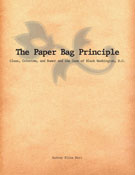
The Paper Bag Principle: Class, Colorism, and Rumor and the Case of Black Washington, D.C.

Posted in Books, History, Media Archive, Monographs, Passing, Social Science, United States on 2012-07-10 02:24Z by Steven

The Paper Bag Principle: Class, Colorism, and Rumor and the Case of Black Washington, D.C.

University of Tennessee Press
2006-07-15
136 pages
9.2 x 6.3 x 0.7 inches
Cloth ISBN: 1-57233-462-2
Cloth ISBN-13: 978-1572334625

Audrey Elisa Kerr, Professor of English and Women Studies
Southern Connecticut State University

The Paper Bag Principle: Class, Colorism, and Rumor in the Case of Black Washington, D.C. considers the function of oral history in shaping community dynamics among African American residents of the nation’s capitol. The only attempt to document rumor and legends relating to complexion in black communities, The Paper Bag Principle looks at the divide that has existed between the black elite and the black “folk.”

While a few studies have dealt with complexion consciousness in black communities, there has, to date, been no study that has catalogued how the belief systems of members of a black community have influenced the shaping of its institutions, organizations, and neighborhoods. Audrey Kerr examines how these folk beliefs—exemplified by the infamous “paper bag tests”—inform color discrimination intraracially.

Kerr argues that proximity to whiteness (in hue) and wealth have helped create two black Washingtons and that the black community, at various times in history, replicated “Jim Crowism” internally to create some standard of exceptionalism in education and social organization. Kerr further contends that within the nomenclature of African Americans, folklore represents a complex negotiation of racism written in ritual, legend, myth, folk poetry, and folk song that captures “boundary building” within African American communities.

The Paper Bag Principle focuses on three objectives: to record lore related to the “paper bag principle” (the set of attitudes that granted blacks with light skin higher status in black communities); to investigate the impact that this “principle” has had on the development of black community consciousness; and to link this material to power that results from proximity to whiteness. The Paper Bag Principle is sure to appeal to scholars and historians interested in African American studies, cultural studies, oral history, folklore, and ethnic and urban studies.

Table of Contents

  • Acknowledgments
  • Introduction
  • 1. Traditions and Complexion Lore
  • 2. A National Perspective on Complextion Lore
  • 3. Washington Society
  • 4. Social Organization in Washington
  • 5. School Lore: Beliefe and Practice in the Education of Black Washington
  • 6. Complexion and Worship
  • 7. One Drop of Black Blood, a Conclusion
  • Notes
  • Bibliography
  • Index
Tags: , , , , ,