Philanthropic racism in Britain: The Liverpool university settlement, the anti-slavery society and the issue of ‘half-caste’ children, 1919-51

Posted in Articles, History, Media Archive, Politics/Public Policy, Social Science, United Kingdom on 2011-04-02 19:00Z by Steven

Philanthropic racism in Britain: The Liverpool university settlement, the anti-slavery society and the issue of ‘half-caste’ children, 1919-51

Immigrants & Minorities
Volume 3, Issue 1 (1984)
Pages 69-88
DOI: 10.1080/02619288.1984.9974570

Paul B. Rich

The history of racial ideology in Britain has focused mainly on extreme groups of the political right. Less attention has been paid to more ‘respectable’ forms of racism. This paper attempts to redress the balance. It concentrates upon two groups, the Anti-Slavery Society and the Settlement Movement and, with particular reference to Liverpool and Cardiff between 1919 and 1951, examines their attitudes towards Britain’s ‘half-caste’ population.

The history of racial ideology in Britain has tended mostly to focus upongroups on the extreme right-wing fringe to the exclusion of what may be termed ‘middle opinion’. This rather narrow range of analysis, centred around the yardstick of fascism and its political variants, can lead to the downplaying in certain aspects of British racial attitudes which can be seen to represent a continuation, in a somewhat different guise, of Victorian racial ideas. It was Hugh Tinker who originally suggested this possible linkage between more modern British race attitudes and what he termed ‘neo-Victorianism’, though the thesis has been given no substantial institutional anchorage. This article, therefore, proposes to look at one particular set of institutional links between the Victorian era and the more modern arena of race relations in the 1920s and 1930s by looking at the role of the Anti-Slavery Society and the Settlement Movement in the debate on ‘half-castes’ in the seaport towns of Liverpool, and to a lesser degree Cardiff, between the wars.

This issue is of importance to students of race in Britain for a number of reasons. Both the Anti-Slavery Society and the Settlement Movement had roots in the Victorian philanthropic concern with the lower social orders and the less privileged. Though the anti-slavery movement had its heyday during the middle of the nineteenth century before and after the American Civil War of 1861-5, it left a strong legacy in middle-class liberal thought in Britain which was to enjoy a renewed upsurge on the issue of ‘forced labour’ in the Belgian Congo during the Edwardian years through the campaign of E.D. Morel and the Congo Reform Association. Similarly, the university settlement movement was a product of middle-class concern with the lower class—especially in London—in the 1880s as rising class consciousness and residential separation between classes made older and more paternalistic methods of social control increasingly ineffective. Both these Victorian movements carried on in…

Read or purchase the article here.

Tags: , , , ,

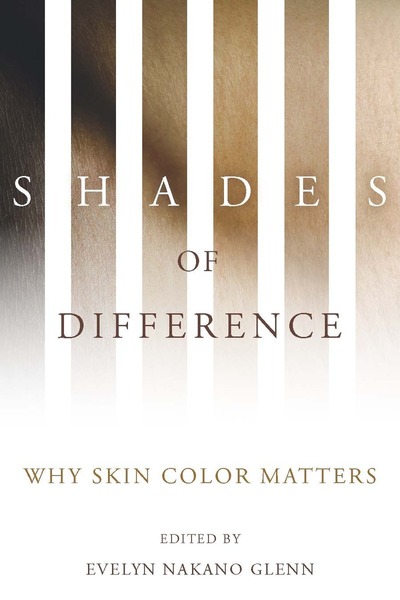
Shades of Difference: Why Skin Color Matters

Posted in Africa, Anthologies, Books, Brazil, Caribbean/Latin America, Identity Development/Psychology, Law, Media Archive, Politics/Public Policy, Social Science, United States on 2011-04-02 18:04Z by Steven

Shades of Difference: Why Skin Color Matters

Stanford University Press
2009
312 pages
11 tables, 15 figures, 16 illustrations
Cloth ISBN: 9780804759984
Paper ISBN: 9780804759991
E-book ISBN: 9780804770996

Edited by:

Evelyn Nakano Glenn, Professor of Asian American Studies
University of California, Berkeley

Shades of Difference addresses the widespread but little studied phenomenon of colorism—the preference for lighter skin and the ranking of individual worth according to skin tone. Examining the social and cultural significance of skin color in a broad range of societies and historical periods, this insightful collection looks at how skin color affects people’s opportunities in Latin America, Asia, Africa, and North America.

Is skin color bias distinct from racial bias? How does skin color preference relate to gender, given the association of lightness with desirability and beauty in women? The authors of this volume explore these and other questions as they take a closer look at the role Western-dominated culture and media have played in disseminating the ideal of light skin globally. With its comparative, international focus, this enlightening book will provide innovative insights and expand the dialogue around race and gender in the social sciences, ethnic studies, African American studies, and gender and women’s studies.

Contents

    Contributors

  • Introduction: Economies of ColorAngela P. Harris
  • Part I The Significance of Skin Color: Transnational Divergences and Convergences
    • 1. The Social Consequences of Skin Color in Brazil—Edward Telles
    • 2. A Colorstruck World: Skin Tone, Achievement, and Self-Esteem Among African American Women—Verna M. Keith
    • 3. The Latin Americanization of U.S. Race Relations: A New Pigmentocracy—Eduardo Bonilla-Silva and David R. Dietrich
  • Part II Meanings of Skin Color: Race, Gender, Ethnic Class, and National Identity
    • 4. Filipinos and the Color Complex: Ideal Asian Beauty—Joanne L. Rondilla
    • 5. The Color of an Ideal Negro Beauty Queen: Miss Bronze 1961-1968—Maxine Leeds Craig
    • 6. Caucasian, Coolie, Black, or White? Color and Race in the Indo-Caribbean Diaspora—Aisha Khan
    • 7. Ihe Dynamics of Color: Mestizaje, Racism, and Blackness in Veracruz, Mexico—Christina A. Sue
  • Part III Consuming Lightness: Modernity, Transnationalism, and Commodification
    • 8. Skin Tone and the Persistence of Biological Race in Egg Donation for Assisted Reproduction—Charis Thompson
    • 9. Fair Enough? Color and the Commodification of Self in Indian Matrimonials—Jyotsna Vaid
    • 10. Consuming Lightness: Segmented Markets and Global Capital in the Skin-Whitening Trade—Evelyn Nakano Glenn
    • 11. Skin Lighteners in South Africa: Transnational Entanglements and Technologies of the Self—Lynn M. Thomas
  • Part IV Countering Colorism: Legal Approaches
    • 12. Multilayered Racism: Courts’ Continued Resistance to Colorism Claims—Taunya Lovell Banks
    • 13. The Case for Legal Recognition of Colorism Claims—Trina Jones
    • 14. Latinos at Work: When Color Discrimination Involves More Than Color—Tanya Katerí Hernandez
  • Acknowledgments
  • Notes
  • Index

Read the Introduction here.

Tags: , , , , , , , , , , , , , , , , , , , , , , , , , , , , , , ,

Comparative racisms: What anti-racists can learn from Latin America

Posted in Articles, Brazil, Caribbean/Latin America, Media Archive, Politics/Public Policy, Social Science, United States on 2011-03-31 21:30Z by Steven

Comparative racisms: What anti-racists can learn from Latin America

Ethnicities
Volume 11, Number 1 (2011-03-31)
pages 32-58
DOI: 10.1177/1468796810388699

Jonathan Warren, Chair of the Center for Brazilian Studies; Associate Professor of International Studies
University of Washington

Christina A. Sue, Assistant Professor of Sociology
University of Colorado, Boulder

There has been extensive debate about the putative imperial dimensions of critical race studies in Latin America. The concern is that US racial discourses, identities and anti-racist strategies are being incorrectly applied to, if not forced upon, Latin America. Those who disagree with this position, including ourselves, argue that it is legitimate to take insights and understandings gleaned in the USA as tools for understanding and challenging racism in Latin America. However, we also believe that the exchange of ideas regarding effective anti-racist strategies should flow in both directions. Therefore, in this article we change the direction of the traditional dialogue by discussing ways in which research in Latin America can inform the theoretical foundation of antiracism in other countries, such as the USA. Specifically, we discuss the implications of current strategies of race mixing, minimization of racial consciousness, colorblindness, multiculturalism and racism literacy for current theories of anti-racism.

There has been extensive debate about the putative imperial dimensions of critical race studies in Latin America. The concern is that US racial discourses, identities and anti-racist strategies are being incorrectly applied to, if not forced upon, Latin America. Is it appropriate to refer to self-identified mixed-race Latin Americans as ‘black’ or ‘Indian’? Should the language of US anti-racism, which includes terms such as white supremacy and segregation, be used to describe the racial terrain in Latin America? Is the encouragement of black and indigenous movements in Latin America productive? Sociologists Pierre Bourdieu and Loïc Wacquant (1999) have argued that US perspectives on race represent merely another dimension of ‘cunning imperialist reason’. Latin America is being pressured to emulate not only US models of capitalism, modernity and democracy, but also its less-than-laudable politics of race.

Those who disagree with this position, including ourselves, argue that it is legitimate to take insights and understandings gleaned in the USA as tools for understanding and challenging racism in Latin America. Theoretical models, concepts and political tactics can be inappropriately applied to different contexts, but this certainly is not inevitable. In fact, ideas, directions, clues and insights generated in one region may prove useful in another part of the world, especially when applied with a learned sensitivity of the particularities of the place, both from which the lessons were generated and to which they are being applied. Just as it has proved beneficial to take theoretical and political insights generated in Europe to better understand and navigate capitalism and modernity elsewhere in the world, it is equally suitable to use knowledge garnered in US anti-racist endeavors to situations beyond its borders. Indeed, it seems arbitrary to suggest that intellectuals and activists can draw on the traditions of Weber and Kafka, but not on those of DuBois and Morrison. To dismiss exchanges based on these latter traditions as ‘brutal ethnocentric intrusions’ or the advancement of ‘racistoid perspectives’ (Bordieu and Wacquant, 1999) seems crude and reductive at best.

Largely overlooked in the heat of this debate have been the insights that Latin America may offer the ongoing struggle against racism in the USA and elsewhere. This article hopes to enliven this nascent discussion (see Sawyer, 2003; Telles, 2004; Wade, 2004), and perhaps, in the process, alleviate some of the feelings of US imperialism given the North–South direction of the didactic process in recent decades. In other words, rather than focusing on what the US experience can teach Latin America (the emphasis of much of the scholarship in the past few decades), we wish to elaborate on the lessons race and ethnic studies in Latin America may hold for anti-racists in the USA. Fortunately, many putative solutions to racism currently touted in the USA are not untested propositions. Although unbeknownst to many proponents of these anti-racist proposals, their ideas have circulated and have undergone empirical scrutiny for well over a century in other parts of the hemisphere.

Below, then, is a discussion of some of the key findings from the contemporary scholarship on race in Latin America. This overview is not meant to be a review of the increasingly vast literature on the topic; instead we seek to highlight those findings that are of particular relevance to ongoing policy and academic debates in the North Atlantic. To scholars of race in Latin America, this selected summary offers an original synopsis of literature on race and racism in the region. Our intended audience, however, is not foremost Latin Americanists but rather North Atlantic scholars and policymakers, who could benefit greatly from a better understanding of the Latin American experience with race…

Race mixing and mixed-race identities have not proven successful anti-racist strategies.

In the United States it is often implied, if not explicitly stated, that race mixing will disarm racism (AMEA, 1997–2006;2 Daniel, 2002; D’Souza, 1995; Gay, 1987; Fernández, 1996; Harris, 1964; Kalmijn, 1998; Nakashima, 1992; Patterson, 2000; Zack, 1993). Social pundit Dinesh D’Souza argues, in The End of Racism, that ‘the country is entering a new era in which old racial categories are rapidly becoming obsolete. The main reason for this is intermarriage’ (1995: 552). Writing in The New Republic, under the headline ‘Race Over’, the Harvard sociologist Orlando Patterson asserts that the color line will not be an issue much longer since ‘migratory, sociological, and biotechnological developments’ are undermining race (2000: 6). Cultural and biological race mixing, coupled with new biotechnological methods to change hair texture and skin color, enabling African Americans to ‘enhance their individuality’ by ‘opting for varying degrees of hybridity’, will ultimately change the future of race (Patterson, 2000: 6). The outlook is clear to Patterson: ‘By the middle of the twenty-first century, America will have problems aplenty. But no racial problems whatsoever’ (2000: 6). By 2050, ‘the social virus of race will have gone the way of smallpox’ (2000: 6).

The ‘race mixers’’ basic thesis is that, if racial identities and the physical markers of these traditional categories are eroded, giving way to multiracial identities and a racial continuum, then racial discrimination will fade. It is promised that the racial hierarchy will evaporate if Americans emphasize their commonalities (rather than their differences) with their compatriots by embracing café-au-lait identities and attempting through miscegenation (or biotechnology), to produce greater numbers of mixed-race (or hybrid-looking) subjects. Reginald Daniel, for one, sees multiracial identities as enabling ‘whites and blacks and everyone in between to transcend their separate and hostile worlds… Such a transformation in thought and behavior would move the US closer to the ideal of a land of equal opportunity for all’ (2002: 194). Susanne Heine, a guest editor for Interracial Voice, also sees multiracial practices as a powerful tool for dismantling the racial hierarchy. ‘Intermarriage’, she asserts, will make:

‘Black America’ just one more of history’s footnotes… With each new wave of immigrants who cause new mixes to arise, ‘Black America’ and ‘White America’ will continue to fade into each other, atrophying and losing their steam, even as ‘America’, the one, the real and the only, that Destiny has as her ultimate design, begins taking shape. (2006: 3–4).

In sum, US advocates of race mixing clearly anticipate that such practices will lead to the disappearance of racism in society.

In Latin America, intellectuals, governments and ordinary citizens have long promoted mestizaje (race mixture) as the means for transcending race and producing national cohesion. For example, early 20th-century Mexican social scientists and policy makers vigorously advocated for race mixing in order to erode racial divisions, which they viewed as impeding national cohesion and development. As Alan Knight notes, the Reforma was concerned that Mexico had ‘failed to create a genuine, unitary nation—after the model of France, Germany or Japan, nations from which ‘‘there arises a solemn cry of shared blood, of shared flesh, that cry which is above all else, since it is the voice of life, the mysterious force which pulls material together and resists its disintegration’’’ (citing Manuel Gamio, Knight, 1990: 88). The need to build a unified nation thus rested on the creation of a mixed-race population…

…Despite the race-mixers’ predictions, both past and present, the official encouragement and popular embrace of mixed-race practices and identities have not ended race or racism in Latin America. To be sure, blackness and Indianness as habitable identities have been dramatically weakened; however, this café con leche reality has not led to the demise of race. As one Afro-Cuban doctor noted: ‘Race is a problem here. Race mixture only creates other categories and a means to whiten your children. But everyone knows that it is best to be white and worst to be black’ (Sawyer, 2006: 124). Similarly, in Venezuela, despite the pride of a café con leche mixed race identity, Venezuelans want to have as little café and as much leche as possible (Herrera Salas, 2007; Wright, 1990). In other words, far from diminishing racism, mixed-race identities have been claimed as a strategic measure to escape blackness and Indianness (Burdick, 1998a; Degler, 1971; Goldstein, 2003; Sue, 2010; Twine, 1998).

Furthermore, scholars of race in Latin America have argued that the region’s emphasis on race mixture has masked race-based inequalities and discrimination (Hasenbalg and Huntington, 1982; Twine, 1998), allowed prejudice to go unchecked (Robinson, 1999; Sagrera, 1974), and produced a feeling of relief among whites, exempting them from the responsibility of addressing racial inequities (Hasenbalg, 1996). Additionally, others believe it has inhibited demands for indigenous and black rights and access to resources (Mollett, 2006). To take one example, Charles Hale (1999) found that discourses of mestizaje and hybridity closed discussions of collective rights and racism just when these discussions were beginning to make a difference in Guatemala. Confirming Hale’s observations, Tilley noted that the budding Mayan movement has stimulated a more politically potent backlash anchored in the widely accepted belief that race mixing has eroded racial distinctions. That is, ‘collective Mayan protest was [portrayed as] nonsensical and specious, even racist [because] Indian and Spanish races had long ago been ‘forged’ into one’ (Tilley, 2005).

Unfortunately, then, the promotion of race mixture, as well as identification as mestizo and white by individuals of African and indigenous descent, have not delivered the blow to racism that many have predicted. Studies of Latin America show that race continues to be socially significant even though racial identifications and locations are smooth gradations rather than entrenched positions (Martinez Novo, 2006; Sawyer, 2006; Telles, 2004; Wade, 1993). Racial inequalities flourish despite the fact that race mixture and interracial marriage have been commonplace and officially encouraged for more than a century…
Read or purchase the article here.
Read a corrected proof here.

Tags: , , , ,

GW gives community option to identify as multiracial

Posted in Articles, Campus Life, Identity Development/Psychology, New Media, Politics/Public Policy, United States on 2011-03-31 00:31Z by Steven

GW gives community option to identify as multiracial

The GW Hatchet
George Washington University, Washington D.C.
2011-03-28

Pavan Jagannathan, Hatchet Reporter

The University added a new category for multiracial students, faculty and staff to classify themselves as “two or more races” in University institutional data, moving into compliance with a new federal regulation.

University Provost and Executive Vice President for Academic Affairs Steven Lerman said the U.S. Department of Education’s new aggregate categories for reporting racial and ethnic data of students and staff went into effect for the 2010-2011 school year.

“GW is complying with a federal mandate to collect race and ethnicity data in a specific way to allow for multiple race codes per person,” Lerman said…

Tags: , ,

Making (mixed-)race: census politics and the emergence of multiracial multiculturalism in the United States, Great Britain and Canada

Posted in Articles, Canada, Census/Demographics, Media Archive, Politics/Public Policy, Social Science, United Kingdom, United States on 2011-03-30 14:54Z by Steven

Making (mixed-)race: census politics and the emergence of multiracial multiculturalism in the United States, Great Britain and Canada

Ethnic and Racial Studies
Volume 35, Issue 8, 2012
pages 1409-1426
DOI: 10.1080/01419870.2011.556194

Debra Thompson, Assistant Professor of Political Science
Ohio University

During the same time period, the United States, Great Britain and Canada all moved towards ‘counting’ mixed-race on their national censuses. In the United States, this move is largely attributed to the existence of a mixed-race social movement that pushed Congress for the change—but similar developments in Canada and Britain occurred without the presence of a politically active civil society devoted to making the change. Why the convergence? This article argues that demographic trends, increasingly unsettled perceptions about discrete racial categories, and a transnational norm surrounding the primacy of racial self-identification in census-taking culminated in a normative shift towards multiracial multiculturalism. Therein, mixed-race identities are acknowledged as part of—rather than problematic within—diverse societies. These elements enabled mixed-race to be promoted, at times strategically, as a corollary of multiculturalism in these three countries.

Read or purchase the article here.

Tags: ,

Cimmerii or Eurasians and Their Future

Posted in Asian Diaspora, Books, Media Archive, Monographs, Politics/Public Policy, Social Science, United Kingdom on 2011-03-26 02:53Z by Steven

Cimmerii or Eurasians and Their Future

Simon Wallenburg Press
2007 (Originally Published in 1929)
English
84 pages
ISBN: 1843560135
ISBN-13: 9781843560135

Cedric Dover

A belief in Eugenics was widespread in the early half of the last centenary and amongst its prominent believers were George Bernard Shaw, Winston Churchill and Adolf Hitler. This iniquitous social philosophy supposed that Northern Europeans were superior in civilization to such races as Indians. Anglo Indians who were of mixed blood were considered, even more inferior since they inherited the worst characteristics of both races. Anglo Indians came under attack from government scientists who wrote papers on Eugenics and used the Anglo Indians as examples how the human race could be degraded by intermarriage. Cedric Dover’s book Cimmerii was written as defence against this racist attack on India’s Anglo Indians. A remarkable pioneering book written before the Second World War, it thoroughly disproved the eugenics theory by recounting the achievements of the Anglo Indian race. It is a shame this brilliant book did to find its way to Europe after it was published, as it would have contributed in discrediting the pseudo science of eugenics. The belief in Eugenics led to the killing, institutionalising and outright genocide of races perceived as inferior or undesirable. The book would have defended the Jews who like the Anglo Indians were deemed a threat to racial purity. After the defeat of Nazi Germany, many ideas about “racial hygiene” were publicly renounced by politicians and members of the scientific community. But the work of Cedric Dover will forever stand out, as the work of one brave man who stood up and defended his small Anglo Indian community in a little book, and in doing so, struck the first blow against an evil that was to sweep through Europe a decade later. Cimmerii? Or Eurasians and Their Future by Cedric Dover is the fourth book in the Anglo Indian Heritage series. The Others are: Herbert Alick Stark ‘Hostages To India Britain’s Betrayal in India: The Story of the Anglo Indian Community These are the Anglo Indians by Reginald Maher. The books are called the Anglo Indian Heritage books as they chronicle the rich and colourful history of the Anglo Indian Community. This small community has had outstanding achievements at every level of society for hundreds of years but that record of achievement has been hidden, passed over or co-opted as British and Indian History. These Books are an attempt to fairly represent the history of the community by works by Anglo Indians themselves.

Tags: ,

Race and health care: problems with using race to classify, assess, and treat patients

Posted in Dissertations, Health/Medicine/Genetics, Media Archive, Politics/Public Policy, United States on 2011-03-22 21:45Z by Steven

Race and health care: problems with using race to classify, assess, and treat patients

University of Texas
May 2010
64 pages

Atalie Nitibhon

Presented to the Faculty of the Graduate School of The University of Texas at Austin in Partial Fulfillment of the Requirements for the Degree of Master of Public Affairs

Though racial classifications may serve as a mechanism for identifying and correcting disparities among various groups, using such classifications in a clinical setting to detect and treat patient needs can be problematic. This report explores how medical professionals and researchers use race in health care for purposes of data collection, risk assessment, and diagnosis and treatment options. Using mixed race individuals as an example, it then discusses some of the problems associated with using race to group individuals, assess risk, and inform patient care. Finally, it discusses how certain components of personalized medicine, such as genetic testing, Electronic Health Records, and Rapid Learning Systems could help address some of the concerns that arise from the application of race in a health care setting.

Table of Contents

  • Chapter 1: Introduction
    • What is Race?
  • Chapter 2: Race and Health Care
    • Data Collection/Health Statistics
    • Risk Assessment
    • Diagnosis/Treatment
  • Chapter 3: The Case of Mixed Race
  • Chapter 4: Addressing the Issue
    • Genetic Testing
    • Genetic Testing Policy
      • Privacy and Security
      • Accuracy
      • Medical Education
      • Access
      • Research
    • Electronic Health Records and Rapid Learning Systems
    • Electronic Health Records Policy
    • Meaningful Use of Electronic Health Records
  • Chapter 5: Conclusion
  • References
  • Vita

…Chapter 3: The Case of Mixed Race

As mentioned during the previous discussion entitled “What is Race?”, no such thing as “pure race” exists, so it stands to reason that everyone is, to some degree, “multiracial” or of “mixed race.” However, for the purposes of this discussion, the terms “multiracial,” “mixed race,” and “mixed heritage” refer to individuals with parents who are classified as being from two distinct racial or ethnic categories. Mixed heritage individuals described by such a definition provide an excellent example of some of the problems associated with relying on race to classify individuals, assess risk, or inform patient care.

Racial identification, either on the part of the individual or by an external actor (e.g., a medical professional) is an area of concern, particularly in terms of the reliability of using race to assess health risk. For example, an individual who has one black parent and one Hispanic parent may self-identify as only one or the other. If she identifies as black and does not think to share the racial or ethnic identities of both of her parents with the medical professionals administering care, how comprehensive will the patient assessment be? Or, if a patient has one Asian parent and one white parent, but a medical professional identifies her as Hispanic, what effects does that external misidentification have on the adequacy, accuracy, and equitability of the physician’s assessment of the patient? Furthermore, patients do not inform health care professionals that they believe they have disease X, thus allowing the clinician to then administer exams to confirm that diagnosis. Instead, patients present a list of symptoms to their physician, and then expect a diagnosis and treatment. While most physicians will follow proper medical protocol in assessing and diagnosing a patient, her beliefs and biases, however well-meaning they may be, could influence the type of treatment the patient receives. Thus, if the physician believes the Asian/White patient to be Hispanic, the physician’s perceptions about Hispanics in the health care setting may subconsciously influence her assessment and care of the patient…

…In general, the absence of options for multiethnic or multiracial individuals reveals part of the problem in using race as a risk assessment tool: it neglects to account for the extent of genetic variation that underlies the concept of race. Thus, not only does it disregard a number of people who do not fit neatly into any of the given categories, but it may also misgauge the genetic contributions of individuals who do select a specific race or ethnicity with which they identify socially….

…The 2000 Census marked the first time individuals had the option to “mark one or more” race; the resulting data reveal that nearly 7-million individuals self-identified as multiple races. Another study projects that individuals who self-identify as mixed race will make up 21 percent of the population by 2050. The growing number of individuals who self-identify as multiracial indicates that the “traditional” methods of grouping people according to race need reassessment. Similarly, the manner in which medical professionals consider race to inform patient care needs reassessment. Nonetheless, inclusion of the option to mark one or more on the Census does not mean that mixed heritage individuals are a new “phenomenon.” Recalling the idea that nobody is purely one race, it stands to reason that doctors have been treating “mixed heritage” patients for quite some time now. In some respects, that illustrates the notion that the actual “race” of an individual is irrelevant; the only way to treat the patient is to treat the patient…

Read the entire thesis here.

Tags: ,

President Underscores Similarities With Brazilians, but Ignores One

Posted in Articles, Barack Obama, Brazil, Caribbean/Latin America, Media Archive, Politics/Public Policy, Social Science, United States on 2011-03-22 01:37Z by Steven

President Underscores Similarities With Brazilians, but Ignores One

The New York Times
2011-03-20

Alexei Barrionuevo

Jackie Calmes

RIO de JANEIRO — From a visit to this city’s most infamous slum to a national address amid the gilded elegance of a celebrated theater, President Obama on Sunday sought to underscore the shared histories and futures of the United States and Brazil, reaching out to the people of one of the most racially diverse countries in the Americas.

But Mr. Obama, on the second day of a five-day tour of Latin America, once again seemed to sidestep mentioning his own racial background in appearances here, even as Brazilians who gathered at a plaza trying to catch a glimpse of him said that he had inspired millions in this country because of his African heritage.

“Because he knows the reality of discrimination against blacks, it would be very important for him to pass on the message that it is possible to get somewhere, to be someone, in spite of all the difficulties,” said Célio Frias, a 46-year-old businessman. “He is an inspiration.”…

…But Brazilians see the issue differently. Brazil was the last country in the Western world to abolish slavery, having done it in 1888. Yet unlike the United States, Brazil never passed Jim Crow segregation laws, and despite the persistence of racism here, many Brazilians take pride in having intermarried more than whites and blacks in the United States.

In the months leading up to his election, Mr. Obama’s popularity soared in Brazil with a wide cross-section of Brazilians. Many proclaimed that Mr. Obama’s gregarious personality made him seem like a Brazilian masquerading as an American, even as many Americans see him as too cool and detached.

“I was moved by his election, I followed everything, saved magazines, newspapers, everything that came out about him,” said Maria Helena Reis, 62, a nurse. “He gives a lot of pride to blacks.”

Opinion polls in the region show that Mr. Obama’s election has also improved Latin American countries’ opinion of the United States as a whole. Among Brazilians, those with a favorable view increased by 16 percentage points from 57 percent in 2008 to 73 percent in 2009, according to Latinobarometro, a polling company in Santiago, Chile. The increase was higher among blacks and those of mixed race surveyed than among whites.

Mr. Obama’s activities on Sunday in Rio—first, his visit to the sprawling City of God favela, or slum, made famous the world over in the 2002 movie that bears its name, followed by a televised speech to a large audience at a historic theater—illustrated the White House’s efforts to take advantage of the president’s unique appeal to the broad and heavily mixed-race Brazilian public…

Read the entire article here.


Tags: , ,

American Identity in the Age of Obama

Posted in Barack Obama, Census/Demographics, Identity Development/Psychology, Live Events, Media Archive, Politics/Public Policy, Social Science, United States on 2011-03-21 21:36Z by Steven

American Identity in the Age of Obama

Northeastern University
Amilcar Cabral Center in the John D. O’Bryant African American Institute
Boston, Massachusetts
Friday, 2011-03-25, 08:30-15:30 EDT (Local Time)

The election of Barack Obama as the 44th president of the United States has opened a new chapter in the country’s long and often tortured history of inter-racial and inter-ethnic relations. Many relished in the inauguration of the country’s first African American president—an event foreseen by another White House aspirant, Senator Robert Kennedy, four decades earlier. What could have only been categorized as a dream in the wake of Brown vs. Board of Education was now a reality. Some dared to contemplate a post-racial America. Still, soon after Obama’s election a small but persistent faction questioned his eligibility to hold office; they insisted that Obama was foreign-born. Following the Civil Rights battles of the 20th century hate speech, at least in public, is no longer as free flowing as it had been. Perhaps xenophobia, in a land of immigrants, is the new rhetorical device to assail what which is non-white and hence un-American. Furthermore, recent debates about immigration and racial profiling in Arizona along with the battle over rewriting of history and civics textbooks in Texas suggest that a post-racial America is a long way off. Indeed, in his 1995 book, Dreams from My Father, Obama observed both how far we have come and how far we yet to traverse.

This conference will provide an opportunity to discuss changing and persistent notions of American identity in the Age of Obama. What roles do race, ethnicity, ancestry, immigration status, locus of birth play in the public and private conversations that defy and reinforce existing conceptions of what it means to be American?

Morning Session 08:30 – 12:00 EDT

Paper 2: “The First Black President?: Cross-racial Perceptions of Barack Obama’s Race”

Matthew Hunt, Associate Professor of Sociology
Northeastern University

David C. Wilson, Assistant Professor of Political Science and International Relations
University of Delaware

Barack Obama’s ancestry can aptly be described as racially-mixed given his “black” Kenyan father and “white” American mother. At the same time, Obama self-identifies as African American and is widely regarded as the country’s first black president. These latter facts, of course, stem from the socially constructed nature of racial identities, America’s malevolent racial history and pattern of racial formation (think “one drop rule”), and (related) contemporary patterns of racial classification and experience. Nonetheless, the nature of Obama’s racial status does not go uncontested in the public arena. African Americans have questioned Obama’s racial authenticity (“Is he Black enough?”). And, among many whites, Obama is seen as something other than truly “black” – a fact that made him more palatable to whites as a candidate and likely contributed to his electoral success. These issues all point to the importance of understanding how and why people view Barack Obama as occupying one or another racial status/category in America. This paper explores these issues empirically via an analysis of 2009 polling data from the Pew Research Center’s “Racial Attitudes in America II” project (N = 2,850). Our analyses center on whether Obama is seen as “black” or “mixed race.” Specifically, we explore how a host of factors – including demographics, concerns about Obama’s political focus on Whites and Blacks, perceptions of discrimination, perceptions of the nature of Obama “values, racial stereotypes, and respondents” own racial identities (including a “mixed race” option) – shape how the public views the President in terms of race. In so doing, we hope to shed light on the ways in which persons’ social locations, identities, and views on racial and societal issues contribute to how Obama’s racial status is constructed by the lay public.

Paper 3: “Racial Identification in a Post Obama era: Multiracialism, Immigration and Identity Choice”

Natalie Masuoka, Assistant Professor of Political Science
Tufts University

In 2008, 2.2% of Americans identified with two or more racial categories. Indeed, assertions of non-traditional identities evoking a mixed race (or multiracial) back-ground are more prevalent in society today, particularly among younger generations. The rise of multiracial identification is indicative of new social norms that govern racial identification which offer a more inviting environment for individuals to assert multiracial identities. Yet, as a trend of multiracial self-identification grows, it demands the attention of those that self-identify with the established racial categories, such as white or black, who must then consider and respond to these identities. I anticipate that response to multiracial identities will vary by racial background. As a general pattern, I argue that whites tend to interpret multiracial identities with normative optimism about U.S. race relations while racial minorities generally respond more unfavorably to the assertions of these identities. Because of this, racial minorities will be more critical of multiracial identities and challenge the legitimacy of these identities. Using recent public opinion data, I examine the relationship between views on multiracial identities and other racial and political attitudes and compare how this relationship may differ across whites, blacks, Latinos and Asians.

For more information, click here.

Tags: , , ,

Census serves up racial buffet in Silicon Valley

Posted in Articles, Census/Demographics, Media Archive, Politics/Public Policy, Social Science, United States on 2011-03-21 19:19Z by Steven

Census serves up racial buffet in Silicon Valley

Silicon Valley Mercury News
2011-03-20

Joe Rodriguez

Who are you? What are you?

Sara Phillips, a 20-year-old computer science student from Hawaii at Santa Clara University, just may have the new look of the 21st century. When her 2010 Census form arrived last year, she gazed at the variety of ethnic and racial boxes available to her and selected four: Spanish and Filipino, same as her mother; and Japanese and white from her father’s lineage.

“I always mark as many as I can,” she said.

Choosing from this racial buffet made her one of about 87,300 people living in Santa Clara County who claimed more than one race, according to the latest results released by the U.S. Census Bureau. That’s an increase of about 9,000 from the past decade…

…Advocates, including the Berkeley-based Association of Multi Ethnic Americans, started lobbying for the distinction in the late 1960s, arguing in part that the blending of races eventually would transcend racial divisions. Curiously, some odd bedfellows opposed them.

On one side, cultural conservatives said another racial category would Balkanize America and stifle the dream of a colorblind society. On the other, traditional black, Asian and Native American groups feared the new category would dilute their numbers and political clout.

For better or worse, the mixed-race genie is out of the bottle, said professor Matthew Snipp, a sociologist who heads the Center for the Comparative Study of Race and Ethnicity at Stanford University.

“It’s going to continue to grow, and how fast is anybody’s guess,” he said. At the same time, “It’s still a relatively small part of the population.”

Although he has some Irish blood, Snipp is Native American and marked only that box on his own census form. He said the key issues in the mixed-race question still are alive and meaty.

For example, he said, federal anti-discrimination laws name and protect traditional minority groups, but not multiracial people. The Census Bureau is the only agency that collects such information. When a federal health agency wants to know which racial populations need attention and where, Census Bureau computers assign mixed-race people to one of the traditional racial groups and hands the recoded counts to the agencies.

“The bigger issue is that we still have laws in place to combat discrimination that still exists,” he said…

Read the entire article here.

Tags: , , , , ,