Say Hapa, With Care

Posted in Articles, Asian Diaspora, Media Archive, United States on 2014-06-19 17:34Z by Steven

Say Hapa, With Care

AAPI Voices: Amplifying the voices of Asian Pacific America.
2014-06-18

Sharon Chang, Guest Columnist

What does Hapa mean?  One way to know is to look at the ways in which the word is used.

It’s a “Hawaiian word for ‘mixed-race’,” says Hapa Kitchen Supper Club, “coined to refer to people of East Asian and Caucasian backgrounds.” Hapa Sushi Grill & Sake Bar calls it “a harmonious blend of Asian and American.” It’s a “slang term,” proclaims The Natural Hapa: Bamboo Bundles and Hapa Time: Style Inspiration chirps it’s “just one of the coolest words ever.” There’s Hapa Yoga, Hapa Ramen, Hapa Grill, Hapa Cupcakes, Hinode sells a “Hapa Blend” of brown and white rices and Hapa Culture sells…erasers?

Let’s talk about this word, Hapa…

Read the entire article here.

Tags: , , , ,

Search through own heritage leads evangelist to story about enslaved mixed-race pastor

Posted in Articles, History, Louisiana, Media Archive, Native Americans/First Nation, Religion, Slavery, United States on 2014-06-18 19:50Z by Steven

Search through own heritage leads evangelist to story about enslaved mixed-race pastor

The Advocate
Baton Rouge, Louisiana
2014-06-16

Mark H. Hunter, Special to The Advocate

If local school district officials knew then what Sammy Tippit knows now, he might not have been allowed to attend Istrouma High School.

Tippit, 66, is a world-renowned evangelist who grew up in Baton Rouge and now lives in San Antonio. He was a prominent Istrouma High student government leader and proudly represented the Indians at statewide high school meetings and debates.

“I truly am an Istrouma Indian,” Tippit said with a big smile and a twinkle in his blue eyes. And he means that in more ways than one.

As a youthful “Jesus freak” in the late 1960s, he boldly preached the Gospel of Jesus Christ in dangerous nightclubs on the west side of the Mississippi River. He was arrested and deported from Communist Romania and risked arrest in the Soviet Union for preaching in underground churches in the 1970s and ’80s.

Just a few months ago, Tippit said, he preached in Pakistan where a large portion of the 10,000-member audience — many of them Muslim men, — prayed for salvation in Jesus Christ. A suicide bomber, perhaps on his way to the service, exploded a few blocks away.

But one of Tippit’s most unnerving experiences came 10 years ago when a man in Portugal, researching his own family roots, told him they were related by Native American blood going back to Revolutionary War times.

“All of a sudden I didn’t know who I was,” Tippit said during an interview at a local coffee shop. “I have fair skin and blue eyes, but my bloodline is a mixture of English, Native American and African.”…

Read the entire article here.

Tags: , , ,

On The Census, Who Checks ‘Hispanic,’ Who Checks ‘White,’ And Why

Posted in Articles, Census/Demographics, Latino Studies, Media Archive, United States on 2014-06-18 17:16Z by Steven

On The Census, Who Checks ‘Hispanic,’ Who Checks ‘White,’ And Why

Code Switch: Frontiers of Race, Culture and Ethnicity
National Public Radio
2014-06-16

Gene Demby, Lead Blogger

We’ve been talking a lot lately about how who fills out the Census in what way. It’s an ongoing preoccupation of Code Switch, and one shared by Julie Dowling. Dowling, a University of Illinois sociologist, whose book, Mexican Americans and the Question of Race, came out earlier this year. (As the daughter of a Mexican-American mother and Irish-American father, Dowling knows all about the complexities of filling out the race question on the Census form.)

I interviewed Dowling about her research, and she shared some fascinating insights about the gap between how people fill in Census forms and how they think of themselves.

On the history of ‘Hispanic’ on the Census Questionnaire

In 1930, “Mexican” was put on the Census [questionnaire] as a race. This was during the Depression and it was a time period when [the government was] rounding up people. They used the Census in the 1940s to locate Japanese-Americans for internment camps. So people didn’t want to be identifiable on the Census because they were afraid of the government.

Today, everyone wants to be counted. Now everyone wants representation. But at that time period, people did not want that. And they also did not want to be racialized. This was a time where the best avenue for people to fit in was to claim whiteness.

In 1929, the League of the United Latin American Citizens (LULAC), a Mexican-American organization, formed in Corpus Christi, TX. One of their main organizing efforts was to get “Mexican” off the 1930 census. They protested: we are white race, we are Americans.

The Mexican government itself protested the category, because the entire Southwest used to be part of Mexico, and when it was taken over by the United States, they promised Mexico that the Mexican residents there would be treated as full citizens. Well, at the time, you had to be white to be a citizen. So that’s where the whole issue came about of Mexicans, specifically, identifying as legally white but socially not-white.

It worked against them in some ways, because they claimed segregation and discrimination, the parties being accused of discrimination could say, Well, no, you’re white. So this history of claiming whiteness has been a strategy that Mexican Americans and other Latino groups have used to try to lobby for acceptance — claiming Americanness, claiming whiteness…

Read the entire article here.
Tags: , , , , , , , ,

When Dad Wiped Away My Tears: Accepting a Child’s Vulnerability

Posted in Articles, Asian Diaspora, Autobiography, Identity Development/Psychology, Media Archive, United States on 2014-06-18 08:28Z by Steven

When Dad Wiped Away My Tears: Accepting a Child’s Vulnerability

Psychology Today
2014-06-15

Stephen Murphy-Shigematsu Ed.D.
Stanford University

I thought summer camp would be endless fun. My two best friends were going and I wanted to go with them so badly I asked my dad to lie about my age so I could get in. I was seven and you were supposed to be eight. Dad liked my spunk, so he changed my birthday on the application and I got to go to the two-week overnight camp. On Father’s Day I always remember this story with gratitude and want to share it with you.

Camp Russell wasn’t quite what I had dreamed about. It wasn’t a rich kids’ camp, but the Boy’s Club camp and was full of tough kids from all over the city. I was scared and tried not to be noticed, but as the only Asian kid there I stood out everywhere I went. Kids would whisper to each other when I walked by or shout from a distance, “Hey Jap” or “Ching, Chong, Chinaman!” and everyone would laugh or pretend to speak Chinese. I didn’t know what to do. There were too many and they were too big to fight. So I pretended not to hear anything and no one approached me or threatened me. I was big for my age and I heard them joking that I knew karate…

Read the entire article here.

Tags: ,

LeiLani Nishime explores the Asian American experience in her new book

Posted in Articles, Asian Diaspora, Communications/Media Studies, Social Science, United States on 2014-06-16 02:48Z by Steven

LeiLani Nishime explores the Asian American experience in her new book

The Seattle Globalist
2014-03-25

Diane Han
University of Washington

We understand that race doesn’t exist biologically, but it doesn’t mean that race isn’t real.

“We think we see race because it exists in the world, but really, we learn to see race,” says LeiLani Nishime, author of the recently published “Undercover Asian: Multiracial Asian Americans in Visual Culture.”

“I think the approach to race is not to ignore it or pretend it is not there, but to confront it, see that it’s there, and understand what it does for us in a social context.”

Nishime’s book is a critical examination of the ways multiracial Asian Americans are represented in mass media…

Read the entire article here.

Tags: , , ,

Elliot Rodger’s half-white male privilege

Posted in Articles, Asian Diaspora, Communications/Media Studies, United States on 2014-06-16 02:28Z by Steven

Elliot Rodger’s half-white male privilege

Salon
Thusday, 2014-05-29

Joan Walsh, Editor at Large

The killer’s Asian heritage matters. So does his ugly class entitlement. Misogyny crosses lines of race and culture

The widespread recognition that Elliot Rodger’s killing spree was the tragic result of misogyny and male entitlement has been a little bit surprising, and encouraging. Why, then, has it been so hard to get his race right?

From the left, headlines (including on Salon) have labeled him “white,” though most stories at least nodded to his Asian heritage (his mother was ethnic Chinese Malaysian). Chauncey DeVega’s fascinating piece on Rodger’s crime as evidence of “aggrieved white male entitlement syndrome,” a malady that includes other white male mass killers from Columbine’s Eric Klebold to Newtown’s Adam Lanza, didn’t mention his status as half-Asian.

When commentators noted the omission, DeVega (whose work I admire) doubled down in a follow-up piece,“Yes, Elliot Rodger is white!” He argued that Rodger “constructed an identity for himself as ‘Eurasian’ and proceeded to internalize American society’s cues and lessons about power, privilege, race, and gender. He then lived out his own particular understanding of what it means to be white and male in the United States.”

Not that I have a lot of sympathy for Rodger, but it twists his already twisted story to label him simply white…

…“The media, as usual, has oversimplified his identity and experience of race in typically binary terms, which miss the complex nuances and grey areas of that identity and experience,” University of California, Santa Barbara, sociology professor G. Reginald Daniel told me via email. (Daniel is also the editor in chief of the Journal of Critical Mixed Race Studies.) “My feeling is that some of his many issues are related in part to his struggles with or questions about how ‘white’ he was or was not allowed or perceived to be.”…

Read the entire article here.

Tags: , , ,

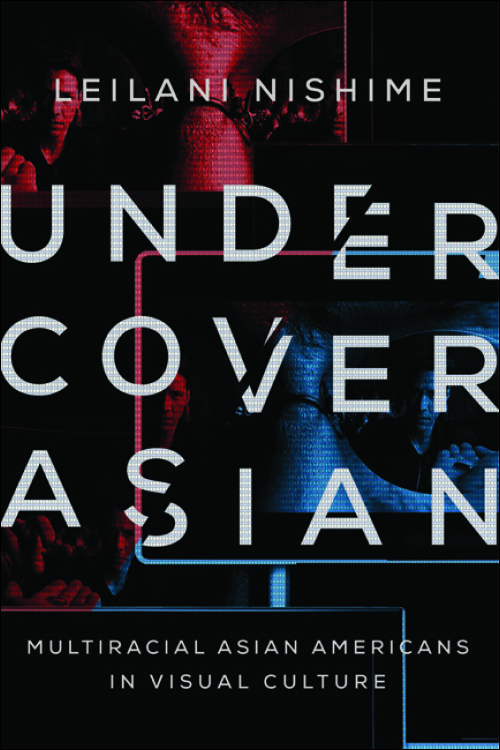
Undercover Asian: Multiracial Asian Americans in Visual Culture

Posted in Anthropology, Asian Diaspora, Books, Communications/Media Studies, Media Archive, Monographs, United States on 2014-06-15 23:29Z by Steven

Undercover Asian: Multiracial Asian Americans in Visual Culture

University of Illinois Press
January 2014
264 pages
6 x 9 in.
15 black & white photographs
Cloth ISBN: 978-0-252-03807-5
Paper ISBN: 978-0-252-07956-6

Leilani Nishime, Assistant Professor of Communication
University of Washington, Seattle

Representations of mixed race Asian Americans in popular culture

In this first book-length study of media images of multiracial Asian Americans, Leilani Nishime traces the codes that alternatively enable and prevent audiences from recognizing the multiracial status of Asian Americans. Nishime’s perceptive readings of popular media–movies, television shows, magazine articles, and artwork–indicate how and why the viewing public often fails to identify multiracial Asian Americans. Using actor Keanu Reeves, golfer Tiger Woods, and the television show Battlestar Galactica as examples, Nishime suggests that this failure is tied to gender, sexuality, and post-racial politics. In contrast to these representations, Nishime provides a set of alternative moments when audiences can view multiracial Asians as multiracial. Through a consideration of the Matrix trilogy, reality TV star Kimora Lee Simmons, and the artwork of Kip Fulbeck, these examples highlight both the perils and benefits of racial visibility, uncovering our society’s ways of constructing racial categories. Throughout this incisive study, Nishime offers nuanced interpretations that open the door to a new and productive understanding of race in America.

Tags: , , , , ,

‘Mixed Blood’

Posted in Articles, Arts, Asian Diaspora, Family/Parenting, Media Archive, United States on 2014-06-15 23:23Z by Steven

‘Mixed Blood’

Ecns.cn: The Official English-language website of China News Service
2014-06-05

To many, the US is no doubt a cultural melting pot as over the years people from various ethnic backgrounds have inhabited the land and collectively created an all new culture. Yet, all the way on the other side of the Earth, a similar situation seems to be emerging in China. Through images seen at the exhibition for Mixed Blood at the Today Art Museum in Beijing, visitors will have the chance to glimpse these changes for themselves.

Cosponsored by the US Embassy in Beijing and the Today Art Museum, the Beijing exhibition for Mixed Blood features photographs and documents created by artist CYJO from 2010 to 2013 documenting 19 families of mixed ethnicities, races and cultures living in Beijing and New York.

In the photographs, family members stand in their own homes in a line with arms at their sides, while next to the photographs are introductions explaining the background of each family member and the story of their family.

Standing in the exhibition hall, these photographs don’t just provide a clear image of the life of “mixed families” commonly seen in big cities, but also raise the question: “How far has our society progressed when it comes to ethnicity and race?”…

Read the entire article here.

Tags: , , , , ,

Posted in Books, History, Judaism, Media Archive, Monographs, Religion, United States, Women on 2014-06-13 21:29Z by Steven

Still Jewish: A History of Women and Intermarriage in America

New York University Press
February 2009
325 pages
Cloth ISBN: 9780814757307
Paper ISBN: 9780814764343

Keren R. McGinity, Author-Educator
Love & Tradition: intermarriage insights for a Jewish future

Over the last century, American Jews married outside their religion at increasing rates. By closely examining the intersection of intermarriage and gender across the twentieth century, Keren R. McGinity describes the lives of Jewish women who intermarried while placing their decisions in historical context. The first comprehensive history of these intermarried women, Still Jewish is a multigenerational study combining in-depth personal interviews and an astute analysis of how interfaith relationships and intermarriage were portrayed in the mass media, advice manuals, and religious community-generated literature.

Still Jewish dismantles assumptions that once a Jew intermarries, she becomes fully assimilated into the majority Christian population, religion, and culture. Rather than becoming “lost” to the Jewish community, women who intermarried later in the century were more likely to raise their children with strong ties to Judaism than women who intermarried earlier in the century. Bringing perennially controversial questions of Jewish identity, continuity, and survival to the forefront of the discussion, Still Jewish addresses topics of great resonance in a diverse America.

Tags: , ,

One Drop of Love – a performance by Fanshen Cox DiGiovanni at the Brooklyn Historical Society

Posted in Arts, Census/Demographics, Identity Development/Psychology, Live Events, Media Archive, Social Science, United States on 2014-06-10 20:59Z by Steven

One Drop of Love – a performance by Fanshen Cox DiGiovanni at the Brooklyn Historical Society

Brooklyn Historical Society
Crossing Borders, Bridging Generations
2014-06-12, 19:00 EDT (Local Time)

Crossing Borders, Bridging Generations and the Brooklyn Historical Society is delighted to host One Drop of Love, a multimedia solo performance by Fanshen Cox DiGiovanni that incorporates performance, film, photographs, and animation to tell the story of how the notion of ‘race’ came to be in the U.S.

One Drop of Love asks audiences to consider: how does our belief in ‘race’ affect our most intimate relationships? The show travels near and far, in the past and present to explore family, race, love and pain – and a path towards reconciliation. Audiences go on a journey from the 1700s to the present, to cities all over the U.S and to West and East Africa, where both the narrator and her father spent time in search of their racial roots.

One Drop of Love is produced by Fanshen Cox DiGiovanni, Ben Affleck, Chay Carter and Matt Damon. For more information, visit: www.onedropoflove.org.

This event is co-sponsored by LovingDay.org, MixedRootStories.org and MixedRaceStudies.org.

For more information, click here.

Tags: , ,