Black Skin, White Masks

Posted in Books, Identity Development/Psychology, Media Archive, Monographs, Philosophy on 2011-11-13 17:17Z by Steven

Black Skin, White Masks

Grove/Atlantic, Inc.
September 2008 (Originially published in 1952)
240 pages
5-1/2 x 8-1/4
Paperback ISBN-13: 978-0-8021-4300-6

Frantz Fanon

Translated from the French by Richard Philcox

Few modern voices have had as profound an impact on the black identity and critical race theory as Frantz Fanon’s, and Black Skin, White Masks represents some of his most important work. Fanon’s masterwork is now available in a new translation that updates its language for a new generation of readers.

A major influence on civil rights, anticolonial, and black consciousness movements internationally, Black Skin, White Masks is the unsurpassed study of the black psyche in a white world. Hailed for its scientific analysis and poetic grace when it was first published in 1952, the book remains a vital force today from one of the most important theorists of revolutionary struggle, colonialism, and racial difference in history.

Contents

  • Foreword
  • Introduction
  • Chapter One: The Black Man and Language
  • Chapter Two: The Woman of Color and the White Man
  • Chapter Three: The Man of Color and the White Woman
  • Chapter Four: The So-Called Dependency Complex of the Colonized
  • Chapter Five: The Lived Experience of the Black Man
  • Chapter Six: The Black Man and Psycho-pathology
  • Chapter Seven: The Black Man and Recognition
    • A. The Black Man and Adler
    • B. The Black Man and Hegel
  • Chapter Eight:By Way of Conclusion
Tags: , ,

African Diasporas: Afro-German Literature in the Context of the African American Experience

Posted in Books, Europe, Literary/Artistic Criticism, Media Archive, Monographs, United States on 2011-11-11 04:57Z by Steven

African Diasporas: Afro-German Literature in the Context of the African American Experience

Lit Verlag
2006
144 pages
ISBN: 3-8258-9612-9

Aija Poikane-Daumke

This book investigates the development of Afro-German literature in the context of the African American experience and shows the decisive role of literature for the emergence of the Afro-German Movement. Various Afro-German literary and cultural initiatives, which began in the 1980s, arose as a response to the experience of being marginalized—to the point of invisibility—within a dominant Eurocentric culture that could not bring the notions of “Black” and “German” together in a meaningful way. The book is a significant contribution to the understanding of German literature as multi-ethnic and of the the transatlantic networks operating in the African Diasporas.

Tags: , ,

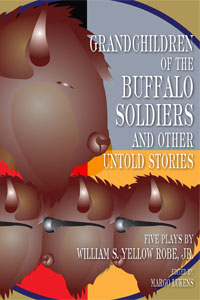
Grandchildren of the Buffalo Soldiers and Other Untold Stories

Posted in Books, History, Identity Development/Psychology, Monographs, Native Americans/First Nation, United States on 2011-11-09 02:05Z by Steven

Grandchildren of the Buffalo Soldiers and Other Untold Stories

UCLA American Indian Studies Center
2009
375 pages
10-digit ISBN: 0-935626-59-X
13-digit ISBN: 978-0-935626-59-9

William S. Yellow Robe Jr., Playwright, Director, Poet, Actor, Writer, and Educator

Edited by:

Margo Lukens, Associate Professor of English
University of Maine

Five Plays by William S. Yellow Robe Jr.

This collection of five plays portrays the complex issues that arise when mixed-blood American Indian characters come up against traditional Native beliefs. It shows how legislated and internalized racism has ravaged human relationships and created divisive struggles within Native American families and communities. The title play, Grandchildren of the Buffalo Soldiers, examines the lingering effects of colonial exploitation of tensions between African American and Native American people in the nineteenth century. All of Yellow Robe’s plays meditate on “the returning” to home, to community, and how the matter of belonging is a privilege.

Contents

  • Foreword
  • Introduction
  • A Stray Dog
  • Grandchildren of the Buffalo Soldiers
  • Mix Blood Seeds
  • Better-n-Indins
  • Pieces of Us: How the Lost Find Home
  • Biographies
Tags: , ,

The Monacan Indian Nation of Virginia: The Drums of Life

Posted in Books, Media Archive, Monographs, Native Americans/First Nation, United States, Virginia on 2011-11-09 01:39Z by Steven

The Monacan Indian Nation of Virginia: The Drums of Life

University of Alabama Press
2008
248 pages
Quality Paper ISBN: 978-0-8173-5488-6
Hardcover ISBN: 978-0-8173-1615-0
E Book ISBN: 978-0-8173-8113-4 
 
Rosemary Clark Whitlock, Monacan Indian and Independent Scholar

The contemporary Monacan Nation had approximately 1,400 registered members in 2006, mostly living in and around Lynchburg, Virginia, in Amherst County, but some are scattered like any other large family. Records trace the Monacans of Virginia back to the late 1500s, with an estimated population of over 15,000 in the 1700s.
 
Like members of some other native tribes, the Monacans have a long history of struggles for equality in jobs, health care, and education and have suffered cultural, political, and social abuse at the hands of authority figures appointed to serve them. The critical difference for the Monacans was the actions of segregationist Dr. Walter A. Plecker, Director of the Bureau of Vital Statistics from 1912 until he retired at age 85 in 1946. A strong proponent and enforcer of Virginia’s Racial Integrity Law of 1924 (struck down in 1967), which prohibited marriage between races, Plecker’s interpretation of that law convinced him that there were only two races–white and colored–and anyone not bearing physically white genetic characteristics was “colored” and that included Indians. He would not let Indians get married in Virginia unless they applied as white or colored, he forced the local teachers to falsify the students’ race on the official school rolls, and he threatened court clerks and census takers with prosecution if they used the term “Indian” on any official form. He personally changed government records when his directives were not followed and even coerced postpartum Indian mothers to list their newborns as white or colored or they could not take their infants home from the hospital. Eventually the federal government intervened, directing the Virginia state officials to begin the tedious process of correcting official records. Yet the legacy of Plecker’s attempted cultural genocide remains. Through interviews with 26 Monacans, one Episcopal minister appointed to serve them, one former clerk of the court for Amherst County, and her own story, Whitlock provides first person accounts of what happened to the Monacan families and how their very existence as Indians was threatened.

Tags: , , , , , , , ,

Tribe, Race, History: Native Americans in Southern New England, 1780–1880

Posted in Books, History, Media Archive, Monographs, Native Americans/First Nation, United States on 2011-11-08 00:52Z by Steven

Tribe, Race, History: Native Americans in Southern New England, 1780–1880

Johns Hopkins University Press
2007
344 pages
11 halftones, 2 line drawings
Hardback ISBN: 9780801886942; Paperback ISBN: 9780801898198

Daniel R. Mandell, Professor of History
Truman State University, Kirksville, Missouri

  • Winner, 2008 Lawrence W. Levine Award, Organization of American Historians

Tribe, Race, History examines American Indian communities in southern New England between the Revolution and Reconstruction, when Indians lived in the region’s socioeconomic margins, moved between semiautonomous communities and towns, and intermarried extensively with blacks and whites.

Drawing from a wealth of primary documentation, Daniel R. Mandell centers his study on ethnic boundaries, particularly how those boundaries were constructed, perceived, and crossed. He analyzes connections and distinctions between Indians and their non-Indian neighbors with regard to labor, landholding, government, and religion; examines how emerging romantic depictions of Indians (living and dead) helped shape a unique New England identity; and looks closely at the causes and results of tribal termination in the region after the Civil War.

Shedding new light on regional developments in class, race, and culture, this groundbreaking study is the first to consider all Native Americans throughout southern New England.

Tags: , ,

The Dispossessed: Cultural Genocide of the Mixed-Blood Utes: an Advocate’s Chronicle

Posted in Books, History, Law, Media Archive, Monographs, Native Americans/First Nation, United States on 2011-11-07 02:07Z by Steven

The Dispossessed: Cultural Genocide of the Mixed-Blood Utes: an Advocate’s Chronicle

University of Oklahoma Press
May 1998
384 pages
9 x 6.1 x 1.1 inches
ISBN-10: 0806130431; ISBN-13: 978-0806130439

Parker M. Nielson

This book is out of print.

In The Dispossessed, Parker M. Nielson chronicles the tragic story of the mixed-blood Utes. A leading Utah attorney, Nielson represented this group in its suit against the U.S. government, decided by the Supreme Court in 1972. Although the Court determined that the mixed-bloods had been defrauded, it declined to restore their property. Basing his account on extensive research as well as his own firsthand experience, Nielson brings to light for the first time the disturbing events that led up to the landmark decision.

Deprived of their native lands in central Utah by immigrant Mormons, the mixed-blood Utes—almost exclusively members of the Uintah band—were confined to a reservation in eastern Utah, with a promise from the U.S. government that the land would be theirs alone forever. This promise was not kept. The final blow was the Termination Act, enacted in the early 1950s. Designed to end government supervision of American Indians and the obligation of federal entitlements, its consequences for the mixed-blood Utes—as well as for many other Indian groups—were devastating, for it deprived them of their assets, land, and very way of life.

Drawing in particular on the testimony of individual Utes affected by the termination policy, Nielson discloses the broken promises and backhanded schemes perpetuated by government officials and the Utes’ own lawyers, whose motives were compromised by self-interest. The author thus explores an all-too-neglected subject: the role of tribal attorneys in influencing tribal histories.

Tags: , , ,

Staging Black Feminisms: Identity, Politics, Performance

Posted in Books, Literary/Artistic Criticism, Media Archive, Monographs, United Kingdom, Women on 2011-11-06 22:04Z by Steven

Staging Black Feminisms: Identity, Politics, Performance

Palgrave an (imprint of Macmillan)
May 2007
256 pages
5 1/2 x 8 1/4 inches
ISBN: 978-1-4039-8640-5, ISBN10: 1-4039-8640-1

Lynette Goddard, Senior Lecturer in Drama and Theatre
Royal Holloway, University of London

Staging Black Feminisms explores the development and principles of black British women’s plays and performance since the late Twentieth century. Using contemporary performance theory to explore key themes (such as migration, motherhood, sexuality, and mixed race identity), it offers close textual readings and production analysis of a range of plays, performance poetry and live art works by practitioners, including Patience Agbabi, Jackie Kay, Valerie Mason John, Winsome Pinnock, Jacqueline Rudet, Debbie Tucker Green, Dorothea Smartt, Su Andi, and Susan Lewis.

Table of Contents

  • Acknowledgements
  • Introduction
  • PART I: HISTORY AND AESTHETICS
    • Black British Women and Theatre: An Overview
    • Black Feminist Performance Aesthetics
  • PART II: PLAYS
    • Winsome Pinnock’s Migration Narratives
    • Jacqueline Rudet (Re)Writing Sexual Deviancy
    • Jackie Kay and Valerie Mason-John’s Zamis, Lesbians and Queers
  • PART III: PERFORMANCES
    • Black Mime Theatre Women’s Troops
    • Solo Voices: Performance Art, Dance and Poetry
  • PART IV: CONCLUSIONS
    • Black Feminist Futures?
  • Notes
  • Bibliography
  • Index
Tags: , , , , , , , , , ,

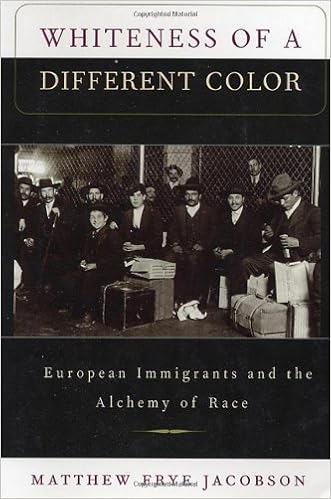
Whiteness of a Different Color: European Immigrants and the Alchemy of Race

Posted in Books, History, Media Archive, Monographs, Social Science, United States on 2011-11-05 03:07Z by Steven

Whiteness of a Different Color: European Immigrants and the Alchemy of Race

Harvard University Press
September 1999
368 pages
6-1/8 x 9-1/4 inches; 14 halftones, 2 tables
Paperback ISBN: 9780674951914

Matthew Frye Jacobson, Professor of American Studies & History
Yale University

  • Winner of the 1999 John Hope Franklin Publication Prize of the American Studies Association
  • 1999 Best Book on the Social Construction of Race, Sponsored by the American Political Science Association Section on Race, Ethnicity and Politics
  • Co-Winner of the American Political Science Association’s 1999 Ralph J. Bunche Award

America’s racial odyssey is the subject of this remarkable work of historical imagination. Matthew Frye Jacobson argues that race resides not in nature but in the contingencies of politics and culture. In ever-changing racial categories we glimpse the competing theories of history and collective destiny by which power has been organized and contested in the United States. Capturing the excitement of the new field of “whiteness studies” and linking it to traditional historical inquiry, Jacobson shows that in this nation of immigrants “race” has been at the core of civic assimilation: ethnic minorities in becoming American were reracialized to become Caucasian. He provides a counterhistory of how nationality groups such as the Irish or Greeks became Americans as racial groups like Celts or Mediterraneans became Caucasian.

Jacobson tracks race as a conception and perception, emphasizing the importance of knowing not only how we label one another but also how we see one another, and how that racialized vision has largely been transformed in this century. The stages of racial formation—race as formed in conquest, enslavement, imperialism, segregation, and labor migration—are all part of the complex, and now counterintuitive, history of race. Whiteness of a Different Color traces the fluidity of racial categories from an immense body of research in literature, popular culture, politics, society, ethnology, anthropology, cartoons, and legal history, including sensational trials like the Leo Frank case and the Draft Riots of 1863.

Table of Contents

  • Note on Usage
  • Introduction: The Fabrication of Race
  • I. The Political History of Whiteness
    • 1. “Free White Persons” in the Republic, 1790–1840
    • 2. Anglo-Saxons and Others, 1840–1924
    • 3. Becoming Caucasian, 1924–1965
  • II. History, Race, and Perception
    • 4. 1877: The Instability of Race
    • 5. Looking Jewish, Seeing Jews
  • III. The Manufacture of Caucasians
    • 6. The Crucible of Empire
    • 7. Naturalization and the Courts
    • 8. The Dawning Civil Rights Era
  • Epilogue: Ethnic Revival and the Denial of White Privilege
  • Notes
  • Acknowledgments
  • Index
Tags: , , ,

Freedom Papers: An Atlantic Odyssey in the Age of Emancipation

Posted in Books, Caribbean/Latin America, Europe, Identity Development/Psychology, Law, Media Archive, Monographs, Passing, Slavery, United States, Women on 2011-11-04 20:46Z by Steven

Freedom Papers: An Atlantic Odyssey in the Age of Emancipation

Harvard University Press
February 2012
288 pages
6-1/8 x 9-1/4 inches
17 halftones, 1 line illustration, 1 map
Hardcover ISBN 9780674047747

Rebecca J. Scott, Charles Gibson Distinguished University Professor of History and Professor of Law
University of Michigan

Jean M. Hébrard, Historian and Visiting Professor
École des Hautes Études en Sciences Sociales (Paris)
University of Michigan

Around 1785, a woman was taken from her home in Senegambia and sent to Saint-Domingue in the Caribbean. Those who enslaved her there named her Rosalie. Her later efforts to escape slavery were the beginning of a family’s quest, across five generations and three continents, for lives of dignity and equality. Freedom Papers sets the saga of Rosalie and her descendants against the background of three great antiracist struggles of the nineteenth century: the Haitian Revolution, the French Revolution of 1848, and the Civil War and Reconstruction in the United States.

Freed during the Haitian Revolution, Rosalie and her daughter Elisabeth fled to Cuba in 1803. A few years later, Elisabeth departed for New Orleans, where she married a carpenter, Jacques Tinchant. In the 1830s, with tension rising against free persons of color, they left for France. Subsequent generations of Tinchants fought in the Union Army, argued for equal rights at Louisiana’s state constitutional convention, and created a transatlantic tobacco network that turned their Creole past into a commercial asset. Yet the fragility of freedom and security became clear when, a century later, Rosalie’s great-great-granddaughter Marie-José was arrested by Nazi forces occupying Belgium.

Freedom Papers follows the Tinchants as each generation tries to use the power and legitimacy of documents to help secure freedom and respect. The strategies they used to overcome the constraints of slavery, war, and colonialism suggest the contours of the lives of people of color across the Atlantic world during this turbulent epoch.

Tags: , , , , , , ,

Halfbreed

Posted in Autobiography, Books, Canada, Media Archive, Monographs, Native Americans/First Nation, Women on 2011-11-02 21:43Z by Steven

Halfbreed

University of Nebraska Press
1973
157 pages
Paperback ISBN: 978-0-8032-6311-6

Maria Campbell

“I write this for all of you, to tell you what it is like to be a Halfbreed woman in our country. I want to tell you about the joys and sorrows, the oppressing poverty, the frustration and the dreams. . . . I am not bitter. I have passed that stage. I only want to say: this is what it was like, this is what it is still like.”

For Maria Campbell, a Métis (“Halfbreed”) in Canada, the brutal realities of poverty, pain, and degradation intruded early and followed her every step. Her story is a harsh one, but it is told without bitterness or self-pity. It is a story that begins in 1940 in northern Saskatchewan and moves across Canada’s West, where Maria roamed in the rootless existence of day-to-day jobs, drug addiction, and alcoholism. Her path strayed ever near hospital doors and prison walls.

It was Cheechum, her Cree great-grandmother, whose indomitable spirit sustained Maria Campbell through her most desperate times. Cheechum’s stubborn dignity eventually led the author to take pride in her Métis heritage, and Cheechum’s image inspired her in her drive for her own life, dignity; and purpose.

Tags: ,