Brazilian Telenovelas and the Myth of Racial Democracy

Posted in Books, Brazil, Caribbean/Latin America, Communications/Media Studies, Media Archive, Monographs, Social Science on 2013-02-20 20:59Z by Steven

Brazilian Telenovelas and the Myth of Racial Democracy

Lexington Books
March 2012
136 pages
Size: 6 1/2 x 9 1/2
Hardback ISBN: 978-0-7391-6964-3
eBook ISBN: 978-0-7391-6965-0

Samantha Nogueira Joyce, Assistant Professor in Communication Studies
Indiana University, South Bend

Brazilian Telenovelas and the Myth of Racial Democracy, by Samantha Nogueira Joyce, examines what happens when a telenovela directly addresses matters of race and racism in contemporary Brazil. This investigation provides a traditional textual analysis of Duas Caras (2007-2008), a watershed telenovela for two main reasons: It was the first of its kind to present audiences with an Afro-Brazilian as the main hero, openly addressing race matters through plot and dialogue. Additionally, for the first time in the history of Brazilian television, the author of Duas Caras kept a web blog where he discussed the public’s reactions to the storylines, media discussions pertaining to the characters and plot, and directly engaged with fans and critics of the program.

Joyce combines her investigation of Duas Caras with a study of related media in order to demonstrate how the program introduced novel ideas about race and also offered a forum where varying perspectives on race, class, and racial relations in Brazil could be discussed. Brazilian Telenovelas is not a reception study in the traditional sense, it is not a story of entertainment-education in the strict sense, and it is not solely a textual analysis. Instead, Joyce’s text is a study of the social milieu that the telenovela (and especially Duas Caras) navigates, one that is a component of a contemporary progressive social movement in Brazil, and one that views the text as being located in social interactions. As such, this book reveals how telenovelas contribute to social change in a way that has not been fully explored in previous scholarship.

Table of Contents

  • Chapter I – Episode 1: And Let There be White
  • Chapter II – Black Flows: Duas Caras / The Legacy of Whitening and Racial Democracy
  • Chapter III – “My Little Whitey” / “My Big, Delicious Negro:” Telenovelas, Duas Caras, and the Representation of Race
  • Chapter IV – Deu no Blogão! (“It was in the Big Blog!”): Writing a Telenovela, a Blog, and a Metadiscourse
  • Chapter V – Duas Caras as a New Approach to Social Merchandising
  • Chapter VI – Conclusions
  • References
  • About the Author
  • Index
Tags: , , ,

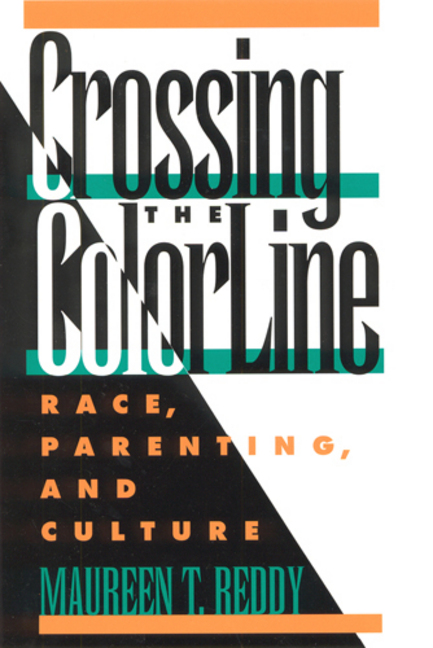
Crossing the Color Line: Race, Parenting, and Culture

Posted in Books, Family/Parenting, Media Archive, Monographs, United States on 2013-02-18 18:40Z by Steven

Crossing the Color Line: Race, Parenting, and Culture

Rutgers University Press
August 1994
215 pages
Cloth ISBN 0-8135-2105-X
Paperback ISBN 0-8135-2374-5

Maureen T. Reddy, Professor of English
Rhode Island College

Contents

  • Preface
  • Acknowledgments
  • 1. On Lines and Bridges
  • 2. Starting Out
  • 3. “Why Do White People Have Vaginas?”
  • 4. “One Drop of Black Blood”
  • 5. The Fourth R
  • 6. Mothers, Daughters, Sisters, Comrades
  • Notes
  • Bibliography
  • Index
Tags: , ,

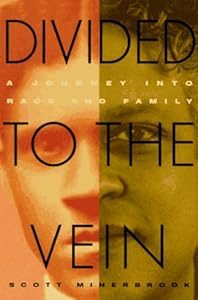
Divided To The Vein: A Journey into Race and Family

Posted in Autobiography, Books, Media Archive, Monographs on 2013-02-18 17:48Z by Steven

Divided To The Vein: A Journey into Race and Family

Houghton Mifflin Harcourt
1996
320 pages
Hardcover ISBN-10: 0151931070; ISBN-13: 978-0151931071

Scott Minerbrook

Scott Minerbrook’s parents hail from opposite ends of the cultural spectrum. His father was a pampered only child born into Chicago’s aspiring black bourgeoisie, while his mother was an idealistic girl from a large family of poor white Missouri farmers. Minerbrook grew up in the 1950s and ’60s, in a world that was fighting the grim realities of racial separatism and willful ignorance with the ideals of equality and integration. At home, his parents fought each other and a host of personal demons, even as they raised four boys, excelled in their careers, and moved from Chicago, to Manhattan’s Upper West Side, and finally to the leafy suburbs of Connecticut. Minerbrook completed his schooling at Harvard’s burgeoning African-American studies department and went on to raise a family of his own. But by the time he reached his late thirties, he was no longer satisfied with living an emotional half-life, rejecting and rejected by so much of his flesh and blood. He set out for his mother’s hometown in the Botheel of Missouri, determined to claim the white relatives who had refused to recognize his existence. Despite their desire to “keep things just as they are”, he knew that bringing down the daunting barrier called race was essential to his humanity and to theirs. In the course of his journey, Minerbrook takes a hard look at his upbringing and the lives of his parents. He digs deep to explore the meaning of family, the roots of identity, and the reasons why we lay so many basic human problems at the door of race. Lyrically written, painfully honest, psychologically and socially astute, this powerful memoir challenges us all to confront the divisive cult of race and to move beyond it.

Tags: ,

The Dust of Life: America’s Children Abandoned in Vietnam

Posted in Asian Diaspora, Books, Identity Development/Psychology, Media Archive, Monographs on 2013-02-18 03:29Z by Steven

The Dust of Life: America’s Children Abandoned in Vietnam

University of Washington Press
1999
160 pages
notes, glossary, bibliog., index
Paperback ISBN: 9780295978369

Robert S. McKelvey, M.D., Professor
Division of Child and Adolescent Psychiatry
Oregon Health & Science University

The Dust of Life is a collection of vivid and devastating oral histories of Vietnamese Amerasians. Abandoned during the war by their American fathers, discriminated against by the victorious Communists, and ignored for many years by the American government, they endured life in impoverished Vietnam. Their stories are sad, sometimes tragic, but they are also testimonials to the strength of human resiliency.

Robert S. McKelvey is a former marine who served in Vietnam in the late 1960s. Now a child psychiatrist, he returned to Vietnam in 1990 to begin the long series of interviews that resulted in this book. While allowing his subjects to speak for themselves, McKelvey has organized their narratives around themes common to their lives: early maternal loss, the experience of prejudice and discrimination, coping with adversity, dealing with shattered hopes for the future, and, for some, adapting to the alien environment of the United States.

While unique in many respects, the Vietnamese Amerasian story also illustrates themes that are tragically universal: neglect of the human by-products of war, the destructiveness of prejudice and racism, the pain of abandonment, and the horrors of life amidst extreme poverty, hostility, and neglect.

Tags: , , ,

Ten Thousand Sorrows

Posted in Asian Diaspora, Autobiography, Books, Media Archive, Monographs on 2013-02-18 03:04Z by Steven

Ten Thousand Sorrows

Bantam Books
2000
240 pages
Paperback ISBN-10: 0553812645; ISBN-13: 978-0553812640

Elizabeth Kim

‘I don’t know how old I was when I watched my mother’s murder, nor do I know how old I am today.’

The illegitimate daughter of a peasant and an American GI, Elizabeth Kim spent her early years as a social outcast in her village in the Korean countryside. Ostracized by their family and neighbours, she and her mother were regularly pelted with stones on their way home from the rice fields. Yet there was a tranquil happiness in the intense bond between mother and daughter. Until the day that Elizabeth’s grandfather and uncle came to punish her mother from the dishonour she had brought on the family, and executed her in front of her daughter.

Elizabeth was dumped in an orphanage in Seoul. After some time, she was lucky enough to be adopted by an American couple. But when she arrived in America she found herself once again surrounded by fanaticism and prejudice.

Elizabeth’s mother had always told her that life was made up of ten thousand joys as well as ten thousand sorrows, and, supported by her loving daughter, and by a return to her Buddhist faith, she finally found a way to savour those joys, as well as the courage to exorcise the demons of her past.

Tags: , ,

Soul to Soul: A Black Russian American Family 1865-1992

Posted in Autobiography, Books, Europe, History, Media Archive, Monographs, United States on 2013-02-18 01:59Z by Steven

Soul to Soul: A Black Russian American Family 1865-1992

W. W. Norton & Company
1994
318 pages
Hardcover ISBN-10: 0393034046; ISBN-13: 978-0393034042
Paperback ISBN: ISBN 978-0-393-31155-6

Yelena Khanga (with Susan Jacoby)

As the Soviet Union crumbled in early 1991, a young Russian woman in search of her past found her way to Mississippi, to the rich cotton land where her great-grandfather, a former slave, had become the largest black landowner in Yazoo County. In this extraordinary memoir, we share the life and family legacy of the Khangas over four generations and three continents. 32 pages of photos.

Tags: , , , , , ,

Bulletproof Diva: Tales of Race, Sex, and Hair

Posted in Books, Identity Development/Psychology, Media Archive, Monographs, Politics/Public Policy, Social Science, United States on 2013-02-18 01:29Z by Steven

Bulletproof Diva: Tales of Race, Sex, and Hair

Anchor an imprint of Random House
1997-02-19
320 pages
Paperback ISBN: 978-0-385-47123-7

Lisa Jones

In Bulletproof Diva, Lisa  Jones brings the wit and candor of her infamous Village Voice column, “Skin Trade,”  to a much larger audience. Chock full of the “fierce black girl humor” that has made her column so popular, this provocative collection of  essays and observations on race, sex, identity, and  the politics of style speaks to a young generation  of blacks who were raised in an integrated society  and are now waiting for America to deliver on its  promises of equality. The thirty-seven short  pieces and six long essays in Bulletproof  Diva cover a wide range of topics, many of them  extremely controversial. Jones moves smoothly from  issues of ethnicity in a changing America,  challenging viewpoints on African-American  and mixed race identity, to “butt theory”  and the roller-coaster politics of black hair. Written in a style that is as appealing as it is  unapologetic, Bulletproof Diva marks the debut of a genuinely gifted young writer  with a distinctive voice and a fresh perspective on  the black cultural scene.

Tags: ,

The Trend of the Race: A Study of Present Tendencies in the Biological Development of Civilized Mankind

Posted in Anthropology, Books, Health/Medicine/Genetics, Media Archive, Monographs on 2013-02-18 00:46Z by Steven

The Trend of the Race: A Study of Present Tendencies in the Biological Development of Civilized Mankind

Harcourt, Brace and Company
1921
396 pages
(Digitized by Google)

Samuel J. Holmes (1868-1964), Ph.D., Professor of Zoology
University of California, Berkeley

CONTENTS

  • I. An Introductory Orientation
  • II. The Hereditary Basis
  • III. The Inheritance of Mental Defects and Disease
  • IV. The Heritable Basis of Crime and Delinquency
  • V. The Inheritance of Mental Ability
  • VI. The Decline of the Birth Rate
  • VII. The Causes of the Decline of the Birth Rate
  • VIII. Natural Selection in Man
  • IX. The Selective Influence of War
  • X. Sexual Selection and Assortative Mating
  • XI. Consanguineous Marriages and Miscegenation
  • XII. The Possible Role of Alcohol and Disease in Causing Hereditary Defects
  • XIII. The Alleged Influence of Order of Birth and Age of Parents upon Offspring
  • XIV. The Racial Influence or Industrial Development
  • XV. The Selective Function of Religion
  • XVI. Retrospect and Prospect

PREFACE

The present volume is the outgrowth of a course of lectures on Eugenics which has been given for several years in the University of California. Its aim is to present an account of the various forces which are at present modifying the inherited qualities of civilized mankind. In dealing with so extensive and complex a subject I have doubtless committed a number of errors and have probably not altogether escaped from being misled by statistical fallacies into which I have so often accused others of having fallen. The more extensively I have delved into the varied literature on the biological evolution of man, the more I have become impressed with the necessity of employing extreme caution in drawing conclusions. Few subjects, in fact, present so many pitfalls for the unwary. It is with the conviction that it is especially important in this field to be sure one is right before going ahead that I have devoted so much effort to critical analysis at the risk of becoming tedious to the general reader.

I am indebted to my colleagues Professor F. B. Sumner and Professor F. J. Teggart for reading my original manuscript and for making a number of valuable suggestions.

The preparation of the present work has involved the compilation of an extensive bibliography which is to be published as an additional volume so that the references may be rendered avail able for other investigators.

S. J Holmes

Berkeley, Calif.
Jan. 1921.

Read the entire book here or here.

Tags: , ,

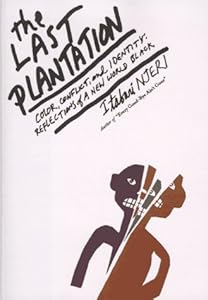
The Last Plantation: Color, Conflict, and Identity: Reflections of a New World Black

Posted in Autobiography, Books, Media Archive, Monographs, Social Science, United States on 2013-02-17 19:23Z by Steven

The Last Plantation: Color, Conflict, and Identity: Reflections of a New World Black

Houghton Mifflin
1997-02-10
307 pages
Hardback ISBN-10: 0395771919; ISBN-13: 978-0395771914

Itabari Njeri

In the 1980s, when most Americans considered “black” a racial reference, many multiracial people began to see themselves as part of a heterogeneous ethnic group linked by history, culture, and blood—a distinction that has led to considerable conflict. Prompted by the comment “You look like an ordinary Negro to me,” Itabari Njeri, the author of the critically acclaimed memoir Every Good-Bye Ain’t Gone and a reporter for the Los Angeles Times, decided to take a look at her own family in order to explore racism within her community. What she discovered is disturbing. Referring to incidents in the news—the Rodney King beating, the black boycott of Korean grocers in Los Angeles, the killing of a black teenager by a Korean immigrant—as well as to her family, Njeri lays out with precision and power how limited racial definitions contribute to the psychological slavery that makes the mind the last plantation. She provides telling evidence that the recognition of a larger, multiracial identity—which would substantially define most Americans—we can challenge marginalizing concepts and the way in which the racial debate is now framed.

Tags: ,

Slaves in the Family

Posted in Books, History, Media Archive, Monographs, Slavery, United States on 2013-02-17 19:03Z by Steven

Slaves in the Family

Farrar Straus & Giroux
1998
505 pages
Paperback ISBN-10: 0345431057; ISBN-13: 978-0345431059

Edward Ball, Lecturer in English
Yale University

Edward Ball tells the story of southern slavery through tracking the history of the Balls, prominent landowners, rice-planters, one or two of them slave traders, and big slave owners in a southern family in dispersal and decline. In 1698, a planter named Elias Ball arrived in South Carolina from Devon, England, to claim an inheritance to one half of a plantation. By 1865, the Ball family of South Carolina owned over a dozen plantations along the Cooper River near Charleston. The crop was Carolina Gold—rice. The empire was grown with seeds from Madagascar and slave labour purchased on the Charleston Docks. By the time the Civil War ended, nearly 4,000 people had been enslaved by the Balls. Descendents of the Ball slaves may number as high as 11,000 today.

Tags: , ,