Beyond White Ethnicity: Developing a Sociological Understanding of Native American Identity Reclamation

Posted in Books, History, Identity Development/Psychology, Media Archive, Monographs, Native Americans/First Nation, Social Science, United States on 2009-11-27 19:41Z by Steven

Beyond White Ethnicity: Developing a Sociological Understanding of Native American Identity Reclamation

Lexington Books (an imprint of Rowman & Littlefield)
October 2006
262 pages
Cloth: 0-7391-1393-3 / 978-0-7391-1393-6
Paper: 0-7391-1394-1 / 978-0-7391-1394-3

Kathleen J. Fitzgerald, Professor of Sociology
University of New Orleans, New Orleans, Louisiana

Through qualitative analysis of individuals, Kathleen J. Fitzgerald studies the social construction of racial and ethnic identity in Beyond White Ethnicity. Fitzgerald focuses on Native Americans, who despite a previously unacknowledged and uncelebrated background, are embracing and reclaiming their heritage in their everyday lives. Focusing on the purpose, process, and problems of this reclamation, Fitzgerald’s research provides an understanding of these issues. She also exposes how institutional power relations are racialized and how race is a social and political construction, and she helps us understand larger cultural transformations. This insightful collection of research sparks the interest of those who study sociology, anthropology, and cultural studies.

Table of Contents

  1. Reclaimer Narratives: Exposing the Duality of Structure in Identity Formation
  2. Challenging White Hegemony: Reclaimers and the Culture Wars
  3. Reclaimer Practices: Religion, Spirituality, Language, Family, and Food
  4. “If It Looks Like a Duck”: Physical Appearance and Reclaimer Identity
  5. “Wanna-bes” and “Indian Police”: The Battle Over Authenticity
Tags: , ,

‘Toubab La!’ Literary Representations of Mixed-Race Characters in the African Diaspora

Posted in Africa, Books, Caribbean/Latin America, Europe, Identity Development/Psychology, Literary/Artistic Criticism, Media Archive, Monographs, United Kingdom, United States on 2009-11-27 00:35Z by Steven

‘Toubab La!’ Literary Representations of Mixed-Race Characters in the African Diaspora

Cambridge Scholars Publishing
July 2007
453 pages
ISBN13: 9781847182319
ISBN: 1-84718-231-3

Ginette Curry, Professor of English
Florida International University

The book is an examination of mixed-race characters from writers in the United States, The French and British Caribbean islands (Martinique, Guadeloupe, St. Lucia and Jamaica), Europe (France and England) and Africa (Burkina Faso, South Africa, Botswana and Senegal). The objective of this study is to capture a realistic view of the literature of the African diaspora as it pertains to biracial and multiracial people. For example, the expression “Toubab La!” as used in the title, is from the Wolof ethnic group in Senegal, West Africa. It means “This is a white person” or “This is a black person who looks or acts white.” It is used as a metaphor to illustrate multiethnic people’s plight in many areas of the African diaspora and how it has evolved. The analysis addresses the different ways multiracial characters look at the world and how the world looks at them. These characters experience historical, economic, sociological and emotional realities in various environments from either white or black people. Their lineage as both white and black determines a new self, making them constantly search for their identity. Each section of the manuscript provides an in-depth analysis of specific authors’ novels that is a window into their true experiences.

The first section is a study of mixed race characters in three acclaimed contemporary novels from the United States. James McBride’s The Color of Water (1996), Danzy Senna’s Caucasia (1998) and Rebecca Walker’s Black White and Jewish (2001) reveal the conflicting dynamics of being biracial in today’s American society. The second section is an examination of mixed-race characters in the following French Caribbean novels: Mayotte Capécia’s I Am a Martinican Woman (1948), Michèle Lacrosil’s Cajou (1961) and Ravines du Devant-Jour (1993) by Raphaël Confiant. Section three is about their literary representations in Derek Walcott’s What the Twilight Says (1970), Another Life (1973), Dream on Monkey Mountain (1967) and Michelle Cliff’s Abeng (1995) from the British Caribbean islands. Section four is an in-depth analysis of their plight in novels written by contemporary mulatto writers from Europe such as Marie N’Diaye’s Among Family (1997), Zadie Smith’s White Teeth (2000) and Bernardine Evaristo’s Lara (1997). Finally, the last section of the book is a study of novels from West African and South African writers. The analysis of Monique Ilboudo’s Le Mal de Peau (2001), Bessie Head’s A Woman Alone: Autobiographical Writings (1990) and Abdoulaye Sadji’s Nini, Mulâtresse du Sénégal (1947) concludes this literary journey that takes the readers through several continents at different points in time.

Overall, this comprehensive study of mixed-race characters in the literature of the African diaspora reveals not only the old but also the new ways they decline, contest and refuse racial clichés. Likewise, the book unveils how these characters resist, create, reappropriate and revise fixed forms of identity in the African diaspora of the 20th and 21st century. Most importantly, it is also an examination of how the authors themselves deal with the complex reality of a multiracial identity.

Table of Contents

  • Acknowledgements
  • Introduction
  • PART I. THE UNITED STATES
  • PART II. THE FRENCH CARIBBEAN ISLANDS
    • Chapter 4: Mayotte Capécia’s I am a Martinican Woman (1948): “My father is Black, My Mother is Brown, and I, Am I White?” (Martinican Riddle)
    • Chapter 5: Michèle Lacrosil’s Cajou (1961): The Anti-Narcissus
    • Chapter 6: Raphaël Confiant’s Ravines du Devant-Jour (1993): Ethnostereotypes in Martinique
  • PART III. THE BRITISH CARIBBEAN ISLANDS
    • Chapter 7: The Racial Paradox of Derek Walcott in What the Twilight Says (1970), Derek Walcott: Another life (1973) and Dream on Monkey Mountain (1967)
    • Chapter 8: Michelle Cliff’s Abeng (1995): A Near-White Jamaican Woman’s Quest for Identity
  • PART IV. EUROPE
    • Chapter 9: Marie N’Diaye’s Among Family (1997): A Desperate Search for Caucasian Identity
    • Chapter 10: Zadie Smith’s White Teeth (2000): The Concept of Englishness in the 21st Century
    • Chapter 11: Bernardine Evaristo’s Lara (1997): Transculturality in England: Oyinbo, Whitey, Morena, Nig Nog, Nigra!
  • PART V. AFRICA
    • Chapter 12: Monique Ilboudo’s Le Mal de peau (2001): Colonization and Forced Hybridity
    • Chapter 13: Bessie Head’s A Woman Alone: Autobiographical Writings (1990): White-on-Black and Black-on-Black Racial Oppression in Southern Africa
    • Chapter 14: Abdoulaye Sadji’s Nini, Mulâtresse du Sénégal (1947): “Toubab La!”
  • Conclusion
  • Works Cited
  • Primary Sources
  • Critical Sources
  • Index

Read a preview  here.

Tags: , , , , , , , , , , , , ,

Visceral Cosmopolitanism: Gender, Culture and the Normalisation of Difference

Posted in Autobiography, Biography, Books, History, Media Archive, Monographs, Social Science, United Kingdom on 2009-11-25 02:04Z by Steven

Visceral Cosmopolitanism: Gender, Culture and the Normalisation of Difference

Berg Publishers
September 2007
224 pages, bibliog., index
Paperback ISBN: 9781845202439
Hardback ISBN: 9781845202422
Ebook ISBN: 9781847883438

Mica Nava, Professor of Cultural Studies
University of East London

Cultural theorist Mica Nava makes an original and significant contribution to the study of cosmopolitanism by exploring everyday English urban cosmopolitanism and foregrounding the gendered, imaginative and empathetic aspects of positive engagement with cultural and racial difference.

By looking at a wide range of texts, events and biographical narratives, she traces cosmopolitanism from its marginal status at the beginning of the twentieth century to its relative normalisation today. Case studies include the promotion of cosmopolitanism by Selfridges before the first world war; relationships between white English women and ‘other’ men—Jews and black GIs—during the 1930s and 1940s; literary, cinematic and social science representations of migrants in postcolonial Britain; and Diana and Dodi’s interracial romance in the 1990s. In the final chapter, the author draws on her own complex family history to illustrate the contemporary cosmopolitan London experience.

Scholars have tended to ignore the oppositional cultures of antiracism and social inclusivity. This groundbreaking study redresses this imbalance and offers a sophisticated account of the uneven history of vernacular cosmopolitanism.

Table of Contents

List of figures
Acknowledgements

I. INTRODUCTION
Chapter 1 – Cosmopolitanism, Everyday Culture and Structures of Feeling: The Intellectual Framework of the Book

II. COSMOPOLITANISM AND COMMERCIAL CULTURE 1910s-1920s
Chapter 2 – The Allure of Difference: Selfridges, the Russian Ballet and the Tango
Chapter 3 – ‘The Big Shop Controversy’: Ideological Communities and the Chesterton-Selfridge Dispute

III. DIFFERENCE AND DESIRE IN 1930s-1940s
Chapter 4 – The Unconscious and Others: Inclusivity, Jews and the Eroticisation of Difference
Chapter 5 – White Women and Black Men: The Negro as Signifier of Modernity in Wartime Britain

IV. COSMOPOLITANISM IN POSTCOLONIAL BRITAIN
Chapter 6 – Thinking Internationally, Thinking Sexually: Race in Postwar Fiction, Film and Social Science
Chapter 7 – Princess Diana and Dodi Al Fayed: Romance, Race and the Reconfiguration of the Nation

V. CONCLUSION: ACTUALLY EXISTING COSMOPOLITANISM
Chapter 8 – A Love Song to our Mongrel Selves: Cosmopolitan Habitus and the Ordinariness of Difference

Bibliography
Index

Tags: ,

The Libertine Colony: Creolization in the Early French Caribbean

Posted in Books, Caribbean/Latin America, History, Literary/Artistic Criticism, Media Archive, Monographs, Slavery on 2009-11-24 20:37Z by Steven

The Libertine Colony: Creolization in the Early French Caribbean

Duke University Press
May 2005
408 pages
19 b&w photographs
Cloth ISBN: 0-8223-3453-4, ISBN13 978-0-8223-3453-8
Paperback ISBN: 0-8223-3465-8, ISBN13 978-0-8223-3465-1

Doris Garraway, Associate Professor of French
Northwestern University

Presenting incisive original readings of French writing about the Caribbean from the inception of colonization in the 1640s until the onset of the Haitian Revolution in the 1790s, Doris Garraway sheds new light on a significant chapter in French colonial history. At the same time, she makes a pathbreaking contribution to the study of the cultural contact, creolization, and social transformation that resulted in one of the most profitable yet brutal slave societies in history. Garraway’s readings highlight how French colonial writers characterized the Caribbean as a space of spiritual, social, and moral depravity. While tracing this critique in colonial accounts of Island Carib cultures, piracy, spirit beliefs, slavery, miscegenation, and incest, Garraway develops a theory of “the libertine colony.” She argues that desire and sexuality were fundamental to practices of domination, laws of exclusion, and constructions of race in the slave societies of the colonial French Caribbean.

Among the texts Garraway analyzes are missionary histories by Jean-Baptiste Du Tertre, Raymond Breton, and Jean-Baptiste Labat; narratives of adventure and transgression written by pirates and others outside the official civil and religious power structures; travel accounts; treatises on slavery and colonial administration in Saint-Domingue; the first colonial novel written in French; and the earliest linguistic description of the native Carib language. Garraway also analyzes legislation—including the Code noir—that codified slavery and other racialized power relations. The Libertine Colony is both a rich cultural history of creolization as revealed in Francophone colonial literature and an important contribution to theoretical arguments about how literary critics and historians should approach colonial discourse and cultural representations of slave societies.

Table of Contents

  • Illustrations
  • Preface
  • Introduction: Creolizaton in the Old Regime Chapter One: Border of Violence, Border fo Desire: The French and the Island Caribs
  • Chapter Two: Domestication and the White Noble Savage
  • Chapter Three: Creolization and the Spirit World: Demons, Violence, and the Body
  • Chapter Four: The Libertine Colony: Desire, Miscegenation, and the Law
  • Chapter Five: Race, Reproduction, and Family Romance in Saint-Domingue
  • Conclusion
  • Notes
  • Works Cited
  • Index
Tags: , , , , , , ,

Crossing the Line: Racial Passing in Twentieth-Century U.S. Literature and Culture

Posted in Arts, Books, History, Literary/Artistic Criticism, Media Archive, Monographs, Passing, Social Science, United States on 2009-11-24 19:27Z by Steven

Crossing the Line: Racial Passing in Twentieth-Century U.S. Literature and Culture

Duke University Press
July 2000
272 pages
12 b&w photographs
Cloth ISBN: 0-8223-2479-2, ISBN13: 978-0-8223-2479-9
Paperback ISBN: 0-8223-2515-2, ISBN13: 978-0-8223-2515-4

Gayle Wald, Professor of English
George Washington University

As W. E. B. DuBois famously prophesied in The Souls of Black Folk, the fiction of the color line has been of urgent concern in defining a certain twentieth-century U.S. racial “order.” Yet the very arbitrariness of this line also gives rise to opportunities for racial “passing,” a practice through which subjects appropriate the terms of racial discourse. To erode race’s authority, Gayle Wald argues, we must understand how race defines and yet fails to represent identity. She thus uses cultural narratives of passing to illuminate both the contradictions of race and the deployment of such contradictions for a variety of needs, interests, and desires.

Wald begins her reading of twentieth-century passing narratives by analyzing works by African American writers James Weldon Johnson, Jessie Fauset, and Nella Larsen, showing how they use the “passing plot” to explore the negotiation of identity, agency, and freedom within the context of their protagonists’ restricted choices. She then examines the 1946 autobiography Really the Blues, which details the transformation of Milton Mesirow, middle-class son of Russian-Jewish immigrants, into Mezz Mezzrow, jazz musician and self-described “voluntary Negro.” Turning to the 1949 films Pinky and Lost Boundaries, which imagine African American citizenship within class-specific protocols of race and gender, she interrogates the complicated representation of racial passing in a visual medium. Her investigation of “post-passing” testimonials in postwar African American magazines, which strove to foster black consumerism while constructing “positive” images of black achievement and affluence in the postwar years, focuses on neglected texts within the archives of black popular culture. Finally, after a look at liberal contradictions of John Howard Griffin’s 1961 auto-ethnography Black Like Me, Wald concludes with an epilogue that considers the idea of passing in the context of the recent discourse of “color blindness.”

Wald’s analysis of the moral, political, and theoretical dimensions of racial passing makes Crossing the Line important reading as we approach the twenty-first century. Her engaging and dynamic book will be of particular interest to scholars of American studies, African American studies, cultural studies, and literary criticism.

Table of Contents

  • Preface
  • Acknowledgments
  • Introduction: Race, Passing, and Cultural Representation
  • 1. Home Again: Racial Negotiations in Modernist African American Passing Narratives
  • 2. Mezz Mezzrow and the Voluntary Negro Blues
  • 3. Boundaries Lost and Found: Racial Passing and Cinematic Representation, circa 1949
  • 4. “I’m Through with Passing”: Postpassing Narratives in Black Popular Literary Culture
  • 5. “A Most Disagreeable Mirror”: Reflections on White Identity in Black Like Me
  • Epilogue: Passing, “Color Blindness,” and Contemporary Discourses of Race and Identity
  • Notes
  • Bibliography
  • Index
Tags: , , , , , , , ,

The Age of Jim Crow

Posted in Books, History, Law, Media Archive, Monographs, Politics/Public Policy, Social Science, United States on 2009-11-24 16:09Z by Steven

The Age of Jim Crow

W. W. Norton & Company
October 2008
434 pages
5.4 × 8.2 in
Paperback ISBN 978-0-393-92758-0

Jane Dailey, Associate Professor of American History
University of Chicago

America’s racial history has been marked by both hard-won progress and sudden reversals of fortune.

In The Age of Jim Crow, Jane Dailey introduces readers to a fascinating collection of documents on race and segregation in America that were created between the end of the Civil War and the emergence of the Civil Rights Movement a century later.  Organized around two themes, Dailey highlights the role of law in creating, maintaining, and — ultimately — helping to undo segregation.   She also traces the effects of interracial sex and marriage as they shaped the era of Jim CrowThe Age of Jim Crow focuses throughout on sexuality and gender politics as they play out across the legal, social and economic, political, and cultural arenas.

View the Table of Contents here.

Tags: ,

Between Totem And Taboo: Black Man, White Woman in Francographic Literature

Posted in Africa, Books, Europe, History, Literary/Artistic Criticism, Media Archive, Monographs, Social Science on 2009-11-23 21:45Z by Steven

Between Totem And Taboo: Black Man, White Woman in Francographic Literature

University of Exeter Press
2001
292 pages
Hardback ISBN: 9780859896498
BIC Code: 1HFD, 2ADF, 3JF, 3JH, 3JJ

Roger Little

Between Totem and Taboo picks its way judiciously through a minefield of prejudice, myth and stereotypes.  It is the first book to explore the literary representation by authors black and white, male and female, of interracial relations between France and her former territories in West Africa through the special nexus of the white woman and the black man.

Presented as a text-based chronological exploration of the relationship from 1740 to the present day, it reveals how racism distorted such relations for a quarter of a millennium.  It will fascinate anyone seriously interested in Black studies, Women’s studies and Postcolonial studies, who will find in it not only many unknown or unconsidered texts but a new angle of approach to their research.  All quotations are in French and English.

Roger Little was Professor of French (1776) at Trinity College Dublin until his retirement in 1998. He has an outstanding record of scholarship in French and francophone writing, with particular interests in sub-Saharan Africa and the Caribbean. His academic work has mainly concentrated on modern French poetry and the representation of Blacks in Francographic literature. He has edited several volumes of Textes littéraires for University of Exeter Press. The French government has conferred upon him the rank of Chevalier de l’Ordre National du Mérite and he has been awarded the Prix de l’Académie française: médaille de vermeil du rayonnement de la langue française.

Table of Contents

  • Acknowledgements
  • Some Key Dates
  • Introduction: Between Totem and Taboo
  • 1. Eighteenth-century Enwhitenment
  • 2. From Taboo to Totem
  • 3. Traditions and Transitions
  • 4. Opposite genders, Opposite Agendas
  • 5. The French Empire Writes Back
  • 6. Struggles for Independence
  • 7. The Freedom to Choose
  • 8. Liberty and Licence
  • 9. Full Circle
  • Conclusion: Beyond Difference and Indifference
  • Notes
  • Select Bibliography
  • Index
Tags: , , , ,

Race and Reality: What Everyone Should Know about Our Cultural Diversity

Posted in Books, Monographs, New Media, Social Science on 2009-11-23 20:43Z by Steven

Race and Reality: What Everyone Should Know about Our Cultural Diversity

Prometheus Books
2009-12-22
336 pages
Paperback ISBN: 978-1-59102-767-6

Guy P. Harrison

The concept of race has had a powerful impact on history and continues to shape the world today in profound ways. Most people derive their attitudes about race from their family, culture, and education. Very few, however, are aware that there are vast differences between the popular notions of race and the scientific view of human diversity. Yet even among scientists, who understand the current evidence, there is great controversy regarding the definition of the term race or even the usefulness of thinking in terms of race at all.

Drawing on research from diverse sources and interviews with key scientists, award-winning journalist Guy P. Harrison surveys the current state of a volatile, important, and confusing subject. Harrison’s thorough approach explores all sides of the issue, including such questions as these:

  • If analysis of the human genome reveals that all human beings are 99.9% alike, how meaningful are racial differences?
  • Is the concept of race merely a cultural invention?
  • If race distinctions are at least partially based in biological reality, how do we decide the number of races? Are there just three or maybe 3 million?
  • What do studies of racial attitudes reveal? Are we all, in one way or another, racists?
  • How does race correlate with environmental and geographical differences?
  • Are race-based drugs a good idea?
  • How does race influence intelligence, athletic ability, and love interests?

Harrison delves into these and many more intriguing, controversial, and important questions in this enlightening book. After reading Race and Reality, you will never think about race in the same way again.

Guy P. Harrison (Grand Cayman, Cayman Islands) is the author of the highly acclaimed 50 Reasons People Give for Believing in a God and Race and Reality: What Everyone Should Know about Our Biological Diversity. He has won several international awards for his writing, including the World Health Organization‘s award for health reporting and the Commonwealth Media Award for Excellence in Journalism.

Tags: ,

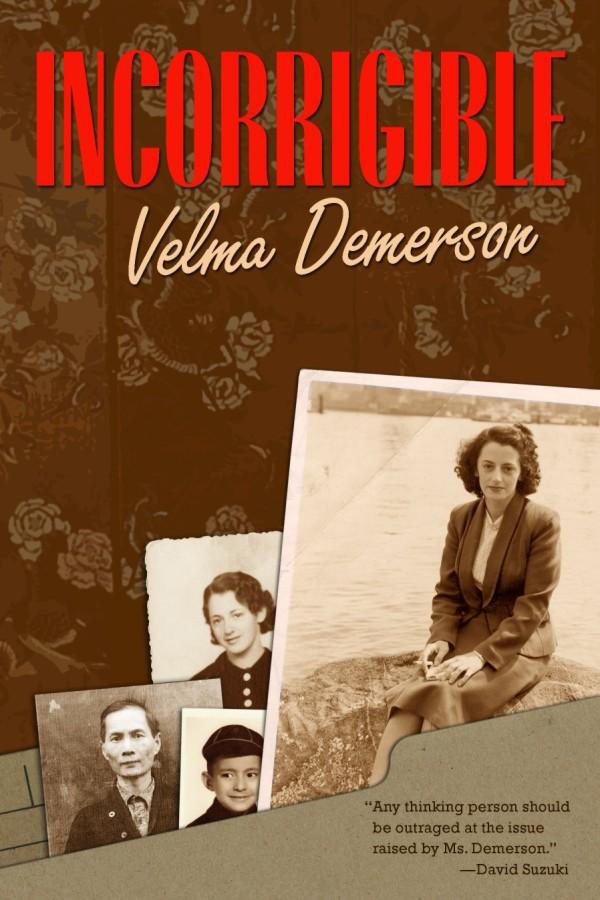
Incorrigible

Posted in Asian Diaspora, Autobiography, Books, Canada, Law, Media Archive, Monographs, Politics/Public Policy on 2009-11-23 02:50Z by Steven

Incorrigible

Wilfrid Laurier University Press
December 2004
184 pages
ISBN13: 978-0-88920-444-7

Velma Demerson

On a May morning in 1939, eighteen-year-old Velma Demerson and her lover were having breakfast when two police officers arrived to take her away. Her crime was loving a Chinese man, a “crime” that was compounded by her pregnancy and subsequent mixed-race child. Sentenced to a home for wayward girls, Demerson was then transferred (along with forty-six other girls) to Toronto’s Mercer Reformatory for Females. The girls were locked in their cells for twelve hours a day and required to work in the on-site laundry and factory. They also endured suspect medical examinations. When Demerson was finally released after ten months’ incarceration weeks of solitary confinement, abusive medical treatments, and the state’s apprehension of her child, her marriage to her lover resulted in the loss of her citizenship status.

This is the story of how Demerson, and so many other girls, were treated as criminals or mentally defective individuals, even though their worst crime might have been only their choice of lover. Incorrigible is a survivor’s narrative. In a period that saw the rise of psychiatry, legislation against interracial marriage, and a populist movement that believed in eradicating disease and sin by improving the purity of Anglo-Saxon stock, Velma Demerson, like many young women, found herself confronted by powerful social forces. This is a history of some of those who fell through the cracks of the criminal code, told in a powerful first-person voice.

Velma Demerson is a widow, and mother of three children—the first child, the son of her interracial marriage, died at age twenty-six. She has worked throughout her life in a variety of positions, mostly as a secretary for governments (provincial and federal) and lawyers. She is self-educated. This is her first book.

Read an excerpt here.

Tags: ,

Intermarriage across Race and Ethnicity among Immigrants: E Pluribus Unions

Posted in Books, Family/Parenting, Media Archive, Monographs, Social Science on 2009-11-21 04:10Z by Steven

Intermarriage across Race and Ethnicity among Immigrants: E Pluribus Unions

LFB Scholarly Publishing
November 2008
228 pages
5.5 X 8.5 / viii
Hardcover ISBN-13: 978-1-59332-294-6

Charlie V. Morgan, Assistant Professor of Sociology
Brigham Young University

Morgan examines the relationship between assimilation and intermarriage. In studying mixed relationships, he finds that ethnicity, in the form of language and religion, is more important than race. Males and females were more likely to find themselves in coethnic relationships as they imagined the role that extended family would play. They talked about parental prejudices, language, religion, and other cultural clashes as major factors. There were many females, however, who did not follow this pattern because of perceptions of patriarchy. They avoided coethnic relationships because they wanted a partner who would think of them as an equal.

Tags: ,