Oye Como Va! Hybridity and Identity in Latino Popular Music

Posted in Anthropology, Arts, Books, History, Latino Studies, Media Archive, Monographs, United States on 2010-01-25 18:52Z by Steven

Oye Como Va! Hybridity and Identity in Latino Popular Music

Temple University Press
December 2009
238 pp
6×9
1 figure 5 halftones
Paper EAN: 978-1-43990-090-1; ISBN: 1-4399-0090-6
Cloth EAN: 978-1-43990-089-5; ISBN: 1-4399-0089-2

Deborah Pacini Hernandez, Associate Professor of Anthropology and American Studies
Tufts University

Listen Up! When the New York-born Tito Puente composed “Oye Como Va!” in the 1960s, his popular song was called “Latin” even though it was a fusion of Afro-Cuban and New York Latino musical influences. A decade later, Carlos Santana, a Mexican immigrant, blended Puente’s tune with rock and roll, which brought it to the attention of national audiences. Like Puente and Santana, Latino/a musicians have always blended musics from their homelands with other sounds in our multicultural society, challenging ideas of what “Latin” music is or ought to be. Waves of immigrants further complicate the picture as they continue to bring their distinctive musical styles to the U.S.—from merengue and bachata to cumbia and reggaeton.

In Oye Como Va!, Deborah Pacini Hernandez traces the trajectories of various U.S. Latino musical forms in a globalizing world, examining how the blending of Latin music reflects Latino/a American lives connecting across nations. Exploring the simultaneously powerful, vexing, and stimulating relationship between hybridity, music, and identity, Oye Como Va! asserts that this potent combination is a signature of the U.S. Latino/a experience.

Table of Contents

  • Preface
  • 1. Introduction: Hybridity, Identity, and Latino Popular Music
  • 2. Historical Perpectives on Latinos and the Latin Music Industry
  • 3. To Rock or Not to Rock: Cultural Nationalism and Latino Engagement with Rock ‘n’ Roll
  • 4. Turning the Tables: Musical Mixings, Border Crossings and new Sonic Circuitries
  • 5. New Immigrants, New Layerings: Tradition and Transnationalism in the U.S. Dominican Popular Music
  • 6. From Cumbia Colombiana to Cumbia Cosmopolatina: Roots, Routes, Race, and Mestizaje
  • 7. Marketing Latinidad in a Global Era
  • Notes
  • Selected Bibliography
  • Index
Tags: , , ,

Challenging Mestizaje: A Gender Perspective on Indigenous and Afrodescendant Movements in Latin America

Posted in Anthropology, Articles, Caribbean/Latin America, Social Science, Women on 2010-01-23 20:40Z by Steven

Challenging Mestizaje: A Gender Perspective on Indigenous and Afrodescendant Movements in Latin America

Critique of Anthropology
Vol. 25, No. 3
pages 307-330
(2005)
DOI: 10.1177/0308275X05055217

Helen I. Safa, Professor Emerita of Anthropology/Latin American Studies
University of Florida

This article compares the contemporary movements for cultural autonomy and social legitimation organized by the indigenous and Afrodescendant populations of Latin America. These movements are challenging the concept of blanqueamiento or whitening embedded in the process of mestizaje in Latin America. Whitening proclaimed the superiority of white European culture over indigenous and black culture, a concept these movements are challenging by proclaiming their own cultural autonomy. In particular, the article will examine the increasing role of women in both these movements, and how women are reconciling the tension between ethnic/racial and gender consciousness.

 Read or purchase the article here.

Tags: ,

Go-Betweens and the Colonization of Brazil: 1500-1600

Posted in Anthropology, Books, Brazil, Caribbean/Latin America, History, Media Archive, Monographs, Slavery on 2010-01-22 22:12Z by Steven

Go-Betweens and the Colonization of Brazil: 1500-1600

University of Texas Press
2005
6 x 9 in.
391 pp., 20 figures, 11 maps, 2 tables
ISBN: 978-0-292-71276-8

Alida C. Metcalf, Harris Masterson, Jr. Professor of History
Rice University, Houston, Texas

Doña Marina (La Malinche)PocahontasSacagawea—their names live on in historical memory because these women bridged the indigenous American and European worlds, opening the way for the cultural encounters, collisions, and fusions that shaped the social and even physical landscape of the modern Americas. But these famous individuals were only a few of the many thousands of people who, intentionally or otherwise, served as “go-betweens” as Europeans explored and colonized the New World.

In this innovative history, Alida Metcalf thoroughly investigates the many roles played by go-betweens in the colonization of sixteenth-century Brazil. She finds that many individuals created physical links among Europe, Africa, and Brazil—explorers, traders, settlers, and slaves circulated goods, plants, animals, and diseases. Intercultural liaisons produced mixed-race children. At the cultural level, Jesuit priests and African slaves infused native Brazilian traditions with their own religious practices, while translators became influential go-betweens, negotiating the terms of trade, interaction, and exchange. Most powerful of all, as Metcalf shows, were those go-betweens who interpreted or represented new lands and peoples through writings, maps, religion, and the oral tradition. Metcalf’s convincing demonstration that colonization is always mediated by third parties has relevance far beyond the Brazilian case, even as it opens a revealing new window on the first century of Brazilian history.

Read an excerpt here.

Table of Contents

  • A Note on Spelling and Citation
  • Acknowledgments
  • 1. Go-betweens
  • 2. Encounter
  • 3. Possession
  • 4. Conversion
  • 5. Biology
  • 6. Slavery
  • 7. Resistance
  • 8. Power
  • Notes
  • Bibliography
  • Index
Tags: , , ,

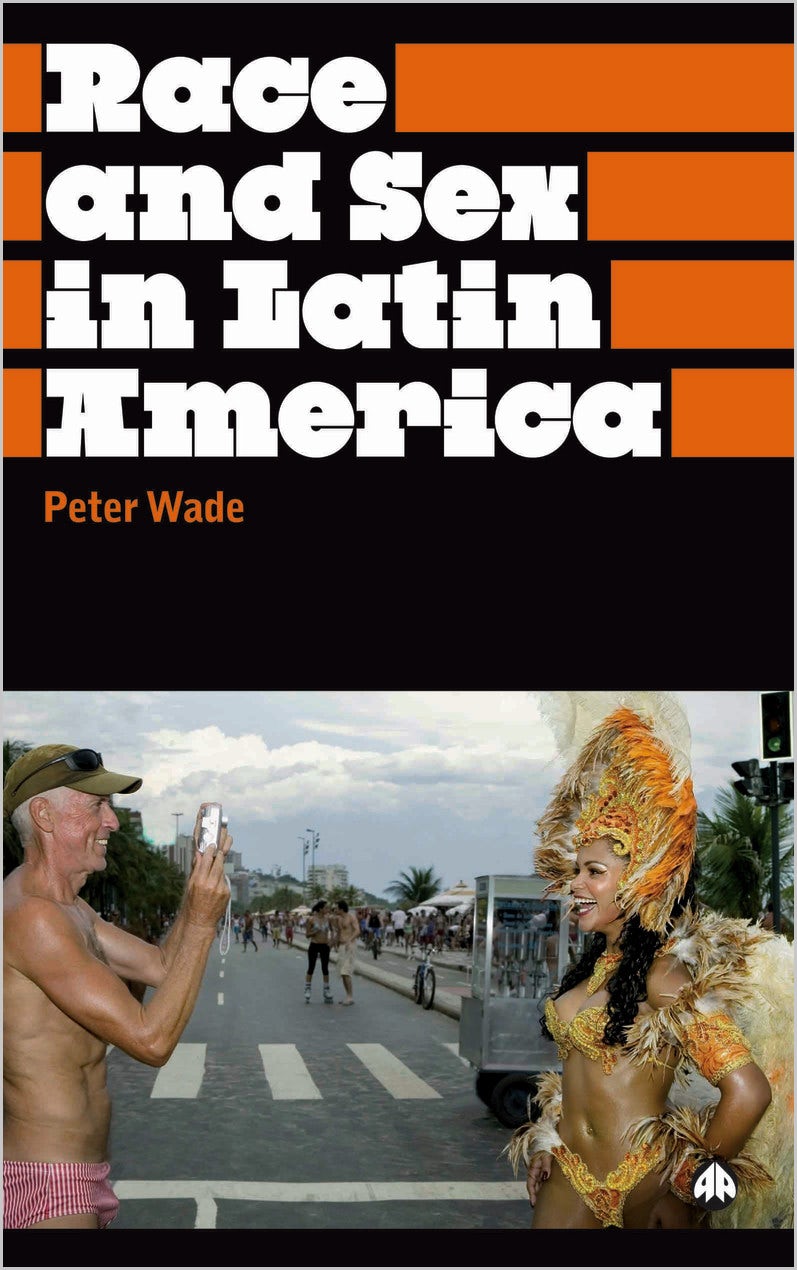
Race and Sex in Latin America

Posted in Anthropology, Books, Caribbean/Latin America, History, Media Archive, Monographs, Social Science on 2010-01-20 01:52Z by Steven

Race and Sex in Latin America

Pluto Press
2009-09-07
320 pages
Size: 215mm x 135mm
Illustrations: 1 map, 3 figures
ISBN: 9780745329499

Peter Wade, Professor of Social Anthropology
University of Manchester

Race and Sex in Latin America

The intersection of race and sex in Latin America is a subject touched upon by many disciplines but this is the first book to deal solely with these issues.

Interracial sexual relations are often a key mythic basis for Latin American national identities, but the importance of this has been underexplored. Peter Wade provides a pioneering overview of the growing literature on race and sex in the region, covering historical aspects and contemporary debates. He includes both black and indigenous people in the frame, as well as mixed and white people, avoiding the implication that “race” means “black-white” relations.

Challenging but accessible, this book will appeal across the humanities and social sciences, particularly to students of anthropology, gender studies, history and Latin American studies.

Table of Contents

  • 1. Introduction: defining race and sex
  • 2. Explaining the articulation of race and sex
  • 3. Race and sex in colonial Latin America
  • 4. Making nations through race and sex
  • 5. The political economy of race and sex in contemporary Latin America
  • 6. Race, sex and the politics of identity and citizenship
  • 7. Conclusion
  • References
  • Index
Tags: ,

Transforming Mulatto Identity in Colonial Guatemala and El Salvador; 1670-1720

Posted in Anthropology, Articles, Caribbean/Latin America, History, Media Archive, Slavery on 2010-01-19 01:17Z by Steven

Transforming Mulatto Identity in Colonial Guatemala and El Salvador; 1670-1720

Transforming Anthropology
Volume 12, Issue 1-2 (January 2004)
Pages 9 – 20
DOI: 10.1525/tran.2004.12.1-2.9

Paul Lokken, Assistant Professor of Latin American History
Bryant University, Smithfield Rhode Island

This article examines an important moment in the history of people of African origins in the region now encompassed by the republics of Guatemala and El Salvador. That moment has received relatively little attention in modern scholarship because the entire subject of the colonial African presence in the region was largely ignored until recently. The lingering effects of nineteenth-century scientific racism contributed to the “forgetting” of African origins, but developments during the colonial era initiated the process. During that era, the dependence of Spaniards primarily on the labor of the region’s indigenous majority allowed members of an African-defined minority—both free and enslaved—to rework the contours of the identity assigned to them, via marriage, militia service, and other avenues. This transformation in identity was marked by shifts away from association with the “inferiority” of tributary status and toward incorporation into a broader category—gente ladina (hispanized people)—that carried connotations unrelated to African identity.

…Increased fluidity in classification was perhaps inevitable, at least where identification of “mixed” origins was concerned. For instance, while marriage records demonstrate clearly that in seventeenth-century Guatemala the term “mulato” was generally applied to people who actually possessed some African origins, examples of labeling “mistakes” were beginning to crop up as well, notably in San Salvador and San Miguel. In 1671, the son of an “espafiol” and an “india” from San Miguel was identified as “mulato libre” in a marriage record produced in Olocuilta, just outside San Salvador, and in 1691, a record filed in Amapala listed the parents of a “mulato libre” as “indios vecinos” (Indian residents) of San Miguel.” The vulnerability of Spanish efforts to enforce boundaries between “types” of individuals with plural origins as a means of divide-and-rule (Cope 1994:3-26, Lutz 1994:79-112, 140) is also underscored in court cases in which people whom others defined as mulatto claimed mestizo status in order to avoid tribute or otherwise dissociate themselves from the “taint” of African ancestry (Few 1997:120).”…

Read or purchase the article here.

Tags: , , ,

Mixed Blood Indians: Racial Construction in the Early South

Posted in Anthropology, Books, Family/Parenting, History, Identity Development/Psychology, Media Archive, Monographs, Native Americans/First Nation, United States on 2010-01-12 21:24Z by Steven

Mixed Blood Indians: Racial Construction in the Early South

University of Georgia Press
2005-03-28
60 pages
Illustrated, Trim size: 5.5 x 8.25
ISBN: 978-0-8203-2731-0

Theda Perdue, Atlanta Distinguished Term Professor of Southern Culture
University of North Carolina, Chapel Hill

On the southern frontier in the eighteenth and early nineteenth centuries, European men—including traders, soldiers, and government agents—sometimes married Native women. Children of these unions were known by whites as “half-breeds.” The Indian societies into which they were born, however, had no corresponding concepts of race or “blood.” Moreover, counter to European customs and laws, Native lineage was traced through the mother only. No familial status or rights stemmed from the father.

“Mixed Blood” Indians looks at a fascinating array of such birth- and kin-related issues as they were alternately misunderstood and astutely exploited by both Native and European cultures. Theda Perdue discusses the assimilation of non-Indians into Native societies, their descendants’ participation in tribal life, and the white cultural assumptions conveyed in the designation “mixed blood.” In addition to unions between European men and Native women, Perdue also considers the special cases arising from the presence of white women and African men and women in Indian society.

From the colonial through the early national era, “mixed bloods” were often in the middle of struggles between white expansionism and Native cultural survival. That these “half-breeds” often resisted appeals to their “civilized” blood helped foster an enduring image of Natives as fickle allies of white politicians, missionaries, and entrepreneurs. “Mixed Blood” Indians rereads a number of early writings to show us the Native outlook on these misperceptions and to make clear that race is too simple a measure of their—or any peoples’—motives.

Tags: ,

The Myth of the Human Races

Posted in Anthropology, Books, Media Archive, Monographs, Social Science on 2010-01-11 22:33Z by Steven

The Myth of the Human Races

Michigan State University Press
December 1997
210 pages
6.00″ x 9.00″
Notes, bibliography, index
Cloth ISBN 10: 0-87013-439-6; ISBN 13: 978-0-87013-439-5

Alain F. Corcos, Professor Emeritus of Botany
Michigan State University

The idea that human races exist is a socially constructed myth that has no grounding in science. Regardless of skin, hair, or eye color, stature or physiognomy, we are all of one species. Nonetheless, scientists, social scientists, and pseudo-scientists have, for three centuries, tried vainly to prove that distinctive and separate “races” of humanity exist. These protagonists of race theory have based their flawed research on one or more of five specious assumptions:

  • humanity can be classified into groups using identifiable physical characteristics
  • human characteristics are transmitted “through the blood,”
  • distinct human physical characteristics are inherited together,
  • physical features can be linked to human behavior,
  • human groups or “races” are by their very nature unequal and, therefore, they can be ranked in order of intellectual, moral, and cultural superiority.

The Myth of Human Races systematically dispels these fallacies and unravels the web of flawed research that has been woven to demonstrate the superiority of one group of people over another.

Tags: , ,

Being Māori-Chinese: Mixed Identities (Book Review)

Posted in Anthropology, Articles, Asian Diaspora, Book/Video Reviews, Media Archive, Oceania, Social Science on 2010-01-11 19:19Z by Steven

Being Māori-Chinese: Mixed Identities (Book Review)

Sites: a journal of social anthropology and cultural studies
University of Otago, New Zealand
Volume 5, Number 2 (2008)
pages 180-182

Kate Bagnall

Being Māori-Chinese: Mixed Identities, Manying Ip, Auckland University Press, Auckland, 2008, 255pp. ISBN 978-1-86940-399-7

Manying Ip makes it clear from the outset that Being Māori-Chinese: Mixed Identities is a very personal book. It begins with an explanation of her own inspiration for the project – the emergence of tantalising snippets about Māori-Chinese families that kept popping up in her wider research on New Zealand Chinese – and her own process of locating subjects and conducting interviews. Ip tells of being warned by a ‘well-meaning elder’ from Te Wānangao-Raukawa about the difficulties she would encounter in her project, due to the sensitivity of the subject matter and the reticence that Māori-Chinese as a group would have towards sharing in-depth information with her. ‘Are you sure you wish to pursue this study on Māori-Chinese relations? I don’t think people will tell you much’, he said.

The publication of Being Māori-Chinese is, then, an acknowledgement of Ip’s reputation as a researcher and community advocate. It is only through mutual trust that she has been given access to the personal stories of the seven Māori-Chinese families whose experiences make up the heart of the book.  Each chapter focuses on a particular family and presents an intimate journey into the family culture and individual identities of family members. The book is further testament to the courage and generosity of her subjects, who shared memories and thoughts on many aspects of their lives. Their generosity is particularly moving because, as Ip states, ‘those memories involve a struggle against social discrimination and, in many cases, family disapproval’…

Family stories, such as those told in Being Māori-Chinese, are at the core of the growing body of Australasian scholarship that explores mixed race lives, families and communities. Such stories counter the assumptions of previous generations that interracial encounters were either unthinkable due to race prejudice or occurred under unsavoury conditions that were detrimental to one or both parties. Ip is to be commended for encouraging the Māori-Chinese families included in the book to share their experiences, and also for carefully structuring each chapter so that her voice takes a secondary place to those of family members themselves. As she notes in her Introduction, the book explores lives that ‘have been largely overlooked in the formal historical and sociological discourse of New Zealand’. This book is an important step in inserting Māori-Chinese into the story of New Zealand’s past, present and future…

Read the entire review here.

Tags: , , , , ,

Black, White, Other: Racial categories are cultural constructs masquerading as biology

Posted in Anthropology, Articles, Census/Demographics, Media Archive, Social Science on 2010-01-10 04:50Z by Steven

Black, White, Other: Racial categories are cultural constructs masquerading as biology

Natural History Magazine
December 1994
pp. 32–35

Jonathan Marks, Associate Professor of Anthropology
University of North Carolina, Charlotte

While reading the Sunday edition of the New York Times one morning last February, my attention was drawn by an editorial inconsistency. The article I was reading was written by attorney Lani Guinier (Guinier, you may remember, had been President Clinton’s nominee to head the civil rights division at the Department of Justice in 1993. Her name was hastily withdrawn amid a blast of criticism over her views on political representation of minorities.) What had distracted me from the main point of the story was a photo caption that described Guinier as being “half-black.” In the text of the article, Guinier had described herself simply as “black”

How can a person be black and half black at the same time? In algebraic terms, this would seem to describe a situation where x = 1/2 x, to which the only solution is x = 0.

The inconsistency in the Times was trivial, but revealing. It encapsulated a longstanding problem in our use of racial categories—namely, a confusion between biological and cultural heredity. When Guinier is described as “half-black,” that is a statement of biological ancestry, for one of her two parents is black. And when Guinier describes herself as black, she is using a cultural category, according to which one can either be black or white, but not both.

Race—as the term is commonly used—is inherited, although not in a strictly biological fashion. It is passed down according to a system of folk heredity, an all-or-nothing system that is different front the quantifiable heredity of biology. But the incompatibility of the two notions of race is sometimes starkly evident—as when the state decides that racial differences are so important that interracial marriages must be regulated or outlawed entirely. Miscegenation laws in this country (which stayed on the books in many states through the 1960s) obliged the legal system to define who belonged in what category. The resulting formula stated that anyone with one-eighth or more black ancestry was a “negro.” (A similar formula, defining Jews, was promulgated by the Germans in the Nuremberg Laws of the 1930s.).

Applying such formulas led to the biological absurdity that having one black great-grandparent was sufficient to define a person as black, but having seven white great grandparents was insufficient to define a person as white. Here, race and biology are demonstrably at odds. And the problem is not semantic but conceptual, for race is presented as a category of nature…

…Unlike graduated biological distinctions, culturally constructed categories are ultrasharp. One can be French or German, but not both; Tutsi or Hutu, but not both; Jew or Catholic, but nor both; Bosnian Muslim or Serb, but not both; black or white, but not both. Traditionally, people of “mixed race” have been obliged to choose one and thereby identity themselves unambiguously to census takers and administrative bookkeepers—a practice that is now being widely called into question

Read the entire article here.

Tags: ,

Confounding the Color Line: The Indian-Black Experience in North America

Posted in Anthologies, Anthropology, Books, Canada, Caribbean/Latin America, History, Identity Development/Psychology, Media Archive, Native Americans/First Nation, Slavery, Social Science, United States on 2010-01-09 20:17Z by Steven

Confounding the Color Line: The Indian-Black Experience in North America

University of Nebraska Press
2002
396 pages
Illus., map
Paperback ISBN: 978-0-8032-6194-5

Edited by

James F. Brooks, President and Chief Executive Officer
School for Advanced Research, Santa Fe, New Mexico

Confounding the Color Line is an essential, interdisciplinary introduction to the myriad relationships forged for centuries between Indians and Blacks in North America. Since the days of slavery, the lives and destinies of Indians and Blacks have been entwined-thrown together through circumstance, institutional design, or personal choice. Cultural sharing and intermarriage have resulted in complex identities for some members of Indian and Black communities today.

The contributors to this volume examine the origins, history, various manifestations, and long-term consequences of the different connections that have been established between Indians and Blacks. Stimulating examples of a range of relations are offered, including the challenges faced by Cherokee freedmen, the lives of Afro-Indian whalers in New England, and the ways in which Indians and Africans interacted in Spanish colonial New Mexico. Special attention is given to slavery and its continuing legacy, both in the Old South and in Indian Territory. The intricate nature of modern Indian-Black relations is showcased through discussions of the ties between Black athletes and Indian mascots, the complex identities of Indians in southern New England, the problem of Indian identity within the African American community, and the way in which today’s Lumbee Indians have creatively engaged with African American church music.

At once informative and provocative, Confounding the Color Line sheds valuable light on a pivotal and not well understood relationship between these communities of color, which together and separately have affected, sometimes profoundly, the course of American history.

Tags: , ,