The Hafu Project: October Newsletter

Posted in Articles, Asian Diaspora, New Media on 2012-10-03 03:39Z by Steven

The Hafu Project: October Newsletter

The Hafu Project Newsletter
The Hafu Project
October 2012


The Hafu Project talking at a multicultural family workshop organized by TIPP in Meguro

We hope this email finds you well. This year the summer was harsh in Japan. We do hope you got to enjoy summer wherever you are in the world!

This volume of the newsletter features an interview with hafu writer, Sandra Häfelin, who recently published a book titled “Hafu ga bijin nante mousou desukara!!” (Translation: “It’s only a myth that hafus are beautiful!!”). Sandra was one of the many supporters who kindly participated in The Hafu Project in 2009 in Tokyo. Her website “Hafu wo kangaeyou” explores the topic of hafus through everyday experiences and stories. It is such a joy to read with plenty of real episodes, we highly reccommend her website!

If you happen to live in Japan, you may have noticed a surge of media exposure of hafus. To start with, Nippon Television interviewed a dozen young hafu girls in Harajuku to discuss some of the unexpected cons of being a hafu in Japan (Zoom In Saturday, aired on Sep 15). Weekly magazine SPA also had a dedicated feature on hafus, which included the ins and outs of why hafus are often considered to be a “gaikokujin” (foreigner). In addition, Nagoya Television covered three hafu individuals with varying stories (UP!, aired on Sep 27). Each of these three media exposures had different approaches but certainly added to the current dialogue of being a hafu in Japan…

Read the entire newsletter here.

Tags: , ,

Cedric Dover

Posted in Articles, Asian Diaspora, Biography, Identity Development/Psychology, Media Archive, Poetry on 2012-10-02 02:18Z by Steven

Cedric Dover

Wasafiri
Volume 27, Issue 2 (2012)
pages 56-57
DOI: 10.1080/02690055.2012.662322

Cedric Dover was born in Calcutta in 1904. Dover’s mixed ancestry (English father, Indian mother) and his studies in zoology led to a strong interest in ethnic minorities and their marginalisation. After his studies, he joined the Zoological Survey of India as a temporary assistant entomologist. He also wrote several scientific articles and edited the Eurasian magazine New Outlook.

Dover settled in London In 1934 to continue his anthropological studies on issues of race. He published Half-Caste in 1937, followed by Hell in the Sunshine (1943). During the 1940s Dover contributed regularly to the BBC Indian Section of the Eastern Service alongside many other British-based South Asians. There he befriended George Orwell, in 1947 he published Feathers in the Arrow: An Approach for Coloured Writers and Readers. Dover moved to the United States in the same year and took up a range of visiting academic posts. He was a member of the faculty of Fisk University, as Visiting Lecturer in Anthropology. He also briefly lectured at the New School of Social Research, New York, and Howard University. Dover held a lifelong interest in African-American art, culture and literature and his influential book American Negro Art was published in 1960. Dover returned to London in the late 1950s. He continued to lecture and write on minority issues and culture until his death in 1961.

A Note on the Text

These poems were first published in Brown Phoenix (London; College Press. 1950).

Brown Phoenix

I am the brown phoenix
Fused in the flames
Of the centuries’ greed.

I am tomorrow’s man
Offering to share
Love, and the difficult quest,
In the emerging plan.

Do you see a dark man
Whose mind you shun,
Whose heart you never know,
Unable to understand
That I am the golden bird
With destiny clear?
Fools cannot destroy me
With arrogant fear.

Listen brown man, black man,
Yellow man, mongrel man,
And you white friend and comrade:
I am the brown phoenix—I am you.

‘There is my symbol for us all.’

For we are tomorrow’s men,
But not you,
Little pinkwhite man,
Not you!

Read or purchase the article here.

Tags: , ,

“Wait . . . they had a white baby?!?!”

Posted in Articles, Asian Diaspora, Media Archive, Social Science on 2012-09-30 03:09Z by Steven

“Wait . . . they had a white baby?!?!”

Stephen Murphy-Shigematsu
2012-09-01

Stephen Murphy-Shigematsu
Stanford University

My niece recently had a baby, a beautiful boy. The proud grandmother showed the photo of the newborn to family members and everyone oohed and aahed. One of his cousins looked at the picture and said, “Oh he’s so cute!”  But suddenly a puzzled look came over him and he blurted out, “Wait . . . they had a white baby?!?!
 
When I heard this story I thought, Oh, it’s already started. People see colors and label according to what they see. The little cousin saw white and labeled the baby white. But mom is Japanese as well as Irish and Scottish. Dad is Irish as well as African American and American Indian. The baby is therefore all of these. But he is already being labeled by a single category, a race.
 
And he is already being looked at in relation to his family. The little cousin was intrigued  because to him mom is probably white and dad black, so put black and white together and what do you get? A white baby?…

Read the entire article here.

Tags:

Tiger Mom’s Hapa Cubs

Posted in Articles, Asian Diaspora, Identity Development/Psychology, Media Archive on 2012-09-30 01:17Z by Steven

Tiger Mom’s Hapa Cubs

Stephen Murphy-Shigematsu
2012-05-09

Stephen Murphy-Shigematsu
Stanford University

Are persons with one Asian parent and one non-Asian parent Asian or not Asian? Schools don’t seem to know where to place them, leaving them on their own to determine their identities. In the article, “Some Asians’ college strategy: Don’t check ‘Asian’,” some young Hapa reveal the ambivalence and flexibility surrounding their identities. Parents wondering if they should regard their kids as Asian might take a lesson from Tiger Mom Amy Chua, who raised two Hapa children.

Amy describes her two girls, Sophia and Lulu, as having “brown hair, brown eyes, and Asianesque features.” They both speak Chinese and Sophia eats “all kind of organs and organisms, duck webs, pig ears, and sea slugs, critical aspects of Chinese identity.” Yet, on their first trip to China, the girls are treated as spectacles, drawing curious crowds, even in cosmopolitan Shanghai, when people stared, giggled, and pointed at the “two little foreigners who speak Chinese.” At the zoo, when the girls were taking pictures of the baby pandas, the crowd was taking pictures of the girls

Read the entire article here.

Tags:

Playing for Malaya: A Eurasian Family and the Pacific War

Posted in Asian Diaspora, Biography, Books, History, Media Archive, Monographs on 2012-09-28 20:06Z by Steven

Playing for Malaya: A Eurasian Family and the Pacific War

University of Hawai‘i Press (Distributed for the National University of Singapore Press)
2011
208 pages
Paper ISBN: 978-9971-69-573-6

Rebecca Kenneison

Reggie, according to his niece Wendy, ‘only told what Reggie wanted you to know.’ Reggie was my father. He had honed the technique of talking with apparent openness and using that talk as a decoy duck: while you were listening to it quack around the pond, you weren’t noticing all the others hiding in the reeds. What follows includes tales that Reggie told repeatedly but, on the whole, it’s about what Reggie didn’t tell me.

So begins a stunning personal account of a Eurasian family living in Malaya. Reggie was the author’s father, and one of the many gaps in his account of his family was that his mother was Eurasian. When Rebecca Kenneison discovered this omission after his death, she set out to learn more about her extended family on the other side of the world.

Set in the 1930s and 1940s, this book recounts the experiences of an extended Eurasian family during the invasion and occupation of Malaya by the Japanese. Colonial society considered Eurasians insufficiently European to be treated as British, but during the Pacific War they seemed all too European to the Japanese, who subjected the Eurasian community to discrimination and worse. Because many Eurasians, including members of the Kenneison family, supported the Allied cause, their wartime experiences are an extraordinary account of tragedy, heroism and endurance, presented here with great eloquence and clarity.

Tags: , , , ,

That’s How It Goes: Autobiography Of A Singapore Eurasian

Posted in Asian Diaspora, Autobiography, Books, Media Archive, Monographs on 2012-09-28 17:56Z by Steven

That’s How It Goes: Autobiography Of A Singapore Eurasian

Select Books
2008
235 pages
Paperback ISBN: 9789814022392

F. A. C. “Jock” Oehlers

These memoirs by a member of one of Singapore’s leading Eurasian families offers many sidelights onto Singapore’s life in the mid-20th century. The author, then a dental student, tells of the hardships of his life with a young family at the Japanese-enforced agricultural settlement for Eurasians at Bahau, Negri Sembilan. He tells of his career as an oral surgeon at the University and in private practice, his involvement with the development of the Singapore Kennel Club until his 1990 retirement to Perth, West Australia. With black-and-white photographs.

Tags: , , ,

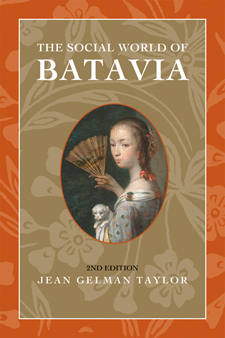
The Social World of Batavia: Europeans and Eurasians in Colonial Indonesia (Second Edition)

Posted in Anthropology, Asian Diaspora, Books, History, Media Archive, Monographs on 2012-09-28 15:27Z by Steven

The Social World of Batavia: Europeans and Eurasians in Colonial Indonesia (Second Edition)

University of Wisconsin Press
April 2009 (First Published in 1983)
312 pages
6 x 9  
14 b/w illustrations

Jean Gelman Taylor, Associate Professor of History
University of New South Wales

In the seventeenth century, the Dutch established a trading base at the Indonesian site of Jacarta. What began as a minor colonial outpost under the name Batavia would become, over the next three centuries, the flourishing economic and political nucleus of the Dutch Asian Empire. In this pioneering study, Jean Gelman Taylor offers a comprehensive analysis of Batavia’s extraordinary social world—its marriage patterns, religious and social organizations, economic interests, and sexual roles. With an emphasis on the urban ruling elite, she argues that Europeans and Asians alike were profoundly altered by their merging, resulting in a distinctive hybrid, Indo-Dutch culture.

Original in its focus on gender and use of varied sources—travelers’ accounts, newspapers, legal codes, genealogical data, photograph albums, paintings, and ceramics—The Social World of Batavia, first published in 1983, forged new paths in the study of colonial society. In this second edition, Gelman offers a new preface as well as an additional chapter tracing the development of these themes by a new generation of scholars.

Tags: , , , ,

Mixed-race Jewish children locate their communal comfort zone

Posted in Articles, Asian Diaspora, Family/Parenting, Judaism, Media Archive, Religion, United States on 2012-09-26 16:39Z by Steven

Mixed-race Jewish children locate their communal comfort zone

The Jewish Chronicle Online
2009-11-12

Sue Fishkoff

Dafna Wu, a 48-year-old San Francisco nurse, was born to a Jewish mother and Chinese father. She was raised Jewish but looks Asian, as does her daughter, nine-year-old Amalia, whose father was also Chinese.

The Hebrew School Amalia attends is filled with mixed-race children, but the parents in the congregation are all white, as is the majority of American Jewry. That concerns her mother.
 
“All my life I’ve had to defend being Jewish,” says Ms Wu. “When I go to a new synagogue, people ask who I’m with. I don’t want her to have to explain her Judaism, or be exoticised for it. I just want her to be a kid, not ‘that special, multi-racial kid’.”
 
That’s why Ms Wu brings Amalia to Be’chol Lashon (In Every Tongue), a San Francisco-based organisation for ethnically and racially diverse Jews. At the group’s most recent retreat last month, at a camp north of San Francisco, Amalia played with other Jewish children who are black, Hispanic and Asian. They sang Hebrew songs, built a succah, and learned about tzedakah, but they also talked openly with their counsellors about what it means to be Jews of colour, to have an identity people do not see due to the colour of their skin.

About 5.4 per cent of America’s Jews are either non-white or Hispanic, according to the 2000-2001 National Jewish Population Survey. A 2004 study by the Institute for Jewish and Community Research, Be’chol Lashon’s parent organisation, puts that number at about 10 per cent. Nevertheless, say activists in the field, the prevailing assumption is that Jews are white, and that Jews of other racial or ethnic backgrounds are adoptees or converts. Sometimes they are, but increasingly they are not, as the children of mixed-race couples grow to adulthood and begin raising their own Jewish children…

Read the entire article here.

Tags: , , ,

Bengali Harlem and the Lost Histories of South Asian America

Posted in Asian Diaspora, Books, History, Media Archive, Monographs, Social Science, United States on 2012-09-25 21:08Z by Steven

Bengali Harlem and the Lost Histories of South Asian America

Harvard University Press
2012-11-19
320 pages
6-1/8 x 9-1/4 inches
15 halftones, 2 maps, 4 tables
Hardcover ISBN: 9780674066663

Vivek Bald, Assistant Professor of Writing and Digital Media
Massachusetts Institute of Technology

In the final years of the nineteenth century, small groups of Muslim peddlers arrived at Ellis Island every summer, bags heavy with embroidered silks from their home villages in Bengal. The American demand for “Oriental goods” took these migrants on a curious path, from New Jersey’s beach boardwalks into the heart of the segregated South. Two decades later, hundreds of Indian Muslim seamen began jumping ship in New York and Baltimore, escaping the engine rooms of British steamers to find less brutal work onshore. As factory owners sought their labor and anti-Asian immigration laws closed in around them, these men built clandestine networks that stretched from the northeastern waterfront across the industrial Midwest.

The stories of these early working-class migrants vividly contrast with our typical understanding of immigration. Vivek Bald’s meticulous reconstruction reveals a lost history of South Asian sojourning and life-making in the United States. At a time when Asian immigrants were vilified and criminalized, Bengali Muslims quietly became part of some of America’s most iconic neighborhoods of color, from Tremé in New Orleans to Detroit’s Black Bottom, from West Baltimore to Harlem. Many started families with Creole, Puerto Rican, and African American women.

As steel and auto workers in the Midwest, as traders in the South, and as halal hot dog vendors on 125th Street, these immigrants created lives as remarkable as they are unknown. Their stories of ingenuity and intermixture challenge assumptions about assimilation and reveal cross-racial affinities beneath the surface of early twentieth-century America.

For more information, visit the Bengali Harlem website here.

Table of Contents

  • Author’s Note
  • Introduction: Lost in Migration
  • 1. Out of the East and into the South
  • 2. Between Hindoo and Negro
  • 3. From Ships’ Holds to Factory Floors
  • 4. The Travels and Transformations of Amir Haider Khan
  • 5. Bengali Harlem
  • 6. The Life and Times of a Multiracial Community
  • Conclusion: Lost Futures
  • List of Abbreviations
  • Notes
  • Acknowledgments
  • Index
Tags: , ,

The Eurasian Face

Posted in Arts, Asian Diaspora, Books, Media Archive, Monographs on 2012-09-24 20:57Z by Steven

The Eurasian Face

Blacksmith Books
November 2010
140 pages
70+ b/w images
Bilingual: English/Chinese
20.5 x 31 cm
Hardcover ISBN: 978-988-99799-9-7

Kirsteen Zimmern

No one represents diversity better than Eurasians—those individuals with a mix of Caucasian and Asian heritage. Once a source of shame, the Eurasian face has become the face that sells. It is the face with which everyone can identify. In an ever-shrinking world, the search is on for a one-size-fits-all global image. Eurasians have become the world’s poster boys and girls, much sought after as actors and models.

Taking advantage of increasingly tolerant times and the growing commercial and cultural exchanges between East and West, Eurasians have gained prominence as entrepreneurs, professionals and athletes. This book of interviews and black-and-white portraits reveals how seventy Eurasians of diverse backgrounds see their place in the world today.

Kirsteen Zimmern is a photographer of Chinese and Scottish ancestry. She has always been fascinated by the tell-tale signs of East and West in the faces of fellow Eurasians, and has found this fascination to be widespread: few days go by without strangers examining her appearance to discern her ethnicity. She lives in Hong Kong.

View pages 48-59 here.

Tags: , ,