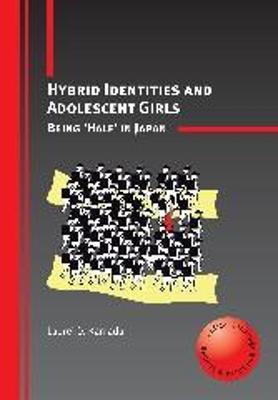
Hybrid Identities and Adolescent Girls: Being ‘Half’ in Japan

Posted in Asian Diaspora, Books, Identity Development/Psychology, Media Archive, Monographs, Women on 2013-04-06 16:25Z by Steven

Hybrid Identities and Adolescent Girls: Being ‘Half’ in Japan

Multilingual Matters
2009-12-03
280 pages
210 x 148 (A5)
Paperback ISBN: 9781847692320
Hardback ISBN: 9781847692337

Laurel Kamada, Lecturer Professor
Tohoku University, Japan

This is the first in-depth examination of “half-Japanese” girls in Japan focusing on ethnic, gendered and embodied ‘hybrid’ identities. Challenging the myth of Japan as a single-race society, these girls are seen struggling to positively manoeuvre themselves and negotiate their identities into positions of contestation and control over marginalizing discourses which disempower them as ‘others’ within Japanese society as they begin to mature. Paradoxically, at other times, within more empowering alternative discourses of ethnicity, they also enjoy and celebrate cultural, symbolic, social and linguistic capital which they discursively create for themselves as they come to terms with their constructed identities of “Japaneseness”, “whiteness” and “halfness/doubleness”. This book has a colourful storyline throughout—narrated in the girls’ own voices—that follows them out of childhood and into the rapid physical and emotional growth years of early adolescence.

Tags: , ,

Of Mongrels and Men: The Shared Ideology of Anti-Miscegenation Law, Chinese Exclusion, and Contemporary American Neo-Nativism

Posted in Asian Diaspora, History, Law, Media Archive, Papers/Presentations, United Kingdom on 2013-04-06 16:19Z by Steven

Of Mongrels and Men: The Shared Ideology of Anti-Miscegenation Law, Chinese Exclusion, and Contemporary American Neo-Nativism

bepress Legal Series
Working Paper 458
2005-02-16

Geoffrey A. Neri, Associate
Miller Barondess, LLP

Table of Contents

  • I. INTRODUCTION
  • II. BIRTH OF THE “ABOMINATION”: THE DEVELOPMENT OF ANTI-MISCEGENATION LAW
    • A. Origins and Early History
    • B. Anti-Miscegenation Ideology
      • 1. Monogenism and Christian Fundamentalism
      • 2. Polygenism and Pseudoscience
      • 3. Social Darwinism
      • 4. A Beacon of Light in the Dark Age of Racist Ideology
  • III. THE “YELLOW PERIL”: ANTI-MISCEGENATION LAW AND CHINESE EXCLUSION
    • A. Chinese Migration to the United States in the 19th Century
      • 1. Pull Factors
      • 2. Push Factors
    • B. Anti-Chinese Immigration Legislation
    • C. The “Chinese Exclusion Case” and Plenary Power Doctrine
    • D. “Negroes or Mulattoes . . . and Mongolians”: The Anti-Miscegenation Expands to Include the Chinese
    • E. Effects of Anti-Miscegenation Law and Chinese Exclusion on Chinese Transnational Movement
  • IV.MORE WHIMPER THAN BANG: THE END OF CHINESE EXCLUSION AND THE ANTI MISCEGENATION STATUTE
    • A. The End of Chinese Exclusion
    • B. The Demise of the Anti-Miscegenation Statute
      • 1. Early Challenges
      • 2. Loving
  • V. THE CONTEMPORARY RELEVANCE OF ANTI-MISCEGENATION LAW AND THE PERIOD OF CHINESE EXCLUSION
    • A. The Good News . . . More Progressive Racial Norms in the Modern Era
    • B. The Bad News . . . Neo-Nativism Serves up “Old Poison in New Bottles”
  • VI.CONCLUSION

“We want no more mixture of races. . . . No strong nation was ever born of mongrel races of men.”
—U.S. Senator La Fayette Grover (addressing the “Chinese Problem”), June 30, 1872

I. INTRODUCTION

A complex interaction of push and pull factors created a substantial wave of Asian migration to the United States in the 19th century. In brief, acute political and economic instability and dislocation in China arising from European imperialism, internal conflict, and famine “pushed” Chinese laborers to the United States, while a demand for cheap, reliable labor brought on by burgeoning industrialization in the American West, the construction of the Transcontinental Railroad, and the 1849 California gold strike at Sutter’s Creek “pulled” them. Due to America’s historic policy of open borders, this migration was virtually unrestricted and the rapid influx of Chinese immigrants into the American West almost immediately provoked “widespread concerns about the relationship between race and national identity” in the United States. The Chinese were perceived as possessing characteristics that amounted to unbridgeable racial differences and “fears of hybridity” proliferated, prompting one California legislator to warn that “were the Chinese to amalgamate at all with our people, it would be a hybrid of the most despicable, a mongrel of the most detestable that has ever afflicted the earth.

Anti-miscegenation laws, state laws prohibiting sex and/or marriage between individuals of different “races” originally crafted to prevent the mixing of whites and blacks, were quickly extended to regulate the interaction between whites and the Chinese, the new “other” race. In a process dubbed “Negroization” by historian Dan Caldwell, the Chinese were charged with the same negative racial qualities—“[h]eathen, morally inferior, savage, and childlike . . . lustful, sensual”—that had previously been hoisted on blacks and the rhetoric of anti-black racism became the rhetoric of anti-Chinese racism. This process of reassignment occurred a number of times as subsequent groups of Asian immigrants came to the United States and anti-miscegenation laws were extended further to apply to them: Japanese, Koreans, Indians, Filipinos and eventually all Asian immigrants were subject to the prohibition against commingling with whites.

This Article will examine the anti-miscegenation statute as well as other exclusionary laws specifically applied to the Chinese diaspora in America throughout the 19th and 20th century, describing the impact these racially restrictive laws had on Chinese transnational migration during the period. It will present the anti-miscegenation statute as an emblem of the broader concern of American nativism—a concern with defining and policing American political and civic culture, with protecting American republicanism from the perceived threat posed by foreigners deemed “unassimilable.” This Article will then situate the anti-miscegenation statute within the larger framework of the xenophobic ideology animating exclusionary laws in general—an ideology in which amalgamation between white and nonwhite persons is assumed to threaten the purity of the white American body politic as much as the white American body.

Viewed in this manner, the anti-miscegenation statute, far from being a relic of America’s racist past, is especially relevant to contemporary arguments regarding immigration. For although the primary thesis of anti-miscegenation law—the assertion that nonwhites are incompatible with whites physically—has been disproven (or at least driven underground) by modern science, a dangerous corollary to that thesis—the notion that certain classes of immigrants, by virtue of their race and/or country of origin, are incompatible with American civic and political culture—endures. The modern nativist revival, this Article will conclude, invokes the specter of anti-miscegenation law and Chinese exclusion in charging that the most recent wave of migration to the United States, comprised mostly of Latinos and Asians, “cannot or will not assimilate” and threaten to degrade and undermine “national identity”…

Read the entire paper here.
Tags: , ,

So, What Are You… Anyway?: 2013 Conference on Multiracial Identity

Posted in Asian Diaspora, Census/Demographics, Identity Development/Psychology, Live Events, Media Archive, Politics/Public Policy, Social Science, United States on 2013-04-06 16:17Z by Steven

So, What Are You… Anyway?: 2013 Conference on Multiracial Identity

Hosted by the Harvard College Half-Asian People’s Association
Harvard University
2013-04-05 through 2013-04-06

The Harvard Half-Asian People’s Association will host its fifth annual conference on mixed-race politics and identity issues, “So…What Are You, Anyway?” (SWAYA) on Friday, April 5, 2013 and Saturday, April 6, 2013 on the Harvard University campus. The event is open to the public and will feature an array of exciting guest lecturers who will speak on issues involving multiracial identity.

The conference will include lectures given by author Pearl Fuyo Gaskins, Harvard professor Jennifer Hochschild, and Eric Hamako, as well as discussion groups led by experts on modern race relations. Last year, the event drew over one hundred students and other guests from colleges and cities around the US.

SWAYA will culminate in a special gala dinner* in honor of the 2013 recipient of the Cultural Pioneer Award, Pearl Gaskins, author of the book What are You?: Voices of Mixed-Race Young People

For more information, click here.

Tags: , , , , ,

Hapa Japan 2013

Posted in Arts, Asian Diaspora, Live Events, Media Archive, United States on 2013-04-06 15:55Z by Steven

Hapa Japan 2013

Los Angeles, California
2013-04-02 through 2013-04-06

A free Festival Celebrating Mixed-Race and Mixed-Roots Japanese People and Culture!

Come join us at Hapa Japan 2013 from April 2-6, 2013 in Los Angeles for a concert featuring emerging hapa artists, a comedy night at East West Players, readings by award-winning authors, a historical exhibit at the Japanese American National Museum, film screenings of great documentaries, and a 2-day academic conference at the University of Southern California.

For more information, click here.

Tags: , , , ,

Mixing Race: The Kong Sing Brothers and Australian Sport

Posted in Articles, Asian Diaspora, History, Identity Development/Psychology, Media Archive, Oceania on 2013-04-05 04:14Z by Steven

Mixing Race: The Kong Sing Brothers and Australian Sport

Australian Historical Studies
Volume 39, Issue 3 (2008)
pages 338-355
DOI: 10.1080/10314610802263323

Gary Osmond, Lecturer
School of Human Movement Studies
University of Queensland

Marie-Louise McDermott
Edith Cowan University, Joondalup, Western Australia

Little research exists on the participation of Chinese in Australian sport in the colonial or Federation periods. This article examines the involvement of three, hitherto-unknown, amateur sportsmen in late nineteenth-century Sydney—the Kong Sing brothers. Otto, Ophir, and George Kong Sing, sons of a Chinese shopkeeper and white Australian mother, participated in several sports over two decades, enjoying varying degrees of success and recognition. Adopting a mixed-race perspective, this article examines their identity in various contexts as Chinese, Australian, and Anglo-Chinese in order to explore the complexities of racial identity and the lived Chinese Australian experience.

My favourite trivia question in baseball is, ‘Which Italian American player for the Brooklyn Dodgers once hit 40 home runs in a season?’ Nobody ever gets it right, because the answer is Roy Campanella. who was as Italian as he was black. He had an Italian father and a black mother, but he’s always classified as black.

Stephen Jay Gould, 2003

Reformulations of race as socially Constructed, rather than biologically determined, have highlighted the multilayered, hybrid, and complex dimensions of racial identity and it is widely accepted that racial and other cultural identities are shaped by flux, discontinuities, and rupture. Appreciation of the ambivalence of constructed racial identities has challenged the ‘binary categorisations and oppositions of “old” versions of racial difference. Identities of individuals and groups cannot easily and safely be fixed or generalised, despite dominant race-thinking which seeks simple, common racial denominators, as demonstrated in the sporting context by Gould above. His example of Campanella draws attention to the concept of mixed race, around which a substantial literature has grown. As well as acknowledging individual realities, mixed-race…

Read or purchase the article here.

Tags: , , , , , , , , ,

Between: Living in the Hyphen

Posted in Arts, Asian Diaspora, Canada, Identity Development/Psychology, Media Archive, Videos on 2013-04-05 00:35Z by Steven

Between: Living in the Hyphen

National Film Board of Canada
2005
00:43:43

Anne Marie Nakagawa

Anne Marie Nakagawa’s documentary examines what it means to have a background of mixed ancestries that cannot be easily categorized. By focusing on 7 Canadians who have one parent from a European background and one of a visible minority, she attempts to get at the root of what it means to be multi-ethnic in a world that wants each person to fit into a single category. Finding a satisfactory frame of reference in our ‘multicultural utopia’ turns out to be more complex than one might think. Between: Living in the Hyphen offers a provocative glimpse of what the future holds: a departure from hyphenated names towards a celebration of fluidity and being mixed.

Tags: , , , ,

‘Visible & Invisible’ Exhibition to Explore History of Hapa JA Experience

Posted in Anthropology, Articles, Arts, Asian Diaspora, History, Media Archive, United States on 2013-04-01 02:10Z by Steven

‘Visible & Invisible’ Exhibition to Explore History of Hapa JA Experience

The Rafu Shimpo: Los Angeles Japanese Daily News
2013-03-31

The Japanese American National Museum, in collaboration with the USC Hapa Japan Database Project, will present its next exhibition, “Visible & Invisible: A Hapa Japanese American History,” from Sunday, April 7, through Sunday, Aug. 25.

Through photos, historical artifacts, multimedia images, and interactive components, “Visible & Invisible” explores the diverse and complex history of the mixed-roots and mixed-race Japanese American experience.

At a free opening night party planned for Saturday, April 6, from 7:30 to 9:30 p.m., visitors can preview this unique perspective on mixed race within the Japanese American community.

“Visible & Invisible” is preceded by the five-day Hapa Japan Festival, a free event featuring Hapa musicians and artists, a comedy night, readings by award-winning authors, film screenings of leading documentaries, and a two-day academic conference at USC. The festival runs from April 2 to 6. For more information on the schedule and featured programs, visit http://www.hapajapan.com/

Read the entire article here.

Tags: , ,

AALR Mixed Race Initiative

Posted in Articles, Asian Diaspora on 2013-03-31 22:38Z by Steven

AALR Mixed Race Initiative

Akemi Johnson
2013-03-24

Akemi Johnson

Historian Lily Anne Yumi Welty and I just finished writing our collaborative piece for The Asian American Literary Review’s special issue on mixed race, coming out this fall. Lily and I shared a summer of research (and karaoke, kaiten sushi, officers’ clubs, and sweltering traffic jams) in Okinawa, although she comes at the topic from a historical, academic angle. Working on this joint piece, we realized how differently we’re used to writing–she’s all about the outline and thesis and being explicit, while I tend to make sense of things as I go, planting dots for readers to connect. We’ll see how our mashup turns out…

Read the entire article here.

Tags: , , , ,

Barry McGee

Posted in Articles, Arts, Asian Diaspora, Media Archive, United States, Videos on 2013-03-31 22:19Z by Steven

Barry McGee

art21: Art in the Twenty-First Century
Public Broadcasting Service
Season 1 (2001), Place

About Barry McGee

A lauded and much-respected cult figure in a bi-coastal subculture that comprises skaters, graffiti artists, and West Coast surfers, Barry McGee was born in 1966 in California, where he continues to live and work. In 1991, he received a BFA in painting and printmaking from the San Francisco Art Institute. His drawings, paintings, and mixed-media installations take their inspiration from contemporary urban culture, incorporating elements such as empty liquor bottles and spray-paint cans, tagged signs, wrenches, and scrap wood or metal. McGee is also a graffiti artist, working on the streets of America’s cities since the 1980s, where he is known by the tag name “Twist.” He views graffiti as a vital method of communication, one that keeps him in touch with a larger, more diverse audience than can be reached through the traditional spaces of a gallery or museum. His trademark icon, a male caricature with sagging eyes and a bemused expression, recalls the homeless people and transients who call the streets their home. McGee says, “Compelling art, to me, is a name carved into a tree.” His work has been shown at Walker Art Center, Minneapolis; San Francisco Museum of Modern Art; UCLA Hammer Museum, Los Angeles; and on streets and trains all over the United States. He and his daughter, Asha, live in San Francisco.

Tags: , ,

The Graffitist Who Moved Indoors

Posted in Articles, Arts, Asian Diaspora, Media Archive, United States on 2013-03-31 20:13Z by Steven

The Graffitist Who Moved Indoors

The New York Times
2013-03-28

Carol Kino

SAN FRANCISCO — “This is one of my favorite things to do,” Barry McGee said as he drove along the Bayshore Freeway on a glowering winter day, pointing out random patches of new graffiti. He was supposed to be talking about his traveling midcareer retrospective, which opens Saturday at the Institute of Contemporary Art in Boston. Instead, he was revisiting some of the places where he’d spent time in the late 1980s and early ’90s, as he rose to prominence as the graffiti artist known as Twist.

“That was the key, to have every rooftop in San Francisco,” Mr. McGee reminisced as he took an off-ramp down toward the industrial reaches of the Mission District, one of many places where he and his crew once tagged the road, safety barriers and every visible roof below. “It seems completely ridiculous now,” he said, laughing, “but then it was the most important thing.”

Since those days, the whole South of Market area, once known for its seediness, has been redeveloped, gentrified. Mr. McGee had to drive past several blocks of trendy loft buildings before finding a slice of ruined waterfront that resembled the streets he once roamed. He finally stopped at a crumbling warehouse by the bay…

…But perhaps the person with the biggest expectations is Mr. McGee himself.

He grew up in South San Francisco, the child of a Chinese-American secretary and an Irish-American father who worked in auto body shops and collected junked hot rods. As a teenager, he was fascinated by the anarchic tactics of the Bay Area’s activist groups, some of which were spray-painting anti-government slogans on banks and underpasses. (Unsurprisingly, one of his favorite words is “radical.”)

A friend introduced him to graffiti and Mr. McGee, who had “always drawn,” said his creative life took off. “It was really empowering,” he said. “I really thought I was doing art on the street.”…

Read the entire article here. View the slide show here.

Tags: , , ,