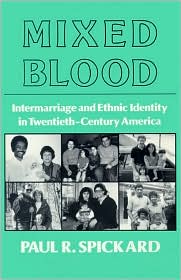
Mixed Blood: Intermarriage and Ethnic Identity in Twentieth-Century America

Posted in Asian Diaspora, Books, Family/Parenting, History, Identity Development/Psychology, Media Archive, Monographs, Social Science, United States on 2010-01-01 22:25Z by Steven

Mixed Blood: Intermarriage and Ethnic Identity in Twentieth-Century America

University of Wisconsin Press
December 1989
544 pages
6 x 9, 4 tables
Paperback ISBN-10: 0-299-12114-3
Paperback ISBN-13: 978-0-299-12114-3

Paul R. Spickard, Professor of History
University of California, Santa Barbara

Named an “Outstanding Book on Human Rights in the United States” by the Gustavus Myers Center for the Study of Human Rights.

Tags: , ,

Glamour in the Pacific: Cultural Internationalism and Race Politics in the Women’s Pan-Pacific

Posted in Asian Diaspora, Books, History, Media Archive, Monographs, Oceania, Women on 2009-12-29 15:58Z by Steven

Glamour in the Pacific: Cultural Internationalism and Race Politics in the Women’s Pan-Pacific

University of Hawai’i Press
July 2009
304 pages
15 illustrations
Cloth ISBN: 978-0-8248-3342-8

Fiona Paisley, Senior Lecturer, School of Humanities
Griffith University in Brisbane, Australia

Perspectives on the Global Past

Since its inception in 1928, the Pan-Pacific Women’s Association (PPWA) has witnessed and contributed to enormous changes in world and Pacific history. Operating out of Honolulu, this women’s network established a series of conferences that promoted social reform and an internationalist outlook through cultural exchange. For the many women attracted to the project—from China, Japan, the Pacific Islands, and the major settler colonies of the region—the association’s vision was enormously attractive, despite the fact that as individuals and national representatives they remained deeply divided by colonial histories.

Glamour in the Pacific tells this multifaceted story by bringing together critical scholarship from across a wide range of fields, including cultural history, international relations and globalization, gender and empire, postcolonial studies, population and world health studies, world history, and transnational history. Early chapters consider the first PPWA conferences and the decolonizing process undergone by the association. Following World War II, a new generation of nonwhite women from decolonized and settler colonial nations began to claim leadership roles in the Association, challenging the often Eurocentric assumptions of women’s internationalism. In 1955 the first African American delegate brought to the fore questions about the relationship of U.S. race relations with the Pan-Pacific cultural internationalist project. The effects of cold war geopolitics on the ideal of international cooperation in the era of decolonization were also considered. The work concludes with a discussion of the revival of “East meets West” as a basis for world cooperation endorsed by the United Nations in 1958 and the overall contributions of the PPWA to world culture politics.

Read the introduction here.

The limits of internationalist interventions into the politics of “race” and the historical legacies of imperialism, nationalism and colonialism familiar to much contemporary world history were fundamental questions preoccupying women at the PPWA also. As I argue in this book, the resilience of race thinking and the limits of the cross-cultural ethos within the PPWA should be read not as constituting the organization’s failure to somehow transcend history, but rather as a reminder of the inherence of racialism to modern feminism and liberal thought more generally. Wishing to be unbounded by territory yet inevitably preoccupied by territorial issues, the Pan-Pacific conferences discussed in the following chapters provide unique insight into the profoundly interconnected histories of race and gender that have shaped feminist internationalism, as well as other progressive politics, and illustrate their on-the-ground, embodied, and passionate contestations.  By viewing the interwar Pacific as a newly conceived territory of modernity in both spatial and temporal terms, this book sees the interwar period as a pivotal moment in the twentieth century, one in which new ways of thinking about the world opened up, however partially, to questions of diversity and difference at the global level that still occupy us today. Not least, these decades saw new accounts of the flow of populations across the Pacific, encouraging a generation of ethnographers, demographers, and anthropometrists to declare the similarities between the races and cultures and in the Pacific in particular, to announce the future intermixing of peoples and cultures as the Pacific solution to world affairs, and to predict the future advancement of world civilization. Warwick Anderson points out that racial intermixture was claimed by many of those undertaking studies in the Pacific such as Felix and Marie Keesing, who feature in this study, to announce the way forward for humankind, thus envisaging interracial relations in stark contrast to the disavowal of racial mixing in the United States and its anxious management in Australia and elsewhere. The Keesings were also critical of the mandate of their own country, New Zealand, in Samoa (alongside the United States), contrasting that regime with their ideal of advancement through dynamic racial and cultural flows.  As Tony Ballantyne explains, the region was conceptualized spatially and temporally as the product of waves of population linking more recent colonization to deep time.
Tags: , , ,

Fluid…: Identity in the Making

Posted in Articles, Asian Diaspora, Identity Development/Psychology, Media Archive, Women on 2009-12-17 16:57Z by Steven

Fluid…: Identity in the Making

The Vermont Connection Journal
The University of Vermont
2002-07-29

Amiko Matsumoto

I get the “what are you” question a lot. I usually get a warning that the question is coming: a tilt of the head, a squint of the eyes, a puzzled look as the wheels turn in my questioner’s head. She or he will try to figure out where I fit, what possible combination or part of the world looks like me. And when the search of the database ends without a satisfactory answer, my questioner will ask, “What are you?”

For a long time, I didn’t like this question because I didn’t have a neatly packaged answer. “My dad is sansei, a third generation Japanese American, and my mom’s ancestry goes back three generations to France and Switzerland,” I’d respond. Sometimes that answer would be satisfactory, but most often, it was not. “But what are YOU?” or “But you don’t look THAT Japanese” or even “Wow, your English is really good”—that’s what would usually follow.

When it did, I would feel like I had done something wrong, that I had failed, and that I should do more to explain myself. I wanted to be understood so badly that I sometimes tried to deny part of who I was in order to more successfully fit into someone’s perception of who I should be. But a few years ago, all of that changed. It wasn’t an overnight decision for me, but rather a process that was the result of many conversations, confrontations, and tears. At some point during my time in Burlington, I became comfortable with my biracial identity. More than comfortable, I became proud…

…I now see fluid identity as a strength. I like being able to move in and out of different communities, being able to express the cultural characteristics of my surroundings without much thought. Perhaps the best example of this came a few years ago while I was in line at Disneyland with a few friends. The women ahead of us were exchange students from Japan. We talked for the forty-five minutes or so it took to get on the roller coaster, and when we got off the ride, my friends commented on how I “became Japanese” as I talked with the students. “Your sentence structure changed. You bowed your head a lot. It was like you became a different person. Do you always do that around Japanese people?” Their questions truly caught me off guard, not because I felt insecure in who they perceived me to be, but because I really hadn’t noticed I did that. Fluid identity is just as it sounds: the ability to identify in a way that takes into account the cultural currents and adjust accordingly. The issues it raises permeate all aspects of who I am…

Read the entire article here.

AAST 398M – Multi-Racial Asian Americans

Posted in Asian Diaspora, Course Offerings, New Media, Social Science, United States on 2009-12-15 02:52Z by Steven

AAST 398M – Multi-Racial Asian Americans

University of Maryland
Spring 2010

The multiracial American population is increasing exponentially, as are available services and organizations to support it. With these shifts in mind, this class will examine multiracial America yesterday, today, and tomorrow, with an emphasis on multiracial Asian America in particular. Some questions of interest: what is the public consciousness of multiracial peoples? What is public policy regarding multiracial peoples? How do multiracial peoples view their struggles for identity, equity, and community? What “infrastructure” exists to support the multiracial population, and in what ways does it provide or fail to provide support? Having identified the crucial issues facing multiracial America, the class will culminate in collaborative projects to address them.

‘After all, I am partly Māori, partly Dalmatian, but first of all I am a New Zealander’

Posted in Articles, Asian Diaspora, Identity Development/Psychology, Media Archive, Oceania, Social Science, Women on 2009-12-12 21:04Z by Steven

‘After all, I am partly Māori, partly Dalmatian, but first of all I am a New Zealander’

Ethnography
Volume 6, Number 4 (December 2005)
pages 517-542
DOI: 10.1177/1466138105062477

Senka Božić-Vrbančić
The University of Auckland, New Zealand

This article explores the complexity of the processes of identity construction for ‘mixed-race’ individuals in New Zealand. It focuses on two life stories told by Māori-Croatian women in order to analyse how individuals of Māori-Croatian background constitute their own identity within the heterogeneous discursive practices (race, ethnicity, gender, class, nation) that have operated in New Zealand from colonial times to the bicultural New Zealand of the present. Experience of the hybridization of identity is placed within a framework of power relationships and the varieties of social struggles which help to constitute it from below.

Read or purchase the article here.

Tags: , , ,

Living Proof: Is Hawaii the Answer?

Posted in Articles, Asian Diaspora, Media Archive, Politics/Public Policy, Social Science, United States on 2009-12-12 19:10Z by Steven

Living Proof: Is Hawaii the Answer?

The Annals of the American Academy of Political and Social Science
Volume 530, Number 1 (November 1993)
pages 137-154
DOI: 10.1177/0002716293530001010

Glen Grant

Dennis M. Ogawa, Professor and Department Chair of American Studies
University of Hawaii

Hawaii has often been heralded for its relatively harmonious race relations, which encompass a great diversity of Asian and Pacific cultures. As the national concern with respect to multi-culturalism escalates into a debate over the merits of ethnicity versus amalgamation into the American melting pot, an understanding of Hawaii’s social and racial systems may demand greater scrutiny. The living proof that the islands’ people offer is not racial bliss or perfect equality but an example of how the perpetuation of ethnic identities can actually enhance race relations within the limits of a social setting marked by (1) the historical development of diverse ethnic groups without the presence of a racial or cultural majority; (2) the adherence to the values of tolerance represented in the Polynesian concept of aloha kanaka, an open love for human beings; and (3) the integration of Pacific, Asian, European, and Anglo-American groups into a new local culture.

Read or purchase the article here.

Tags: , , , , ,

Asian Americans: From Racial Category to Multiple Identities

Posted in Asian Diaspora, Books, Census/Demographics, Identity Development/Psychology, Media Archive, Monographs, Politics/Public Policy, Social Science, United States on 2009-12-08 21:24Z by Steven

Asian Americans: From Racial Category to Multiple Identities

Alta Mira Press
April 1998
116 pages
Cloth: 2 0-7619-9172-7 / 978-0-7619-9172-4 
Paper: 2 0-7619-9173-5 / 978-0-7619-9173-1 

Juanita Tamayo Lott

Does race matter? Having witnessed the civil rights movement and changes in immigration laws, we continue to ask ourselves this complex question. In the United States, racial status and identity has historically been defined by the White majority. Asian Americans: From Racial Category to Multiple Identities shows that race continues to be a major organizing principle in the US.  Using census data on “Blacks,” “White Ethnics,” and “Nonblack Minorities,” Lott deconstructs widely accepted majority/minority classifications to reveal the multiplicity of identities surrounding each group.

Table of Contents

  • About the Author
  • Acknowledgment
  • Dedication
  • What Are You
  • Chapter One Race: A Major Organizing Principle
  • Chapter Two Directive 15 Origins
  • Chapter Three Continuing Utility of Directive 15
  • Chapter Four Asian Americans: A Racial Category
  • Chapter Five Asian Americans: A Multiplicity of Identities
  • Bibliography
  • Index
Tags: ,

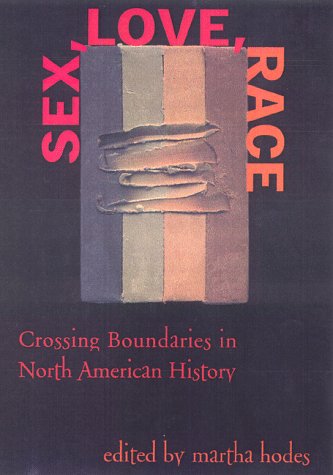
Sex, Love, Race: Crossing Boundaries in North American History

Posted in Anthologies, Asian Diaspora, Books, History, Law, Media Archive, Slavery, Social Science, United States, Women on 2009-12-05 02:53Z by Steven

Sex, Love, Race: Crossing Boundaries in North American History

New York University Press
1999
416 pages
Cloth ISBN: 9780814735565
Paperback ISBN: 9780814735572

Edited by

Martha Hodes, Professor of History
New York University

Since pre-colonial days, America has been both torn apart and united by love, sex, and marriage across racial boundaries. Whether motivated by violent conquest, economics, lust, or love, such unions have disturbed some of America’s most sacred beliefs and prejudices.

Sex, Love, Race provides a historical foundation for contemporary discussions of sex across racial lines, which, despite the numbers of interracial marriages and multiracial children, remains a controversial issue today. The first historical anthology to focus solely and widely on the subject, Sex, Love, Race gathers new essays by both younger and well-known scholars which probe why and how the specter of sex across racial boundaries has so threatened Americans of all colors and classes.

Traversing the whole of American history, from liaisons among Indians, Europeans, and Africans to twentieth-century social scientists’ fascination with sex between “Orientals” and whites, the essays cover a range of regions, races, ethnicities, and sexual orientations. In so doing, Sex, Love, Race, sketches a larger portrait of the overlapping construction of racial, ethnic, and sexual identities in America.

Tags: ,

Rethinking inclusion and exclusion: the question of mixed-race presence in late colonial India

Posted in Articles, Asian Diaspora, History, Identity Development/Psychology, New Media, Social Science on 2009-11-27 03:12Z by Steven

Rethinking inclusion and exclusion: the question of mixed-race presence in late colonial India

University of Sussex Journal of Contemporary History
Issue Five
2002
pp. 1-22

Satoshi Mizutani

This article examines the ambivalent meanings of mixed-race presence in late colonial India (from the mid-nineteenth to the mid-twentieth centuries). In doing so it contributes insights for pursuing the theme of inclusion and exclusion in the historiography of imperialism and colonialism. Studies on the imperial politics of inclusion and exclusion have not fully explicated the complex intersections between colonial exclusion and the metropolitan bourgeois hierarchy. We still tend, rather habitually, to mould our analytic categories, according to the coloniser/colonised dichotomy. This is not at all to imply that the analytic and empirical weight of this dichotomy should be downplayed: rather, it means that the coloniser/colonised axis itself stands in need of being re-considered.

The post-Independent historiography of colonial India has attended to the internal ordering of the colonised society, so as to evaluate the correlation between colonialist exclusion and nationalist inclusion, and to research the multiplicities of racial, class, gender and caste subordination under imperialism. In contrast, less attention has been paid to the internal configuration of the coloniser’s society. As Ann Stoler has pointed out, studies of colonial societies have long tended to assume white communities and colonisers as an abstract force, comprising a seamless homogeneity of bureaucratic and commercial agents. But it is possible, as this paper will show, to challenge this conventional view in ways that address the important imbrications of ‘racial’, class and gender identities.

This paper assesses the imperial significance of mixed-race identity in order to show that the imperial formation of ‘whiteness’ was predicated on the metropolitan order of class as well as the bipolar conceptualisation of racial difference. It will seek to demonstrate how the heterogeneous subjects of British society (men, women, middle or working classes, children, as well as ‘mixed bloods’) were differentially included in, or excluded from, the imperial body politic. Pointing to this internal differentiation, however, should not be taken as an end in itself.  Rather, it should be done as a step to show how the internal hierarchies of British society had repercussions on external relations with the colonised. In other words, the analysis of the internal composition of the coloniser’s society in this paper will not be intended as a way of replacing the coloniser/colonised dichotomy, but, on the contrary, will be meant as a means precisely to re-consider it from another vantage point…

Read the entire article here.

Tags: , , , ,

Multiraciality Reigns Supreme? Mixed-Race Japanese Americans and the Cherry Blossom Queen Pagent

Posted in Articles, Asian Diaspora, Identity Development/Psychology, Media Archive, Social Science on 2009-11-27 02:44Z by Steven

Multiraciality Reigns Supreme? Mixed-Race Japanese Americans and the Cherry Blossom Queen Pagent

Amerasia Journal
1997
Volume 23, No. 1
pp. 113-128

Rebecca Chiyoko King-O’Riain, Lecturer in Sociology
National University of Ireland, Maynooth

The notes of the koto echo through the hall and I am mesmerized by the vision on stage.  Beautiful Japanese women dressed in kimono who seem to glide across the stage as if it were ice, their arms outstretched as if to begin a hug so that their ornate sleeves flap slightly in the breeze.  But then I squint to get a closer look, and I suddenly can hear the synthesized drum beat accompanying the plaintive sounds of the koto and can see that not all of the faces look completely Japanese.

Since 1968, a northern California pageant has chosen a queen to reign over the Cherry Blossom Festival held each April in San Francisco’s Japantown.  The queen has come to symbolize northern California’s Japanese American community in many ways.  However, in the past five years half of the candidates, and two of the queens, have not been racially 100 percent Japanese.  The increased participation of mixed-race Japanese Americans has an effect on both the mixed-race and the mono-racial participants in the Queen Pagent as well as the community at large.  This article examines how mixed-race Japanese American women define themselves in what has traditionally been a monoracial setting.  In the context of the pageant, what does it mean to be Japanese American?  How is that defined and how is that definition changing due to the increased participation of mixe-race Japanese Americans?…

Read the entire article here.

Tags: ,