Partly Colored: Asian Americans and Racial Anomaly in the Segregated South

Posted in Asian Diaspora, Books, History, Identity Development/Psychology, Law, Literary/Artistic Criticism, Media Archive, Monographs, Native Americans/First Nation, Politics/Public Policy, Social Science, United States on 2010-06-28 20:46Z by Steven

Partly Colored: Asian Americans and Racial Anomaly in the Segregated South

New York University Press
2010-04-23
304 pages
13 illustrations
Cloth ISBN: 9780814791325
Paperback ISBN: 9780814791332

Leslie Bow, Professor of English and Asian American Studies
University of Wisconsin, Madison

Arkansas, 1943. The Deep South during the heart of Jim Crow-era segregation. A Japanese-American person boards a bus, and immediately is faced with a dilemma. Not white. Not black. Where to sit?

By elucidating the experience of interstitial ethnic groups such as Mexican, Asian, and Native Americans—groups that are held to be neither black nor white—Leslie Bow explores how the color line accommodated—or refused to accommodate—“other” ethnicities within a binary racial system. Analyzing pre- and post-1954 American literature, film, autobiography, government documents, ethnography, photographs, and popular culture, Bow investigates the ways in which racially “in-between” people and communities were brought to heel within the South’s prevailing cultural logic, while locating the interstitial as a site of cultural anxiety and negotiation.

Spanning the pre- to the post- segregation eras, Partly Colored traces the compelling history of “third race” individuals in the U.S. South, and in the process forces us to contend with the multiracial panorama that constitutes American culture and history.

Table of Contents

Acknowledgments
Introduction: Thinking Interstitially

  1. Coloring between the Lines: Historiographies of Southern Anomaly
  2. The Interstitial Indian: The Lumbee and Segregation’s Middle Caste
  3. White Is and White Ain’t: Failed Approximation and Eruptions of Funk in Representations of the Chinese in the South
  4. Anxieties of the ‘Partly Colored’
  5. Productive Estrangement: Racial-Sexual Continuums in Asian American as Southern Literature
  6. Transracial/Transgender: Analogies of Difference in Mai’s America

Afterword: Continuums, Mobility, Places on the Train
Notes
Works Cited
Index
About the Author

Read the introduction here.

Tags: ,

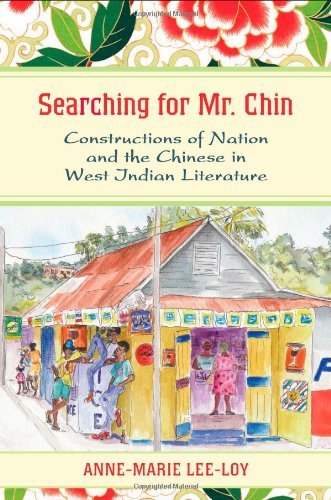
Searching for Mr. Chin: Constructions of Nation and the Chinese in West Indian Literature

Posted in Asian Diaspora, Books, Caribbean/Latin America, Literary/Artistic Criticism, Media Archive, Monographs on 2010-06-24 19:33Z by Steven

Searching for Mr. Chin: Constructions of Nation and the Chinese in West Indian Literature

Temple University Press
May 2010
192 pages
5.5×8.25
Cloth EAN: 978-1-43990-130-4; ISBN: 1-4399-0130-9
Electronic Book: EAN: 978-1-43990-132-8

Anne-Marie Lee-Loy, Assistant Professor of English
Ryerson University, Toronto, Canada

West Indian literary representations of local Chinese populations illuminate concepts of national belonging

What do twentieth-century fictional images of the Chinese reveal about the construction of nationhood in the former West Indian colonies? In her groundbreaking interdisciplinary work, Searching for Mr. Chin, Anne-Marie Lee-Loy seeks to map and understand a cultural process of identity formation: “Chineseness” in the West Indies. Reading behind the stereotypical image of the Chinese in the West Indies, she compares fictional representations of Chinese characters in Jamaica, Trinidad, and Guyana to reveal the social and racial hierarchies present in literature by popular authors such as V.S. Naipaul and Samuel Selvon, as well as lesser known writers and hard to access literary texts.

Using historical, discursive, and theoretical frameworks for her literary analysis, Lee-Loy shows how the unstable and ambiguous “belonging” afforded to this “middleman minority” speaks to the ways in which narrative boundaries of the nation are established. In addition to looking at how Chinese have been viewed as “others,” Lee-Loy examines self-representations of “Chineseness” and how they complicate national narratives of belonging.

Tags: ,

Multifaceted Identity of Interethnic Young People: Chameleon Identities

Posted in Asian Diaspora, Books, Family/Parenting, Identity Development/Psychology, Media Archive, Monographs, Social Science, United Kingdom on 2010-06-24 18:27Z by Steven

Multifaceted Identity of Interethnic Young People: Chameleon Identities

Ashgate Publishing
May 2010
Illustrations: Includes 24 (including 5 tables) line drawings
234 x 156 mm
224 pages
Hardback
ISBN: 978-0-7546-7860-1
eBook ISBN: 978-0-7546-9691-9
BL Reference: 305.8’0083-dc22
 
Sultana Choudhry, Principal Lecturer in Psychology and Director of Child, Adolescent and Family Mental Health
London Metropolitan University, UK

The number of interethnic individuals is one of the most striking demographic changes in Britain over the last decade. Demonstrating both that identity is fluid and multifaceted rather than fixed, and that people of an interethnic background do not necessarily experience identity conflict as proposed by some social scientists, Multifaceted Identity of Inter-ethnic Young People explores the manner in which interethnic young people define their identities. In doing so, it also looks at their parents and their experiences as interethnic couples in society. Presenting rich new empirical information relating to young people of Black, White, Asian and Chinese interethnic backgrounds, this book also examines the impact that inter-religious relationships have upon young people’s sense of identity, whilst also discussing the implications of the election of America’s first interethnic president. As such, it will be of interest to social scientists working in the fields of race, ethnicity and identity.

Read the introduction here.

Table of Contents

Part 1: Placing Identity Theory and Research in Context
Introduction
Social science theories and research on identity
The science of ethnic and inter-ethnic identity

Part 2: The Research
How the research was carried out

Part 3: Voices – Non Inter-Ethnic and Inter-Ethnic
Non-inter ethnic parents and children
Inter-ethnic couples

Part 4: The Coming of the Chameleons
Who am I? Identities adopted
A chameleon identity
The fine art of choosing an identity
The impact of being inter-ethnic
Conclusions: the future is inter-ethnic

Appendices
References
Index

Tags: ,

Ward Helps Biracial Youths on Journey Toward Acceptance

Posted in Articles, Asian Diaspora, Identity Development/Psychology, Media Archive, Social Science on 2010-06-21 02:37Z by Steven

Ward Helps Biracial Youths on Journey Toward Acceptance

The New York Times
2009-11-09

John Branch

PITTSBURGH — Steelers receiver Hines Ward surrounded himself with old friends at the dinner table on a recent Saturday night. The bond was as obvious as the look on everyone’s faces — half Korean, half something else. The shared experience was far more than skin deep.

There was a boy who was bullied into depression and tried to commit suicide. There was a girl ordered by a teacher to keep her hair pulled back tight, to straighten the natural curls she inherited from her black father. There was another too intimidated by her taunting classmates to board the bus, choosing instead the humiliating and lonely walk to school. There were the boys who were beaten regularly and teased mercilessly. There were college-age girls who broke into tears when telling their stories of growing up biracial in South Korea.

But when they looked around the table, they saw familiarity. And a future…

…“It was hard for me to find my identity,” Ward said. “The black kids didn’t want to hang out with me because I had a Korean mom. The white kids didn’t want to hang out with me because I was black. The Korean kids didn’t want to hang out with me because I was black. It was hard to find friends growing up. And then once I got involved in sports, color didn’t matter.”

But there is no such relief valve for most of the estimated 19,000 biracial children in South Korea. The fast-growing majority of them are Kosians, with a parent from a different Asian country.

The number of Amerasians — those generally with white or black American fathers, often from the military — is slowly shrinking. But their mere appearance leads to harsher discrimination, officials said.

“Korea is traditionally a single blood,” said Wondo Koh, a Korean who met up with the group in Pittsburgh while doing business. “We Koreans are not comfortable with this mixed-blood situation. We have become familiar now, but we did not know how to cope.”…

Read the entire article here.

Tags: , ,

‘Celtic Samurai’ Tells Story of Hapa Family Life

Posted in Articles, Asian Diaspora, Identity Development/Psychology, Live Events, New Media, United States on 2010-06-20 20:44Z by Steven

Celtic Samurai’ Tells Story of Hapa Family Life

Hokubei.com – North America’s Japanese Newsource
2010-06-18

“Celtic Samurai,” a storytelling program by Dr. Stephen Murphy-Shigematsu on the family life of a Japanese mother and American-born Irish father, will be presented by the Japanese American National Library and the Nichi Bei Weekly on Saturday, June 19, [2010] at 1:30 p.m. in the Union Bank Hospitality Room, located in the Japan Center’s East Mall, Post and Buchanan streets in San Francisco.

The subtitle, “A Boy’s Transcultural Journey Searching for Shamrocks in Zen Gardens,” expresses the playful nature of the stories that illuminate how political, legal and ideological forces influence the lives of families and individual identities

Read the entire article here.

Tags: ,

Marrying Out: One-in-Seven New U.S. Marriages is Interracial or Interethnic

Posted in Asian Diaspora, Census/Demographics, Media Archive, Reports, Social Science, United States on 2010-06-04 21:56Z by Steven

Marrying Out: One-in-Seven New U.S. Marriages is Interracial or Interethnic

Pew Research Center
2010-06-04
41 pages

Paul Taylor, Project Director
Pew Research Center

Jeffrey S. Passel, Senior Demographer
Pew Research Center

Wendy Wang, Research Associate
Pew Research Center

Jocelyn Kiley, Research Associate
Pew Research Center

Gabriel Velasco, Research Analyst
Pew Research Center

Daniel Dockterman, Research Assistant
Pew Research Center

A record 14.6% of all new marriages in the United States in 2008 were between spouses of a different race or ethnicity from each other, according to a Pew Research Center analysis of new data from the U.S. Census Bureau.

That figure is an estimated six times the intermarriage rate among newlyweds in 1960 and more than double the rate in 1980.

This dramatic increase has been driven in part by the weakening of longstanding cultural taboos against intermarriage and in part by a large, multi-decade wave of immigrants from Latin America and Asia.

In 1961, the year Barack Obama’s parents were married, less than one in 1,000 new marriages in the United States was, like theirs, the pairing of a black person and a white person, according to Pew Research estimates. By 1980, that share had risen to about one in 150 new marriages. By 2008, it had risen to one-in-sixty.

Key findings:

  • A record 14.6% of all new marriages in the United States in 2008 were between spouses of a different race or ethnicity from one another. This includes marriages between a Hispanic and non-Hispanic (Hispanics are an ethnic group, not a race) as well as marriages between spouses of different races — be they white, black, Asian, American Indian or those who identify as being of multiple races or “some other” race.
  • Among all newlyweds in 2008, 9% of whites, 16% of blacks, 26% of Hispanics and 31% of Asians married someone whose race or ethnicity was different from their own.
  • Gender patterns in intermarriage vary widely. Some 22% of all black male newlyweds in 2008 married outside their race, compared with just 9% of black female newlyweds. Among Asians, the gender pattern runs the other way. Some 40% of Asian female newlyweds married outside their race in 2008, compared with just 20% of Asian male newlyweds. Among whites and Hispanics, by contrast, there are no gender differences in intermarriage rates.
  • Rates of intermarriages among newlyweds in the U.S. more than doubled between 1980 (6.7%) and 2008 (14.6%). However, different groups experienced different trends. Rates more than doubled among whites and nearly tripled among blacks. But for both Hispanics and Asians, rates were nearly identical in 2008 and 1980.
  • These seemingly contradictory trends were both driven by the heavy, ongoing Hispanic and Asian immigration wave of the past four decades. For whites and blacks, these immigrants (and, increasingly, their U.S.-born children who are now of marrying age) have enlarged the pool of potential spouses for out-marriage. But for Hispanics and Asians, the ongoing immigration wave has also enlarged the pool of potential partners for in-group marriage.
  • There is a strong regional pattern to intermarriage. Among all new marriages in 2008, 21% in the West were interracial or interethnic, compared with 13% in both the South and Northeast and 11% in the Midwest.
  • Most Americans say they approve of racial or ethnic intermarriage — not just in the abstract, but in their own families. More than six-in-ten say it “would be fine” with them if a family member told them they were going to marry someone from any of three major race/ethnic groups other than their own.
  • More than a third of adults (35%) say they have a family member who is married to someone of a different race. Blacks say this at higher rates than do whites; younger adults at higher rates than older adults; and Westerners at higher rates than people living in other regions of the country.

Table of Contents

Executive Summary

Section I. Overview
Section II. Intermarriage by Race and Ethnicity
Section III. Intermarriage Trends
Section IV. Attitudes about Intermarriage

Appendices
Methodology
Additional charts
State and Regional Rates

Read the entire report here.

Tags: , , , , , , ,

The nature of bi-ethnic identity in young adults of Asian and European descent and their perceptions of familial influences on its development

Posted in Asian Diaspora, Dissertations, Identity Development/Psychology, Media Archive, United States on 2010-05-28 04:47Z by Steven

The nature of bi-ethnic identity in young adults of Asian and European descent and their perceptions of familial influences on its development

University of Maryland
Department of Human Development
2009

Amanda Laurel Wagner Hoa

The purpose of this study was to identify the key constructs of bi-ethnic identity, the key familial influences, and other salient influences on bi-ethnic identity as perceived by young adults of Asian and European descent. The rapidly changing demographics of the United States provide an impetus for research on the developmental processes of bi-ethnic individuals. In this qualitative study, participants were interviewed about their bi-ethnic identities and possible influences on bi-ethnic identity development. Data analysis for this study incorporated techniques from grounded theory (Strauss & Corbin, 1990) and analytic induction (LeCompte & Preissle, 1993). Five bi-ethnic identity types emerged from participants’ responses to interview questions: majority identity, minority identity, dual identity, integrated identity, and unresolved identity. These identity types are a unique contribution to the literature in that they specify how individuals of Asian and European descent define themselves. Additionally, this study identified four facets of bi-ethnic identity that indicate how bi-ethnic individuals think and feel about their background: centrality, self-label, affirmation, and affect. Six categories of influences on bi-ethnic identity development emerged from responses to interview questions (parental, extended family, personal, peer, environmental, discrimination), with 18 subcategories. This study is important because most prior research on bi-ethnic identity has focused on uncovering developmental stages, while we lack understanding of the nature of bi-ethnic identity and influences on its development. This study was important given the dearth of research on bi-ethnic Asians, although future research is needed with other bi-ethnic groups.

Download restricted until 2015-10-06.

Tags: , , ,

Multiple choice: Literary racial formations of mixed race Americans of Asian descent

Posted in Asian Diaspora, Dissertations, Literary/Artistic Criticism, Media Archive, United States on 2010-05-27 03:12Z by Steven

Multiple choice: Literary racial formations of mixed race Americans of Asian descent

Rice University
May 2001
194 pages

Shannon T. Leonard
Rice University

A thesis submitted in partial fulfullment of the requirements for the degree Doctor of Philosophy

This dissertation reassesses key paradigms of Asian American literary studies in the interest of critically accounting for the cultural productions of mixed race Asian Americans. Over the last twenty years, Asian American literary criticism has focused narrowly on a small body of writers, such as Maxine Hong Kingston, David Henry Hwang, and Amy Tan, who achieved mainstream popularity with U.S. feminists and/or multiculturalists, or focused on authors like Frank Chin and John Okada whose literary personas and works lend themselves to overt appropriations for civil rights causes and/or identity politics. “Multiple Choice” participates in a renewed interest in the expansion of Asian American literary boundaries and critical inquiry. “Multiple Choice” addresses the complex racial formations of select mixed race Asian American authors and subjects from the turn of the century to the present. My study situates, both theoretically and historically, the diverse ways in which mixed race peoples variously represent themselves. As the dissertation’s metaphorical title suggests, self-representations, or an individual’s ethnic choices, especially in the case of mixed race Americans, are constantly adjudicated by others (e.g. cultural critics, the media, or U.S. census designers and evaluators). Notwithstanding the omnipresence of these external forces, “Multiple Choice” also engages the complex sets of choices made from within specific Asian American communities, particularly those choices that come in conflict with other Asian American identities. The dissertation looks at writers both well-known and virtually unknown: Edith Eaton, Winnifred Eaton, Sadakichi Hartmann, Aimee Liu, Chang-rae Lee, Amy Tan, Shawn Wong, Jessica Hagedorn, Peter Bacho, Thaddeus Rutkowski, and Paisley Rekdal.

Read the entire dissertation here.

Tags: , , , , , , , , , , , , , , , , , ,

The Marital Patterns of Multiracial People in the United States: A Comparison of Asian/Whites and Black/Whites

Posted in Asian Diaspora, Media Archive, Papers/Presentations, Social Science, United States on 2010-05-23 19:46Z by Steven

The Marital Patterns of Multiracial People in the United States: A Comparison of Asian/Whites and Black/Whites

American Sociological Association Annual Meeting
Hilton San Francisco
San Francisco, California
2009-08-08
20 pages

Michael Miyawaki
Fordham University

In this paper, I examine and compare the marital patterns of two multiracial groups—Asian/whites and black/whites—in the United States. Examining the marital behavior of multiracial people is of particular importance to understanding their state of assimilation. Furthermore, the race of their spouse has important consequences for the racial classification of their offspring. Because the racial identity and experience of multiracial people differ by racial background (i.e., Asian/white, black/white, etc.), there may be differences in the marital patterns of multiracial subgroups in a marriage market segmented by race. In this study, I limit my analysis to non-Latino Asian/white adults (18 and older) married to non-Latino whites, Asians, and Asian/whites, and non-Latino black/white adults married to non-Latino whites, blacks, and black/whites. To compare the odds of Asian/whites and black/whites marrying whites, their nonwhite counterparts, and their multiracial counterparts, I use multinomial logistic regression. While both Asian/whites and black/whites are most likely to marry whites, results show significant differences between the two groups in terms of their odds of marrying whites, nonwhites, and multiracials. Whereas Asian/whites are more likely than black/whites to marry whites (vs. nonwhites) and multiracials (vs. nonwhites), black/whites are more likely than Asian/whites to marry nonwhites. Thus, results demonstrate that not only is the marriage market segmented by race among monoracials, it is also racially segmented among multiracials.

To read the entire paper, click here.

Tags: ,

The relationship between the ‘racial’ experiences of the ‘half Japanese’ and Japanese identity/racial discourse: The process of ‘othering’

Posted in Asian Diaspora, Dissertations, Media Archive, Social Science on 2010-05-11 18:06Z by Steven

The relationship between the ‘racial’ experiences of the ‘half Japanese’ and Japanese identity/racial discourse: The process of ‘othering’

2008
58 pages

Marcia Yumi Lise

People of mixed heritage in Japan, often referred to as Hafu, are often subject to ethnic/racial hurdles in Japan. The distinct Japanese racial thinking and the monoethnic myth affect the ways in which Hafus are considered in Japanese society. It is often difficult for Hafus to be considered ‘ordinary’ Japanese regardless of their Japanese upbringing.

Through a qualitative research methodology, this study sets out to explore and address the issues of ‘othering’ experienced by Hafus in Japan and examine the ways in which Japanese racial thinking affects their position in society and their sense of belonging from the point of view of the Hafus.

Read the entire thesis here.

Tags: , ,