Racing ahead, going nowhere

Posted in Articles, Asian Diaspora, Media Archive, Politics/Public Policy, Social Science on 2012-01-22 19:23Z by Steven

Racing ahead, going nowhere

Very Fine Commentary
2011-04-17

Yoong Ren Yan, Editor

Are we running around in circles with our policies on race?

Racism is bad. What more is there to say?”

It may not have been the case just 50 years ago in the time of Rosa Parks and Martin Luther King, but in today’s world, being against racism is rather unremarkable. Part of the reason Nelson Mandela is such a universally revered figure is because his cause is no longer controversial. Those that are the least bit racist are promptly and collectively refuted, and with good reason: racism is not only astoundingly irrational, but also one of the worst forms of injustice humans have ever inflicted on others.

Yet there is more to the issue of race. Our insistence that people not be judged based on their skin has not extended to consensus on how to achieve that end. While we all agree that racial discrimination, exploitation and conflict should be things of the past, there are, broadly, two contradictory visions for the future. Which of these should be pursued, and by what means, are sources of unrecognised controversy, and therefore deserve further debate.

More is not better

Singapore represents one of these cases. The Singaporean model is encapsulated in our national obsession with ‘multi-’: we are taught that our nation is multi-racial, multi-cultural, multi-religious, multi-lingual. We present ourselves as a rojak society, a mix of different cultures and ethnicities whose flavours blend into a single dish. Our government is committed to ‘racial harmony’, and envisages Singapore’s four races coexisting peacefully, accepting one another’s differences and working together to build a nation.

For a country that not so long ago was mired in communal violence, division and mutual mistrust, Singapore has made notable progress. It is a prime example of multi-racialism. It has succeeded with two parallel strategies: firstly, to group the population into CMIO (Chinese Malay Indian Others); and secondly, to encourage, and where necessary enforce, cohesion amongst these four races. This approach has manifested itself in our policies on language (English first, no dialects), education (English-medium schools), housing (the Ethnic Integration Policy), social security (ethnic self-help groups) and even the media (censorship, the Sedition Act).

Yet, as Minister Mentor Lee Kuan Yew constantly reminds us, our multi-racial society is still fragile and vulnerable, and could just unravel if we become complacent. In a world stricken with ethnic conflict, his words resonate. But in some senses, Singapore’s drive to become multi-racial has sown the seeds of subterranean tension by continuing to entrench notions of race in society, just at a time when such notions are gradually fading away. Instead of allowing the winds to blow over our divisions, multi-racialism deepens the lines in the sand and widens our already narrowing differences.

This is exemplified by Racial Harmony Day, an attempt to promote cohesion by showcasing the four nationally-sanctioned cultures. Exposure to cultural differences may have been useful in our formative years, but today, a day that celebrates differences rather than similarities and inculcates the notion of race in our children from a young age seems rather anachronistic. Worse yet, divergent racial identities are enforced even when these identities have become far fainter over the years. The result is a farce where Singaporeans put in the special effort to buy cheongsams or learn how to play the angklung on Racial Harmony Day to fit into the race and culture of which they are supposedly a part…

…In concentrating on multi-racialism, our strategies have obstructed society from becoming less race-conscious, which has artificially perpetuated the existence of race in Singapore, with its attendant tensions and clashes. It is difficult enough to encourage integration. If society spontaneously turns away from race, why should the government stick obsessively to its multi-racial stance?…

Read the entire article here.
Tags: , ,

Multiple Realities: Reconsidering Multiracialism in Singapore

Posted in Asian Diaspora, Books, Media Archive, Monographs, Social Science on 2012-01-22 17:13Z by Steven

Multiple Realities: Reconsidering Multiracialism in Singapore

World Scientific Publishing
Summer 2012
150 pages
ISBN: 978-981-270-604-1; 981-270-604-6

Eugene K. B. Tan, Assistant Professor of Law
Singapore Management University, Singapore

How has Singapore’s multiracialism policy evolved, and how has it impacted on ethnic relations and nation-building in a secure, yet perpetually vulnerable, Singapore? This important book addresses these important questions through a critical analysis of ethnic markers in key facets of Singaporean life, such as elections and race quotas in public housing, national service, ethnic self-help groups, the rise of “Chineseness” and increased religious piety. The author challenges the conventional wisdom that multiracialism in Singapore is unequivocally race-blind or nonethnic in its approach. Instead, he argues that Singapore is an ethnic-conscious state wherein race, culture and language are instrumentally mobilized as key resources in nation-building and political governance. This could have potentially ethnic/racial enhancing or polarizing effects, thus undermining the stability of the multiracial framework in Singapore.

Contents:

  • Introduction — The Multiple Realities of Multiracialism
  • Race and Multiracialism as a Mode of Governance in Singapore
  • Institutionalizing Multiracialism: The Legal, Institutional Framework and the Periodization of Ethnic Relations
  • Electoral Politics: Electing Race Consciousness?
  • The Citizen’s Army: The Dilemmas of Faith, Loyalty and Citizenship
  • The Essence of Self-Help and the Dilemmas of Ethnic Essentialism
  • Multiracialism and the Growing Assertion of Chineseness: Ethnic Consciousness as a Cultural Resource
  • The Specter of Religious Extremism: Veiled Threats, Fearful Faithful Piety and Enlarging the Common Space
  • The Impoverishment of Multiracialism: The Lack of Shared Institutions
  • Conclusion: The Way Ahead
Tags: , ,

Census and Identity: The Politics of Race, Ethnicity, and Language in National Censuses

Posted in Africa, Anthologies, Asian Diaspora, Books, Canada, Census/Demographics, Europe, Media Archive, Politics/Public Policy, United States on 2012-01-22 02:00Z by Steven

Census and Identity: The Politics of Race, Ethnicity, and Language in National Censuses

Cambridge University Press
January 2002
224 pages
Dimensions: 228 x 152 mm
Paperback ISBN: 9780521004275
Hardback ISBN: 9780521808231
eBook ISBN: 9780511029325
DOI: 10.2277/0521004276

Edited by:

David I. Kertzer, Dupee University Professor of Social Science, Professor of Anthropology & Italian Studies
Brown University

Dominique Arel, Professor of Political Science
University of Ottawa

This study examines the ways that states have attempted to pigeon-hole the people within their boundaries into racial, ethnic, and language categories. These attempts, whether through American efforts to divide the U.S. population into mutually exclusive racial categories, or through the Soviet system of inscribing nationality categories on internal passports, have important implications not only for people’s own identities and life chances, but for national political and social processes as well. The book reviews the history of these categorizing efforts by the state, offers a theoretical context for examining them, and illustrates the case with studies from a range of countries.

Features

  • The first in a new series that specifically addresses the needs of the student
  • Focuses on the charged topic of efforts to categorize individuals into racial and ethnic categories in the national census
  • Highly integrated volume with extensive introductory chapter that helps define a new field

Table of Contents

  1. Censuses, identity formation, and the struggle for political power David I. Kertzer and Dominique Arel
  2. Racial categorization in censuses Melissa Nobles
  3. Ethnic categorization in censuses: comparative observations from Israel, Canada, and the United States Calvin Goldscheider
  4. Language categories in censuses: backward- or forward-looking? Dominique Arel
  5. The debate on resisting identity categorization in France Alain Blum
  6. On counting, categorizing, and violence in Burundi and Rwanda Peter Uvin
  7. Identity counts: the Soviet legacy and the census in Uzbekistan David Abramson.
Tags: , , , , , , , , , , , , ,

Mixing it up: Multiracialism redefines Asian American identity

Posted in Articles, Asian Diaspora, Census/Demographics, Identity Development/Psychology, Media Archive, Social Science, United States on 2012-01-21 21:43Z by Steven

Mixing it up: Multiracialism redefines Asian American identity

San Francisco Chronicle
2011-02-11

Jeff Yang, Special to SF Gate

How the mainstreaming of multiracialism is forcing a more fluid definition of Asian American identity
 
Like many immigrants, my parents see identity as a bucket. My mother and father had come to America carefully bearing a pail of old-world traditions, cherished customs, shining morals and rock-ribbed ethics; they’d worked hard and sacrificed greatly to give me and my sister the things they never had. And then, they handed us the bucket—knowing that in the transfer, a little bit of culture would inevitably slosh out over the side…

…Going fourth

It’s something that needs to be considered. As multiracial identity becomes the Asian American mainstream—by 2020, it’s projected that one out of five Asians in the U.S. will be multiracial; by 2050, that ratio will exceed one in three—the population of persons with one-fourth Asian heritage or less is poised to spike.
 
“I’m half Japanese, and my husband is all Irish,” says sociologist Dr. Rebecca Chiyoko King-O’Riain. “Our kids have very Celtic coloration—pale skin and fair hair. They’re not obviously Asian in appearance at all, and yet they still feel very connected with that part of their heritage. And that’s becoming more common, particularly among Japanese Americans, where multiracial identity is so common. There’s even a term for it I heard in California: ‘Quapa.’ If hapas are half Asians, quapas—like my kids—are quarter-Asians.”
 
Quapas have an overwhelmingly non-Asian ancestry; many don’t look Asian and don’t have Asian surnames. Yet anecdotal evidence suggests that as Asian America becomes more multiracial, a growing number of quapa Asians are affirmatively reconnecting with their Asian heritage, and actively embracing a sense of Asian American identity—challenging society’s conventional means of defining race in the process…

Read the entire article here.

Tags: , , ,

Envisioning Chinese Identity and Managing Multiracialism in Singapore

Posted in Asian Diaspora, Communications/Media Studies, Identity Development/Psychology, Media Archive, Papers/Presentations, Politics/Public Policy, Social Science on 2012-01-21 16:14Z by Steven

Envisioning Chinese Identity and Managing Multiracialism in Singapore

International Association of Societies of Design Research Conference
2009-10-18 through 2009-10-22
Coex, Seoul, Korea
9 pages

Leong Koon Chan, Associate Professor
School of Design Studies
University of New South Wales, Sydney, Australia

Multiracialism and bilingualism are key concepts for national ideology and policy in the management of Singapore for nation building. Multiracialism is implemented in social policies to regulate racial harmony in the population of Chinese-Malay-Indian-Other, a social stratification matrix inherited from the British administration. Bilingualism—the teaching and learning of English and the mother tongue in primary and secondary schools—is rationalised as the ‘cultural ballast’ to safeguard Asian identities and values against Western influences. This focus on ‘culture’ as a means of engendering a relationship between the individual and the nation suggests that as a tool for government policy culture is intricately linked to questions of identity. In discussing multiracialism it is necessary to address ethnicity for the two concepts are intertwined.

This paper investigates the crucial role that imagery plays in our understanding of nationalism by examining the policy and process of language reform for the Chinese in Singapore through the visual culture of the Speak Mandarin Campaigns, 1979-2005. Drawing upon object analysis, textual/document analysis and visual interpretation, the research analyses how the graphic communication process is constructed and reconstructed as indices of government and public responses to the meanings of multiracialism and Chineseness.

Central to the findings are Anthony D. Smith’s (1993) contention that “national symbols, customs and ceremonies are the most potent and durable aspects of nationalism,” and Raymond Williams’ (1981) contention that social ideologies are reflective of “structures of feeling”, defined as individual and collective meanings and values, “…with specific internal relations, at once interlocking and in tension…a social experience which is still in process.”

Read the entire paper here.

Tags: , , ,

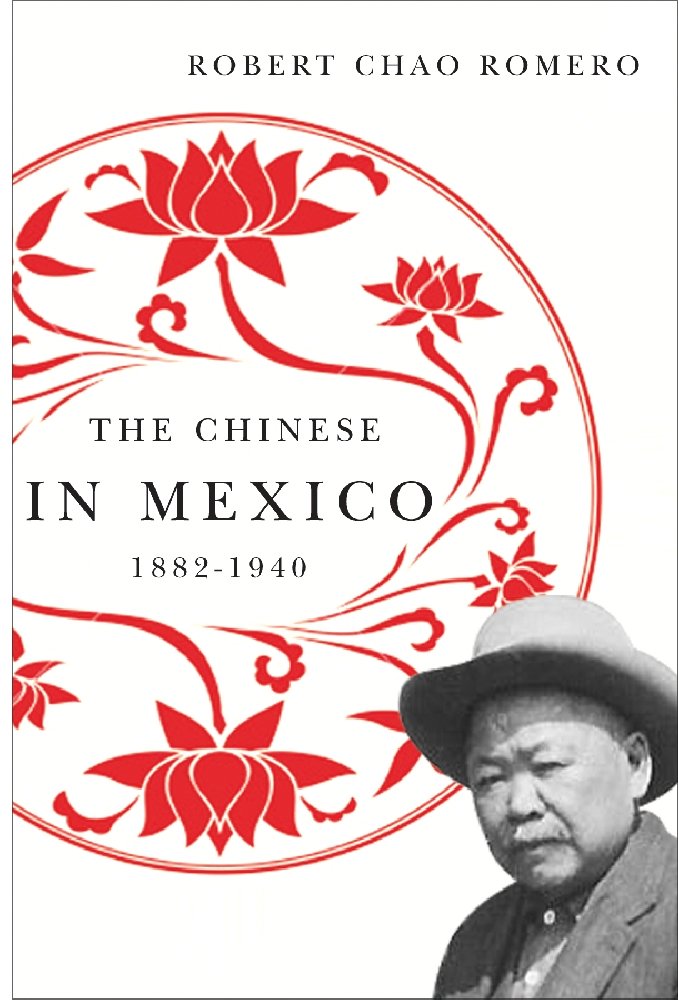
The Chinese in Mexico, 1882-1940

Posted in Asian Diaspora, Books, Caribbean/Latin America, History, Media Archive, Mexico, Monographs on 2012-01-21 04:48Z by Steven

The Chinese in Mexico, 1882-1940

University of Arizona Press
2010-07-22
272 pages
6.00 in x 9.00
Paper (978-0-8165-1460-1)
Cloth (978-0-8165-2772-4)

Robert Chao Romero, Associate Professor of Chicana/o Studies and Asian American Studies
University of California, Los Angeles

An estimated 60,000 Chinese entered Mexico during the late nineteenth and early twentieth centuries, constituting Mexico’s second-largest foreign ethnic community at the time. The Chinese in Mexico provides a social history of Chinese immigration to and settlement in Mexico in the context of the global Chinese diaspora of the era.

Robert Romero argues that Chinese immigrants turned to Mexico as a new land of economic opportunity after the passage of the U.S. Chinese Exclusion Act of 1882. As a consequence of this legislation, Romero claims, Chinese immigrants journeyed to Mexico in order to gain illicit entry into the United States and in search of employment opportunities within Mexico’s developing economy. Romero details the development, after 1882, of the “Chinese transnational commercial orbit,” a network encompassing China, Latin America, Canada, and the Caribbean, shaped and traveled by entrepreneurial Chinese pursuing commercial opportunities in human smuggling, labor contracting, wholesale merchandising, and small-scale trade.

Romero’s study is based on a wide array of Mexican and U.S. archival sources. It draws from such quantitative and qualitative sources as oral histories, census records, consular reports, INS interviews, and legal documents. Two sources, used for the first time in this kind of study, provide a comprehensive sociological and historical window into the lives of Chinese immigrants in Mexico during these years: the Chinese Exclusion Act case files of the U.S. Immigration and Naturalization Service and the 1930 Mexican municipal census manuscripts. From these documents, Romero crafts a vividly personal and compelling story of individual lives caught in an extensive network of early transnationalism.

Tags: , , , , ,

It’s dual-race for 1 in 6 babies of mixed parentage

Posted in Articles, Asian Diaspora, Census/Demographics, New Media on 2012-01-12 02:08Z by Steven

It’s dual-race for 1 in 6 babies of mixed parentage

The Straits Times
Singapore
2012-01-11

Amanda Tan

One in six newborn babies of mixed parentage was registered as having a double-barrelled race last year after a new policy kicked in allowing parents to do so.

This full-year figure, released for the first time to The Straits Times, comes a year after the policy was implemented in January last year.

The Immigration and Checkpoints Authority (ICA) said 16 per cent of mixed-race babies born last year were recorded as being of dual race…

Read the entire article here.

Tags: , ,

Multiplicity within Singularity: Racial Categorization and Recognizing “Mixed Race” in Singapore

Posted in Articles, Asian Diaspora, Census/Demographics, History, Media Archive, Social Science on 2012-01-11 16:45Z by Steven

Multiplicity within Singularity: Racial Categorization and Recognizing “Mixed Race” in Singapore

Journal of Current Southeast Asian Affairs
Volume 30, Number 3 (2011)
pages 95-131
ISSN: 1868-4882 (online), ISSN: 1868-1034

Zarine L. Rocha, Research Scholar
Department of Sociology
National University of Singapore

“Race” and racial categories play a significant role in everyday life and state organization in Singapore. While multiplicity and diversity are important characteristics of Singaporean society, Singapore’s multiracial ideology is firmly based on separate, racialized groups, leaving little room for racial projects reflecting more complex identifications. This article explores national narratives of race, culture and belonging as they have developed over time, used as a tool for the state, and re-emerging in discourses of hybridity and “double-barrelled” racial identifications. Multiracialism, as a maintained structural feature of Singaporean society, is both challenged and reinforced by new understandings of hybridity and older conceptions of what it means to be “mixed race” in a (post-)colonial society. Tracing the temporal thread of racial categorization through a lens of mixedness, this article places the Singaporean case within emerging work on hybridity and recognition of “mixed race”. It illustrates how state-led understandings of race and “mixed race” describe processes of both continuity and change, with far-reaching practical and ideological impacts.

Introduction

“Race” and racial categories have long played a significant role in everyday life and state organization in Singapore. From colonization to independent statehood, narratives of racial distinctiveness and classification underpinned Singapore’s development at macro and micro levels. While multiplicity and diversity are important characteristics of contemporary Singaporean society, Singapore’s multiracial ideology is firmly based on separated, racialized groups, leaving little room for more complex individual and institutional racial projects. However, hybridity and “mixed race” are increasingly important characteristics and identifications in Singaporean society, and in fact have historically provided an important thread linking colonial and postcolonial national identifications. This article traces the emergence of mixed identities against a background of racial structuring in Singapore, moving from colonial understandings of race towards the recent state-led efforts at recognizing hybridity: acknowledging ancestral and personal complexity within a singular racial framework…

…Mixedness, Diversity and Identity

In contrast to the neat delimitations of the census, colonial Singaporean society was diverse and complicated, made up of interacting groups that blurred at the edges. The Peranakans, otherwise known as Babas and Nonyas, or Straits Chinese, provide a good example of this complexity, as an ethnic group which traced its descent to seventeenth century Chinese migrants who married local women in Southeast Asia (Beng 1993; Stokes-Rees 2007). Characterized by Chinese and Malay influences and inflected by European and Indonesian customs, Peranakan (meaning “descendent” in Malay) culture illustrated the fusion and intermingling of cultures in everyday life (Goh 2008a: 237).

In keeping with the eurocentric understanding of racial hierarchy, much intermixing (particularly inter-Asian intermixing, as in this case) was left unrecorded and unremarked. It was the intermixing between Europeans and Asians that was of greater concern to the colonial authorities (Stoler 1992), reflecting the gendered and racialized bases for colonialism. Of concern was the fact that despite practical and prejudicial limitations, as in all of Europe’s colonies, relationships between the colonizers and the colonized produced offspring: children of “mixed race”, who transgressed the ostensibly fixed racial lines demarcated by the administration (Pomfret 2009).

Individuals of mixed European and Asian descent in Singapore were known as Eurasians. Interestingly, Eurasians were among the earliest migrants to Singapore after 1819, coming from regions with an established European presence, such as Goa, Malacca, Macau and Timor (Braga-Blake 1992; Pereira 2006). Eurasians were frequently classified as European due to similarities in style of dress, custom and religion, and as such were accorded higher socio-economic status, often working in the civil service and in higher ranking jobs (Braga-Blake 1992; Pereira 1997). As greater numbers of Europeans arrived after 1869, this privileged position became more precarious (Pereira 2006). Eurasians continued to occupy an intermediate position, between the “local” population and the British colonizers in terms of employment, education and socio-economic status, but a firmer line was drawn between European and Eurasian – effectively limiting social interaction and employment prospects, but maintaining a certain privilege (Braga-Blake 1992)…

Read the entire article here.

Tags: , , , ,

28. Hapa Issues: Asian Americans of Mixed Racial Descent

Posted in Asian Diaspora, Course Offerings, Media Archive, United States on 2012-01-07 10:59Z by Steven

28. Hapa Issues: Asian Americans of Mixed Racial Descent

Amherst College, Amherst, Massachusetts
Spring 2010

Growing numbers of inter-racial marriages and the products of these marriages—children of mixed racial descent—have contributed to the increasing diversity of America in the 21st century. Reflecting this heterogeneity, the 2000 Census allowed people to claim more than one background for the first time. In this course, we will evaluate the experiences of hapas—Asians of mixed racial descent—through a historical and comparative framework. This class will explore inter-racial and inter-ethnic marriage trends in various Asian communities in the U.S. in order to highlight the complexity of the Asian American experience. Additionally, we will compare the experiences of hapas representing a range of backgrounds, including those of Asian/White ancestry as well as Asian/Black heritage. Some of the specific topics that will be covered in this course include the following: racial and ethnic community membership and belonging; the dynamics of inter-racial relationships; identity, authenticity, and choice; and the gender identities of mixed race individuals. This course highlights the simultaneous fluidity and social construction of race while marking its real impact on everyday and structural aspects of American life.

Tags:

ASAM 187. Asian Pacific American Mixed Race Issues

Posted in Asian Diaspora, Course Offerings, Media Archive, United States on 2012-01-07 01:59Z by Steven

ASAM 187. Asian Pacific American Mixed Race Issues

Pomona College, Claremont, California
Spring 2008

Course will explore the lives of racially and ethnically mixed people, focusing on Asian Pacific Americans. As intermarriage rates increase for all groups, the experiences of multiracial people reflect in distinctive ways the cultural and identity choices that individuals and communities are facing. The course will concentrate on the significance of both ascribed and chosen racial identities, examining how they influence the experiences and choices of individuals, families, and communities. A second area of attention will be to how multicultural backgrounds shape relationships and practices within families. Other issues to be discussed include living in multiracial communities, public policy implications, transracial adoptees, self‐representation in literature and memoirs, and media representations. Students will have the opportunity to investigate a topic of their choice in a research paper.

Tags: