Deconstructing a Manumission Document: Mary Stafford’s Free Paper

Posted in Articles, History, Law, Media Archive, Slavery, United States, Women on 2012-04-30 23:21Z by Steven

Deconstructing a Manumission Document: Mary Stafford’s Free Paper

The Georgia Historical Quarterly
Volume 89, Number 3 (Fall 2005)
pages 285-317

Mary R. Bullard

This article examines the manumission document of Mary Stafford. In early nineteenth-century Georgia, manumitting one’s slave property was a personal matter loosely regulated by the state. In exchange for a one dollar token sum, Robert Stafford conveyed to Belton Copp and his heirs a piece of real estate in downtown Norwich, Connecticut, to be held in trust for Armand, Robert, and Mary. If these legatees died without legitimate heirs, then Stafford’s estate was to comply with Georgia law and go to his heirs-at-law equally, meaning his white niece and nephews, children of his two sisters, who resided in Georgia.

In early nineteenth-century Georgia, manumitting one’s slave property was a personal matter loosely regulated by the state. Bonds of affection between slaveowners and their housekeepers or mistresses were by no means unusual, and manumission was sometimes the reward for faithful service. Reversing an earlier trend, however, by the 1820s manumission became illegal in Georgia unless followed by immediate expulsion of the enfranchised from the state. A slaveowner’s personal ability to manumit had been proscribed as early as 1801, and owners attempting to “free negro slaves, mulatto, mustizo, or any other persons . . . of color” deemed slaves, had been wrarned that the only way to do so was to apply to the legislature. The individual runaway raised ominous images of thievery and rebellion. Nonetheless, fugitive slaves managed to make their way to areas in free states, where they found work, hopeful that former owners would not find them. As the…

Tags: , , , , ,

Lawrence Powell delivers a gripping history of New Orleans in ‘Accidental City’

Posted in Articles, Book/Video Reviews, History, Louisiana, Media Archive, United States on 2012-04-30 00:10Z by Steven

Lawrence Powell delivers a gripping history of New Orleans in ‘Accidental City’

New Orleans Times-Picayune
2012-04-02

Chris Waddington

At first, I was disappointed to hear that Lawrence Powell’s history of the Crescent City ended with the Battle of New Orleans. I wanted the Tulane University scholar to bring me a little closer to the present.

My opinion changed a few pages into “The Accidental City: Improvising New Orleans.”
 
Powell’s splendid time machine of a book swept me into a detailed account of the city’s rise from swampy colonial outpost to strategic linchpin during the War of 1812. Populated with vividly sketched characters, Powell’s history fits individual actors into a coherent, geopolitical narrative that spans centuries and continents — no easy task when your cast includes Enlightenment scientists, loud-mouthed market women, French-Canadian voyageurs, Ursuline nuns, slave artisans and Gen. Andrew Jackson hoisted on the shoulders of cheering Baratarians…

…The birth of a distinctive Creole society wasn’t fast or tidy. Powell writes about free people of color who owned slaves. He writes about back-of-town bars where people of all races mixed. He describes how Ursuline nuns recruited the wives of slaveholders to serve as godparents for their baptized chattels — in opposition to prevailing law. He writes about brutally suppressed slave revolts — and the free manumission of black concubines and their mixed-race offspring. He catches all the high and low notes as New Orleanians improvised an American future — and he makes it clear that America would be a very different place without the city’s contributions.

Read the entire review here.

Tags: , , , ,

A Contested Presence: Free Blacks in Antebellum Mississippi, 1820–1860

Posted in Articles, History, Law, Media Archive, Mississippi, Slavery, United States on 2012-04-29 19:55Z by Steven

A Contested Presence: Free Blacks in Antebellum Mississippi, 1820–1860

Mississippi History Now: An online publication of the Mississippi Historical Society
August 2000

Denoral Davis, Profesor of History
Jackson State University, Jackson, Mississippi

During its first half century as a territory and state (1810-1860), Mississippi was an agrarian-frontier society. Its population was made up of four groups: Indians, whites, slaves, and free blacks. All four groups were present in Mississippi from its territorial beginnings.

Blacks in Mississippi, and elsewhere in the South, became free in several ways. Prior to 1825, it was common and legal for slaves to become free either by purchasing their freedom or by slaveholders freeing them. Beginning in the mid-1820s, both forms of emancipation became increasingly less common and even illegal. The primary pathways to free status for blacks were blocked.

In the decades after the 1820s, the legal avenues to freedom and emancipation were limited only to children born to free mothers and parents and to those approved by the Mississippi legislature through petitions for emancipation. With the passage of an 1822 law, the legislature became directly involved in slave emancipation for the purpose of limiting the state’s free black population. The 1822 law gave the legislature authority to approve or reject all slave emancipations in the state. Largely as a result, slave emancipations sharply declined and Mississippi’s free black population remained small, never exceeding 1,400…

…Free blacks as a group tended to be biracial and mulatto. In 1860, roughly 80 percent of Mississippi’s free black population of 800 were of mixed racial ancestry. By contrast, among the state’s more than 400,000 slaves on the eve of the Civil War, fewer than 10 percent were mulatto. Whites, slaveowners in particular, contributed to both the origins and existence of a free black, mulatto-dominated population in Mississippi. Court records from local chancery cases and records of the Mississippi Supreme Court clearly indicate the role of white slaveowners. In wills slaveowners sometimes admitted fathering mulatto offspring, and they frequently emancipated their children and left them property…

…The inheritance of money probably accounts for some slaveownership among free blacks. Fully 12 percent, 45 of the 519 free persons of color in 1830, owned slaves or were in slave-owning households. Most of these slaveowners, nearly 70 percent, were mulatto. Free black slaveholders owned an average of four slaves. However, William Perkins of Claiborne County held seventeen in bondage, and George Winn’s household in neighboring Adams County included sixteen slaves.

William Johnson (1809-1851), perhaps Mississippi’s best known free black, was a slaveholder as well. In 1834, the Adams County native owned three slaves and roughly 3,000 acres in real property. He went on to diversify his financial interests. He speculated in farmland, rented real estate, and owned a bath house, delivery firm, and toy shop. He even hired out his slaves to haul coal and sand. Throughout his life, the white community in Natchez and Adams County held Johnson in high regard. He associated with and was close to many of Adams County’s most prominent white families. Following Johnson’s untimely death at the hands of a free black, Baylor Winn, the Natchez Courier was moved to comment that Johnson held a “respected position [in the community] on account of his character, intelligence and deportment.”…

Read the entire article here.

Tags: , , ,

Gender and the manumission of slaves in colonial Brazil: The prospects for freedom in Sabará, Minas Gerais, 1710–1809

Posted in Articles, Brazil, Caribbean/Latin America, History, Media Archive, Slavery on 2012-04-29 19:21Z by Steven

Gender and the manumission of slaves in colonial Brazil: The prospects for freedom in Sabará, Minas Gerais, 1710–1809

Slavery & Abolition: A Journal of Slave and Post-Slave Studies
Volume 18, Issue 2, 1997
pages 1-29
DOI: 10.1080/01440399708575208

Kathleen J. Higgins

On 9 December 1735 Manoel da Costa Braga declared before the notary of Sabará, Minas Gerais, his decision to free from slavery his own children, Joseph, Marianna and Maria, and to recognize them as heirs to his estate. In this declaration Manoel da Costa Braga did not, however, choose to free the children’s mother, Magdalena, who presumably remained enslaved.

Fifty-five year later, on 10 February 1790. Senhora Maria Rodrigues Pereyra freed a child named Faustino in exchange for 40 drams of gold paid to her by the father, Sebastião Angola. The records do not show whether or not Faustino’s mother was ever set free.

These two manumissions, each typical of the time in which they were granted, reflect the transformation of Minas Gerais by its renowned eighteenth-century gold rush. Manoel da Costa Braga owned slaves in the first half of the eighteenth century when gold production was booming, slave prices were extraordinarily high, and the colonizers or Sabará were largely white men rarely accompanied by while women. In contrast, by the time Maria Rodrigues Pereyra owned slaves in Minas Gerais, the gold rush was long over and the importance of gold production to the overall economy had diminished significantly. The populations of both slave and free in Sabará were, nonetheless, much larger in Maria Rodrigues Pereyra’s day, and although white women were still outnumbered by white men, women slaveholders were by no means a novelty. Furthermore, by the end of the eighteenth century whites had long since ceased to be in the majority within the free population. In this slave society, manumission decisions had ultimately led to a population of free people (and slaveholders) that was both racially mixed and racially diverse (see Table 1).

Both the decline of gold mining and changes within the slaveholding population had a major impact on the manumission of slaves. Through a…

Read or purchase the article here.

Tags: , , ,

Manumission in nineteenth-century Virginia

Posted in Articles, Economics, History, Media Archive, Slavery, United States, Virginia on 2012-04-29 18:21Z by Steven

Manumission in nineteenth-century Virginia

Cliometrica: A Journal of Historical Economics and Econometric History
Volume 5, Issue 2 (June 2011)
pages 145-164
DOI: 10.1007/s11698-010-0056-x

Howard Bodenhorn, Professor of Economics
Clemson University, Clemson, South Carolina

Using previously unexploited data, this paper explores the ages at which slaves were manumitted. OLS estimates reveal that mixed-race slaves, slaves in the tobacco-producing Piedmont, and female slaves of female slave owners were manumitted at younger ages. Weibull proportional hazards estimates imply that the same groups were more likely to be manumitted. The results also reveal a markedly diminishing likelihood of manumission after Nat Turner’s 1831 insurrection in south-central Virginia. The results are consistent with a principal–agent model in which slave owners contracted with slaves over consumption and future manumission to elicit effort and control shirking or other unproductive activities.

Read or purchase the article here.

Tags: , ,

Social Construction of Ethnicity Versus Personal Experience: The Case of Afro-Amerasians

Posted in Articles, Asian Diaspora, Identity Development/Psychology, Media Archive, United States on 2012-04-28 20:56Z by Steven

Social Construction of Ethnicity Versus Personal Experience: The Case of Afro-Amerasians

Journal of Comparative Family Studies
Volume 29, Issue 2 (Summer 1998)
pages 255-267

Teresa Kay Williams

Michael C. Thornton, Professor of Afro-American Studies
University of Wisconsin, Madison

The article focuses on the existence of ethnic group differences in the U.S. and how the subgroup of Black Americans, Afro-Amerasians, situate themselves in an environment that attempts to place them within established racial boundaries. Afro-Amerasians are estranged between two forces: the contrasting push of society to identify them as only Black, and the pull of their own personal and unique experience. However, instead of succumbing to these forces, these groups developed a different kind of Black identity which incorporates other parts of their heritage. They choose to situate themselves on the traditional boundaries of racial groups rather than deny important parts of who they are; thus, they choose to be marginal. They grew up in environment where they had ample opportunity to develop. These people tried to make sense of their experiences as radicalized peoples. Their struggles with personal and social accepts of identity provide sociological insight into understanding the complexities and contradictions of race and their ever-changing meanings and applications.

There are two significant contributors to ethnicity or racial group identity: a thread of historical experience that is shared by each member of the collectivity, and a sense of potency/strength inherent in the group (see Phinney, 1990). In social science research, racial identity, ostensibly feelings toward the group, is rarely examined with explicit measures of group feelings. Usually, a racial label is correlated to psychosocial development of group members. In this regard, racial group membership – and not actual experience – is normally featured.

 Thus, race is often used as a proxy for experience and attitudes, a practice embedded in premises of social science literature (Wilkinson, 1984). Deterministic views of race ignore important variations in how subgroups of Blacks relate to the larger group and to one another. Perhaps no experience better exposes the contradictions regarding how we view race in America than that of racially mixed individuals and, in particular, those with African heritage (Bonacich, 1991; King and DaCosta, 1995; Root, 1992).

Although a rare occurrence, interracial ties draw much attention because they encapsulate unresolved feelings and attitudes about race (Thomton and Wason, 1995). In a society racially stratified, where races are seen to be distinct, racial mixing has always been considered problematic (Spickard, 1992). Interracial populations muddy the dualistic view of race (i.e., that each of us is one or another race) and epitomize the inadequacies of this ideology; they lead us to question basic assumptions of how racial life is organized. In this article, we elaborate on this point by examining what would normally be considered a subgroup of Black Americans. We explore how Afro-Amerasians situate themselves in an environment that attempts to place them within established racial boundaries.

LITERATURE REVIEW

Black Group Identity

Work on Black group identity is not easy to characterize, in part because of relatively limited research on this issue, especially that which examines ethnic group differences (Porter and Washington, 1993). Typically, analysis highlights the influence of social class on identity (e.g., Landry, 1987; Farley, 1984). Some inquiry suggests that class is only a part of the puzzle. Broman et al. (1988) reveal that older, less-educated respondents in urban areas and highly-educated Blacks living outside the West were most likely to feel close to other Blacks. Gurin et al. (1989) show that identity, defined as common fate and as more Black than American, was not simply related to class. Males and those of upper-class status were more likely to feel a common fate with Blacks. Younger Blacks and those who did not work full-time were also more likely to feel more Black than American.

Usually, these studies implicitly assume that group identity is a globally positive (or negative) feeling toward a homogeneous racial referent (Allen et al., 1989). This view fails to recognize that subgroups of Blacks have attitudes about various groups within the racial category (e.g., poor versus middle-class Blacks). It is also common, within this perspective, to treat Blacks as having assimilated and thus not see identity as an alternate cultural experience (Porter and Washington, 1993). These assumptions result in an approach that rarely sees group attitudes as an admixture of positive and negative feelings. This approach does not allow for the possibility that group attitudes may involve an affinity with some aspects of subgroups within the racial category, even while coupled with attempts to disassociate from others (McAdoo, 1985; Jackson et al., 1988; Cross, 1991).

However, an ambiguity toward the racial group might be expected for minorities who contend with negative images of their group permeating society. Some emerging works identify several reference groups within the overarching racial category. Allen et al. (1989) describe identity as containing two important referents: masses (non-mainstream) and elites (mainstream). They suggest that within the racial category is an array of boundaries and identities prioritized in a variety of ways. For example, case studies show that native Black Americans distance themselves from Black Haitians (Stafford, 1985).

Multiracial Identity

Blacks will have different views of Blackness depending on where they are positioned in the social hierarchy. The position we consider here is mixed racial heritage. Historically, this category was simple. Mixed race referred to Black-White offspring who were part of a two-tiered system: Whites and Blacks, with racially mixed people viewed as improved versions of Blacks. Changes in the racial composition of the United States have been the catalyst of emerging work accenting race relations as inclusive …

Tags: , , , ,

Just Finished Reading: Fathers of Conscience: Mixed-Race Inheritance in the Antebellum South

Posted in Articles, Book/Video Reviews, History, Law, Media Archive, Slavery, United States on 2012-04-28 17:29Z by Steven

Just Finished Reading: Fathers of Conscience: Mixed-Race Inheritance in the Antebellum South

Random Thoughts on History: My musings on American, African American, Southern, Civil War, Reconstruction, and Public History topics and books.
2012-04-17

Tim Talbott
Frankfort, Kentucky

The practice of slavery created many complications. Not the least of these were the children produced by relationships between slave owners and their female property. Certainly many of these associations were forced, as they were the creation of an unequal power relationship, but possibly others evolved into a more common law-type bond. Whatever the union between slave and owner, it is obvious that a number of these slaveholders felt an obligation to their mixed-race offspring, and sometimes toward the mothers, in that they sometimes left wills freeing and providing them with property or monetary gifts.

Fathers of Conscience: Mixed-Race Inheritance in the Antebellum South, by Dr. Bernie D. Jones, a law professor at Suffolk University who earned her PhD in history at the University of Virginia, explores a number of the court cases in which the wills of slaveowners who made provisions for their mixed-race children were contested, most often by the white members of the owners’ families.

Jones explains that interracial relationships were tolerated in the Old South so long as they remained secret and hidden. When owners took measures to provide for their illegitimate children and their slave mothers is often when things got problematical. Judges often had to decide whether to respect the desires of the deceased owner or face a potentially hostile community who did not want free blacks in their neighborhoods. The author contends that judges that decided these cases normally described the men in these illicit relationships as three types; as “righteous fathers” who were attempting to right a wrong, “vulnerable old men” who had been duped or seduced by their slave women in order to receive favorable treatment, or “degraded creatures” who deserved no respect for destroying community norms…

Read the entire review here.

Tags: , , ,

Norbert Rillieux and a Revolution in Sugar Processing

Posted in Articles, Biography, History, Louisiana, Media Archive, Slavery, United States on 2012-04-27 20:24Z by Steven

Norbert Rillieux and a Revolution in Sugar Processing

American Chemical Society
National Historic Chemical Landmarks: Norbert Rillieux and a Revolution in Sugar Processing
2002

Judah Ginsberg
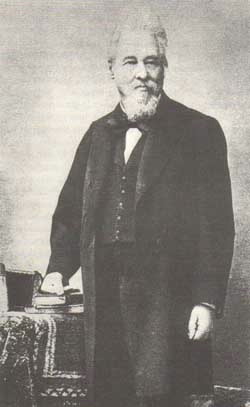

Portrait of Norbert Rillieux (undated).

Dedicated April 18, 2002 at Dillard University in New Orleans, Louisiana

Norbert Rillieux: Chemist and Engineer

The birth record on file in New Orleans City Hall is spare: “Norbert Rillieux, quadroon libre, [free quadroon] natural son of Vincent Rillieux and Constance Vivant. Born March 17, 1806. Baptized in St. Louis Cathedral by Pere Antoine.”

Vincent Rillieux was an inventor himself who designed a steam-operated press for baling cotton. He appears to have had a long relationship with Constance Vivant, “a free woman of color,” and one of their sons, Norbert, became what is now called a chemical engineer. The use of the father’s surname and the baptism in New Orleans’ cathedral indicate the paternity was publicly acknowledged.

As a boy the precocious Norbert showed an interest in engineering, and his father sent him to France for his education. By the age of 24, Rillieux was an instructor in applied mechanics at the Ecole Centrale in Paris. Around 1830, Rillieux published a series of papers on steam engines and steam power.

While in France, Rillieux began working on the multiple effect evaporator. As George Meade, a sugar expert, wrote in 1946: “The great scientific contribution which Rillieux made was in his recognition of the steam economies which can be effected by repeated use of the latent heat in the steam and vapors.” What Rillieux did, and what became the basis for all modern industrial evaporation, was to harness the energy of vapors rising from the boiling sugar cane syrup and pass those vapors through several chambers, leaving in the end sugar crystals.

Rillieux’s evaporator was a safer, cheaper, and more efficient way of evaporating sugar cane juice than the method then in use, the Jamaica train. In this system, teams of slaves ladled boiling sugar juice from one open kettle to another. The resulting sugar tended to be of low quality since the heat in the kettles could not be regulated, and much sugar was lost in the process of transferring juice from kettle to kettle.

Some Louisiana sugar planters quickly understood the significance of Rillieux’s invention, and he returned to New Orleans in the early 1830s, years that coincided with a sugar boom. Rillieux tinkered with his invention over the next decade, and in 1843 he was hired to install an evaporator on Judah Benjamin’s Bellechasse Plantation. Benjamin, a Jewish lawyer who later served as secretary of war in the Confederacy, became Rillieux’s staunchest supporter in Louisiana sugar circles. Benjamin wrote in 1846 that sugar produced with the Rillieux apparatus was superb, the equal of “the best double-refined sugar of our northern refineries.”

The success of his evaporator apparently made Rillieux, according to a contemporary, “the most sought after engineer in Louisiana,” and he acquired a large fortune. But while his invention no doubt enriched sugar planters, Rillieux was still, under the law, “a person of color” who might visit sugar plantations to install his evaporator but who could not sleep in the plantation house. (Nor, for that matter, could a man of Rillieux’s accomplishments be expected to stay in slave quarters. Some planters, it appears, provided Rillieux with a special house with slave servants while he visited as “a consultant.”). As the Civil War approached, the status of free blacks deteriorated with the imposition of new restrictions on their ability to move about the streets of New Orleans and other draconian laws.

It was about this time that Rillieux moved back to France. Race relations may have played a part in his decision. At one point, Rillieux became incensed when one of his applications for a patent was denied initially because authorities mistakenly believed he was a slave and thus not a citizen of the United States. The declining profitability of the sugar industry in Louisiana also may have been a factor. In any event, in Paris, Rillieux developed a passion for Egypt. In 1880, a visiting Louisiana sugar planter found Rillieux deciphering hieroglyphics at the Bibliotheque Nationale. Rillieux died in 1894 and was buried in the famed Paris cemetery of Pere Lachaise. His wife, Emily Cuckow, lived comfortably for another eighteen years…

…Neither slave nor free

Americans pouring into the newly purchased Louisiana Territory encountered a social caste virtually unknown in the Eastern seaboard States: gens de couleur libre, free people of color. In the early years of the nineteenth century, free blacks comprised 25 percent of the population of New Orleans, far higher than in most other areas of the American South, where nearly all blacks were slaves.

The number of free blacks in New Orleans was due in part to the French and Spanish heritage of Louisiana. Both France and Spain had lenient manumission policies and both encouraged slaves to purchase their freedom. But the majority of free blacks resulted from sexual relations between white men and black women. One Spanish bishop lamented, “a good many inhabitants live almost publicly with colored concubines” and they consider the issue of such liaisons “as their natural children.” Finally, the ranks of the gens de couleur libre swelled in the early years of American control of New Orleans with the influx of thousands of light-skinned freemen fleeing the internecine warfare in the new black Republic of Haiti.

In the eighteenth century, Louisiana free blacks enjoyed a higher social status and had more rights than the small free black population of the English colonies. Their condition would deteriorate under American control, but it remained true that free blacks maintained a privileged status in the antebellum years. As late as 1856, the Louisiana Supreme Court ruled that under Louisiana law there is “all the difference between a free man of color and a slave, that there is between a white man and a slave.” Indeed, a few free blacks even belonged to the planter class, owning slaves themselves…

Read the entire article here.

Tags: , ,

Beyoncé, beauty and the all mighty dollar

Posted in Anthropology, Articles, History, Media Archive, Slavery, Social Science, United States, Women on 2012-04-27 17:24Z by Steven

Beyoncé, beauty and the all mighty dollar

Insight News
Minneapolis, Minnesota
2012-03-09

Irma McClaurin, Ph.D., Culture and Education Editor

Just for the record, we are not in, nor has there ever been, a post-racial moment in America.  And so, we must dive deep into historical memory of this country to understand why all the fuss about L’Oréal’s  latest advertisement for cosmetics featuring Beyoncé

Read the entire article here.

Tags: , ,

More children identify as ‘biracial’: just a choice or a good thing?

Posted in Articles, Barack Obama, Census/Demographics, Media Archive, United States on 2012-04-27 04:30Z by Steven

More children identify as ‘biracial’: just a choice or a good thing?

The Washington Post
2012-04-26

Mary C. Curtis

It’s been happening for a while — census data show it. The number of mixed-race babies has quickly grown in the last decade, a trend that’s no surprise in an increasingly diverse country. Men and women are choosing partners of different races and identifying their children using the array of hyphenated options now available on forms that still ask the question.

More than 7 percent of the 3.5 million children born in the year before the 2010 Census were of two or more races, up from 5 percent a decade earlier, the Washington Post reports. In the story, William H. Frey, a Brookings Institution demographer who analyzed the information, said, “I think people are more comfortable in identifying themselves, and their children, as mixed race.” He added, “It’s much more socially acceptable, more mainstream, to say, ‘That’s what we want to identify them as.’ ”

What is come down to is choice, and if it remained just that, it would be fine. But Frey goes on to assign value to this particular choice. “This is a huge leap,” he said. “This is a ray of hope that we’re finally moving into an era where this very sharp black-white divide is breaking apart.”

That’s where he makes a leap, that it’s a matter of, well, black and white. Identifying as biracial is a choice now, but does it have to be better? Is Tiger Woods’ “Cablinasian” option more enlightened than Halle Berry’s decision to self-identify as black?

Frey isn’t the only one who judges the trend as a “ray of hope,” a necessary step forward in relationships between races. When President Barack Obama checked off one race, black, on his census form, he was criticized by some, accused of somehow denying his white mother. It may have marked the first time such indignation over the issue reached a fever pitch, though if it were Barack the bank robber I hardly think whites would be clamoring to claim him.

At the time, a white woman married to a black man told me she was angry and disappointed for her two children’s sake. “He’s president. He could have been an example,” she told me. That we were walking through a Charlotte science museum exhibit “Race: Are We So Different?” that proved the many ways humans are more alike than any other species made our discussion both fraught and beside the point. Since she wanted freedom to choose, how could she criticize the president for his? I asked her. He would certainly know his motives better than a stranger whose reaction might have more to do with her own…

…My grown-up son fills out his own census form now, a black man with a white father and a special relationship with a white grandmother he loves with all his heart. It’s not confusing at all…

Read the entire article here.

Tags: , , , , ,