The Face of Japan Is Changing, But Some Aren’t Ready

Posted in Articles, Asian Diaspora, Census/Demographics, Media Archive on 2015-03-15 01:41Z by Steven

The Face of Japan Is Changing, But Some Aren’t Ready

Kokatu
2015-03-13

Brian Ashcraft


Eriana Miyamoto

Change happens slowly in Japan, but it does happen. You wake up one day, and things that weren’t possible years ago are happening today. Nowhere is that more evident than in the woman who will represent Japan in the Miss Universe pageant—but that’s to the chagrin of some who wanted a more “Japanese” winner.

Eriana Miyamoto is the twenty-year-old selected to represent Japan in the upcoming Miss Universe pageant. As reported by Mainichi News, Miyamoto even expressed uneasiness as to whether or not it would be okay for a hafu [half-Japanese] like her to represent Japan.

When introducing herself to reporters after her selection, Miyamoto said that her mother is Japanese and her father is American. She added that she was born and raised in Nagasaki and that while she doesn’t “look Japanese” on the outside, on the inside, there are many Japanese things about her…

Read the entire article here.

Tags: , , ,

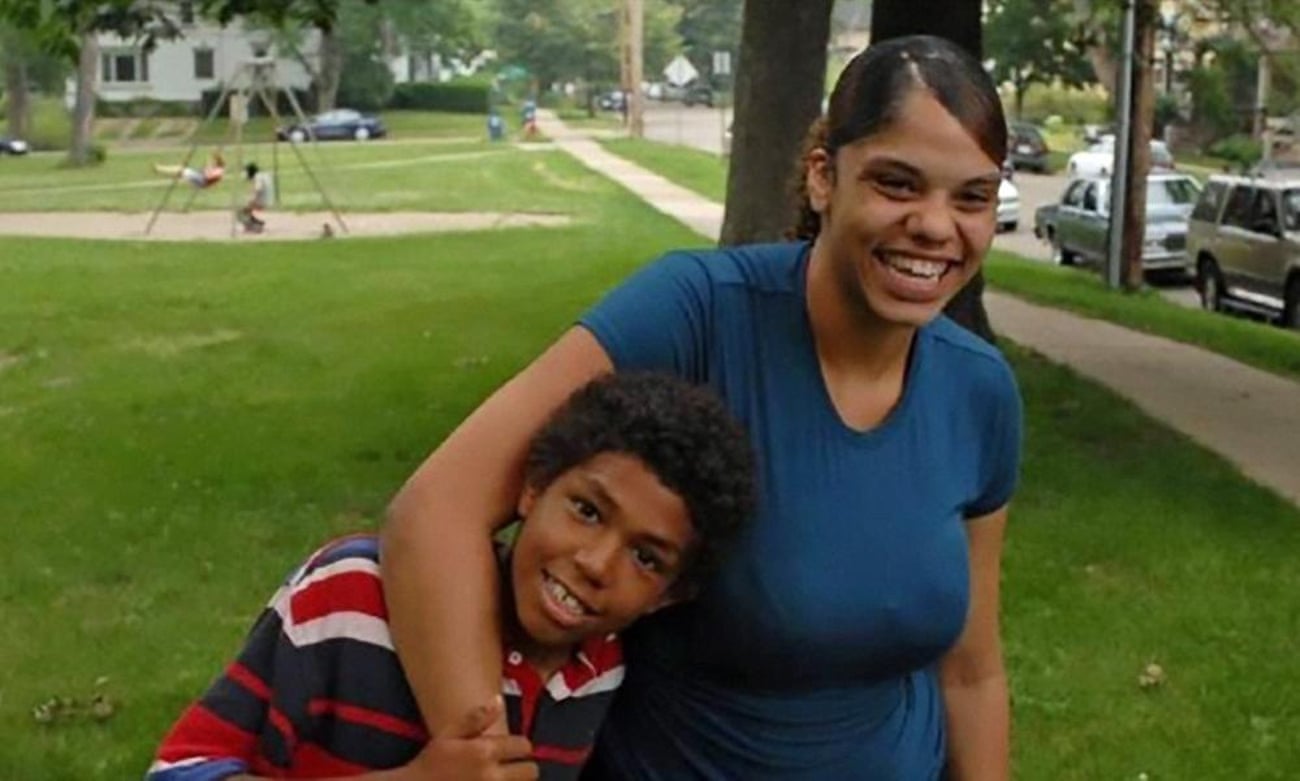
Tony Terrell Robinson was shot dead by Madison police. This is how it happened

Posted in Articles, Law, Media Archive, Social Justice, United States on 2015-03-15 01:07Z by Steven

Tony Terrell Robinson was shot dead by Madison police. This is how it happened

The Guardian
2015-03-13

Oliver Laughland, Senior Reporter
Guardian US

Zoe Sullivan


Robinson as a child. ‘There is something so beautiful about a black kid, especially in America, trying to make it against all odds and fucking up so bad, but then actively trying to better his situation.’ Photograph: Robinson family

Exclusive: Many questions remain about the shooting of the Wisconsin 19-year-old, but accounts from close friends and family paint a picture of a young man turning his life around who needed help that night – and instead wound up another young man of color whose life was tragically cut short

Madison, Wisconsin—Tony Terrell Robinson was born into poverty and spent the last moments of his life bleeding from a gunshot wound, surrounded by no one but local police officers on the porch of his shared apartment…

Read the entire article here.

Tags: , , , , , , ,

Finding Grafton Tyler Brown, African American Artist

Posted in Articles, Biography, Literary/Artistic Criticism, Media Archive, United States on 2015-03-12 20:31Z by Steven

Finding Grafton Tyler Brown, African American Artist

Keith Skinner: Writer: Renegade Image: Fiction, memoir, travel & essays
2014-05-25

Keith Skinner

I had never heard of Grafton Tyler Brown before. I was just trying to develop a character for my historical novel-in-progress, The Relentless Harvest.

The Search for a Character

It all started with a desire to raise the level of conversation in the lumber camp scenes set in 19th century Albion, California. Much of the dialogue I had written for those scenes featured hardened men with little or no education, men who generally were aware of little else than life in camp. I considered tossing a writer into their midst but quickly discounted the idea. I needed someone who would interact with and leave an impression on the men, someone who would ignite their imaginations. A writer would only isolate himself and would be unable to share his work with the largely illiterate loggers. Then I remembered all the vintage lithographs and drawings I had examined for my San Francisco scenes. What if an artist came to the woods to chronicle the emerging lumber industry?…

Read the entire article here.

Tags: , ,

Hate Takes the Bus

Posted in Articles, Media Archive, Social Science, United States on 2015-03-12 15:36Z by Steven

Hate Takes the Bus

The New York Times
2015-03-11

Charles M. Blow

A University of Oklahoma Fraternity’s Chant and the Rigidity of Racism

This week, when video was posted showing members of the University of Oklahoma’s chapter of Sigma Alpha Epsilon gleefully engaged in a racist chant on a bus, some people were shocked. Others, like me, were not.

This was just video confirmation of a racism that envelops us like a fog, often just as evanescent and immeasurable.

Some people seemed surprised because these were millennials, and college students to boot. Both because of generational easing and educational enlightenment, weren’t these sorts of things supposed to be vestiges of the past?

After all, as the Pew Research Center put it last year, “Millennials are the most racially diverse generation in American history,” with “some 43 percent of millennial adults” being nonwhite.

A 2010 Pew report found that “almost all millennials accept interracial dating and marriage.” An MTV poll of millennials found that “84 percent say their family taught them that everyone should be treated the same, no matter what their race,” and that 89 percent “do believe that everyone should be treated the same no matter their race.”

But these numbers can be deceiving. They don’t herald an age of egalitarianism as we might think…

Read the entire article here.

Tags: , , , ,

Was Elliot Rodger Asian American?

Posted in Articles, Asian Diaspora, Identity Development/Psychology, Law, Media Archive, United States on 2015-03-12 01:57Z by Steven

Was Elliot Rodger Asian American?

Reappropriate.co
2015-03-10

Jenn Reappropriate

For weeks following the Isla Vista shooting, killer Elliot Rodger was described in mainstream media as a young White man. This was a convenient narrative: Rodger was seen as yet another example of the maligned young vengeance-seeking White male outcast (like Eric Harris and Dylan Klebold and Adam Lanza): so twisted by violent first-person shooters and sexual-social frustration that he resorted to unthinkable violence.

Yet, for Elliot Rodger, this narrative is complicated by Rodger’s own tangled and confusing relationship with his racial identity: one that defies simple categorization as Rodger being straightforwardly White, or otherwise.

Biologically speaking, Elliot Rodger was biracially White and Asian American. Both Rodger’s biological mother and his step-mother were Asian American, and in his lengthy manifesto, Rodger self-identified as a “beautiful Eurasian”. Upon his death, Rodger was initially identified by law enforcement as an unknown “Asian male”.

Elliot Rodger also viewed his mixed race heritage as elevating him above those he termed as “lowly” “full-blooded Asian” men. In a lengthy 68-page report released last month by the Santa Barbara sheriff’s department, it is revealed that Elliot Rodger frequently conducted Google searches on Adolf Hitler and Naziism. These search terms are consistent with Rodger’s frequent racist web postings that espouse a clear belief in a racial hierarchy which positioned men of colour as sexually and socially inferior to Whites, and which further positioned White women as the most-coveted.

In May of last year, Chauncey DeVega wrote a highly-shared piece for Alternet (“Yes, Elliot Rodger is ‘White’: What the Santa Barbara Shooter Can Teach Us About Race and Masculinity”), where DeVega argues that racial identity is predominantly a performance, and that Whiteness is the specific performance of superiority over other people of colour. Both DeVega and Philip of You Offend Me You Offend My Family reason that Rodger’s rejection of his Asianness coupled with internalization of White supremacy was evidence of his Whiteness…

Read the entire article here.

Tags: , , , ,

What was it like raising three biracial children?

Posted in Articles, Audio, Autobiography, Family/Parenting, Media Archive, United States on 2015-03-12 01:45Z by Steven

What was it like raising three biracial children?

WBEZ 91.5
Chicago, Illinois
2015-03-06

Bill Healy

Rosa Ramirez was in basic training in the Army, when she came across a girl in her barracks with red hair and blue eyes. “What kind of blood do you have?” Ramirez asked her. “Do you see the world blue?”

Ramirez had gone to high school in Texas and spent time picking fruit in the fields of California. But when it came to race, she was clueless.

Ramirez tells her daughter, Judy, in this week’s StoryCorps, “In my hometown, it was Mexicans and whites. We didn’t have any idea about blacks or Germans or Italians.”

Rosa Ramirez served four years in the military before moving to Virginia, where she met her future husband. Her daughter asked what it was like when Rosa told her parents she wanted to marry a black man?…

Read the entire article here.

Tags: , , , ,

Color Erases, Color Paints

Posted in Articles, Autobiography, Judaism, Media Archive, Religion on 2015-03-11 17:11Z by Steven

Color Erases, Color Paints

Tablet: A New Read on Jewish Life
2015-03-10

Isaiah Rothstein

Each day this week, the Scroll will be featuring a post from a writer at JN Magazine—short for “Jewnited Nations”—a website “here to change the monochromatic monolithic perception of Judaism.” Each post has been commissioned and edited by MaNishtana, the pseudonym of Shais Rishon, a Tablet contributor and editor-at-large at JN Magazine.

Growing up mixed race in Monsey, N.Y.

I often relate to my peer group that both my maternal and paternal ancestors were slaves: As Hebrews in the desert hills of Egypt, and as Africans on the southern plantations of Alabama.

“And he (Moses) called his (son’s) name Gershom, because he was a stranger in a strange land.” (Exodus 2:22)

I grew up in the Orthodox Jewish community of Monsey, N.Y. With my peyot until I was 10 years old and my father’s unwavering affiliation with the Chabad Lubavitch movement, I think it would be safe to say I was raised in what one would call the Haredi community. But our Thanksgiving family reunions revealed a whole other aspect of my family tree, and from a young age I was forced to consider what my own identity would be and what I would make my legacy.

Once Tanya Maria Robertson, my mother split her own sea and converted to Judaism in 1982, becoming Shulamit Geulah Rothstein. And so, as with her own parents, two worlds came together, creating another dimension of civil rights and Jewish unity: the Rothstein family. But with such realities came great complexity…

Read the entire article here.

Tags: , , , ,

Don’t Starve the Census

Posted in Articles, Census/Demographics, Media Archive, Politics/Public Policy, United States on 2015-03-11 16:48Z by Steven

Don’t Starve the Census

The New York Times
2015-03-10

The Editorial Board

Some Republicans in Congress are calling for cuts to the Census Bureau’s budget that would impair the agency’s already strained ability to gather basic data.

An accurate census is essential to determining the correct number of representatives from each state, the effectiveness of voting laws and the allotment of federal aid to states. In fact, information from the census and other surveys by the bureau is crucial to anyone — policy makers and businesspeople, researchers and citizens — who wants to understand the United States, assess where it is headed and influence its course on the basis of hard data.

The White House has requested a slim $1.5 billion for the bureau for fiscal year 2016. Much of that would be for the 2020 census, the planning of which is already behind schedule because of previous budget cuts. Next year is critical for the testing of data-gathering technology; Congress’s failure to provide timely financing to try out hand-held computers before the 2010 census forced a last-minute reversion to paper forms, which proved costlier than an orderly roll out of the computers would have been…

Read the entire article here.

Tags: , ,

Bodies Under Re/view? Mediating Racial Blackness

Posted in Articles, Law, Media Archive, Passing, United States on 2015-03-10 20:29Z by Steven

Bodies Under Re/view? Mediating Racial Blackness

InVisible Culture: An Electronic Journal for Visual Culture
2013-08-20

Tiffany E. Barber, Adjunct Instructor African and African American Studies
University of Oklahoma

“In our allegedly postracial moment, where simply talking about racism openly is considered an impolitic, if not racist, thing to do, we constantly learn and re-learn racial codes. [. . .] In short, it was Trayvon Martin, not George Zimmerman, who was put on trial. He was tried for the crimes he may have committed and the ones he would have committed had he lived past 17.” – Robin D.G. Kelley, “The U.S. v. Trayvon Martin: How the System Worked

In a 1995 keynote address titled “On Identity Politics,” critical race theorist Mari J. Matsuda cautions against assumptions “that racial identity is the cause of racial division rather than a product of it.” For Matsuda, critical race theory emerges “[o]ut of the struggle to understand the ways in which mainstream legal consciousness is white, male, Christian, able-bodied, economically privileged, and heterosexual.” That is, how legal consciousness itself signifies a type of whiteness that excludes and marginalizes difference, difference that is seen in opposition to this constructed whiteness – i.e. black and other non-white subjects, queer subjects, women subjects, and so on. Matsuda’s assertions bring into relation a politics of law, race, and gender that persist today, and demand a consideration of what these mediated relationships tell us about histories of identity formation particular to race, gender and sexuality in the U.S….

…To address these questions, I turn to two cases of precedence that establish relations between the U.S. justice system, racial blackness, and visuality. In 1921, Leonard ‘Kip’ Rhinelander, an affluent white male from a wealthy New York family met and courted Alice Beatrice Jones, a working-class woman of mixed-race ancestry. Jones’s fair skin color permitted her to pass for white and it is unclear whether or not she self-identified as white. Over the next few years, Rhinelander and Jones grew closer and shared a number of intimate encounters, at least two of which were known to be sexual. The couple eloped in October 1924 and enjoyed secluded bliss – Rhinelander’s parents did not approve of Jones – until scandal ripped through the relationship. Soon after, Rhinelander filed for an annulment. The charge? Racial fraud; Rhinelander claimed Jones had misrepresented her blackness…

Read the entire article here.

Tags: , , , , , , ,

First Look at Matthew McConaughey in The Free State of Jones

Posted in Articles, Arts, History, Media Archive, Mississippi, United States on 2015-03-10 01:39Z by Steven

First Look at Matthew McConaughey in The Free State of Jones

ComingSoon.net
2015-03-09

Max Evry

Motion picture and television studio STX Entertainment has begun principal photography on the theatrical feature The Free State of Jones in and around New Orleans, Louisiana, it was announced by Adam Fogelson, Chairman of STX Entertainment’s Motion Picture Group.

The epic action-drama is written and directed by four-time Oscar nominee Gary Ross (The Hunger Games, Seabiscuit, Pleasantville), and stars Oscar-winner Matthew McConaughey (Interstellar, Dallas Buyers Club), Gugu Mbatha-Raw (Beyond the Lights), Keri Russell (Dawn of the Planet of the Apes) and Mahershala Ali (The Hunger Games: Mockingjay Part 1, “House of Cards”)…

…Set during the Civil War, The Free State of Jones tells the story of defiant Southern farmer Newt Knight, and his extraordinary armed rebellion against the Confederacy. Banding together with other small farmers, and with the assistance of local slaves, Knight launched an uprising that led Jones County, Mississippi to secede from the Confederacy, creating a Free State of Jones.

His marriage to a former slave, Rachel, and his subsequent establishment of a mixed race community was unique in the post-war South. Knight continued his struggle into Reconstruction, which distinguished him as a compelling, if controversial, figure of defiance long beyond the War.

Read the entire article here.

Tags: , , , , , , , , , ,