An Overlooked Classic About the Comedy of Race

Posted in Articles, Book/Video Reviews, Identity Development/Psychology, Media Archive, United States on 2015-05-08 01:55Z by Steven

An Overlooked Classic About the Comedy of Race

The New Yorker
2015-05-07

Danzy Senna


Illustration by Roman Muradov

The first time I read Fran Ross’s hilarious, badass novel, “Oreo,” I was living on Fort Greene Place, in Brooklyn, in a community of people I thought of as “the dreadlocked élite.” It was the late nineteen-nineties, and the artisanal cheese shops and organic juice bars had not yet fully arrived in the boroughs, though there were hints of what was to come. Poor people and artists could still afford to live there. We were young and black, and we’d moved to the neighborhood armed with graduate degrees and creative ambitions. There was a quiet storm of what the musician and writer Greg Tate described as “Black Genius” brewing in our midst. Spike Lee had set up a production studio inside the old firehouse on DeKalb Avenue. Around the corner, on Lafayette Street, was Kokobar, a black-owned espresso shop decorated with Basquiat-inspired paintings; there were whispers that Tracy Chapman and Alice Walker were investors. Around the corner, on Elliott Street, Lisa Price, a.k.a. Carol’s Daughter, sold organic hair oils and creams for kinky-curly hair out of a brownstone storefront.

Years earlier, I had read Trey Ellis’s seminal essay “The New Black Aesthetic” in my West Coast dorm room, curled beside my dreadlocked, half-Jewish boyfriend. We saw glimmers of ourselves in his description of a new generation of black artists. We, too, had been born post-civil-rights movement, post-Loving, post-soul, post-everything. We were suspicious of militancy, black or otherwise; suspicious of claims to authenticity, racial and otherwise. We were culturally hybrid—“cultural mulattos,” as Ellis put it—whether we had one white parent or not.

Now, in nineties Fort Greene, we had arrived. Many of the black kids in our midst were recovering oreos: they had grown up listening to the Clash, not Public Enemy, playing hacky-sack, not basketball. They were all too accustomed to, as my friend Jake Lamar once put it, being the only black person at the dinner party.

Only now we were throwing our own dinner party. We were demi-teint—half-tone—a shade of blackness that had been formed in a clash of disparate symbols and signifiers; there was nothing pure about us. We were authentically nothing. Each of us had experienced a degree of alienation growing up—too black to be white, or too white to be black, or too mixed to be anything—and somehow, at the same moment in time, we’d all moved into the same ten-block radius of Brooklyn.

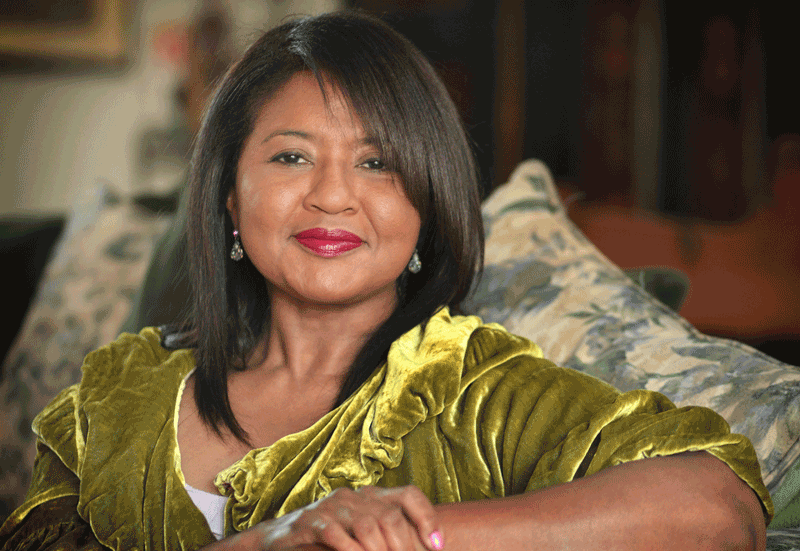
“Oreo” came to me in this context like a strange, uncanny dream about a future that was really the past. That is, it read like a novel not from 1974 but from the near future—a book whose appearance I was still waiting for. I stared at the author photo of the woman wearing the peasant smock and her hair in an Afro and could easily imagine her moving through the streets of Fort Greene. She belonged to our world. Her blackness was our blackness…

Read the entire article here.
Tags: , , , ,

The Hafu Nation: Five Voices

Posted in Articles, Asian Diaspora, Biography, Media Archive, United States on 2015-05-07 20:13Z by Steven

The Hafu Nation: Five Voices

Tokyo Weekender: Japan’s Premier English Magazine
2015-05-03

Kyle Mullin


Velina Hasu Houston (Photo by Ken Matsui)

Four members of the “Hafu Nation” share their experiences of living life from (at least) two perspectives.

Ariana Miyamoto has proven that beauty is not merely skin deep. Although some of her detractors criticized her for not being ethnically pure enough to represent Japan in this year’s Miss Universe pageant, many more supporters see her selection as an opportunity to address what role that mixed race individuals will play in the future of Japan. One work that has brought this question to movie audiences around the world is the documentary “Hafu” (the most common word used to describe Japanese people of mixed race). We reached out to one of the directors of the film, Megumi Nishikura, who put us in touch with several members of the local and international hafu community, who shared their views about Miyamoto’s selection, as well as their own experiences of multiethnicity inside and outside of Japan…

Velina Hasu Houston: A playwright and professor at USC who holds an MFA and PhD, and has explored the U.S.-Japan relationship through drama, fiction, essays, and film, among other forms.

“If Ms. Miyamoto were part white instead of part African American, there might be less brouhaha and discourse about her being named to represent Japan in the Miss Universe pageant. For example, recently Ms. Saira Kunikida, who is Japanese and Italian, was selected by Isetan to represent and be “the perfect symbol” (in the words of Fashion Headline Japan) of its “This is Japan” motto.

“Because Japan thinks of itself as a racially homogeneous and racially pure society, anybody that does not appear to be conventionally Japanese faces myriad issues of prejudgment and, at the very worse, discrimination in Japanese society. Sometimes this is positive in that Japanese citizens may be curious about someone who looks different, especially if that person appears to have some Asian traits. […] But more often than not being hafu in Japanese society can be trying. Japanese citizens stare at hafu constantly—on trains, walking down the street, in stores, and so on. It gets tiring always feeling as though you are being watched. You also may be racially profiled. If Japanese citizens perceive you to be of a certain race or national origin, they may behave differently toward you, thinking that you may act in a way that is to their detriment. These types of encounters are frustrating for hafu because our blood is Japanese as much as it is whatever else we are…

Read the entire article here.

Tags: , , , , , , , , , , , ,

Welcome to Seattle Public Schools. What race are you?

Posted in Articles, Campus Life, Family/Parenting, Media Archive, United States on 2015-05-06 16:12Z by Steven

Welcome to Seattle Public Schools. What race are you?

The Seattle Globalist
Seattle, Washington
2015-05-05

Sharon H. Chang

“Welcome to Seattle Public Schools!” it reads happily. I’m cheerfully advised to use a checklist following to help me enroll my child in kindergarten.

Okay, I think. No problem. My eyes scroll down the checklist: Admission Form, Certificate of Immunization Status, Special Education Form, and School Choice Form. Got it.

I start filling in the Admission Form. It doesn’t take long to get to page 3, “Student Ethnicity and Race”:

“INSTRUCTIONS: This form is to be filled out by the student’s parents or guardians, and both questions must be answered. Part A asks about the student’s ethnicity and Part B asks about the student’s race.”

I heave a huge inward sigh and put the paper aside for the day. Maybe I’ll come back to that one tomorrow, I reflect. But I don’t. I don’t come back to it for at least a week. Actually probably more like two weeks.

This is part of the process of enrolling your child in Seattle Public Schools (SPS). You have to state your child’s race and ethnicity. It’s not optional. And there is an entire one-page form dedicated to that declaration, which in my mind shows the clear significance of labeling a child’s so-called race and ethnicity to the district.

Given that my partner and I are both mixed-race identifying and have endured a lifetime of checking boxes that (hold your breath) might or might not fit, I find these types of forms exhausting. One, they never fit anyone and everyone just right. Two, they are generally and perpetually confusing. Three, they are almost always deeply racializing — they make us feel our bodies are “raced” whether we want to or not. And four, they are pretty suspect in their intentions.

Read the entire article here.

Tags: , , , , , ,

Dr. Bonnie Duran on Race, Racism, & the Dharma

Posted in Articles, Media Archive, Philosophy, Religion, United States on 2015-05-05 18:35Z by Steven

Dr. Bonnie Duran on Race, Racism, & the Dharma

The Whole U
The University of Washington
2015-04-30

Bonnie Duran, Associate Professor of Social Work

The Dharma is the most important source of insight and inspiration to me as I heal from racism and discrimination and as I work towards social justice. The Dharma has taught me important truths about being a “minority” and the powerlessness, discrimination, and prejudice that often come with that status.

Growing up, I strongly identified by and with my racial identities and unconsciously believed the negative stereotypes. As a Native American (Opelousas/Coushatta) mixed race child growing up in a culturally diverse neighborhood in San Francisco, my white friends were often discouraged from playing or spending time with me. Although I scored well on standardized tests, the nuns who were my teachers tracked me into secretarial training and out of college preparatory courses. Girls from the Catholic school I attended would go to the predominantly white Catholic boys schools for monthly dances. I was rarely asked to dance. I unconsciously internalized these messges that I was worth less than others and was fearful, shamed, and obsequious towards authority. Although hurtful and limiting, experiences like these seem minor next to those of my parents, who passed down intergenerational fear, shame, and rage from much more serious, life threatening experiences

When I entered college and began to understand that I was the victim of racism, I was at first enraged by blatant prejudice and was hopeless about my life chances. I engaged in political work, and participated in the burgeoning Native cultural revitalization movement that was sweeping urban areas all over the U.S. and in other communities of color. As an undergraduate in the 1970s, I was very involved with the American Indian student rights, people of color movement at San Francisco State University. After years of political, cultural, and social work, I came to be disenchanted, particularly with the anger, separation, and other afflictive emotions that unmindful political community work and youthful party life can cultivate. As a mixed race person, I often felt that I had no solid cultural ground anywhere…

Read the entire article here.

Tags: , ,

UCLA researchers say Japanese-Americans’ healthier golden years could be a model for other seniors

Posted in Articles, Asian Diaspora, Health/Medicine/Genetics, Media Archive, United States on 2015-05-05 17:42Z by Steven

UCLA researchers say Japanese-Americans’ healthier golden years could be a model for other seniors

UCLA Newsroom
University of California, Los Angeles
2015-04-29

Venetia Lai

Nearly 1 in 4 Japanese-Americans are 65 and older — nearly twice the proportion of seniors in the overall U.S. population. The facts that they are likelier to live longer than other Americans and are healthier when they age make Japanese-Americans an important subject of research by health policy experts — and could provide clues about how all Americans can age, according to a new study by the UCLA Center for Health Policy Research.

Using California Health Interview Survey data from 2003 to 2012, the study found that elderly Japanese-Americans had lower risks for nine of 15 health indicators than other Asian and other racial and ethnic groups in California. Older Japanese-Americans, however, did have higher rates of arthritis and hypertension than seniors in other racial and ethnic groups.

“Japanese-Americans provide a window into our future,” said Ying-Ying Meng, lead author of the study and co-director of the center’s Chronic Disease Program. “They show us one vision of how our nation can age and can help us prepare for the enormous generational shift ahead.”

The report, which was funded by Keiro Senior HealthCare, examines three categories of Japanese in California: Those who identify as being “only” Japanese — typically with parents who both were Japanese; those who identify as being mixed-race; and those who identified as being Japanese in some way…

Read the entire article here.

Tags: , , , ,

Three Unmissable Books That Can Help Us Honor Our Past

Posted in Articles, Asian Diaspora, Book/Video Reviews, Family/Parenting, Identity Development/Psychology, Media Archive, Social Science, United States on 2015-05-05 14:58Z by Steven

Three Unmissable Books That Can Help Us Honor Our Past

Pacific Citizen: The National Newspaper of the JACL
2015-04-30

Ryan Kenji Kuramitsu, JACL MDC Youth Representative

‘It was books,” wrote social critic James Baldwin, “that taught me that the things that tormented me most were the very things that connected me with all the people who were alive, or who had ever been alive.”

As Japanese Americans, our history and experiences offer far greater lessons than simple condemnations of the racism, war hysteria and failure of political leadership that led to our mass incarceration. Rather than trapping us in ancient history, our community’s unique moral perspective can advantage us to speak into a number of modern social struggles, connecting us with all people who are alive.

In this vein, here are three unmissable books that can help us honor our past as we continue to draw fresh connections to present challenges…

…3.  “Raising Mixed Race: Multiracial Asian Children in a Post-Racial World” — In her debut work, sociologist and critical mixed-race theorist Sharon H. Chang brings years of research and writing experience to the project of aiding multiracial Asian American families navigate critical conversations on multiracial identity. Chang’s holistic and intersectional work delves into intensive interviews with 68 parents of mixed-race children, providing readers with invaluable insight and practical observations on the labor of raising multiracial Asian children in a “post-racial” society forever fixated on a black-white racial binary…

Read the entire retive here.

Tags: , , , ,

From Chains to Chiles: An Elite Afro-Indigenous Couple in Colonial Mexico, 1641–1688

Posted in Articles, Caribbean/Latin America, History, Media Archive, Mexico on 2015-05-05 01:25Z by Steven

From Chains to Chiles: An Elite Afro-Indigenous Couple in Colonial Mexico, 1641–1688

Ethnohistory
Volume 62, Number 2, April 2015
pages 361-384
DOI: 10.1215/00141801-2854356

Pablo Miguel Sierra Silva, Assistant Professor of History
University of Rochester

This article explores the life of an elite Afro-indigenous couple in the city of Puebla de los Ángeles during the seventeenth century. Through the study of a freedman, Felipe Monsón y Mojica, and his indigenous wife, Juana María de la Cruz, I propose a new approach to the study of the African diaspora in the urban centers of New Spain (colonial Mexico). By combining an extensive corpus of notarial, judicial, and parochial records with isolated references to Puebla’s Nahuatl-language annals, this article also sheds light on city-dwelling native women who married enslaved men. I argue that formal unions of this type held enormous social, political, and commercial potential for Afro-indigenous couples to emerge as new political actors and urban patrons. In particular, the Monsón de la Cruz household rose to a position of preeminence in pardo religious and military corporations through commerce in indigenous agricultural products.

Read or purchase the article here.

Tags: , , , , ,

Lopsided Afro

Posted in Africa, Articles, Autobiography, Media Archive, South Africa on 2015-05-04 18:17Z by Steven

Lopsided Afro

Mixed Humans ~ Reflections on occupying a space of inbetweenness. Persistently grappling with identity.
2015-05-04

Brian Kamanzi
Cape Town, South Africa

Self Determination.

I never realised how practical those words would become for my life until I started to explore the world beyond the safety of my University. Work spaces where the politics of what is considered respectable are carried out with almost total compliance without anyone mentioning a word, without anyone signing a single suggestion to law.

It was and is suffocating.

I must admit though, this moment revived memories of my childhood.
Being a child of the “colonies” our British style schools and accompanying rules really struggled to accommodate students who just didn’t quite fit the profile.

My hair was just a disaster unless kept short.
In fact, my Dad’s distate for men with anything like long hair rang in stark synchornisation with a reality and imagination that reinforced in my mind that the very hair that came out of my head was essentially…..

Read the entire article here.

Tags: , ,

Ancient DNA Tells a New Human Story

Posted in Articles, Health/Medicine/Genetics, Media Archive on 2015-05-04 18:08Z by Steven

Ancient DNA Tells a New Human Story

The Wall Street Journal
2015-05-01

Matt Ridley

Armed with old bones and new DNA sequencing technology, scientists are getting a much better understanding of the prehistory of the human species, writes Matt Ridley

Imagine what it must have been like to look through the first telescopes or the first microscopes, or to see the bottom of the sea as clearly as if the water were gin. This is how students of human prehistory are starting to feel, thanks to a new ability to study ancient DNA extracted from bodies and bones in archaeological sites.

Low-cost, high-throughput DNA sequencing—a technique in which millions of DNA base-pairs are automatically read in parallel—appeared on the scene less than a decade ago. It has already transformed our ability to see just how the genes of human beings, their domestic animals and their diseases have changed over thousands or tens of thousands of years.

The result is a crop of new insights into precisely what happened to our ancestors: when and where they migrated, how much they intermarried with those they met along the way and how their natures changed as a result of evolutionary pressures. DNA from living people has already shed some light on these questions. Ancient DNA has now dramatically deepened—and sometimes contradicted—those answers, providing a much more dynamic view of the past.

It turns out that, in the prehistory of our species, almost all of us were invaders and usurpers and miscegenators. This scientific revelation is interesting in its own right, but it may have the added benefit of encouraging people today to worry a bit less about cultural change, racial mixing and immigration.

Consider two startling examples of how ancient DNA has solved long-standing scientific enigmas. Tuberculosis in the Americas today is derived from a genetic strain of the disease brought by European settlers. That is no great surprise. But there’s a twist: 1,000-year-old mummies found in Peru show symptoms of TB as well. How can this be—500 years before any Europeans set foot in the Americas?…

Read the entire article here.

Tags: , ,

Sorry Music Journalists, Drake is Black.

Posted in Articles, Arts, Canada, Communications/Media Studies, Judaism, Media Archive, Religion on 2015-05-01 20:33Z by Steven

Sorry Music Journalists, Drake is Black.

Canadaland
2015-04-30

Kyrell Grant

Writers need to stop policing his blackness

It feels ridiculous to have to say this: Drake is black.

Drake, born Aubrey Graham in a city where almost one in ten people are black, is black. Toronto’s greatest civic triumphalist since Jane Jacobs is black.

He is a black man as much as any other black man. And yet Drake’s own identity – his nationality, his mixed race background that includes Jewish heritage and upbringing, the neighbourhood he once lived in, the schools he went to – is often taken to mean that his black experience is somehow inauthentic. While certainly not the first artist to have this kind of analysis imposed on him, Drake’s profile means that his art in particular has been prominently used to deny his black experience when it doesn’t conform to someone else’s narrow vision of race…

Read the entire article here.

Tags: , , , ,