Understanding interracial relationships

Posted in Books, Family/Parenting, Identity Development/Psychology, Media Archive, Monographs, Social Science, United Kingdom on 2009-11-14 20:54Z by Steven

Understanding Interracial Relationships

Russell House Publishing
June 2009
160 pages
ISBN:978-1-905541-53-9

Toyin Okitikpi, Professor
University of Bedfordshire

It is no longer a novelty to see people of different races and ethnicity holding hands and going about their daily lives. Between 1991 and 2001, the British population grew by 4.0 per cent, while the mixed population increased by 138 per cent; and in 2008 the Office of National Statistics reported more people involved in interracial relationships in Britain than in any other country in Europe. But despite the normality of seeing children of mixed parentage and couples – married or cohabiting – in interracial relationships, there remains strong interest in the nature of the relationships, in the motivations that drive them and in the experiences of the children that are born from such relationships. Sometimes this is articulated as concern and prejudice, both in society as a whole and in the helping professions.

This book provides an analysis of the experiences of the people involved in such relationships and explores the implications for anyone who works with them. For counselors, social workers and others involved in work with families and children, it will also be illuminate learning and research in these areas.

Most publications to date that explore practice around interracial relationships focus on the children of mixed parentage. This book explores the experiences, dilemmas and complexities involved in forming intimate relationships across the racial divide. But, as workers’ attitudes and approaches towards children of mixed parentage are generally guided by their views and assumptions about the nature of interracial relationships, this is an important book about working with children, as well as with couples. It:

  • provides detailed discussion of the history of the wider social and economic relationship between white and black people
  • discusses the way black and white relationships have evolved over the centuries and the underlying assumptions
  • offers an account of the dilemmas and complexities involved in interracial relationships
  • explores the nature of the explanations that have been advanced by others about people’s motivation for getting involved in such relationships
  • explores the reactions, views, attitudes and concerns others have towards the relationship; and identifies how people in interracial relationships cope with the negative attitudes and approbation
  • identifies the implications for effective intervention by welfare professionals working with couples involved in interracial relationships.

Reflecting the fact that interracial relationships consisting of black men and white women constitute the highest proportion of interracial relationships in the UK, and that this type of relationship also appears to provoke the greatest disapprobation from many in society, this book is based on interviews with 20 black men and 20 white women who are or have been in interracial relationships. It focuses on developing a better understanding.

Table of Contents

Introduction – looking at interracial relationships

The historical context: looking back to look forward

  • Black people in Britain: a brief history
  • A changing relationship
  • A very visible relationship
  • Interracial as an artistic genre
  • Making sense of the fault lines
  • Racial mixing

Making sense of people’s experiences

  • Experiences matter
  • Revisiting the popular explanations
  • Interracial relationships: is it all about sex?
  • Managing interracial relationship
  • Looking beyond the boundaries
Tags: ,

New book highlights the needs of Mixed Parentage children

Posted in Articles, Identity Development/Psychology, Media Archive, Politics/Public Policy, Social Science, United Kingdom on 2009-11-14 20:41Z by Steven

New book highlights the needs of Mixed Parentage children

London South Bank University
News
2005-06-02

Dr Toyin Okitikpi with his challenging new book [Working with Children of Mixed Parentage]

Proportionately a higher percentage of mixed parentage children end up in care and in Britain we only statistically classify mixed parentage for children where one parent is black and the other white. The new book argues this totally misses the children who for example may be of Asian Chinese descent and when it comes to documents such as the National Census the best we can do is offer them the classification of ‘other’ and ask them to specify.

Toyin explains that there are problems with this form of pigeon holing. He explains, “We are expecting these children to be forced into one classification or another and there is confusion about the children’s identity and their sense of self”…

Read the entire article here.

Tags: ,

White Mothers, Mixed-Parentage Children and Child Welfare

Posted in Articles, Family/Parenting, Media Archive, Politics/Public Policy, Social Science, United Kingdom on 2009-11-14 19:39Z by Steven

White Mothers, Mixed-Parentage Children and Child Welfare

British Journal of Social Work
Volume 29, Number 2 (1999)
pages 269-284

Ravinder Barn, Professor of Social Policy and Social Work
Royal Holloway, University of London

It is now well documented that the majority of mixed-parentage children who enter the public care system in Britain have a white biological mother and a black African Caribbean father. This paper explores some of the underlying factors which increase the vulnerability of mixed-parentage children. The situation of white single mothers is examined in the context of ‘race’, class, gender and location in British society. Empirical findings from two recent research studies provide a profile of white single mothers and their children in receipt of social work help and assistance. Areas for further discussion are raised within this framework.

Tags: ,

Working with children of mixed parentage

Posted in Anthologies, Books, Family/Parenting, Identity Development/Psychology, Media Archive, Politics/Public Policy, Social Science, United Kingdom on 2009-11-14 18:04Z by Steven

Working with children of mixed parentage

Russell House Publishing
2005-03-01
160 Pages
ISBN:978-1-903855-64-5

Edited by

Toyin Okitikpi, Professor
University of Bedfordshire

Table of Contents

  • Introduction: mixed responses: working with children of mixed parentage.
  • Looking at numbers and projections: making sense of the census, emerging trends.
  • Mulatto, marginal man, half-caste, mixed race: the one-drop rule in professional practice.
  • The social and psychological development of mixed parentage children.
  • Identity and identification: how mixed parentage children adapt to a binary world.
  • Practice Issues: working with children of mixed parentage.
  • Direct work with children of mixed parentage.
  • Exploring the discourse concerning white mothers of mixed parentage children.
  • Permanent family placement for children of dual heritage: issues arising from a longitudinal study.
  • Mixed race children: policy and practice considerations.
Tags: ,

An Inter-Racial Love Story in Fact and Fiction: William and Mary King Allen’s Marriage and Louisa May Alcott’s Tale, ‘M.L.’

Posted in Articles, History, Literary/Artistic Criticism, Media Archive, Slavery, United Kingdom, United States on 2009-11-14 06:00Z by Steven

An Inter-Racial Love Story in Fact and Fiction: William and Mary King Allen’s Marriage and Louisa May Alcott’s Tale, ‘M.L.’

History Workshop Journal
2002
Volume 53, Number 1
pages 17-42
DOI: 10.1093/hwj/53.1.17

Sarah Elbert, Professor Emerita of History
The State University of New York, Binghamton

William G. Allen, the child of a free mulatto mother and a white father, was born about 1820, raised by a free black family,and taught probably by ‘educated foreigners’; among the Federal Troops stationed in Fortress Monroe. In 1838 a New York clergyman accepted Allen in his newly-opened school and then recommended his pupil to Gerrit Smith, a prominent New York abolitionist who supported black students at Oneida Institute in upstate New York.  There Allen developed close ties to leaders of the black abolitionist movement. Allen taught fugitive slaves in Canada and co-edited the National Watchman, an abolitionist newspaper in Troy, New York. By 1847 Allen was in Boston clerking for Ellis Gray Loring, an abolitionist lawyer, and also lecturing, writing, and agitating for immediate abolition, racial equality, ‘amalgamation’, and Africa’s importance in the history of world civilization.  Appointed a professor of Greek Language and Literature at New York Central College in McGrawville, upstate New York, he was among pioneers in coeducation and inter-racial education. Allen courted Mary E. King, a white student there. The couple first met little opposition from her family but their toleration quickly vanished when the couple’s engagement prompted an anti-abolitionist and certainly an anti-‘amalgamation’ mob of 500 ‘gentlemen of property and standing’ who prepared to tar and feather Allen and roll him in a nail-studied barrel.  Allen fled to Syracuse, New York, where Jeremiah Loguen and the Reverend Samuel J. May (uncle of Louisa May Alcott) we reactive radical abolitionists and conductors for slaves escaping on the ‘Underground Railway’.  King and Allen then married in New York City and fled to England. Allen lectured in Leeds, Bradford, and Newcastle in 1853 and he wrote their story in ‘The American Prejudice against Color’ and ‘A Personal Narrative’. The pamphlets published in Dublin and London were sent to Samuel J. May and Louisa May Alcott was visiting the May family during the months of the Allen-King incident and its sensationalist treatment in the local papers. Alcott fictionalized the King-Allen romance in her story ‘M.L.’, (now reprinted in Louisa May Alcott on Race, Sex and Slavery, Northeastern University Press, 1998).  Professor R. J. M. Blackett traced the Allens’ years in England and Ireland but found no record of the couple or their children after 1878, when they were living in Notting Hill, London, impoverished and dependent upon friends for support.  Both were dedicated teachers, devoted to the education of poor boys and girls. Allen was the principal of the Caledonian Training School in Islington1863, but Englishmen too were not lacking in racism and his school was resented by competitors who drove him out. (See Blackett,’William G. Allen: the Forgotten Professor’, Civil War History26:2, pp. 39–51). This article brings together Alcott’s tale and the events upon which it was based, in the context of abolitionist culture and activity in upstate New York and New England, and of Alcott’s life, politics, and writing.

Read or purchase the entire article here.

Tags: ,

‘No Such Thing as a Mulatto Slave’: Legal Pluralism, Racial Descent and the Nuances of Slave Women’s Sexual Vulnerability in the Legal Odyssey of Steyntje van de Kaap, c.1815-1822

Posted in Articles, History, Law, Media Archive, Slavery, South Africa, United Kingdom on 2009-11-06 18:15Z by Steven

‘No Such Thing as a Mulatto Slave’: Legal Pluralism, Racial Descent and the Nuances of Slave Women’s Sexual Vulnerability in the Legal Odyssey of Steyntje van de Kaap, c.1815-1822

Fiona Vernal
Department of History
University of Connecticut

Slavery & Abolition
Volume 29, Issue 1
January 2008
pages 23 – 47
DOI: 10.1080/01440390701841034

In 1815, a contentious case came before the Court of Justice in the Cape Colony. Steyntje Van de Kaap, a creole slave, claimed manumission for herself and four children based on her status as a concubine. Harkening back to the Dutch period at the Cape, her suit resurrected a little-known 1772 statute, which, upon the death of slave owners, granted freedom to their concubines and any children from such unions. So indicative was the case of sexual relations at the Cape that one contemporary observer declared that the outcome could threaten one-third of the local slave property, while a Privy Councilor in England who heard the case on appeal, predicted grave consequences if the case should set a precedent. The protracted suit became enmeshed in the nineteenth-century struggle between slaveholders, abolitionists and colonial administrators at the Cape, and in Great Britain. On the eve of amelioration in British colonies like the Cape, Steyntje’s case demonstrated how white paternity and the status of concubine became legal grounds for freedom. This article explores how one woman’s sexual relations with her masters transcended the boundaries of her personal life to challenge the local system of matrilineal descent, to complicate the issue of consent in slave-master sexual relations, and to invoke the worst fears of slaveholders as they confronted a new imperial legal regime interested in reforming slavery.

Tags: , , , , ,

Politicking the personal: examining academic literature and British National Party beliefs and wishes about intimate interracial relationships and mixed heritage

Posted in Articles, New Media, Politics/Public Policy, Social Science, United Kingdom on 2009-11-06 16:29Z by Steven

Politicking the personal: examining academic literature and British National Party beliefs and wishes about intimate interracial relationships and mixed heritage

Information & Communications Technology Law
Volume 18, Issue 2
June 2009
pages 83 – 98
DOI: 10.1080/13600830902814992

Mike Sutton
School of Social Sciences
Nottingham Trent University, Nottingham, UK

Barbara Perry
Faculty of Criminology Justice and Policy Studies
University of Ontario Institute of Technology, Ontario, Canada

Drawing heavily on our earlier work in this area (Perry and Sutton 2006; forthcoming), this article discusses the issue of intimate interracial relationships (IIRs) within the context of the UK Government’s current concerns with social cohesion and provides an overview of the literature on hate and prejudice against those in IIRs in the UK and USA. Following an examination of the official statistics and the numbers of mixed race people in England and Wales, we move on to provide a brief but disturbing glimpse of what it would mean if the BNP‘s long-term dream of winning a national election were actually to happen in light of their official website published proposed policies against IRRs and mixed heritage people.

Tags: , , , , , ,

Belonging to Britain

Posted in Caribbean/Latin America, History, Live Events, New Media, Slavery, Social Science, United Kingdom, Videos on 2009-11-04 04:28Z by Steven

Belonging to Britain

The Munk Centre for International Studies
University of Toronto
2008-11-14
Video Length: 00:46:36

Hazel V. Carby, Charles C. and Dorathea S. Dilley Professor of African American Studies
Yale University

In her lecture, “Belonging to Britain”, Hazel Carby looks at the historic relationship between England and Jamaica, including the history of the slave trade in Bristol and the complex question of identity for those of mixed British and West Indian heritage. Carby is a professor of African American Studies and American Studies at Yale University.

View the video here.

Tags: , , , , ,

Brown Babies in Britain

Posted in Articles, History, Live Events, Media Archive, Social Science, United Kingdom, Videos on 2009-11-04 04:11Z by Steven

Brown Babies in Britain

Radcliffe Quarterly
Winter 2007
Dean’s Lecture Series

Julia Hanna

When white British women met black servicemen during World War II, mixed-race children sometimes resulted from their relationships. In her November 2 [2007] Dean’s Lecture, Hazel V. Carby addressed issues of race and class by drawing on scholarship and personal experience as one of the “brown babies” who caused social consternation and marked, according to Carby, the beginnings of Britain as a racialized state. Her lecture was titled “Brown Babies: The Birth of Britain as a Racialized State, 1943–1948.”

Yet her research into memos sent between various branches of the British government shows an acute awareness of West Indian servicemen as well as black American troops stationed in Britain. Concern was expressed that a “social problem” might arise if nonwhites mixed with the local white population during the war or stayed in Britain after the war, and a program of covert racial segregation was put in place to monitor and manage black troops. When relationships and pregnancies resulted between white women and black men despite such interventions, the women were often counseled to give up their children and avoid marriage. Although her own parents ignored this advice, Carby has continued to search for the depersonalized meaning of her “half-caste” presence in the public sphere by studying memory, history, and citizenship, all of which she hopes to address in a forthcoming work, “Child of Empire: Racializing Subjects in Post WWII Britain.”

The Charles C. and Dorathea S. Dilley Professor of African American Studies, a professor of American studies, and director of the Initiative on Race, Gender, and Globalization at Yale University, Carby is the author of Cultures in Babylon: Black Britain and African America (Verso, 1999).

To watch Carby’s lecture, click here.

Tags: , , , ,

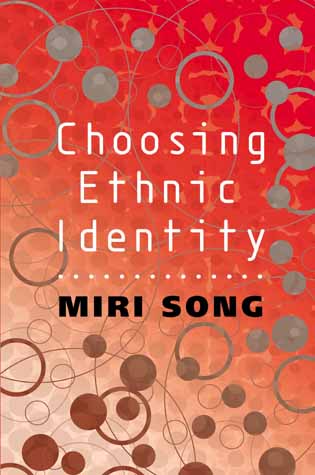
Choosing Ethnic Identity

Posted in Books, Census/Demographics, Identity Development/Psychology, Media Archive, Monographs, Social Science, United Kingdom, United States on 2009-11-04 02:16Z by Steven

Choosing Ethnic Identity

Polity Books
February 2003
192 pages
229 x 152 mm, 6 x 9 in
Hardback ISBN: 9780745622767; ISBN10: 0745622763
Paperback ISBN: 9780745622774; ISBN10: 0745622771

Miri Song, Professor of Sociology
University of Kent

Choosing Ethnic Identity explores the ways in which people are able to choose their ethnic identities in contemporary multiethnic societies such as the USA and Britain. Notions such as adopting an identity, or self-designated terms, such as Black British and Asian American, suggest the importance of agency and choice for individuals. However, the actual range of ethnic identities available to individuals and the groups to which they belong are not wholly under their control. These identities must be negotiated in relation to both the wider society and coethnics. The ability of minority individuals and groups to assert or recreate their own self-images and ethnic identities, against the backdrop of ethnic and racial labelling by the wider society, is important for their self-esteem and social status.

This book examines the ways in which ethnic minority groups and individuals are able to assert and negotiate ethnic identities of their choosing, and the constraints structuring such choices. By drawing on studies from both the USA and Britain, Miri Song concludes that while significant constraints surround the exercising of ethnic options, there are numerous ways in which ethnic minority individuals and groups contest and assert particular meanings and representations associated with their ethnic identities.

Table of Contents

Preface.
Chapter 1 Ethnic identities: choices and constraints.
Chapter 2 Comparing minorities’ ethnic options.
Chapter 3 Negotiating individual and group identities.
Chapter 4 The growth of `mixed race’ people.
Chapter 5 The diversification of ethnic groups.
Chapter 6 The second generation in a global context.
Chapter 7 Debates about racial hierarchy.
Chapter 8 The future of `race’ and ethnic identity.
Notes.
References.
Index

Tags: ,